

Ypsilanti plans to switch to LED street lights
Several Ypsilanti street lights will be converted to LED lights soon as the city pursues a special assessment district to help cover electricity costs.
The street light conversions are part of two DTE Energy programs that will save the city about $23,000 annually.
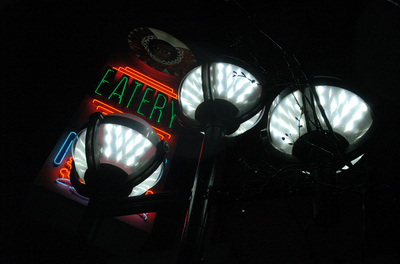
LED streetlights like these shown on Washington Street in Ann Arbor will soon be placed in Ypsilanti.
AnnArbor.com file photo
The Ypsilanti City Council voted unanimously Tuesday to participate in the two programs and to move forward with the special assessment district.
City Manager Ralph Lange is expected to give a presentation at council's Feb. 19 meeting outlining the costs and specifics of the special assessment district, which would encompass the entire city.
Rough estimates from city staff said the district could generate around $500,000 and cost most residents an additional $85 annually. Lange said Eastern Michigan University would likely pay a large amount of money due to the number of lights on its campus.
"EMU has been made aware of this effort because they will be the biggest payer," Lange said.
Possible options for the assessment include a flat flee, irrespective of parcel size; fees based upon the average parcel area; or fees based upon the perimeter.
In March, a public hearing will be held, allowing residents the right to file objections. If property owners representing more than 50 percent of the expected cost of the assessment file objections, the project may not proceed without the affirmative vote of four-fifths of all of the council members.
Separate from the special assessment district, Stan Kirton, director of public services, met with DTE Community Lighting Division representatives Jeff LeBrun and Tim Miller in January to discuss the two new programs that DTE is rolling out this year.
The first program, the Series Circuit Conversion Program, entails replacing the city's series circuit. This program will be done at no labor cost to the city and DTE will replace twenty-nine, 400-watt mercury vapor lights and seven, 250-watt mercury vapor lights.
DTE has offered the option for the city to upgrade the lights to LED lights and the estimated cost for this upgrade is approximately $360 per light fixture.
The current annual energy cost for those 36 lights is $18,558.48 and after the LED conversion, the annual cost will drop to $11,211.74. DTE estimates the return on investment will be approximately 1.77 years.
"When we first started LED lighting, the payback was nine to 10 years," said DTE account manager Tim Miller said. "That’s a big difference."
The second program, the Mercury Vapor to LED Conversion Program, converts the city's mercury vapor lights to LED light fixtures and DTE has offered to convert 224 lights.
"We have specifically targeted communities," Miller said. "It's not being offered to everyone... We are contributing labor to do this as well."
The approximate cost to the city for the LED conversions will be $67,282.
The current annual energy cost for those 224 lights is $49,721.76, and after the LED conversion, the cost will drop to $33,172.44 annually. The return on investment will be approximately 3.18 years.
Since the city is participating in both programs, DTE will grant about $19,090 in rebates, bringing the total cost for the city down to $61,184. Without the rebates, the total would be about $80,274.
DTE Energy regional manager Paul Ganz said Ypsilanti is the first community in the Detroit service area to participate in the programs.
"I was thrilled when I heard about this application," Ganz said. "This is a wonderful program and the payback is really quick."
Ganz said DTE has not yet set a timeline for when the installations will begin, though more information should be available in the coming weeks.
The 2012-13 fiscal year budget includes $50,000 for LED conversions of streetlights, and Kirton said the remaining balance of $11,184 can either be paid for with the energy refund he expects the city to receive from DTE or by allocating money for streetlight conversions in the 2013-14 budget.
Participation in the programs will eliminate all mercury vapor lights east of Huron Street.
"We are attacking the most inefficient ones first to get the most bang for our buck," Lange said.
Katrease Stafford covers Ypsilanti for AnnArbor.com.Reach her at katreasestafford@annarbor.com or 734-623-2548 and follow her on twitter.
Comments
Sara
Wed, Feb 27, 2013 : 1:13 a.m.
LED lights may be more environmentally friendly, and maybe they are cost effective. However, I think it is a bad move for the City of Ypsilanti. LED lights are not as bright as regular street lights and create a safety issue for residents walking on the streets at night.
jayjay
Wed, Feb 6, 2013 : 8:37 p.m.
I hope someone will talk to the city of San Diego and ask them why they chose Induction lighting over LED. It might open a few minds. But since Ypsilanti is apparently much better off financially than San Diego, I guess they can go for fashion (LED) over performance and cost (Induction lighting). Tax payers -- you are correct to challenge this misuse of your money. Ask for openness in the investigation and how they chose LED -- I am sure it will surprise.
Nathan Mentley
Mon, Feb 18, 2013 : 6:54 p.m.
The first program is cost effective in two years. The second program is cost effective in 4 years. This program will save money. It is cost effective. Like I said previously induction lighting isn't an option for this climate. So it's obvious why LED is being pushed by DTE and why Ypsilanti would want in on this program.
Ben Petiprin
Wed, Feb 6, 2013 : 6:50 p.m.
Seems a lot like taxation without representation to me.
Nathan Mentley
Mon, Feb 18, 2013 : 6:58 p.m.
You have the ability to file an objection... and your representatives are voting on it. How is this taxation without representation?
Kellie Woodhouse
Wed, Feb 6, 2013 : 5:43 p.m.
Ann Arbor has been using LED street lights for a few years. http://www.annarbor.com/news/ann-arbor-officials-tout-latest-led-street-lighting-project-estimate-annual-savings-of-5600/
jayjay
Thu, Feb 7, 2013 : 12:54 a.m.
Yes, and paying costs they do not need to pay. LED lighting is indeed the fashion model that catches the attention, but Induction lighting for street lights is less expensive up front and to operate. And they have no need for special disposal. They also have the longest life of any illumination technology available today. Need I say more?
Macabre Sunset
Wed, Feb 6, 2013 : 3:46 p.m.
Have they solved the problem with LED traffic lights becoming hard to see during the winter because they don't run hot enough to melt ice?
Dog Guy
Wed, Feb 6, 2013 : 2:50 p.m.
As I don't pay taxes in the proposed special assessment district, fairness requires that I keep my eyes closed when I drive through it at night.
jayjay
Wed, Feb 6, 2013 : 2:25 p.m.
If the savings are what they are, why don't they finance the LED lights from the savings and not use a special assessment? Is it because LED lighting is too expensive up front? The annual savings do not cover the financing costs? Hmmmmm -- what is the real motivation for the change? Taxpayers -- it is your money!
Nicholas Urfe
Wed, Feb 6, 2013 : 2:04 p.m.
Who makes the profit off this? The lights, the installation? As others have pointed out the ROI is trivial. I feel for the residents asked to pay $85 a year when they are struggling to pay their mortgages and feed their families.
Katrease Stafford
Wed, Feb 6, 2013 : 1:41 p.m.
For those interested in voicing an opinion, there will be two public hearings held in March, the first is tentatively set for March 5. Residents can either voice their support or file an objection to the proposed special assessment district. Residents can potentially impact the decision, as I understand it. After Feb. 19, I will have more details in terms of the exact costs and how the fee will be assessed.
jayjay
Wed, Feb 6, 2013 : 1:23 p.m.
Once again the taxpayers will foot the bill of an incomplete financial analysis. And with the complicity of DTE. Magnetic Induction Lighting would be a better and less expensive choice, but it would also cut down on the energy used vs LED lighting, result in fewer bulb changes because Induction bulbs last 2-x longer than LED. At 12-hour/day usage, Induction bulbs will last 20+ years, and they are much cheaper up front than are LED. But the LED Industry has done a better job of selling its technology. However, Induction lighting is starting to make significant inroads. Ask the City of San Diego why the went to induction lighting and why they did not choose LED -- cost was the major driver! Given Ypsilanti's financial position, will someone kindly explain how they get away with not doing their homework and choosing a more expensive option? It is not by chance that voters get so upset with their supposed representatives. It is apparently easy to spend money that is not yours! Taxpayers ought to at least ask the question -- where is the analysis? Let's see the facts.
Nathan Mentley
Mon, Feb 18, 2013 : 6:50 p.m.
Induction lighting doesn't work well in cold weather. It works well for a place like San Diego since they rarely have sub 50 degree weather.
A2comments
Wed, Feb 6, 2013 : 11:39 a.m.
So the city assesses residents to pay for the installation of lights so the city can save money. How do the residents come it ahead?