

University of Michigan launches new security and police division in response to six-month child porn reporting delay
Public safety and security at University of Michigan is getting an immediate makeover.
U-M regents unanimously approved the creation of a Division of Public Safety and Security during their Friday meeting in Flint.
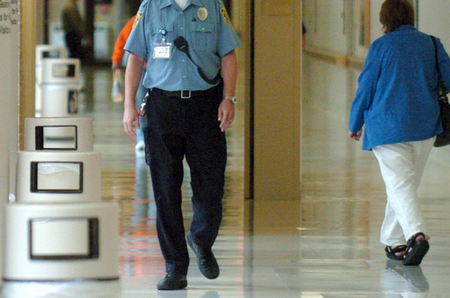
The new division is a response to an external investigation of a six-month reporting lapse by at least eight university officials who knew a U-M Health System resident was suspected of viewing child pornography while at work but did not notify police.
Investigators interviewed 37 people and found serious lapses of communication between hospital security officials and university police. U-M regent Laurence B. Deitch said Friday that the communication line “demands repair.”
The new division will be temporarily headed by Joe Piersante, the current interim U-M police chief. The division will have authority over U-M's security and police operations.
"There was a clear failure among university personnel to timely and effectively communicate regarding the reported possession of child pornography," Deitch said Friday, echoing statements made in February by regents when they ordered the review. "This failure is categorically unacceptable."
Officials also announced that the school will develop a standard practice guide related to safety and security reporting procedures. A search committee for a DPSS director is also being formed.
"This has been a very arduous process, very time consuming," U-M President Mary Sue Coleman said Friday. "But it was critical that we go through it.
We’ve followed a challenging road to reach this point, but I see a clear path forward."
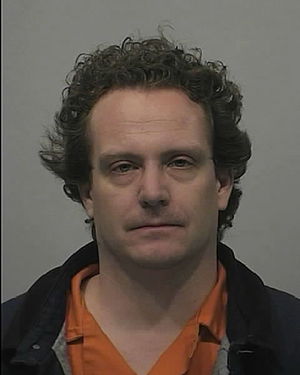
Stephen Jenson
The investigation's findings stem from May 2011, when a female resident discovered evidence that linked 37-year-old pediatric resident Stephen Jenson to child pornography. The employee attempted to use a computer in an employee area of University Hospital and discovered an illicit picture on the screen. The picture was attached to a thumb drive belonging to Jenson.
The employee reported the image to her supervisor and eventually multiple hospital lawyers were informed of the discovery. The lawyers did not report the incident to police.
Instead, university police weren't informed of the incident until six months later, on Nov. 18. They launched an investigation three days later and on Dec. 16 Jenson was arrested and discharged from U-M.
During the six-month lapse, Jenson had regular contact with minors through his duties as a health system pediatrician-in-training.
An investigation by the U.S. Department of Education into the reporting lapse is still underway, a DOE official told AnnArbor.com.
Latham and Watkins Chicago-based trial lawyer Zachary Fardon began the external investigation in April and officials at first predicted it would take six weeks to finish. Instead it took the university six months to released the review's findings to the public and cost the university $487,000, $92,000 more than the $395,000 cap set by the original contract with the firm, according to documents obtained by AnnArbor.com through a Freedom of Information Act request. Lawyers on Fardon's team billed up to $750 an hour.
The external review was the first ordered by regents since Ed Martin was accused of bribing Wolverine basketball players in the 1990s.
Regents demanded the outside investigation on Feb. 16, with regent S. Martin Taylor calling the reporting lapse unacceptable and saying "we must make sure we do everything in our power to make sure it's not repeated."
Regents did not share the actual Latham and Watkins review, but instead issued a public memo summarizing the findings.
"That document was done under attorney-client privilege," said U-M spokesperson Rick Fitzgerald.
The external review follows an internal one released Feb. 10. That review found similar missteps by the university. U-M auditors found that eight U-M employees, including a health system lawyer, knew that Jenson possibly had viewed child pornography while working at the hospital but did not report the incident to police.
The investigation found that a lead hospital attorney intimidated the female resident who originally reported the incident, causing her to cry in a meeting.
Deitch said Friday that the attorney determined "there was not sufficient evidence" to tell police and that such a conclusion was "was wrong and unacceptable."
Auditors also said unclear roles and poor communication between hospital security and university police contributed to the reporting delay.
Meanwhile, Jenson is facing federal charges for receiving and possessing child pornography. In December authorities allegedly found 97 images and four videos of child pornography on his computer. Jenson struck a plea deal with prosecutors in September, but a U.S. District Court judge refused to accept the deal and both sides continue to negotiate on a plea.
Kellie Woodhouse covers higher education for AnnArbor.com. Reach her at kelliewoodhouse@annarbor.com or 734-623-4602 and follow her on twitter.
Comments
Ron Granger
Mon, Oct 22, 2012 : 1:32 p.m.
Great timing to cover this up by choosing to release this on a FRIDAY, in FLINT, right before the UM-MSU game. With the "investigation" report secret, how do we know children were not exposed to the accused after the alleged child porn was reported to University Hospital staff? Why should we believe there is suddenly transparency after an obvious cover-up? Where is the obstruction of justice investigation?
Ron Granger
Sun, Oct 21, 2012 : 10:01 p.m.
"That document was done under attorney-client privilege," said U-M spokesperson Rick Fitzgerald. Exactly as predicted here. This was a secret process, with no transparency. There was never any intent to release the review taxpayers paid for. The whole thing was a sham. Imagine if Penn State had declared that their review would be secret.
Arborcomment
Mon, Oct 22, 2012 : 12:21 a.m.
Notice the location where this sham process was announced: "during their meeting in Flint".
Richard C
Sun, Oct 21, 2012 : 4:46 p.m.
On the one hand, it seems that the real harm caused by this resident was relatively minimal. On the other hand, it has exposed a culture of cover-up in the University Health System. I hope I'm right about the first. I'm deeply worried about the later.
Ron Granger
Mon, Oct 22, 2012 : 1:28 p.m.
"On the one hand, it seems that the real harm caused by this resident was relatively minimal." How can you say that when we are not being allowed to read the report? The public police investigation was blocked by secrecy. How would a parent know that their kids were not exposed to this individual?
FormerMichRes
Sun, Oct 21, 2012 : 10:56 a.m.
You can create all sorts of new divisions, but unless you change the mind set of University senior management, which is to (for the most part anyway) cover up, avoid, and manipulate, nothing will change. That's why the Board of Regents had to hire a couple of outside law firms to conduct the investigation. Besides Dr. Jenson losing his job, I think the only other personnel move was to demote the head of the Office of General Counsel a few months back. I think she's back to being a tenured faculty member, which is another University issue ... and perhaps a good investigative piece for AnnArbor.com. What happens to University management that get into trouble? They generally revert back to tenured faculty teaching your children. Just something to think about.
Frustrated in A2
Sun, Oct 21, 2012 : 5:27 a.m.
It's clear as mud as to what this new division is supposed to do or what are they responsible for.
Arborcomment
Sat, Oct 20, 2012 : 7:32 p.m.
Thanks Kai, yep, works out around a couple of hundred dollars a word for the Regents "memo". So nice of them to throw crumbs. It does allow for speculation since the Margolis report is also posted. Here's a "highlight": "The relationship issues center on a lack of trust and poor collaboration between HHC-Security and DPS, and are less problematic with Housing Security. These disconnects are around protocols for the reporting and investigations of crimes occurring within HHC; the leadership turnover in DPS; the chain of command's ongoing struggle to correct matters; the hostility, in general, between DPS and HHC-Security; and concerns with the hospital's FCC call center. The lack of a healthy working relationship between the three organizations contributes to confusion, misunderstanding, miscommunication, a lack of trust and respect, a lack of sharing of information, and a failure to recognize and appreciate the role, duties and responsibilities that each department must perform. Staff we interviewed from the General Counsel's Office, Risk Management, and other administrative functions expressed consistent surprise at the level of animosity between HHC-Security and the Department of Public Safety. One particular interviewee with a perspective into both organizations shared the belief that HHC-Security does not want to be accountable to DPS or have DPS involved in their "business." At the same time, they articulated a belief that DPS is suspicious of HHC-Security, doesn't respect its role and ignores health care laws. Many of those we interviewed believed that the cause for these challenges is a pervasive lack of leadership: "The fact is that leadership allows this to happen... what we permit we promote." This is not a new atmosphere, it has been going on for years. It is a systemic failure of the leadership of this University illustrated by this incident. Wondering if the Chicago law firm uncovered more - requiring attorney client privilege.
Kai Petainen
Sat, Oct 20, 2012 : 9:24 p.m.
"These disconnects are around protocols for the reporting and investigations of crimes " It's not the first time for them. When the spill happened, in a normal situation, the city/state/DNR/EPA would have been involved. Somehow the UofM hospital area is different, as none of those agencies were involved in the investigation. Those who I thought were here to help and protect us, weren't. Now I know that a river can be covered in goop, but the DNR/EPA don't care. Someone solve the crime of the spill that went under the UofM hospital area. Someone did it, someone knows. Be it the "shmuck in a pick up truck" (then the schmuck knows) or something else. Solve it. As no permit report existed or accident report then it is an unsolved crime. I want to know who did it, and I want them to be charged. And if anyone knows, call the police.
JMA2Y
Sat, Oct 20, 2012 : 7:01 p.m.
A division within a division? Security already exists. Does this Division combine Central and Hospital police? And with what new duties? How many more layers have been added to security to report a problem?
Trouble
Sat, Oct 20, 2012 : 3:21 p.m.
It seems to be the fad nowadays to hire a law firm to investigate what we already know. EMU paid Bodman around $400K to tell us that EMU administrators covered up an obvious homicide in a dorm. Now U of M pays an Illinois firm about the same to tell us what we already know. Ample reason to stop taxpayers funding for frivolous spending of our money. No common sense comes with all these PHD's. Unbelievable.
Basic Bob
Sat, Oct 20, 2012 : 3:16 p.m.
Mary Sue Coleman should be fired, I'm sure she could get a federal job like Graham Spanier.
Tru2Blu76
Sat, Oct 20, 2012 : 3:01 p.m.
"We've followed a challenging road to reach this point, but I see a clear path forward." – M.S. Coleman. Well - does the result make it mandatory for university employees (including medical staff) to notify actual police or just report to the (expanded!) "security apparatus"?? Leaving the reporting up to university officials at any level just perpetuates the flawed thinking here. Leave it to actual police departments to investigate and take whatever actions the evidence justifies under the law. There's definitely no need to hire MORE university officials to do the job which should be the responsibility of the State Police (for example). Discover a possible crime: report to police. It's that simple, U of M has no business setting up a parallel, duplicative police agency which is subject to second guessing and evaluation by non-police personnel (like M. S. Coleman, et al).
Tru2Blu76
Sat, Oct 20, 2012 : 2:55 p.m.
RE: "The investigation's findings stem from May 2011, when a female resident discovered evidence that linked 37-year-old pediatric resident Stephen Jenson to child pornography." –– In other words, the resident physician's report quickly came under suspicion - because - someone decided that kind of report wasn't very important. If U of M President Coleman had made that chance discovery - none of this subsequent ball juggling and second guessing would have happened. The same issue of "respect" applies to "security staff" in this kind of situation: they are held within a net of limitations compared to actual police and they know this. So, it appear, the hospital security supervisors focused first on their own security if they report something which may embarrass their employer (U of M). The reason the Penn State scandal went to trial so quickly is that, once the focus became the responsibility of higher officials, those officials then suffered immediate consequences. Pennsylvania has a law which requires immediate reporting of crimes committed by college employees (such as assistant football coaches). Nowhere in this series of articles is it said whether Michigan has a similar law - which would have FORCED U of M personnel to report to police. Is there such a law? - or are university officials allowed to slide by and allowed to "create their own corrections??" That's what seems to be missing: U of M (it could happen at any college in the state) is now allowed to make provisions that are supposed to prevent FUTURE incidents of this kind. But given their already established (and intense) self interest, will their corrective measures be effective? The reason the Penn State big shots fell - was the law which requires immediate reporting to non-university police - something we don't have here in Michigan.
Kai Petainen
Sat, Oct 20, 2012 : 2:54 p.m.
I applaud the decision of the regents to combine the DPS and Hospital to form the DPSS. This is a step in the right direction and I applaud the decision. When I witnessed the spill, I remember going to the UofM hospital security and asking them about it. Under the "Emergency Planning and Community Right-to-Know Act" and the "Clean Water Act", I felt it was important to ask what had happened -- I shouldn't have to file FOIAs to know. The UofM hospital security started speaking to me, but they were cut off as a supervisor walked into the room and stopped them from talking to me. Strike 1 against hospital security. In a second episode, Diane Brown (in all sincerity, she is a wonderful person, a great employee, and has one of the hardest jobs on campus) from DPS would get a group of directors together for me in a room. We spoke about the spill, and they made it clear to me that it was unsolved and of an unknown source. When I tried asking about the possible causes, the DPS told me that they don't investigate ideas or theories (perhaps more crimes could be solved if they actually investigate ideas or theories). But, in that exchange, the spokesperson from the UofM hospital security, would walk out of the room - mad. They were unable to listen to my concerns and they were, unprofessional, and in my opinion, disrespectful. Strike 2 against hospital security. The third strike against hospital security, is quite simply... that they were unable to solve the spill that flowed through their property. It would run through their property for hours and into the river. Unacceptable. This happened in broad daylight under the noses of hospital security. So, I applaud with full measure the decision that DPS should have more authority over the UofM hospital area. This is a huge step in the right direction.
Kai Petainen
Sat, Oct 20, 2012 : 2:13 p.m.
since the topic deals security, it should be noted that this public event is coming up: DPS invites public to October 24 crime meeting University students, faculty and staff as well as members of the broader community are invited to attend the Department of Public Safety crime meeting at 11 a.m. Oct. 24, 2012. The meeting will be held in the Michigan Union Pendleton Room. The meeting, which brings together DPS shift supervisors and DPS officers involved in crime investigations as well as representatives from Housing Security and Hospital Security, will include a review of recent major crime activity and trends, current criminal investigations and crime prevention strategies. Questions, concerns and suggestions from the community members also will be welcomed and addressed. For more information about the meetings, contact Diane Brown, DPS public information officer, at (734) 936-2323.
sultanofswing
Sat, Oct 20, 2012 : 1:37 p.m.
Before you go off killing all the lawyers....remember lawyers have clients....clients call the shots and pay the bills....
sultanofswing
Sat, Oct 20, 2012 : 7:30 p.m.
Just want to agree with j.kidd reply to my comment...just want to get folks to look beyond lawyers
Joe Kidd
Sat, Oct 20, 2012 : 2:06 p.m.
True but this is a public institution supported by tax dollars. Consider that when you say "client." I think taxpayers have the right to say they don't like the way this place is being run and demand it be done right.
bugmenot
Sat, Oct 20, 2012 : 12:35 p.m.
Sue the hospital attorney for malpractice!
average joe
Sat, Oct 20, 2012 : 12:02 p.m.
No need to promote common sense & responsibility, just add another management layer.
arborani
Sat, Oct 20, 2012 : 2:55 p.m.
Lipstick on a pig. (Apologies to the porker.)
observer
Sat, Oct 20, 2012 : 1:11 p.m.
excellent point.....
observer
Sat, Oct 20, 2012 : 10:39 a.m.
Do u think they hired the law firm because of the upcoming lawsuits and the liability issues vs. having a proper investigation done.....which would show how poorly this was handled from top to bottom.....
Joe Kidd
Sat, Oct 20, 2012 : 2:05 p.m.
Lawsuits? Liability? Who could sue? The people who participated in the cover up won't sue since they did something stupid. If they were told to cover up or lose their job, I am sure they have been taken care of, to keep their mouths shut. The U handled this just like they handled the initial investigation of the Martin case with the basketball team. Hire a law firm to "investigate." Some folks never learn even in education facilities.
stevenhs
Sat, Oct 20, 2012 : 6:27 a.m.
How much evidence do you need to inform police? The female residence's word is plenty to suspect that a crime may have been committed. If there is any reason at all to suspect a crime has been committed, the police should be informed. The police then investigate to determine whether in fact a crime has been committed. Damn these overpaid lawyers. Any group of laypersons has more sense than they.
Scott
Sat, Oct 20, 2012 : 4:58 a.m.
The real tragedy is that a doctor has fallen. Like leviathans they tower over mere mortals, forsaking their Hippocratic oath with every unnecessary test, prescription and procedure. They are above ethics, above morality. They are gods.
Basic Bob
Sat, Oct 20, 2012 : 12:01 p.m.
Fortunately they caught him before he received his membership card.
DennisP
Sat, Oct 20, 2012 : 6:15 a.m.
LOL! I agree.
a2citizen
Sat, Oct 20, 2012 : 3:27 a.m.
Attorney client privilege???!!!!!!!!!!!!!!!!!!!!!! Mr. Fitzgerald, that privilege is for private citizens and corporations, not publicly funded institutions. If your claim survives an FOIA you can bet Penn State will be claiming attorney-client privilege. I have often wondered: Under what legal authority was the lead attorney operating when she decided there was not enough evidence to report a crime to the police? She, and every attorney involved should be disbarred. Attorney-client privilege!!!! Rolling on the floor, laughing my...
sultanofswing
Sat, Oct 20, 2012 : 2:30 a.m.
why is it that you guys can't do anything but report press release stuff ? There is a story here .. Do you even ask questions ? Do you ever do simple independent follow up on stories ?
Joe Kidd
Sat, Oct 20, 2012 : 2:01 p.m.
Alas professional journalism is dead. Died with the freedom on info act and press relying on releases as you note. Nobody develops sources anymore.
nunya
Sat, Oct 20, 2012 : 2:28 a.m.
So, how will this change the hospital security organization? The hospital has always operated apart from the university. Will there still be separate security departments? Who is in charge of hospital security? Not sure I really understand other than perhaps hospital security now reports to the DPS chief instead of hospital administration. What about other security in the university (housing, facilities, etc) do they change somehow?
Kai Petainen
Fri, Oct 19, 2012 : 11:53 p.m.
from the michigan daily article: http://tinyurl.com/8qoxs8n "Certain University personnel (especially in the Health System and in the Office of General Counsel) inappropriately investigated the reported child pornography information independently, without involving or referring the incident to an appropriate law enforcement agency" the memo said." "The individuals who made that determination are no longer employees of the University."
Billy Bob Schwartz
Sat, Oct 20, 2012 : 1:50 p.m.
JC...They no doubt were told that, if you do something like this in the future, be way more careful.
justcurious
Sat, Oct 20, 2012 : 1:44 a.m.
Supposedly the young female attorney left voluntarily according to previous articles. But what about all of the other people who knew and allowed him to see children for six months after? What happened to them? Where does it say anything about what discipline they received?
Arborcomment
Fri, Oct 19, 2012 : 11:09 p.m.
Total travesty. As predicted, attorney-client privilege force field now at full strength. Please clear up confusion: "Instead it took the university six months to released (sic) the reviews findings to the public" versus "Regents did not share the actual Latham and Watkins review, but instead issued a public memo summarizing the findings.". Which is it? It would also be nice to provide a link to the memo so we can see the summary and assign dollar for word costs for the only document the public will see - despite paying for it... UM, now make hospital security officers sworn Police Officers, with a responsibility to investigate potential crimes as a public safety matter and not for legal mitigation for the University. Put a UMPD officer as second in charge of hospital security and RELEASE THE FULL REPORT.
Kai Petainen
Sat, Oct 20, 2012 : 12:28 p.m.
@arborcomment... they provided a link to the public report, but it's not an obvious link. you can see it here: http://www.vpcomm.umich.edu/pa/key/resident.html
nickcarraweigh
Fri, Oct 19, 2012 : 10:41 p.m.
In the wake of the Penn State fiasco, the University's willing to go to extremes and change the job titles and departmental listings of the public safety and hospital security guards. And they paid somebody $800,000 or so to learn that's a good idea. And it took six months to do it. Wow. This changes everything, don't it?
YpsiVeteran
Fri, Oct 19, 2012 : 10:40 p.m.
The idea that the U spent almost half a million dollars to be told that crimes should be reported to the police makes me physically ill.
YpsiVeteran
Fri, Oct 19, 2012 : 10:38 p.m.
I'm still waiting to read a story about how the person in charge of hospital "security" was suspended/fired for his/her failure to adequately train his/her employees on the proper procedures to follow when receiving a report of a crime. Did this "security" dept. have a policy that instructed security officers to bring crime reports lawyers? Did they have a policy at all? The person in charge of these security officers has yet to accept responsibility for this failure.
Joe Kidd
Sat, Oct 20, 2012 : 1:59 p.m.
I think you are on the right track, but aiming at the wrong person. The person in charge of hospital security could have been told what to do with certain cases. All along I knew the whole story would not come out. That is why you hire a laws firm, as noted above by SSpade You can keep the whole document under wraps. I agree, the state should take this over and get the story out. Obviously the U won't do it even though our tax dollars fund it.
lorayn
Sat, Oct 20, 2012 : 12:10 a.m.
I believe that the attorneys in the UM Medical Center legal office (the ones who did not act on this) all left the university once this saw the light of day. I suspect that this was not a coincidence.
SSpade
Fri, Oct 19, 2012 : 10:21 p.m.
They didn't talk to the right people. And of course this turns out to be a joke. ""That document was done under attorney-client privilege," said U-M spokesperson Rick Fitzgerald." Exactly why you hire a law firm and not a real investigative agency. I think the State Attorney General's office needs to investigation here. The cost alone of this law firm folly is enough. The real story will not come out otherwise. Promote the responsible. Perfect.
Kai Petainen
Fri, Oct 19, 2012 : 9:39 p.m.
some might think my thoughts are off topic, but they relate.... in that... problems with communication is not an old matter when it comes to the hospital area and DPS. i will give an unsolved crime (it's not an accident or a permit as there are no reports for either, and unless i can do what happened, then it was criminal). here's an example between the UofM and the AAFD. the reports of the same incident conflict with one another in this example. i have removed the name listed in the report and replaced with ####, but it is of the same name. it reflects the idea that broken communication is a problem that i complained to DPS, even before this incident. it saddens me that communication was not fixed prior to this incident. the AAFD version of the same event: "Scene terminated turning over to U of M OSHA, #### ####" "The scene was then turned over to U of M, and a gentleman by the name of #### ####, who informed us he worked for U of M OSEA, told us that U of M was taking responsibility for the incident since the storm water pipe came from the U of M property" and the UofM version of the same event (the same name is listed in the report): "U.M. O.S.E.H. Representative, #### #### ((###) ###-####) arrived on scene at approx. 9:30pm, #### advised that the Ann Arbor Fire Dept. was in control of the scene and he was there as an observer" do you see how they appear to conflict with one another? AAFD says it is UofM, UofM says it is AAFD.
Kai Petainen
Fri, Oct 19, 2012 : 10:36 p.m.
@Nunya... I understand.... but this old unsolved issue touched on many issues within UofM and the city as a whole. It touched on issues concerning communication, security, pollution, cooperation -- and problems were highlighted before they became big problems... ... and as it had remained unsolved... it awaked an activist in me that started caring for my city and the university, when all others remained quiet. i am inspired by something that President Coleman said, and it's why I do not live in silence nor in anonymity, for I believe strongly in what she says, and I believe that what she says is of sincerity and honesty: President Colemand said: "And yet we must do more. Safety is a responsibility we all share. We must all remain vigilant, and report concerns quickly. I want our students, faculty and staff to know this: Please speak up. It takes resolve to do that. But that is the Michigan way – we do the right thing. Period." And that is what I am trying to do. I am trying to do the Michigan way, the right thing... period.
Nunya
Fri, Oct 19, 2012 : 10:16 p.m.
For the love of all things holy, will you stop using this god forsaken argument. Just so you know I pollute the Huron everyday in your honor!
Kai Petainen
Fri, Oct 19, 2012 : 9:48 p.m.
meant to say... is not a new matter...
LXIX
Fri, Oct 19, 2012 : 9:08 p.m.
So, who in the chain of responsibility was removed for their grevous err in administrative judgement? eg Failed to report a known crime to the police? Or is the University like the Vatican - entitled to a different legal code within its public private-jurisdiction? Perhaps the hospital lawyers and their procedures need a makeover, too. The law firm's fee should definitely be retracted for their failure to perform professionally and actually aggravting the whistleblower situation. Finally, aren't there any impartial investigators for hire in Michigan using Michigan money or is that strictly a Chicago speciality?
Trouble
Sat, Oct 20, 2012 : 3:20 p.m.
LX: It seems to be the fad nowadays to hire a law firm to investigate what we already know. EMU paid Bodman around $400K to tell us that EMU administrators covered up an obvious homicide in a dorm. Now U of M pays an Illinois firm about the same to tell us what we already know. Ample reason to stop taxpayers funding for frivolous spending of our money. No common sense comes with all these PHD's. Unbelievable.
observer
Sat, Oct 20, 2012 : 10:34 a.m.
AMEN LXIX....nailed it.....spot on....
observer
Fri, Oct 19, 2012 : 8:27 p.m.
everyone ran for cover on this.....someone is responsible for this guy having access to patients for an additional six months.....the police, hospital security and housing should be under the direction of one person......