

Multimillion dollar bike-sharing program planned for University of Michigan and downtown Ann Arbor
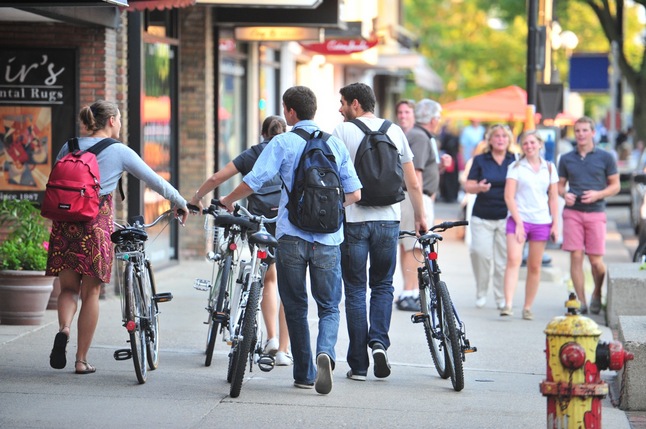
Bicycle sharing is likely coming to Ann Arbor.
Ryan J. Stanton | AnnArbor.com file photo
The Ann Arbor-based Clean Energy Coalition is developing a bike-sharing program throughout the city, including on University of Michigan's sprawling campus near downtown.
Organizers say the program, which could begin as soon as fall 2013, meets a desire of both the university and the city to have a program in place that allows students, residents and commuters to check out bicycles as they would a Redbox DVD.
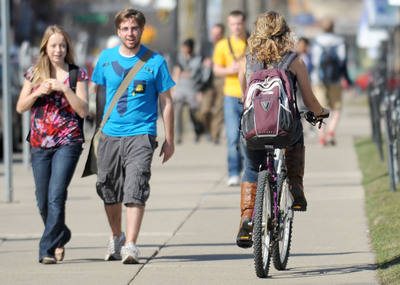
A woman bikes down the sidewalk next to State Street by the University of Michigan Museum of Art in Ann Arbor.
Angela J. Cesere | AnnArbor.com file photo
With most bicycle share programs, anyone with a credit card can participate and members often receive an incentive, such as the first half-hour of rental free.
"For it to be really successful, it has to be something that connects the campus and downtown," said Stephen Dolen, director of parking and transportation services at U-M, which has been exploring a bicycle sharing program for years.
In essence, the bicycles would make easier and quicker for downtown residents to commute to work and for students to venture off campus. The bikes would be especially helpful to commuters who ride the bus to work, but aren't dropped off near their office, organizers say.
Eli Cooper, the city's transportation manager, said the program will cost between $1.8 million and $2 million to launch and operate for its first three years. The capital cost of the program could reach $700,000 and operating costs are expected to reach $350,000 annually.
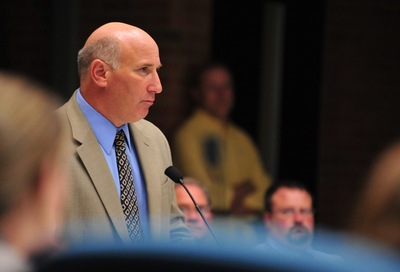
Eli Cooper
Ryan J. Stanton | AnnArbor.com file photo
Participating partners, including the city, the Downtown Development Authority and U-M, are expected to contribute financially. The program will earn additional revenue through membership fees and advertising.
The Ann Arbor Transportation Authority is facilitating the proposed program, which allowed the CEC to obtain a $600,000 federal grant to assist with funding. The grant must be complemented by a 20 percent local capital match, according to CEC officials.
The AATA and DDA boards will have to vote on the authority's financial involvement prior to its participation in the program. City council would also vote to approve the measure, since their financial commitment would be over $25,000.
Officials still are working to establish an exact formula for funding.
"We have not gotten to a final agreed set of terms and conditions," said Cooper, who compared the program with a new business venture. "There remains a number of outstanding questions."
Cooper said AATA's financial burden for the program has fluctuated throughout the planning process. At first, he said, CEC proposed that AATA pay $30,000 a year toward the program for three years. Then, CEC suggested the AATA instead pay a six-figure sum upfront.
AATA and CEC still are discussing AATA's financial participation, which could delay the city's involvement in the program.
"Clean Energy Coalition is now developing agreements for each of the partners, but no agreements have been officially executed as of this date," CEC mobility division manager Matt Sandstrom wrote in an email, adding that "the program is still in its infancy."
Other regulatory aspects, such as signage, also could contribute to a delay in city involvement.
That's why officials have discussed launching the bike sharing program on U-M's campus, and then gradually spreading it throughout the city. Dolen said U-M would like to launch the program in the fall.
Whether the program launches incrementally or all at once, Cooper is confident bike sharing will come to Ann Arbor.
"It just makes sense. It's available, it's relatively low cost, it's a sustainable, green mode of transportation," he said.
The user-friendly system will likely mirror popular bicycle sharing programs in other cities, including heavily trafficked systems in Denver and Portland.

Mary Sue Coleman is a proponent of bike sharing.
Daniel Brenner | AnnArbor.com file photo
In fall 2012, U-M President Mary Sue Coleman recalled what sparked her interest in bicycle sharing. She visited the University of Denver and saw the sharing program the university and city had in place there, which includes more than 500 bicycles and 50 kiosks.
"The bicycles were everywhere," she recalled. "I took photos of all these bike kiosks, came back and said we should do this."
In 2011, bicyclists using the Denver program logged more than 430,000 miles and averaged 750 checkouts a day.
Both the city and U-M's campus have been recognized as bicycle-friendly entities. U-M recently launched a bicycle rental program and installed a series of bicycle repair stations on campus. The school also has increased its bicycle parking. Meanwhile, the city has added roughly 20 miles of bicycle lanes to its infrastructure in the past five years.
The League of American Bicyclists has named U-M one of the 35 most bicycle-friendly universities in the country and Bicycling.com has named the city among the country's top 50 most bicycle-friendly towns.
Kellie Woodhouse covers higher education for AnnArbor.com. Reach her at kelliewoodhouse@annarbor.com or 734-623-4602 and follow her on twitter.
Comments
Joe Schumpeter
Tue, Mar 12, 2013 : 10:34 p.m.
Suggest that you use "smart-lock" approach versus older "smart-dock." "Smart-lock" is a fraction of the cost (which means less money....or many, many more bikes). It is also much more flexible. Getting it wrong now not only costs more now, it costs more every time a system is replaced or expanded. Tampa - the most recent program - chose SoBi. Another hot company is viaCycle (at Georgia Tech, George Mason and Las Vegas). http://inventropolis.com/bikeshare-disrupted/
EyeHeartA2
Tue, Feb 5, 2013 : 3:45 p.m.
Likely more of this: http://www.youtube.com/watch?v=V3nMnr8ZirI
Patricia Lesko
Tue, Feb 5, 2013 : 3:26 p.m.
If Dr. Coleman wants to partner with the CEC and spend her own entity's money on bike sharing, she should. However, not a penny of Ann Arbor taxpayer money should be spent on this latest "greendoggle." Why? Ann Arbor is not Denver. Denver has 619,000 residents. The City of Denver has over 100 miles of multi-use trail, 96 miles of bike lanes, 41 miles of sharrows, and almost 400 miles of signed bike routes. Ann Arbor has 39 miles of bike lanes that are poorly maintained. Over the past several years, taxpayers have paid millions to support non-motorized transportation (including Mr. Cooper's 6-figure salary) for precious little return. You'll find actual numbers here: http://www.a2politico.com/2012/05/may-is-national-bike-month-city-spends-8m-and-increases-number-of-bike-commuters-by-50-cyclists-total/ . @Bob Neeham asks "What services should government provide?" Government 101. The answer? Government provides the services citizens can't provide for themselves: plow the side streets, fill the potholes, fund safety services to meet national standards, root out misuse of public funds by city staffers, provide excellent bus service in exchange for a dedicated millage that costs taxpayers $8-$10 million per year. Our family has bikes; we ride AATA regularly. However, while AATA gives residents of Chelsea and Ypsilanti, downtown merchants and U of M students discounts, the children of Ann Arbor taxpayers who travel to and from high school using AATA get no comparable discounts. For $2M dollars one could purchase 10,000 bikes. However, with $350M per year the City of Ann Arbor can't manage to keep bike paths maintained year round, fill the potholes, pave the roads, plow the side streets, get a bus rider across town in less than 1 hour, provide adequate fire response, fund beat cops and provide robust proactive community policing.
Akmon
Tue, Feb 5, 2013 : 1:57 a.m.
Glad to see this coming to Ann Arbor. I've used similar programs while traveling to Minneapolis and D.C. for work. The sharing programs are easy to use and reliable, especially when paired with an app for mobile phones that provides info on kiosk location and real-time bike availability.
PSJ
Tue, Feb 5, 2013 : 1:24 a.m.
Bikes are efficient and inexpensive! I own several, and a helmet. Those who wish to bike, whether occasionally or frequently, should follow my lead and purchase a bike with THEIR OWN funds.
buvda fray
Tue, Feb 5, 2013 : 1:20 p.m.
Bryan, it's true that bike storage is a concern. It might make more sense to take this effort and turn it into a proposed ordinance that prohibits discrimination based on transportational preference. For example, I cannot bring a bike into my building because the sign prohibits it. I have come to accept this indignity but with the help of you and my fellow citizens, I may one day lift my head high and remain accompanied by my two wheeled choice of conveyance all they way to my interior destination. Bike sharing is nothing new. Someone shared my bike on campus in 1985 and they haven't shared it back to me yet.
Bryan Ellinger
Tue, Feb 5, 2013 : 2:10 a.m.
Visitors and students who don't have storage and maintenance facilities will benefit from this bike share. Sweet helmet reference.
Nicholas Urfe
Tue, Feb 5, 2013 : 1:17 a.m.
This allows people to ride a bike to a destination, like shopping, and then drop the bike at a kiosk and take a bus home, or catch a ride. This allows people to bike into work in the morning, when it is cool, and take the bus home when it is hot. Or IF IT RAINS. Or when they have an errand. Or again, catch a ride. This is useful even for people who own bikes, and have secure storage for their bikes.
tom swift jr.
Tue, Feb 5, 2013 : 12:55 a.m.
What a terrible waste of tax dollars. As mentioned above, if this is a viable model, let it be done by a private company (Avis anyone?). If you can afford the cost of U of M tuition, you can afford to buy a $100 bike at K-Mart.
Bryan Ellinger
Mon, Feb 4, 2013 : 11:45 p.m.
Thanks to Radlib2 for making the case for effective cycling in Ann Arbor.
Radlib2
Tue, Feb 5, 2013 : 1:22 a.m.
You are welcome! :)
sean
Mon, Feb 4, 2013 : 11:40 p.m.
It's like the city just can't stop spending money on inappropriate things. So, $2 million a year for people to rent bikes? What sense does this make when you don't even have the infrastructure of usable, safe bike paths/lanes to ride on? I see a lot of motorists on here complaining about cyclists being on sidewalks and not obeying laws. Look around the proposed area for these rentals (i.e. downtown). Outside of in direct traffic where else is there to ride besides sidewalks? Trust me, we don't want to be there either. It's dangerous for pedestrians, cyclists, and motorists. I have never seen a city with such high taxes that still has such horrible roads, lack of road maintenance (no snow plowing, large potholes on a bike- really not good for anybody), and lack of safe road access for the cycling commuters and casual riders they supposedly support. Now you want more people in those conditions?
Nicholas Urfe
Tue, Feb 5, 2013 : 1:18 a.m.
It isn't all about spending every last transportation dollar on cars. A car doesn't make you more important than anyone else.
rm1
Mon, Feb 4, 2013 : 10:57 p.m.
London has such a program, started in 2010, and I've seen bicycles shuffled around from docking station to docking station. It now has 8000 bikes and 570 docking stations, and is still expanding. The program charges a small fee, and got an initial capital commitment of 25 million GB pounds from Barclays Bank, in return for the right to advertise on the bikes and stations for five years. The program seems a great success. Here's a Wikipedia article: http://en.wikipedia.org/wiki/Barclays_Cycle_Hire
Mary Scott
Mon, Feb 4, 2013 : 10:01 p.m.
Why hasn't this project been reported on earlier? I did some research and the CEC received the CMAQ funding almost a year ago. Even worse the AATA with the CEC has already released a RFP to purchase a bike sharing system and will be awarding it at the end of the month. I cannot believe a non profit that has no public oversight is allowed to secretly push for the spending of tax payer money without any type of town hall meetings to discuss the issue. Now that they have pushed everything through without any community input they alert the community in a single article, when it is too late for community input and if and how tax payer money should be spent. What truly gets me mad is that they have already released this RFP to spend taxer money when they don't have all of the financials figured out. The CEC is on record stating that the CMAQ funding is not sufficient, see quote below. What this means is that the once this that once this system is in place that tax player will be forced to pay or watch a system fail and rust on our streets. I cannot believe this is happening in Ann Arbor and hope the community speaks up and prevents this catastrophy from happening. When a well planed PUBLICLY DISCUSSED bike sharing system could be a great benefit to the community. "Ms. Blackmore also questioned whether the funding level proposed by SEMCOG would be sufficient to initiate the bike-share program. Ms. Briggs stated the funding level proposed by SEMCOG would not be enough to initiate the bike-share program. Ms. Briggs added that bike-share programs are new and that there may be as of yet undiscovered funding sources applicable to such a project." March 2012 Technical Packet, Washtenaw Area Transportation Study March 7,2012.
annarboral
Mon, Feb 4, 2013 : 10:30 p.m.
The real purpose of the AATA, DDA. Art Commission, etc. is to give the mayor a "slush fund" that he can direct without going through any political process except his personal whims.
Ken
Mon, Feb 4, 2013 : 10:16 p.m.
SEMCOG would be better referred to as SEMCLOG.
Arno B
Mon, Feb 4, 2013 : 9:59 p.m.
"Operating costs $350,000 annually" ?? Out of whose pockets is this money supposed to come from? I suppose that we could all look in the mirror for the answer to that one! "Federal grant": I suppose that that Michigan's noted Pied Piper (John Dingell) is at work again for our "Fair Share"! Our two new county arrivals in Lansing (recently referred to as "Freshman lawmakers" Driskell and Zemke) plus two "returnees" (Rutledge and Irwin) have all lamented about recent "cuts to education." Since they seem to have all been appointed to money-dispensing committees they can now help our floundering University with bicycle rentals. Rather than proposing varied spending schemes, make the users pay for what they are getting. If it doesn't float, abandon it.
Greg
Mon, Feb 4, 2013 : 9:52 p.m.
Seems some do not understand. As long as it sounds good and gives those wanting it a case of the "warm & fuzzies" that is all that matters. Little things like making it work economically is of no cause to worry, it is only someone else's money...
Jim
Mon, Feb 4, 2013 : 8:41 p.m.
Does anyone remember "The Green Bike is not locked"? That ended up not working out so well.
aggatt
Mon, Feb 4, 2013 : 10:33 p.m.
but these are locked. And you have to put a deposit down to use them. So what's your point?
Ken
Mon, Feb 4, 2013 : 8:19 p.m.
How nice to read that the Ann Arbor Clean Energy Coalition is peddling a bike-sharing program throughout the city, including the University of Michigan's extensive campus. This is just what the city needs in the form of another multi-million dollar, feel-good environmental project. Before more bicycles are turned loose on the streets, it's been long overdue that the police start issuing citations for traffic violations that motorists see almost daily on the city's roads by these two-wheel menaces. Violations observed include barreling through stop signs and red lights; failure to stay within bicycle lanes; and what appears to be in some cases operation while intoxicated or "high." It should be that the police treat cycle operators with the same enforcement zeal as motorists. The driver of an automobile should not have contend with the blatant lawless bicycles at large in Ann Arbor.
Nicholas Urfe
Tue, Feb 5, 2013 : 1:13 a.m.
Bubble burst: bikes don't kill people like cars do. They are not the accident problem that cars are. The priority should be enforcement on drivers who ignore pedestrians, crosswalks, roll through stop signs, fail to yield, speed, etc.
Bryan Ellinger
Mon, Feb 4, 2013 : 11:23 p.m.
Hate to burst your anti-cyclist bubble, Ken, but, "failure to stay within bicycle lanes," is not a "violation" of anything but motorists' holier-than-thou attitude. Ann Arbor's so-called bicycle lanes are a sad joke. We should get rid of them, and then pass a 3-foot-passing law in Michigan.
Radlib2
Mon, Feb 4, 2013 : 8:38 p.m.
Nope, we're no threat to public safety. They do what they ought to do: worry about that which is dangerous. The "laws" don't really make sence with respect to bikes anyway. You are more than welcome o join the ranks of bike commuters. I bet you'd have a different outlook if you did.
daviesk
Mon, Feb 4, 2013 : 7:50 p.m.
As a University of Michigan student having spent a semester abroad in London, I used the Barclay bikes frequently used them to get around the city. The bikes were far cheaper than taking public transportation and the bike lanes made it easy to get around. However, what I found most beneficial was that I really felt like I got to know the city and find the hidden gems. As a student, it sometimes seems that I rarely leave the SouthU/State Street student corridor. Ann Arbor is such a great city and there is so much to see and do in 4 short years. I believe the bike share program would be a great way to get me and other students to really explore the city affordably. I am a huge proponent of the bike share and feel it can really shape student life and extend the student experience beyond the diag.
deb
Tue, Feb 5, 2013 : 1:29 a.m.
Maybe the U should do it then . . .
Nicholas Urfe
Tue, Feb 5, 2013 : 1:11 a.m.
@lynel: This allows you to ride somewhere and then drop the bike at a Kiosk. You don't have to worry about it, about taking it later, about storing it, etc. You can take one of these bikes out to go have drinks, and then walk home. You don't need storage space for a bike. Etc.
lynel
Mon, Feb 4, 2013 : 11:44 p.m.
Why don't you just buy a bike?
Ian
Mon, Feb 4, 2013 : 7:20 p.m.
Rabble rabble rabble I hate good things and happiness why won't all these students just leave.
LXIX
Mon, Feb 4, 2013 : 11:01 p.m.
I know what you mean. The springtime and summer months here are just absolutely wretched. Wickedly peaceful and horribly relaxed. No students at all. Bringing all their happiness and goodness into town.
buvda fray
Mon, Feb 4, 2013 : 7:13 p.m.
This town has a certain population that thrives on weird ideas, granola and sandals. Just don't tell your kids it's normal in case they escape sometime. If they can't drive a stick shift, mix a gallon of 50:1 and clean an 870 by the time they are 18, it's on the parents. They will have to stay in Ann Arbor forever, sharing bikes and gnawing on wheat grass.
Bryan Ellinger
Tue, Feb 5, 2013 : 5:12 p.m.
Sorry, I had the wrong impression of you in this exchange. It seems that your impression of me is equally off base. I guess I walked into that.
buvda fray
Tue, Feb 5, 2013 : 1:13 p.m.
Thanks Bryan. I am mesmerized by your blank stare. You win. You get the key to Ann Arbor. I do not feel remotely persecuted, just constantly amazed, amused, and begiggled (new word) by people around here demanding that everyone keep a straight face and take them seriously when they spend time and money on goofy stuff that has no purpose beyond "we simply must set ourselves apart, no matter the depths of lunacy we must collectively dive into." Just leave a trail of organic bread crumbs if you every venture to leave the city limits so you can find your way back.
Bryan Ellinger
Tue, Feb 5, 2013 : 1:48 a.m.
Yeah, it's Ann Arbor's war on (manual) cars, and guns, and two-strokes. How does it feel to be persecuted? Oh, wait.
buvda fray
Mon, Feb 4, 2013 : 11:44 p.m.
Undoubtedly they haven't a clue. If this thing works then great but a million bucks is hard to take. It will be picketed by some under represented walk and jog activists or the skateboard preservation league or some other self described relevant group I guess anyway. The part that is hard to take is the blank stare accompanying statements that sound to me like "my idealistic program trumps your traditions, common sense and normally expected system."
Dog Guy
Mon, Feb 4, 2013 : 11:15 p.m.
I suspect, buvda fray, that this is being voted down by those who don't even know what those three skills refer to.
LXIX
Mon, Feb 4, 2013 : 6:33 p.m.
Copenhagen started a bike program in 1995. The original 1500 bikes had advertising and used irregular parts. The program was highly praised and earned the European City title as being "most bike-friendly". The program ceased last year. Due to lack of interest in public funding. Out of the 2500 bicycles eventually supplied to over 100 kiosks, some 1500 with advertising still remain. Waiting for their followup program - if any. A refundable 20 Krone deposit coin worth less than $5 secured the unlimited use bicycles. If the DDA is involved that certainly explains the outrageous $2million public cost to start and $700k ongoing cost to operate such a program - somebody is abusing. It should not even be a DDA job security program to begin with. Go away DDA you are still developmentally obsolete. Copenhagen has a population of 557,920. They spent less than $400k and had corporate advert sponsors for their original launch of 1500 bikes.
LXIX
Mon, Feb 4, 2013 : 9:30 p.m.
Choplink. Maybe this works http://www.bycyklen.dk /english/thecitybikeandcopenhagen.aspx
LXIX
Mon, Feb 4, 2013 : 9:24 p.m.
I guess the funding cycle for 2013 was missed but they are back for April, 2014. http://www.bycyklen.dk/english/thecitybikeandcopenhagen.aspx Hey, maybe the Pure Michigan campaign could put some of their $millions of ad money into sponsoring some of those Danish bikes?
LXIX
Mon, Feb 4, 2013 : 8:55 p.m.
Thank you for the update. I trust the Danish government's public sensibility. A lot of blondes there. How about the comparative city size and program cost v function with this one?
Kyle Mattson
Mon, Feb 4, 2013 : 7:44 p.m.
Sorry, here's a link referencing the new program in Copenhagen: http://cphpost.dk/news/local/new-city-bikes-way-after-all
Kyle Mattson
Mon, Feb 4, 2013 : 7:43 p.m.
Just to note LXIX- The program in Copenhagen was relaunched shortly after the announcement of its closure in the fall, partly due to "widespread criticism" of the decision to end it. This new plan actually seems much more in-depth with tablets mounted on the bikes. It will be interesting to see if this new program is more successful than the original one.
Gordon Moore
Mon, Feb 4, 2013 : 6:08 p.m.
While I applaud the effort, it is sorely misplaced. Talk about getting the cart before the horse! There are already enough cyclists in AA who can't get safely around because of the total lack of a sensible bike lane/path system. What good is a free bike use program going to do w/o safe bike lanes to ride them in? Put the money into developing a continuous, sensible, safe bike lane system, then worry about getting bikes to the masses. And to all of the people who complain about bikes on the roads not following the rules, you need to look in the mirror. I moved to AA from a western state about a year ago, and I am absolutely appalled at the way people drive here. Double yellow lines on Washtenaw? Just a suggestion apparently. I've nearly had a head-on twice with someone barreling into my lane to get into a left turn lane while in traffic. Stop signs? I can only conclude that "Stop" means "Roll on" in Michigander. I once watched helplessly in a parking lot while a car nearly drove in reverse at high speed over a woman pushing a grocery cart. Rear view mirrors are apparently only for aesthetics near the Motor City. I am so shell shocked by the things I see on my short commute to and from work every day that I am too terrified to get on my bike. If drivers do this stuff to other cars, cyclists don't stand a chance!
LXIX
Mon, Feb 4, 2013 : 8:39 p.m.
Welcome to Ann Arbor. Did it ever occur to you that when a lot of people relocate to a small popular town, not designed to accommodate overpopulation and resultant traffic, it soon becomes very congested. Traffic congestion is the primary trigger for aggressive driving behavior. And now careless bicycling behavior as well. In essence, don't complain too loudly. Just take a look in the rear-view mirror for anyone to blame.
annarboral
Mon, Feb 4, 2013 : 5:50 p.m.
This is just like our bus system, it's only a good idea if "somebody else" is paying for it. According to the article the city, DDA, AATA and others will need to subsidize this program for costs estimated to be in the millions. Again, if this is such a good idea why won't the peopole that want to use it be willing to pay for the full cost. I'm very tired of people that continually want something for free or lreduced cost because they can get someone else to pay for it.
harry b
Mon, Feb 4, 2013 : 5:44 p.m.
Bike are not very expensive why would you not buy one. Used ones on Craigs list or a garage sale is less than $50. I am assuming most adults going to U of M have a little bit on money.
mw
Mon, Feb 4, 2013 : 5:18 p.m.
A perfectly serviceable used bike (or new bike from Target or Walmart) can be had for $100 or less. In the same rough price range as a decent pair of running shoes. Would anybody think it would make sense for the city to provide residents with 'free' running shoes? Bikes are so little valued that students commonly abandon them on UM bike racks when the leave town and they have to be cut off and discarded. Students would be the main target market for these bikes, but the rental bikes will be much less useful than bikes they own themselves because the students won't be able to ride them all the way home -- they'll have to walk to and from the closest kiosk. Which won't be that close because nobody's going to put kiosks in the 'student ghetto' since vandalism by drunk yahoos would be virtually guaranteed. And judging from other cities where these programs have been instituted, the bikes themselves kind of suck -- they're heavy and clunky and often in poor states of repair.
Brad
Mon, Feb 4, 2013 : 5:18 p.m.
So once there are bikes available will Susan Pollay give up her car allowance and bike and bus like the DDA is constantly advocating for everyone else? As if!
LXIX
Mon, Feb 4, 2013 : 8:24 p.m.
How about if City Hall mandates that all City employees and Committee members walk, bike, or ride the bus at least one day of every week average or lose their job?
Bertha Venation
Mon, Feb 4, 2013 : 5:12 p.m.
It is our duty as peons of King John and City Council to share in their dream of a world with no motor vehicles.
Radlib2
Tue, Feb 5, 2013 : 7:12 p.m.
Oh yeah, the gas you buy supports terror--directly.
Radlib2
Tue, Feb 5, 2013 : 3:46 p.m.
It is a laudable dream to be sure! Better, much much better,for the environment, animals trying to cross the road, and public health. The car is ruining the world. Any fifth grader can see that.
MichU
Mon, Feb 4, 2013 : 4:47 p.m.
This is brilliant. It makes great sense for Ann Arbor.
Brad
Mon, Feb 4, 2013 : 4:41 p.m.
So how are helmets handled? Do you carry your own or "share"? Or do you just go "commando"?
Kyle Mattson
Mon, Feb 4, 2013 : 7:29 p.m.
True aggatt, but I would presume that the most frequent use of the bike sharing would be "impulse" situations where most would not have a helmet on them. As a cyclist I would recommend that everyone wear a helmet when riding, but I understand why some may choose not to when using a rental program.
aggatt
Mon, Feb 4, 2013 : 5:22 p.m.
people bring their own helmet.
Brad
Mon, Feb 4, 2013 : 5:20 p.m.
"I think the assumption of the program is that you are only going to use it in slow, low-traffic situations" I already knew that there were usually no helmets with the bike sharing, I just wanted to see how people would rationalize not wearing helmets. And we're off to a good start.
Kyle Mattson
Mon, Feb 4, 2013 : 4:55 p.m.
Hi Brad- Every similar program I've encountered in other cities like Boston, DC, Barcelona, etc do not have any type of helmet rental. Although I'd ague the safety of this I think the assumption of the program is that you are only going to use it in slow, low-traffic situations. For example, if you parked in the new underground parking garage and wanted to go over to the SouthU area for lunch. Rather than making the 1-mile trip on foot (about 15 minutes) you could hop on one of these bikes and make it a 5 minute trip. Those looking to bike longer distances like commuting to work or class would most likely use their own bike and have the necessary protective gear for traveling on higher-traffic roads.
Barzoom
Mon, Feb 4, 2013 : 4:36 p.m.
This program could be funded by fining bike riders when they ignore traffic laws. Tax dollars should not be used to fund this colossal waste of money.
MyOpinion
Mon, Feb 4, 2013 : 4:31 p.m.
I'm not sure Ann Arbor is quite big enough for such a program. Washington, DC has a program like this, which is quite a bit bigger. Many of the kiosks are near metro stations, which widens the scope of the program instead of connecting the campus to downtown. The DC program does indeed sometimes run out of bikes, but there is a handy bike finder at the kiosk you are visiting, which shows the number of bikes available at nearby kiosks. And, sometimes the opposite happens. If you want to return a bike, there has to be an empty slot available. So, on rare occasions, you have to drop your bike off to a slightly different kiosk than you had planned for. The issue with abandoned bikes, etc. isn't much of an issue as you check out the bike on your credit card. You get the bike for free if the usage is less than 30 minutes. If you keep the bike, you are charged for it. Not sure what happens if it gets stolen - you are given a bike lock to use.
Macabre Sunset
Mon, Feb 4, 2013 : 3:57 p.m.
According to its annual report in 2010, the "highly successful" Denver program (much, much bigger population base) cost $1.25 million for the year and brought in about $400,000. If this were even a remotely viable business for a much larger community, private enterprise would already be doing this. If you want the government to treat your decision to ride a bicycle as a right or an entitlement, fine. But don't pretend this is going to even come close to breaking even financially.
EyeHeartA2
Mon, Feb 4, 2013 : 3:58 p.m.
We have Boulder envy.
Bob Needham
Mon, Feb 4, 2013 : 3:47 p.m.
Friendly question for those who think this is not an appropriate function for local government -- why? Strikes me that this is pretty similar to a public library model. What's the philosophical issue?
LXIX
Mon, Feb 4, 2013 : 7:53 p.m.
I actually believe in government spending as a spur for beneficial activity. In this case that would be less congestion, less carbon, and more healthy exercise with a bent towards more low tech greening around town. However it is questionable. I would really question the core thinking behind this and other "green" programs introduced so far in Ann Arbor. While every little bit does help like individual recycling, when a city as esteemed as A2 encourages the pedestrian life with deadly crosswalk law while pushing mass resource construction projects adding population congestion as all necessary for saving the planet and outsourced recycling and waste contracts costing more than in house work, and gasoline powered city vehicles, I only see a corrupt politic using whatever cloak it finds to carry on its trough schmoozing with cronies.. Why is a new library or convention center more important than a city built solar farm? Why is a new railroad station or trolley more important than fleet of city hybrids? Why is art more important than sanitary water processing or drains that can handle sand instead of only salt? The city needs a coherent "green vision" that its permanent resident population can all trust or at least knowingly tolerate as being an investment in their future. Who condemned the parks or recycling or compost center or community gardens or even self-paying kayak program? This advance is not a great public-hugging benefit for their price. Very questionable reasoning. Again.
deb
Mon, Feb 4, 2013 : 6:52 p.m.
Public libraries are handicap accessible . . . .
Bob Needham
Mon, Feb 4, 2013 : 4:39 p.m.
Thanks
Macabre Sunset
Mon, Feb 4, 2013 : 3:58 p.m.
Simply that budgets are limited. When you add to what you consider the infrastructure, someone has to pay the bills.
EyeHeartA2
Mon, Feb 4, 2013 : 3:57 p.m.
1. The cost - sort of fuzzy (perhaps on purpose?) $2,000,000 start up, +$750K +$350K - is the our top priority for between 2 and 3 million dollars? 2. The "Free money" thing - sure the federal gobment will subsidize the local gobment $ - who pays for all this in the end (besides the Chinese and my grandkids)? 3. I have a hard time equating books, knowledge, police and fire with bike riding (7 months a year)
EyeHeartA2
Mon, Feb 4, 2013 : 3:45 p.m.
Your gobment dollars at work. So, for $2,000,000 (that's six zeros, in case you are counting). You could buy 11,173 (179 each at Meijers) brand new Schwinns and scatter them about town. That would be roughly one for every ten people in AA. I won't be using my allotment, and you can bet Mary Sue Coleman won't either, so there are a couple of open spots there. You could probably paint all the bikes green or something, like was done in the past.
notob
Mon, Feb 4, 2013 : 3:40 p.m.
700,000 to start up and 350,000 annually? No thanks. You know what happened when they tried to do this in Amsterdam? People ended up stealing the bikes. Eventually there were no bikes left.
EyeHeartA2
Mon, Feb 4, 2013 : 6:36 p.m.
I wish we had canals. I suppose the Huron River could suffice.
Allencic
Mon, Feb 4, 2013 : 5:44 p.m.
I think many of the bikes were simply tossed in the canals
Chad Stark
Mon, Feb 4, 2013 : 3:40 p.m.
I too think that the funding for this is trickier than is being discussed...check out the report I did a few years ago when I tried to spearhead this initiative with David Spiro, a fellow student. https://docs.google.com/viewer?url=http://www.graham.umich.edu/pdf/environ391-bikesharereport.pdf
Allencic
Mon, Feb 4, 2013 : 3:39 p.m.
This will be an especially effective program when the temperature is around ten degrees, the sidewalks are unshoveled and the streets are icy. I can see the headline now, "Student crushed to death on icy street by salt truck while riding free green bike."
GoutMouth
Mon, Feb 4, 2013 : 5:30 p.m.
I still see lunatics out riding their bikes today and all of last week. More power to them but I will enjoy my heat and radio :)
easy123
Mon, Feb 4, 2013 : 3:33 p.m.
Another million dollar boondoggle. I really wonder who is going to fund this in the long term
Macabre Sunset
Mon, Feb 4, 2013 : 6:17 p.m.
Even when it was proposed, the city of Madison said it would paying in hundreds of thousands. Do you have a link to an annual report?
aggatt
Mon, Feb 4, 2013 : 4:36 p.m.
Madison, WI.
Macabre Sunset
Mon, Feb 4, 2013 : 3:59 p.m.
Name one, aggatt.
aggatt
Mon, Feb 4, 2013 : 3:49 p.m.
programs similar to this have been profitable in other US cities.
YouSaidWhat?
Mon, Feb 4, 2013 : 3:27 p.m.
Ann Arbor looks mor and mor like China every day. Saddle up comrades.....and remember to put your helmet on and tighten the chin strap!
aggatt
Mon, Feb 4, 2013 : 3:49 p.m.
*more And how does this make us like China? You might want to do some reading on China.
Nicholas Urfe
Mon, Feb 4, 2013 : 3:06 p.m.
I predict this will be very successful.
Brad
Mon, Feb 4, 2013 : 4:54 p.m.
Do you predict it will be *financially* successful, or just "hey - look at how green we are" successful (with the tab picked up by the taxpayers)?
aggatt
Mon, Feb 4, 2013 : 3:48 p.m.
jcj--similar programs have been profitable in other US cities.
jcj
Mon, Feb 4, 2013 : 3:40 p.m.
I predict this will drain money from the city for 3-5 years before it is dropped like a rock!
jcj
Mon, Feb 4, 2013 : 3:39 p.m.
I bet you were also in on the Mayan Calendar Predictions!
DJBudSonic
Mon, Feb 4, 2013 : 3 p.m.
I am going to share with you my experience in helping to set up a program like this, many moons ago, on the UM campus. Long before the cel phone, or the Internet, or credit cards for most of us. "The Green Bikes Are Free" was its name, and it started when a group of us broke college nike-nuts got up around a dozen bikes, repaired them to working order, and painted them completely green. They were tagged with instructions for use, then "freed" on the Diag during an ecology rally. The rules for use were simple, anyone could use a bike, and leave it anywhere in bounds, as long as it was never locked. There was a location the bike could be returned to for servicing. This required cooperation and understanding by the users. For example, you might ride one up to North Campus, and after class you could come out and find it gone! After a year or so the project sort of ran its course. We added bikes to the stable resulting in around 40 total available. Most bikes were found trashed, or locked, or rusting, hidden behind a Frat house or apartment complex. Even for a free program the trust was not there. I suppose that the use of a fee based system and credit card will prevent that in this case. But I wonder where the budget figures come from? If we could provide and maintain 40 bikes for free, at $500 a bike 500 bikes is only $250K. Are we going to pay $100k in engineering studies and signage? Who has their fingers in this pot? And what is the usage fee? Will it be cheap enough to entice use? What is this going to cost the average homeowner, and what are the benefits going to be? I am not against this idea, although you will note in the two pictures illustrating this article the bikes are on the sidewalk, not in the bike lanes. Walking 4 wide with your bike on the sidewalk is not cool, people. Make a line. City council, please check the math before you approve this, it seems kind of pricey. Remember, federal dollars still come from our po
LXIX
Mon, Feb 4, 2013 : 11:42 p.m.
Obviously your advance contribution has helped shared biking become a popular success in many larger cities.. Congratulations for that accomplishment. You helped change the world. Had you only delayed the program a few decades, however, you might have snagged a more visible DDA "green" consulting fee at taxpayer expense instead.
treetowncartel
Mon, Feb 4, 2013 : 5:20 p.m.
DJBUD, I used a few of those bikes back in the day. I also know a few of them were ghost ridden in the arboretum.
easy123
Mon, Feb 4, 2013 : 3:52 p.m.
It obiously did not work for you! Cannot be sustained. The cities where this "works" also has issues. They have already made the assumption that they will make it work under some use tax
DJBudSonic
Mon, Feb 4, 2013 : 3:49 p.m.
At least we tried to do something, to help people, FOR FREE. This was over 25 years ago, before bike lanes, and federal 'green' subsidies. And while some of those bikes ended up scrapped for parts, I saw others still being used five or more years later. So it could only be considered doomed if helping poor students, at no cost to anyone but ourselves, counts for nothing. And if raising awareness of the need for more bicycle use as part of a broader transportation solution counts for nothing. And if encouraging an atmosphere of community good will, and freedom of movement, counts for nothing. And if having a good time with your friends, and fixing bikes that would have otherwise gone to a landfill counts for nothing. Do you think that todays ideas come out of nowhere? Bike sharing has been kicked around for years, waiting for the technology, and the civility, to allow it to work. I would in no way characterize our efforts as failed or doomed.
aggatt
Mon, Feb 4, 2013 : 3:47 p.m.
This program is very different from the one you described. User's pay a fee for access to these bikes, and put a large deposit down in case there is any damage to the bike. Like some other posters have said, it works very well in other cities in the US (and actually makes money!).
Nicholas Urfe
Mon, Feb 4, 2013 : 3:03 p.m.
These programs are proven to work well in other cities. Not unlike car rental services like zipcar. I am not at all surprised the program you were involved with failed. Giving away bikes for free on the diag? Doomed.
DJBudSonic
Mon, Feb 4, 2013 : 3:02 p.m.
That's "bike-nuts", and "Remember, federal dollars still come from our pockets."
Jessica Webster
Mon, Feb 4, 2013 : 2:46 p.m.
Wonderful! This is great news for our little city.
easy123
Mon, Feb 4, 2013 : 3:54 p.m.
little city- This is an empire on the rise!
Macabre Sunset
Mon, Feb 4, 2013 : 2:29 p.m.
For this kind of money, you could simply give away 10,000 bikes in year one, and get more usage. But 10,000 people aren't going to ride bikes, especially during the colder months. Seems like a colossal waste of money.
easy123
Mon, Feb 4, 2013 : 3:56 p.m.
Govts do not invest. We would not have a ton of folks with 6 figure retirements PLUS full health coverage !
aggatt
Mon, Feb 4, 2013 : 3:45 p.m.
jcj--unlike Nicholas I don't have a problem judging others, and I'm judging you right now for your interesting use of capitalization and punctuation...
jcj
Mon, Feb 4, 2013 : 3:36 p.m.
Nicholas Be Consistent even if you are wrong! You Said... Let that judgement flow. So now YOU are judging why others don't bike.
George K
Mon, Feb 4, 2013 : 3:07 p.m.
Except if you give 10K bikes away it generages 0 revenue. I'm glad you're not the one making the business plan here... And in reponse to your previous posts... Governments make investments, and so do private investors. The city is making the right initiative, and if there are private investors they will jump on board. But the important thing is to transition people into biking to work, not to immediately make money for the city (ROI). The money will come with time, but most private investors don't care about society and their wellbeing so they wouldn't initiate such a program. Have some faith in the city, and stop blindly trusting private interests.
Nicholas Urfe
Mon, Feb 4, 2013 : 3:04 p.m.
Those who can do. The rest complain about it.
simone66
Mon, Feb 4, 2013 : 2:17 p.m.
They have this program in London England and many other Euro cities. It's a great idea and I would definitely try it out.
deb
Tue, Feb 5, 2013 : 1:31 a.m.
. . . or use you the bus pass the U has already provided
deb
Tue, Feb 5, 2013 : 1:26 a.m.
Maybe the U should do it then . . .
daviesk
Mon, Feb 4, 2013 : 7:09 p.m.
As a University of Michigan student having spent a semester abroad in London, I used the Barclay bikes frequently used them to get around the city. The bikes were far cheaper than taking public transportation and the bike lanes made it easy to get around. However, what I found most beneficial was that I really felt like I got to know the city and find the hidden gems. As a student, it sometimes seems that I rarely leave the SouthU/State Street student corridor. Ann Arbor is such a great city and there is so much to see and do in 4 short years. I believe the bike share program would be a great way to get me and other students to really explore the city affordably. I am a huge proponent of the bike share and feel it can really shape student life and extend the student experience beyond the diag.
easy123
Mon, Feb 4, 2013 : 3:58 p.m.
Europhiles , here we come. Anything the Euros do, we need to copy. Why do we have an inferiority complex with a place that is already to cost prohibitive to live
jcj
Mon, Feb 4, 2013 : 3:34 p.m.
If they don't have it in Boulder, how could we possibly consider it?
aggatt
Mon, Feb 4, 2013 : 2:40 p.m.
they have it in Madison WI too. Seems to work pretty well there
Macabre Sunset
Mon, Feb 4, 2013 : 2:30 p.m.
I've seen them in Paris. Some people use them. Like anything that costs money, if it's worth while, an entrepreneur would invest in it. The government should not go into this type of business.
racerx
Mon, Feb 4, 2013 : 1:47 p.m.
So, if the DDA is contributing, that can only mean that my fees I pay for parking my car will go towards someone wanting to rent a bike. The same organization that just built a 500 car park in the middle of downtown. How does the city propose the movement of cars getting in/out the city, downtown, in a timely fashion with more bikes being ridden by people who don't follow any laws but their own, "I'm on a bike, you watch out for me." With the reduction of car lanes continuing throughout the city I don't see how this will help the traffic issues in the city. And the answer isn't have more people use bikes. Let the UM propose that student cars not be brought to the campus and require them to use public transportation or bikes. Now that would make a difference if Mary Sue is so excited about the issue.
easy123
Mon, Feb 4, 2013 : 4:01 p.m.
Sorry - Some Ann Arborites are some of the most careless drivers I They seem to own the road. Take a drive down main street sometime . that 45 mile speed limit has become the low end. I feel sorry for the cyclist who ventures down Main.
jcj
Mon, Feb 4, 2013 : 3:31 p.m.
Owning a car is most certainly a right! Now where you are allowed to drive/park that car might be a privilege.
DJBudSonic
Mon, Feb 4, 2013 : 3:06 p.m.
I couldn't agree more about having a no cars on campus policy. We were not allowed a car our freshman year. And it used to be that cars were not allowed at all by students. Of course, cars have come to be thought of, incorrectly, as a right, not a privilege.
Nicholas Urfe
Mon, Feb 4, 2013 : 2:43 p.m.
It is fewer cars on the road, and fewer cars parking downtown. Also, it isn't all about your car. Your car does not make you any more important than anyone else.
Gorc
Mon, Feb 4, 2013 : 1:39 p.m.
Is it possible for the most popular kiosks to be out of bicycles? Is there a process in place to minimize this from happening? I believe bike sharing would be popular in Ann Arbor. And it could be common for bike commuters to experience a shortage of bikes at times. This may sound contradictory...a shortage of bikes means the program is a success. But, being a commuter and relying on the availablty of a bike to get to work could be hit or miss. Explain that one to your boss. Would you consider this to be a reliable source of transporation?
snark12
Tue, Feb 5, 2013 : 10:20 p.m.
I was in DC recently and saw the bikes in heavy use by tourists.
DeeAA
Mon, Feb 4, 2013 : 7:03 p.m.
In Washington, DC, they have a program. The bikes are red and all over town. There was an article in the paper about the vans and staff that restock the kiosks (mainly at night). They evidently have some sort of electronic way of tracking where the bikes are and are not.
fjord
Mon, Feb 4, 2013 : 2:04 p.m.
I've observed these programs in other cities, and I've seen trucks pull up and offload a bunch of bikes to re-stock a depleted rack. Judging from that precedent, I'd say there's a good chance that they'll be re-shuffling the bike supply as needed. Of course, how effectively they'll manage to do that is a fair question, and undoubtedly there will be growing pains in the beginning as they figure out which racks see the heaviest net loss of bikes.
Dog Guy
Mon, Feb 4, 2013 : 1:38 p.m.
Your federal, state, and local taxes granted to a where-did-it-go CEC shell game now shall sponsor three years of hundred-dollar-an-hour bicycling. AATA will buy megamulti racks for sag-wagons and AA will paint more lurch stripes on streets. Has the laudatory final report been drafted yet?
Nicholas Urfe
Mon, Feb 4, 2013 : 2:41 p.m.
What a drag when facts go against everything you say. "n 2011, bicyclists using the Denver program logged more than 430,000 miles and averaged 750 checkouts a day."
EyeHeartA2
Mon, Feb 4, 2013 : 1:18 p.m.
When is the last time Mary Sue Coleman peddled to ANY meeting. ...but sure, it's fine for the "little people".
Brad
Mon, Feb 4, 2013 : 5:17 p.m.
Oh, she has "peddled" plenty I'm sure.
EyeHeartA2
Mon, Feb 4, 2013 : 3:39 p.m.
You're just a great person Nickolas. Of course in MSC's case, we can go ahead and make a reasonable assumption on this very public figures background. @fjord - you are correct, although in retrospect, my version of peddled may have been correct as well - especially considering the way she is selling this idea.
jcj
Mon, Feb 4, 2013 : 3:28 p.m.
Nicholas You say... "So, yeah. I try not to judge people by how fast they walk, ride, climb stairs, etc." But you also said... "Also - a lot of the drivers in this town are dangerous." Maybe you should take some of your own advice and not judge!
Nicholas Urfe
Mon, Feb 4, 2013 : 2:40 p.m.
Let that judgement flow. We don't know her physical condition and health. Her joint health, heart, etc. You can look at someone who appears healthy but who is actually seriously ill. You don't know if someone has titanium rods holding their back together. You don't know if they have only one kidney, with the other one just hanging on. You don't know if they have inner ear disorders that leave them unable to balance on a bicycle. Also - a lot of the drivers in this town are dangerous. Many people don't feel safe biking. You need to be incredibly alert and defensive to avoid getting hurt. So, yeah. I try not to judge people by how fast they walk, ride, climb stairs, etc.
fjord
Mon, Feb 4, 2013 : 2 p.m.
"pedaled"
GoNavy
Mon, Feb 4, 2013 : 12:50 p.m.
I will support this when they take bicyclists off of the sidewalks and put them into dedicated lanes on the street - where they are subject to the traffic laws the rest of us face. As it stands, bicyclists do whatever they want, wherever they want, and follow whatever rules suit them at the moment.
Jules
Tue, Feb 5, 2013 : 2:06 a.m.
There are some people that are dedicated bikers that do follow the laws, but so many casual bikers don't follow traffic rules and bike wherever. There should be more regulations on bikers that do break the laws. I think having this bike rental will be good for the environment, but potentially dangerous for all other commuters.
GoutMouth
Mon, Feb 4, 2013 : 5:22 p.m.
Correct Nicholas, which is why bikers should follow the rules with more care if they have any value on their own life.
Mangohater
Mon, Feb 4, 2013 : 4:14 p.m.
I think the word, some, right after the "As it stands..." It kinda ticks me off that some people on bikes act like idiots, while the majority of us dedicated bike riders share the road, and observe the rules and laws of the downtown areas. It ticks me off that I've been hit three times, by people stopping their vehicles pass the white stop lines in cross walk areas, or people that are too busy on their phones to care about their surroundings!
Nicholas Urfe
Mon, Feb 4, 2013 : 2:36 p.m.
Sounds like a lot of the car drivers I see. The difference is the average weight of a car is 4000 lbs.
deb
Mon, Feb 4, 2013 : 12:35 p.m.
As a resident on the outskirts of the city limits, I am glad that my tax dolllars are once again, subsidizing a program that mainly benefits the U of M and those that live in, or very close to, downtown. Thanks CIty of Ann Arbor. I am glad that the city cried no money when they were cutting fire fighters, police, on-street leaf pick-up, etc. etc. in the last few years, and now have the money for a bike sharing program. I would like to see the city get back to its core values of providing services to the actual taxpayers in this town
Woman in Ypsilanti
Tue, Feb 5, 2013 : 7:17 p.m.
That must be why so many private companies are building parking garages in town. *cough*
GoutMouth
Mon, Feb 4, 2013 : 5:22 p.m.
Private business has already done this in many parts of the world, I imagine because it makes money.
jcj
Mon, Feb 4, 2013 : 3:25 p.m.
Macabre You nailed it! If this had any potential to be a future money maker private interest would have already done it. Any time the government is involved the only money to be had comes from tax payer subsidies.
Macabre Sunset
Mon, Feb 4, 2013 : 2:35 p.m.
Then, George, like any business idea, if the "study" that claims profit in the future has any validity, a private investor will jump at it. The government has no such constraints. Their studies end up concluding whatever's politically correct in the moment, because "researchers" know who butters their bread. Then when it comes time to build, there's no real need for profit, because the "investors" have no choice, being taxpayers.
Nicholas Urfe
Mon, Feb 4, 2013 : 2:34 p.m.
@deb: "I would like to see the city get back to its core values of providing services to the actual taxpayers in this town" Boo hoo. I won't bike so it shouldn't be done? Sorry, but there are a lot of services I don't use that I must pay for. Most commuters I know bike miles each way to work. 3 miles is a short commute. How far do you live? The university is the largest employer in this town, and they probably also employ the most city residents. Those city residents pay property and other taxes. The suggestion that this program does not serve taxpayers is completely off base.
fjord
Mon, Feb 4, 2013 : 1:58 p.m.
As an actual taxpayer in this town, I regard this as a fantastic way to spend my tax money. I don't have kids, yet I'm not bothered by my taxes being spent on schools. Tax revenues should contribute to the greater good, and this kind of bike rental program, like a strong public school system, enhances the overall community and raises property values. So you benefit from it, even if you never use it.
George K
Mon, Feb 4, 2013 : 12:40 p.m.
It sounds like this will be a for-profit initiative. Yes it takes money to start, but once it's going it could be a revenue generator. Not everything is an expense; some things are investments.
George K
Mon, Feb 4, 2013 : 12:03 p.m.
Sounds like a decent idea. I know they've already added a lot of bike lanes, but are there enough for this many potential bikers? It sounds like they will be all over the roads and the sidewalks.
RUKiddingMe
Mon, Feb 4, 2013 : noon
Is this to discourage people from taking buses? Is this targeting people who already own cars but don't own bikes, but might bike instead of using them if they had free oe low rental usage of a bike? Is this expected to be a source of revenue? What is the definition of "success" for this? A2.com, it would be great if you coulc follow this and make sure to get approximately how much they are expecting to pay per bike, how much the city of Ann Arbor and AATA are paying for this program, etc.
Woman in Ypsilanti
Tue, Feb 5, 2013 : 7:05 p.m.
FWIW, I take the bus between Ann Arbor and Ypsilanti frequently. In the summer, I often get off the bus early just to have a little extra exercise. I can totally see doing the same with these bikes. It would be nice to get off the bus early and rent a bike for a short ride to work. It beats riding a stationary bike at the gym.
E Claire
Mon, Feb 4, 2013 : 7:55 p.m.
Hope they also subsidize showers George K. :) Might work for some but I live too far to bike in without working up a sweat.
George K
Mon, Feb 4, 2013 : 12:43 p.m.
I'm guessing that a good employer will subsidize the cost of bike-sharing for downtown employees. So you COULD rent a bike all day and your company has a deal so it's paid for. Companies do the same thing for parking spaces - their employees have a permanent 24-hour parking spot downtown.
RUKiddingMe
Mon, Feb 4, 2013 : 12:26 p.m.
Eeeehhh, I'd be interested to see Eli Cooper's understanding of where these kiosks would be in relation to bus stops. It doesn't seem likely that a majority of kiosks would be located such that a workplace would be far enough from a bus stop to want to bike instead of walk, but ALSO have a return kiosk located there as well (so the person didn't have to rent the bike for a full day while they're at work). Doesn't seem like that would be the case for the majority of bike/bus riders.
Kellie Woodhouse
Mon, Feb 4, 2013 : 12:20 p.m.
Also, I don't think the program is intended to discourage individuals from riding buses. In fact, when I was talking to Eli Copper he said the bike share program could make bus riding easier. For example, if someone didn't have a bus stop near their workplace but wanted to bus in, he or she could feasibly use the bike share to commute the rest of the way.
Kellie Woodhouse
Mon, Feb 4, 2013 : 12:19 p.m.
These are some good questions, and we'll be reporting on these details as they become available.
deputydwag
Mon, Feb 4, 2013 : 11:48 a.m.
The complaint is not that bike riders don't follow the traffic laws they are required to follow when operating in the road, it is that bike riders violations are not enforced. Vehicle drivers get tickets and points. How many tickets are bike riders getting? There is money to be made, especially when budgets are tight. Not sure how bikes riders subsidize motorists. Interesting concept, is there a registration fee for the bike, a license fee to operate the bike, insurance paid to own and operate the bike? Would like to know how bike riders subsidize motorists. Bike riders do hit pedestrians as one hit me while in a marked crosswalk last fall oh and kept going. Didn't stop and identify themselves or see if I was ok. But the police officer in a marked car didn't either. Didn't see the officer chase the bike rider with lights and siren either. Hmmmmmmm Oh well on a lighter note on only 324 shopping days until Christmas to buy that bike for a loved one.....
Radlib2
Mon, Feb 4, 2013 : 8:12 p.m.
Most people don't speed??? Ha! Don't make me laugh. Almost all do so. I don't know what the game is, I'm just trying to figure out why people get so mad about something that doesn't effect them. Yes, we get through downtown quicker, sorry if you feel bested. Sorry if you feel like cut line at intersections downtown. We do what we got to do to get where we got to go. If we wait in line and act like cars, it would take forever.
E Claire
Mon, Feb 4, 2013 : 7:53 p.m.
Speak for yourself Radlib. "Most people" follow traffic laws. No one is mad that you are "winning the game", whatever that is supposed to mean. You make all bike riders look bad.
Radlib2
Mon, Feb 4, 2013 : 5:59 p.m.
Those fees come nowhere near the actual cost shouldered by local, state, and federal gov. Two wrongs don't make a right, true, however, bikers aren't the ones taking pop shots at drivers when there is an article about road repairs or parking garages. tons of people take shots at us ANY time an article comes up about biking or pedestrians. Drivers break the law with the same frequency. The thing is, it is in our nature to point fingers at others instead of at ourselves. When we break laws, we are the ones at risk, so this is why the cops really don't care about it. If people knew they could drive 90 mph on the freeway with impunity, many would. If there is nobody a an intersection, guess what, I'm not stopping, for many of the stops are there as a traffic calming measure. Since I'm going slow anyway, what does it matter? Are people mad that we are somehow 'winning the game' by an ill-begotten way. Stopping and accelerating constantly really sucks sometimes when biking. This is why most of us don't stop all the time. We are not cars, but rather more like robust pedestrians. If I'm going to act like a car, then i'll ride in the middle of the lane. I don't want to do that, so I ride in the shoulder and try to stay out of everybody's way.
Radlib2
Mon, Feb 4, 2013 : 11:26 a.m.
This is outstanding and will only enhance the city and make it more desirable. This is great for public health and well-being, and most of all, the environment. There will always be haters though; they'll be on any time now, whining about the cost even though it is a trifle, or that bikers don't follow the laws. I guess nobody speeds...oh wait, virtually everyone does...I guess nobody nobody accelerates through an intersection after the light as already turned red a does a California rolling stop. Oh wait, once again, most everyone does that too. So much hatred against the bike. People should take into account that bikes don't pollute, kill people or animals, cause congestion congestion or take parking spots, and lowers healthcar costs. What's more bikers subsidize drivers.
Radlib2
Mon, Feb 4, 2013 : 9:29 p.m.
There will aways be outliers--no matter what. The best we can ever do is speak in generalities, or what is most likely. Fine, every great once in a while a pedestrian gets hurt by a bike; and fine every here and there a pedestrian miraculously comes away unscathed...Stealing is morally unjustifiable and is not victimless. Well-known philosophers even concur that running reds is morally justifiable. This is a lousy analogy, hardly worthy of a response.http://www.nytimes.com/2012/08/05/opinion/sunday/if-kant-were-a-new-york-cyclist.html
E Claire
Mon, Feb 4, 2013 : 9:15 p.m.
Actually Radlib, my friend was hit by a drunk driver going well over 35 when we were teenagers. She flew through the air until she hit a building and she got up with nothing more than scraped, really scraped, knees. Richard Bernstein was in the hospital for a very long time and needed more than one surgery after getting hit by a bike. You asked, I answered. Sorry it didn't fit your argument. And do you really think its ok to break the law as long as no one is around? Are you really trying to justify that behavior? By your logic, I should be able to steal whatever I want the next time I go to Walgreens as long as I know I will get away with it.
Radlib2
Mon, Feb 4, 2013 : 9:01 p.m.
Nobody should go through a red light unless nobody is around. Also, we shouldn't steal someone's right-of-way unless waved through, which I must say, many drivers graciously do. It really does make a huge difference to be able to keep momentum. Thank you wonderful Ann Arbor drivers!
Jules
Mon, Feb 4, 2013 : 8:41 p.m.
Are you okaying that people can cause accidents because going through intersections and red lights is okay? The bikes may not "run over people," but while driving, if I'm turning and a biker decides to keep going through a red light through my right of way, it can cause an accident. This happened to me just the other day. I think it's dangerous for the biker and the driver. I almost swerved to the side and hit someone else in order to avoid the biker.
Radlib2
Mon, Feb 4, 2013 : 8:05 p.m.
Well, 35 mph is about the max. a biker can go, and that person didn't die. My point is, automobiles kill people with regularity. If he were hit by a car doing 35, he probably wouldn't be here, would he? Also, 35 is pretty slow for a car isn't it? You showed me one example, sure. Now I can cite tens of thousands of times a driver killed a pedestrian. Trying to portray the bike as dangerous is ridiculous. I know, a few have been hit; however, almost every one of them walk away. How about when a car hits or gets hit by a driver? How many drivers got hurt? Pretty much zero. That's how many.
E Claire
Mon, Feb 4, 2013 : 7:48 p.m.
".I'd like to see an example of someone getting killed--or even seriously hurt--by a biker." Have you not heard of Richard Bernstein??
Radlib2
Mon, Feb 4, 2013 : 5:28 p.m.
Local, state, and federal taxes go into the building and maintenance of roads and parking facalities. Gas taxes and registrations don't come close to paying for them. This is how bikers subsidize drivers. Almost no money has ever been spent on biking infrastructure when compared to cars, so a couple of million is truly a trifle. How much did the underground parking structure cost? Enough for several decades of this program, and that's just one case...I'd like to see an example of someone getting killed--or even seriously hurt--by a biker.
easy123
Mon, Feb 4, 2013 : 4:06 p.m.
Then do not drive around !!!!
DJBudSonic
Mon, Feb 4, 2013 : 3:16 p.m.
Bikers do not subsidize drivers, how do you figure that? From paying all those gas taxes to keep the roads in shape? Wait, that is a car. By paying $150 a year to license your bike? Wait that is a car, too. How is a bike sharing program based on general tax dollars not a subsidy of biking? If $2 million is a trifle feel free to cough it up for all your bike loving friends benefit. I am not against bikes, just against ignorant generalizations.
simone66
Mon, Feb 4, 2013 : 2:18 p.m.
@Greg, bikes do run over chipmunks, I've seen it with my own eyes. Just putting that out there. :)
Ignatz
Mon, Feb 4, 2013 : 1:29 p.m.
I call the line of cars behind an unpassable bicycle congestion.
George K
Mon, Feb 4, 2013 : 12:48 p.m.
"bikes don't pollute, kill people or animals". Bikes are to pedestrians what cars are to bikes. Bikers disregard the safety of pedestrians all the time, much in the same way car drivers disregard the safety of bikers. Bikes are not perfect, they are just another form of transportation. They are not automatically good.
Atlas Shrugged
Mon, Feb 4, 2013 : 11:52 a.m.
OK, Radlib, since you expected it: In my opinion, the cost is not "trivial" in these tough economic times. The notion or fact that some motor vehicle drivers ignore the rules of the road does not negate the fact that many bike riders do the same. As your momma should have told you, two wrongs don't make a right. Indeed, the combination of careless drivers and careless bike riders magnifies the problem. Now, a question: You use derivations of the word hate twice in your short post. What compels you to do that? Can't people who oppose, or simply don't like, a certain idea like this have valid concerns, and don't at all deserve being labeled a hater? I think your screen name, radlib, explains it all.
conundrummy
Mon, Feb 4, 2013 : 11:14 a.m.
This won't have a negative impact on bike sales but probably increase them. These riders are still going to want a bike of their own and may want a nice one instead of the normal beater. The rental program will, however, still be a success.