

The silent epidemic: How heroin is infiltrating Washtenaw County
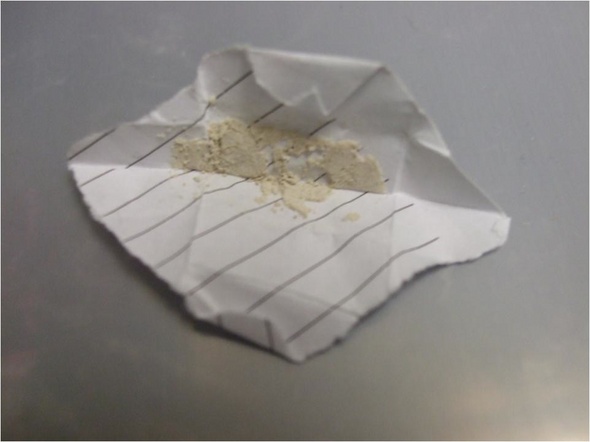
Heroin can come in small, barely noticeable packages like this — folded inside of some notebook paper.
Courtesy of the Washtenaw County Sheriff's Office
Previous story: JoAnna's story: How heroin almost killed her and still tries to steal her soul
Heroin's tracks in Washtenaw County confirm what police and medical experts warn is now a serious problem: There's been an 80 percent increase in heroin-related arrests and a 375 percent increase in heroin sales and manufacturing offenses over three years. By last year, the drug was involved in 30 percent of all drug overdose deaths in the county.
Cheap and addictive, heroin is becoming the drug of choice for hardcore users across Michigan. Driven by the increasing frequency of prescription drug addiction, heroin is the next logical step for the opiate addict.
“I would call it an epidemic. It’s that bad,” said Lt. Jerry Cooley, head of the Livingston and Washtenaw Narcotics Enforcement Team. “It’s Detroit. It’s Lansing. It’s everywhere. Every high school is being inundated with it.
"It’s terrible.”
According to Michigan death certificate files, overdose deaths involving only heroin rose about 186 percent from 2007 to 2009, with the majority of the jump taking place from 2007 to 2008. Deaths involving cocaine and heroin usage — known as a speedball — rose about 57 percent during that same time frame.
Washtenaw County Medical Examiner Jeff Jentzen said there were 20 heroin overdose deaths in the county in 2011. Deaths from heroin overdoses have doubled each year since 2009 — from five that year to 10 in 2010, Jentzen said.
The average age of a heroin overdose patient: 26.
Despite the documented increases in death and crime related to heroin, recent cuts to police forces around the state lead law enforcement officials to admit concern about whether the spread of the drug can be contained.
Officials with the Washtenaw County Sheriff’s Office, Ann Arbor Police Department, Pittsfield Township Public Safety Department and the University of Michigan Addiction Treatment Services all agreed with Cooley’s assessment. Heroin is not an Ypsilanti problem, an Ann Arbor problem or a Pittsfield Township problem. It’s something that’s touching every corner of Washtenaw County.
The addiction
Dope. Junk. Dirt. Smack. These are just four of the unflattering words that heroin is known by in unofficial circles. The fact that many names for heroin are harsh and ugly reveal something about the very nature of the drug and the addiction it causes.
Dr. Edward Jouney, a clinical instructor at the U-M Addiction Treatment Services, said prescription drugs in the opiate family — such as Vicodin and Oxycontin — are linked to heroin use. Prescription drugs are gaining notoriety quickly, Jouney said, even outstripping dependence to alcohol, cocaine and heroin.
“Prescription drug problems, specifically with the painkillers, are like a freight train going down a mountain that’s out of control,” he said. “It’s not just a local problem, it’s a national problem. And it’s a big one. This is something that will kill people.”
Sgt. David Archer, of the Washtenaw County Sheriff’s Office, said that’s consistent with what law enforcement officers are hearing on the east side of the county. Archer works out of Ypsilanti Township and has extensive knowledge of the habits of many heroin abusers in the area who come into contact with deputies.
Prescription drugs can come from almost anywhere: The medicine cabinets of inattentive parents, doctors writing prescriptions or from the street-level dealers who can get them in any number of ways, Archer said.
"They’re easier access for kids. I mean, you can go into mom and dad’s medicine cabinet," Archer said. "The kids get into it and try it, and all of the sudden they’re hooked.
"From what we’re seeing on the street level, it’s really turned in the last five or six months."
However, for the user who becomes dependent on the drugs and wants more of that feeling, there are two big problems with prescription painkillers that heroin solves. For one, pills aren’t cheap: One Oxycodone pill might cost between $30 and $50 on the street, said Detective Chris Fitzpatrick of the Ann Arbor Police Department.
Secondly, the high from a pill taken orally takes longer to kick in than many dependent users want to endure, Jouney said. With a single hit of heroin available for about $10 and the ability to shoot, snort or smoke the drug and get high almost instantaneously, those problems are solved, he said.
The potency of the addiction is directly related to how quickly the addict can be high, Jouney said.
“One of the things that really distinguishes how addictive a drug is is how rapidly the addict gets the high,” he said, adding that most people are shooting heroin. “Typically, the most rapid onset is from inhalation, or smoking. The person smokes it and it goes through lungs and into the bloodstream and then into the brain. Next would be intravenously, which is a very rapid method.”
Initially, the heroin high just makes the user feel good, Jouney said. A sense of euphoria takes over and thoughts about troubles or anxiety are erased, replaced by a floating feeling. However, as the addiction progresses the original chase for euphoria is replaced by the desperate quest for normal.
Heroin withdrawal is an indescribable nightmare. Listing the symptoms — diarrhea, nausea, dilated pupils, watery eyes, runny nose, a racing heart and goosebump flush, among others — hardly does the full extent of dopesickness justice, Jouney said. With withdrawal from the drug coming within 12 to 24 hours after the last hit, desperation can quickly set in.
Desperate cravings can cause a decent person using heroin to turn into a petty crook, Jouney said. Lying, cheating and stealing are usually the first steps a person will take if they run out of money to feed their habit, he said.
“You start to develop cravings and urges, and that translates into compulsive behavior that, to a certain extent, you can’t control,” he said. “That person will go extraordinary lengths in order to get the drugs. That involves stealing, women often prostitute, people will steal from their families.”
“It’s not that they’re a bad person,” he added. “This is just the disease process that’s basically taken over their minds.”
The crimes
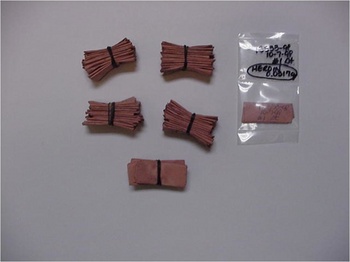
Individual hits of heroin come in small packages, often about $10 for each bindle.
Courtesy of the Washtenaw County Sheriff's Office
Heroin use is nothing new: Branded as a miracle cure for any number of diseases or ailments in the early 20th century, it gained a lethal national reputation in the 1970s and 1980s when celebrities like John Belushi and Janis Joplin — among many others — died with heroin in their system. That reputation continues to this day.
However, Ann Arbor area police say heroin also has another reputation today — it’s a major motivation factor for crimes like robbery, home invasion or larceny.
About 80 percent of the drug busts performed by the Washtenaw County Sheriff’s Office involve heroin, said Archer. Every week, there are three to four heroin busts resulting in arrests by road patrol deputies as well, he said.
One informant told Archer that dealers in Washtenaw County are actually being forced to lower their prices due to the market forces at work.
“It’s cheaper than prescription drugs, and one source told me the dealers are lowering their price because there’s so much competition,” he said.
Pittsfield Township Deputy Police Chief Gordy Schick said it’s not unusual for his department to find the drug as the root cause of sudden increases in home invasions or robberies. After spending three years working at a county jail, Schick said he is never surprised at the depths people will go to when they need a fix.
"Some of the people we’ve come into contact with on the street, they will sell their soul for heroin,” he said.
Pittsfield Township, with its large number of department and grocery stores, deals with many shoplifting cases that are later determined to be initiated for drug money. Late in 2011, officers there investigated the theft of a shopping cart full of meat and hundreds of dollars worth of baby formula; Schick said it’s highly unlikely that those crooks were throwing a huge barbecue or feeding an extremely hungry baby.
iPads, iPods and other electronics are usually frequently targeted items for heroin-fueled thieves, he said.
There is also prostitution taking place in parts of the township that Schick believes is traced to heroin and the desperate attempts to raise money for the drug.
It’s common knowledge in policing circles that upticks in crimes like home invasions can often be explained by even one drug user acting out in an attempt to raise money for his fix, Cooley said.
Although the use of heroin is on par with the level crack cocaine abuse in the 1980s, police said they haven’t seen the violent crime that was associated with crack. However, when there is violent crime, Cooley said it can almost always be tracked back to a dispute over drugs.
“When you have the violent crimes where people get shot and stuff, that’s usually drug related,” he said.
Heroin use also is resulting in another type of crime: At least two people were charged criminally in Washtenaw County with providing the drugs that led to fatal overdoses in the last year.
Ronald Bowman had a charge of delivery of a controlled substance causing death dropped when he pleaded guilty to a charge of delivery/manufacture of a controlled substance less than 50 grams. Bowman was accused of giving Stephanie Gedert, 23, a lethal dose of heroin in August 2011.
Brendan Lathrop faces a charge of delivery of a controlled substance causing death for allegedly providing the heroin that led to Nick Belanger's fatal overdose in January.
Meanwhile, Michigan State Police statistics show that heroin arrests have increased 80 percent in Washtenaw County from 2007 to 2010, when the latest data was available. The increase in the number of heroin sales and manufacturing offenses during the same time period almost seems too high to be true: There's a 375 percent increase, according to state police.
Depressants — and non-heroin opiates such as the prescription drugs Oxycontin and Vicodin — accounted for a larger percentage of the county’s drug overdoses than heroin in the last year, according to data from the Washtenaw County Public Health Department. Forty-one people were admitted to University of Michigan Hospital in 2011 for a depressant or opiate overdose. From April 2011 to March 2012, 61 people were admitted to St. Joseph Mercy Hospital for a depressant or opiate overdose.
In comparison, U-M Hospital saw 12 heroin overdoses in 2011 and St. Joe’s had 11.
The distribution network
Despite the dispersion of the drug across Washtenaw County, it’s a close-to-invisible problem for those not directly affected by an addicted family member, friend or victim of a crime.
Local officials believe much of the drug is coming into the country from Afghanistan. According to police, the big-time dealers are in Detroit, with the city of Ypsilanti and Ypsilanti Township serving as a sort of regional distribution center for the rest of the county.
Deputy Sheriff Jeff Carek said many local dealers drive to Detroit or Inkster to meet their connections and then bring the drugs back to eastern Washtenaw County. From there, the drug is hidden in apartments and houses that are sometimes unoccupied but serve as a junkie’s convenience store, according to police.
Carek said users will often call up their dealers and meet them at a spot, a location that can change a few times in order to throw off any investigators. The fact that the drug can be kept off of street corners and kept within these hidden, secretive deals means the general public might never see a drug deal.
“The old days of rolling into a neighborhood and doing a head nod and buying dope off some guy without ever having met him before are over,” Carek said. “Getting into a group that accepts you (when you’re an undercover officer) is extremely difficult because we have certain rules and limitations that we have to abide by as an undercover.”
Washtenaw County itself is in the middle of things, as far as the distribution of drugs goes, Archer said. To the east is Detroit, south is Toledo, north is Saginaw and Flint and to the northwest is Lansing. All of those cities have a market for heroin, he said.
Nearby Pinckney in Livingston County also has seen heavy usage of heroin, making headlines last year when heroin overdose deaths were occurring at a record pace.
Interstate 94, U.S. 23 and Michigan Avenue are all major pipelines for drug activity, Schick said.
Fitzpatrick, who has run polygraph tests for the Ann Arbor police for the past 13 years and works all drug cases coming from the street, said heroin-related crimes in Ann Arbor typically involved the story of an addict going to Detroit for a fix. However, that’s changed in the last year or so.
“It seems like in the last year now, Ypsilanti is the destination and they don’t go all the way into Detroit,” he said.
The policing
All too often, crime prevention isn’t about solving cases or arresting suspects. Instead, it can be about raising enough awareness to successfully push one area’s problem into someone else’s area.
None of the investigators who spoke to AnnArbor.com felt that the heroin problem could be solved anytime soon. Much of their concern comes from the inability to allocate more officers to fighting the drug.
The budget problems many municipalities are dealing with come at a truly unfortunate time, Cooley said. Washtenaw County is just now seeing an increase in heroin usage and heroin-related crime and he doesn’t even want to contemplate what happens if police budgets continue to get slashed.
“We’re a small unit. We’re a really small unit,” he said of LAWNET. “We used to be more than twice as big as we are and could cover a lot of area. I get really frustrated … there are so many things (investigators) want to do that we can’t get to because it’s so tough.”
“The budgets are really putting a hurting on us and it’s just bad timing, because the increase in heroin has gone up so much,” he added, pointing out that enforcement of Michigan’s Medical Marijuana Act and prescription drug investigations also take up much of the team’s time.
Adding to the problem is that there are few, if any, undercover police officers working for local police departments these days.
Patrol officers are trained to look for signs of heroin addiction and possible clues to the drug’s presence, but undercover operations just aren’t feasible, according to Fitzpatrick.
“That’s a LAWNET thing,” he said. “We don’t have the resources at our level to conduct the covert operations for undercover things.”
Most busts done by local law enforcement officers come during traffic stops or arrests, when a user might be suspected of a different crime but have heroin or drug paraphernalia on them, according to police. There are long-term investigations going on into a number of Washtenaw County’s heroin movers and shakers by deputies, Pittsfield Township police and LAWNET investigators.
But for the most part, being in the right place at the right time is the best way to police the drug.
“There is activity that takes place beneath a roof, but a lot of it is transient,” Schick said of Pittsfield Township. “We have to be at the right place at the right time or responding to complaints. We rely on informant-based information, confidential hot lines for tips. We do rely on the community for insight because we can’t be everywhere. There’s no direct formula.”
But, as their numbers decrease, investigators around the county are sharing more information and working together more than ever before.
Archer said the sheriff’s office did away with the traditional law enforcement problem of not sharing information on each other’s investigations. Now, in daily briefings, detective and deputies get together and shape a game plan.
Archer leads a community action team in Ypsilanti Township that does preventive work with citizens, trying to get out ahead of criminals. Sheriff’s office spokesman Derrick Jackson said that preventative action is markedly different than how deputies handled the onslaught of crack in the 1980s.
“We kind of reacted,” he said. “Now we’re on the front end of it, and have a unit dedicated to doing preventative stuff and finding the key players in crimes ahead of time before something really, really bad happens.”
Schick said detectives from many police agencies in the county get together on a monthly basis to share information.
It’s a simple idea, but it’s one that might help all investigators in the area work together to lessen the avalanche of heroin coming into the county, he said.
“Will we win the war? No. It’s gonna be here,” he said.
“But you do the best with the resources you have.”
Kyle Feldscher covers cops and courts for AnnArbor.com. He can be reached at kylefeldscher@annarbor.com or you can follow him on Twitter.
Comments
a2citizen
Tue, Jul 10, 2012 : 3:31 p.m.
"Local officials believe much of the drug is coming into the country from Afghanistan." Rather than guess where it came from maybe the heroin should be tested to determine it's point of origin. Afghanistan reportedly produces 90% of the worlds heroin. Mexico ranks second in heroin production AND according to DOJ briefings, MEXICO IS THE MAJOR US supplier. Directly from DOJ publication: "The availability of Southwest Asian and Southeast Asian heroin will remain limited in the United States for the foreseeable future. Although Afghanistan produced an estimated potential 630 pure metric tons of heroin in 2009, most Southwest Asian heroin is destined for Europe, Russia, Canada, Iran, and China." Rather than guess where it came from maybe the heroin should be tested to determine it's point of origin. In 2005 there were 187,493 ER visits related to heroin. In 2009 (latest statisics) there were 213,118 ER visits related to heroin. Too bad the numbers for 2011 or the first six months of 2012 is not available. Those statistics would more accurately tell us if the problem is getting worse. http://www.justice.gov/archive/ndic/pubs44/44849/44849p.pdf
Ron Granger
Tue, Jul 10, 2012 : 1:45 p.m.
This is big business, with huge profits. The people who push and markte these drugs would love for your kids to try them. Just a sample. No need to inject it - just have a snort. Try it, you'll like it. Sadly, there isn't much difference between the herion pushers and the big pharma companies.
Ron Granger
Tue, Jul 10, 2012 : 12:09 a.m.
"Local officials believe much of the drug is coming into the country from Afghanistan." It is unfortunate we can't send some troops over there to deal with this. Maybe some of those drones I keep hearing about. I suppose that would cost too much and take years.
jns131
Wed, Jul 11, 2012 : 12:31 p.m.
I read an article a while ago saying that this country with the aide of our soldiers was to stem the tide of growing poppies and to teach them to do other things. Except that after time, they don't want to wait for the new crop when poppies grow faster then corn and other staples. What needs to be done is to re teach these people that a fast buck is actually going to hurt others. So sad to read because these people are so desperate and we are trying to help them and they just don't get it.
a2citizen
Tue, Jul 10, 2012 : 3:32 p.m.
The obvious solution is to conscript the addicts and send them overseas to fight the battle.
Tru2Blu76
Tue, Jul 10, 2012 : 3:55 a.m.
I tend to agree with your ironic point: it's pretty obvious that OUR addicts are right here at home and there's no need to send our troops overseas to "cut off supply" when the customers are the ones we need to crack down on.
Tru2Blu76
Mon, Jul 9, 2012 : 11:56 p.m.
As with alcohol and other mind-numbing substances: if there was no market, there would be no problem!! So, instead of wailing on the Publicity Wall, might it not serve society better to delve deeply into the motivation for using drugs? Legal or not: that's just serving the interest of the few who DO make the mistake of getting addicted. What obligation do we have to drug addicts? The interest of the majority dictates that an intense campaign be directed at those who display signs that they may want to "indulge themselves" a little bit. I've known people who "like" to smoke marijuana, not out of need but simply out of some bizarre desire. Pot is sometimes called a gateway drug because: most users end up going for the bigger pleasure. And those people I've known all displayed a need to "be better" in some way: richer, more respected, less guilt burdened, more self assured - ETCETERAS. In other words, rather than do the work of self improvement, they chose drugs to alleviate their sense of being victimized by their own weaknesses. Not a single exception to this have I seen or even heard of (excluding phony claims to the contrary). Just about every drug user I've ever known (going back over 50 years) is now dead. And they all died before age 40. The emotional cost to families and friends is huge, the monetary cost for controlling addicts' behaviors is quantifiable. There are no miracle cures, no way to protect the rest of us: the only sure answer is 100% prevention. Like denying global warming to forestall action, there's no way we can accept illicit drug use without meeting disaster. If this is indeed a national (or global) emergency, the the same rules apply and must be applied.
Tru2Blu76
Tue, Jul 10, 2012 : 3:45 a.m.
@Angry Moderate: "moderate" - about what and in what way do you pretend to be moderate? "Nice logical argument there." -- of course it is, thank you. It's nice to see you've come out of whatever dysfunctional, self-justifying stupor you were in to comment. LOL! And by the way, you "forgot" to offer your own peerless logic in rebuttal, so naturally you've wasted more time delaying your treatment. Typical for your lot. :-) "50% of the people you know have smoked marijuana." -- Very probably true, and FYI - OVER 50% of those people have decided they could solve their problems without the aid of illicit drugs and ceased taking them. Of course, you're in the minority who failed to stop, so naturally you resent being pointed out as needing corrective enforcement or self improvement. You've got a lot to learn and a lot of work ahead of you -- why not start now?
Angry Moderate
Tue, Jul 10, 2012 : 12:08 a.m.
Everyone who disagrees with you must be "phony" by definition. Nice logical argument there. P.S. - 50% of the people you know have smoked marijuana.
Huron74
Mon, Jul 9, 2012 : 9:47 p.m.
I know a lot of alcoholics. Some "high-functioning", some not. The hf's get up, go to work, live their lives, get home and then crack open a 12 pack or a fifth of their favorite booze and drink until they pass out. Not very pretty, but the only people they hurt are themselves. I believe that if people could legally buy and use heroin, morphine, LSD, methamphetamine, cannabis and all the rest that we as a society would be much better off, with our civil liberties intact, police resources devoted to dangerous crimes, and would leave us without rich, powerful, and dangerous criminal enterprises devoted to selling the dope to the dopes. The dopers could get a reliable, chemically pure version of their favorite poison and the paraphernalia needed to use it without all the clandestine fooforah involved now. This sensationalized scare story about the newest drug epidemic is just the perfect thing to get people all geeked-up for another round in the never ending drug wars IMHO and score some more clicks for AA.com.
Huron74
Tue, Jul 10, 2012 : 5:23 a.m.
Sorry you don't get it True2Blue76. Drug addiction is ugly and destructive no argument there. But we can and should regard addiction a medical problem which is to say a problem that is handled by medical and therapeutic means, not by cops, courts, prisons, and bureaucrats. In my experience most alcoholics manage to function well enough to get by (i.e., out of jail, a roof over their heads, and employed) not that they were thriving. Those that aren't tend to end up on the street or places like CTN. You, me, and everyone else is going to pay for this problem. It's only a matter of how and how much. I'd prefer to pay heroin addicts to get maintenance dosages, or treatment but otherwise be left alone so they can try to cope or failing that not be under pressure to traffic or commit crimes to obtain heroin or whatever they use. Sending police to arrest them and then running the addicts through the revolving door of courts and jails solves nothing and arguably just makes it worse. So, "cui bono" then? Cops, bureaucrats, lawyers, prosecutors, prison guards, politicians, cynical news story writers, but most of all the organized criminal enterprises that supply and sell. They make a fortune. The current junkies vs. narks model we use now is like burning your house down to get rid of mice. That's how I see it. Bottom line: Like it says in the Hypocratic Oath- "First, do no harm." Additionally: treat the addict, mitigate violence, prevent disease, and disable the criminal traffickers by ending their end use market.
Tru2Blu76
Tue, Jul 10, 2012 : 3:33 a.m.
And who cleans up after the passed out "high functional" alcoholics? Some "high functioning" alcoholics" -- is just what actual percentage of the total number of self-destroying addicts? The majority? I think NOT. And who will end up paying (through insurance costs) for the medical care these drug addicts inevitably need (and expect)?
Basic Bob
Mon, Jul 9, 2012 : 10:54 p.m.
I buy some of your argument, but it is naive to think that they don't hurt anyone else. There are tremendous emotional costs to the spouse, children, employer, and former friends as these once high-functioning alcoholics spiral into depravity, degradation, and death. The legacy these people leave behind is future generations of alcoholics, addicts, and abusers, some high-functioning and some complete train-wrecks.
jusayin
Mon, Jul 9, 2012 : 8:27 p.m.
"The budgets are really putting a hurting on us and it's just bad timing, because the increase in heroin has gone up so much," he added, pointing out that enforcement of Michigan's Medical Marijuana Act and prescription drug investigations also take up much of the team's time. "He" being Lawnet's top cop must have had a brain lapse to even suggest that his unit is enforcing marijuana laws while people are croaking on this stuff - breaking into homes to support it, or worse. Are you kidding me Lt. Cooley? Very profound and telling admission...! Very ridiculous use of limited resources and lastly very unrepresentative of your community! BAD policy = bad policing = poor results = a heroin epidemic in our communities. All hrs. spent enforcing weed laws should be returned to the taxpayer. All efforts to stamp out dangerous, family destroying, society destroying drugs like heroin ~ especially amongst our youth ~ should be funded abundantly. But, of course with our current batch of right wing crazies in control of funding our police ( in their eyes -- probably in their neighborhoods also...this is a poor peoples problem, not any concern of theirs)...we're outa luck .
DBH
Mon, Jul 9, 2012 : 7:49 p.m.
As for prescription opioids, it has just been announced that the FDA will require drugmakers to train health care professionals in the proper use of the medications. It will not solve the problem of misuse, of course, but it will be a good start. It is disappointing to me, though, that any health care professional would ever prescribe such a drug without knowing all of the ins and outs of such a potentially dangerous medication. http://www.businessweek.com/ap/2012-07-09/fda-unveils-safety-measures-for-opioid-painkillers
a2citizen
Mon, Jul 9, 2012 : 8:56 p.m.
"...the FDA will require drugmakers to train health care professionals in the proper use of the medications..." The idea that they are considered health care professionals yet still need training in the proper use of medications is scarier than heroin.
dfossil
Mon, Jul 9, 2012 : 7:17 p.m.
It's not just the drug but frankly do you know how quick you get Hepatitis C ? One infected shoot up and you have this little lovely for life! Which will be significantly shorter and not so nice. For all those advocating "legalizing drugs" see what happens with Hep. C when you do that! No, there is no cure, not even close.
Angry Moderate
Mon, Jul 9, 2012 : 11:28 p.m.
Brandon, you can't cover up ignorance with sarcasm. An addict using in a safer environment with medical personnel who can teach them how to get clean is much more likely to recover than an addict using in an alley or under a bridge with negative people who only encourage them to get worse and can't give them referrals to treatment.
Brandon
Mon, Jul 9, 2012 : 11:07 p.m.
More for Angry Moderate, but...Hey...let's just legalize all drugs...let them live their way and everyone else can just take care of the rest of the country! No worries. There are plenty of hard workers to take care of the addicts. Surly they will get tired of all the free, clean needles eventually because so many people just quit using herion on their own. Please note my sarcasm.
Angry Moderate
Mon, Jul 9, 2012 : 8:46 p.m.
Gee, I wonder if places like Vancouver that provide clean needles and trained medical staff to assist with injections have higher or lower rates of HIV and hepatitis infection than the USA.
whale11
Mon, Jul 9, 2012 : 6:09 p.m.
Portugal decriminalized all drugs, including heroin, five years ago with great success. Read the Scientific American article here: http://www.scientificamerican.com/article.cfm?id=portugal-drug-decriminalization
Angry Moderate
Mon, Jul 9, 2012 : 8:45 p.m.
No doubt, their financial problems have to do with decriminalizing possession of small amounts of drugs, nothing to do with banking, trade policy, or global economic conditions.
Goober
Mon, Jul 9, 2012 : 7:38 p.m.
I do not know if I would emulate anything Portugal is or has done - they are in financial ruin.
c'mon now!
Mon, Jul 9, 2012 : 6:02 p.m.
Instead of hand wringing over kids becoming addicted to Heroin, why not question why 90% of the world's Heroin comes from Afghanistan where we have 100,000 troops guarding the opium crop? Why not question why after 911 and The Taliban was run out of Afghanistan the crop proliferated? Why not question why The ATF gave automatic weapons to Mexican Drug Gangs in operation "Fast and Furious?" Why not question why the Federal Government will not secure this border? Some things are a little bit obvious and some are a lot more obvious.
Dennis
Tue, Jul 10, 2012 : 2:57 p.m.
Do you honestly think the US can police the world? We have one of the longest borders in the world and the highest GDP. The US border will never be secured. If they did secure the mexican border there are thousands of miles of Canadian wilderness that can be easily crossed. Drugs will always find a way into the country. If we focused our money on treatment, instead of trying to stop drugs at the source we wouldn't have to worry about operations like "fast and furious"
UlyssesWrong1
Mon, Jul 9, 2012 : 5:50 p.m.
Good article. A lot of people don't know that heroin use has been on the rise with younger people recently, and it has become an especially increasing trend in the rural towns surrounding Ann Arbor. Heroin prices are down so this new generation of 'I'll-try-anything-once!' drug users are getting in on it, and of course it is having some very bad results. Talk to people about the dangers of real drugs, too many people have the 'I'll-try-anything-once!' attitude which is really something that contributes to the problem more often than people would believe.
UlyssesWrong1
Mon, Jul 9, 2012 : 5:56 p.m.
And to blame these people who are addicted to drugs is pretty much useless drivel which does nothing to address the problem other than massage people's egos and give off a false sense of superior morality. If you care at all about your fellow man you would do what you can to help people in need, not post comments ridiculing people on the Internet. But, as we all know, many people would prefer to write all day about it and never make an effort to help due to their own twisted views on our society.
Psudolus
Mon, Jul 9, 2012 : 5:29 p.m.
Heroin, it's not just for Pinkney any more.
leaguebus
Mon, Jul 9, 2012 : 5:28 p.m.
It is amazing that so many think that more Police and more money will solve this problem. It never has. We tried to abolish alcohol and that didn't work, it just created a huge amount of well funded organized crime syndicates. We have loaded up the jails with marijuana criminals and none of the Mexican cartels have gone out of business. There has been a meth epidemic in rural America for a long time but all the enforcement in the world has not stopped people from doing it. Now its heroin. What we need to stop is all the crime associated with using addictive substances. Instead of jailing all the users who get caught, we need to refer them to addiction clinics. We need to treat them with the hope that they will stop this behavior. If they don't stop, we need to send them back to the clinic, but this time prescribe the addictive substance to them. If they want to use, let them use. We can make sure that they get regular medical checkups, get known doses of the addictive substances which will certainly help with overdoses and continue drug counseling. The nay sayers will say that more money to counseling as opposed to jail will create a huge rise in the amount of addicts. Read the Wiki article below to see what happened in the Netherlands when they tried this approach. http://en.wikipedia.org/wiki/Drug_policy_of_the_Netherlands
Brandon
Mon, Jul 9, 2012 : 10:48 p.m.
I respectfully disagree. 94% of first timers convicted of narcotics offenses are offered sentence mitigation. Complete a drug rehabilitation program and get your conviction suspended or wiped altogether. It takes someone willing to get clean/better to stop the progression. Unfortunately our prisons are filled with 2nd, 3rd, 4th...time offenders, not first timers. And plenty of those "completed" these programs. Is it the program or is it the individual. They must be willing.
mbill
Mon, Jul 9, 2012 : 5:02 p.m.
375, 80, 30 percent increase, it must be 30,000 people trying to invade my home, war, avalanche, fear mongering for funding? Sounds like I'll be needing more than a shotgun. prohibition worked? so more money for law net is the answer? And the end user will just go away? You can't watch a TV show with out being pushed to ask your Dr. for more drugs.
jns131
Wed, Jul 11, 2012 : 3:32 a.m.
Doctors are victims of the pharmaceutical society. I too do not take anything except a few aspirins to cure my headache.
Basic Bob
Mon, Jul 9, 2012 : 7:04 p.m.
And if you get hooked on one magic pill, they have a pill to fix that. I stop trusting doctors when they become dope dealers.
Macabre Sunset
Mon, Jul 9, 2012 : 4:33 p.m.
I appreciate the facts in this article. However, the moralizing about "good" people not being responsible for their own actions because heroin is so potent? Not so much. It's still a case of someone deciding to commit a crime because that person is incapable of empathy for his fellow man. That person is already broken, and the addiction merely puts pressure on the urge to take. You can't know whether someone is truly decent until he or she faces extreme conditions. Heroin definitely helps with the extreme, but it can't change someone inside.
Macabre Sunset
Mon, Jul 9, 2012 : 8:48 p.m.
I honestly don't care about the drugs themselves. They don't harm innocent bystanders. But even those who are hooked don't necessarily harm others to get that next fix. What I object to is the assumption that the drugs themselves magically transform innocent little Joey (for example) into someone who breaks into houses to steal for that next fix. Joey was not a good person to begin with, and the drug addiction simply put enough stress on him that he acted poorly. If you believe otherwise, then it is incumbent on you to provide the money for Joey's next drug fix, because, even from an economic perspective, breaking into a home and causing $5,000 in loss and damage just to get $50 worth of drugs is not a good bargain for society. My opinion? Lock people up when they commit crimes. Eliminate parole. Keep jails safe, but locked down, so at least an inmate can get through withdrawal. Then we can talk about second chances. I would, though, de-felonize drug possession itself.
Billy Bob Schwartz
Mon, Jul 9, 2012 : 7:26 p.m.
I disagree, Mac. Many times a person makes a really poor decision, and it comes back to haunt them. someone talks them into trying a drug, and they get hooked. From there on, they have less and less control. This doesn't mean they are bad people. It means they are good people who, through a bad choice or series of choices, have lost control. There are many fine people who, if they had never had the first few drinks, would not have become alcoholic. There are many fine people who, had they not been in intense pain in the hospital and after, would never have taken Oxy or its relatives, and thus would never have become addicted to the stuff, and would never have had to come up with the cash to feed the addiction. In many ways, a good, solid, supportive family life helps people to grow into good, solid citizens. But many take a wrong turn on the way through life and end up in disastrous circumstances. Never assume that "good people" don't do drugs, or if they do drugs, they aren't "good people." That's my view, anyhow.
jns131
Mon, Jul 9, 2012 : 4:09 p.m.
I can't remember if it was Dragnet or Adam 12 that talked about Heroin. It use to be injections, then I heard on television you can now get it for like $10 a pop and just sniff it or eat it. A drug of choice again. Very scary to hear this stuff is becoming popular. Wish this stuff was unavailable.
Jared Angle
Wed, Jul 11, 2012 : 8:04 p.m.
jns131, per data published on Wikipedia, heroin has an oral bioavailability of less than 35%, followed by 44-61% for inhalation (smoking) and 57-70% for snorting, all three of which are much less effective than the near-90% bioavailability of intravenous use. Eating the drug is not common.
leaguebus
Mon, Jul 9, 2012 : 5:42 p.m.
What Dennis said. Different drugs come and go as they are fads. AA has had heroin, coke, and meth use for years. Most of the time people used whatever was cheapest and easiest to get. Acid was large in the early to middle 60's as it was legal for a while, then was used illegally for years. In the 80's it seemed that cocaine use was fairly big and it continued until a bunch of AA business owners went to jail which put a damper on that.
Dennis
Mon, Jul 9, 2012 : 4:31 p.m.
lol, heroin never became unpopular. I knew high school kids who were doing heroin in 2002. Ann Arbor just likes to pretend those things don't go on here.
Woman in Ypsilanti
Mon, Jul 9, 2012 : 3:23 p.m.
I would love to see the statistics comparing the risk of driving a motorcycle without a helmet with the risks of overdosing on heroin.
Basic Bob
Mon, Jul 9, 2012 : 6:59 p.m.
Survivors of heroin overdose and traumatic brain injury act surprisingly alike
mbill
Mon, Jul 9, 2012 : 5:09 p.m.
terrorism v. drug war funding/statistics make more sense to compare. How much is real and how much is fear? And how have our approaches worked? What do our leaders think and how are they voting?
Woman in Ypsilanti
Mon, Jul 9, 2012 : 4:58 p.m.
I am honestly not trying to soapbox the helmet issue. I am fascinated by how people perceive risk in different ways and unequally for different things. Consider how much money we spend as a society to deal with the risk of terrorism when that risk is really very low. We are, as a society, very irrational about risk and that has some pretty major implications when one is forming public policy. I guess I am looking for some context.
Dennis
Mon, Jul 9, 2012 : 4:29 p.m.
1. Motorcycle riders don't prostitute themselves for a fix. 2. Why does everyone have to soapbox their issue is every article? Oh and jns131, you can survive a heroin overdose. Lots of hardcore addicts have overdosed at least once.
jns131
Mon, Jul 9, 2012 : 4:10 p.m.
You might survive the head injury. You won't with an overdose.
Woman in Ypsilanti
Mon, Jul 9, 2012 : 3:01 p.m.
Oh how interesting. Just as budget cuts are affecting public sector jobs, all of a sudden there is a heroin "problem" that the police believe can be solved by throwing more money their way. Maybe what we have is a prohibition problem. What if instead of spending more on law enforcement, we spent more on treatment programs? As bad as the physical withdrawal symptoms are with heroin, the physical withdrawal symptoms related to stopping alcohol abuse are worse and yet the cops don't seem too worried about drunks committing property crimes in order to buy liquor. Why is that?
Davidian
Mon, Jul 9, 2012 : 2:43 p.m.
Ok, Heroin did not arrive on the scene yesterday. I think just about everyone knows that it is an incredibly addictive and deadly drug. If you're still dumb enough to try it, that's on you. My sympathy goes to the families of these incredibly selfish and stupid people, but definitely not the users themselves.
Craig Lounsbury
Mon, Jul 9, 2012 : 3:07 p.m.
I see your points. But as a society we face the fallout from the drug. These "incredibly selfish and stupid people" are also both desperate and have a cash flow problem .
Linda Peck
Mon, Jul 9, 2012 : 1:53 p.m.
If people continue to live in ways that are insensitive to children's needs, we are going to see teenagers and adults who are sick and need help. Bottom line. If people continue to believe that tiny little babies can survive happily, no risk, in daycare situations, let alone the little toddlers who get used to being without their mommies, we are going to have problems. People need to give up that second income, live more modestly, and raise their own children in a decent way. Who cannot see this? Schools need to seriously address their insensitivity issues and fix them. We have a degenerated society that lives for "highs" through any means, drugs, alcohol, food, disgusting media productions, hyped up news events, and "enjoying" their own weird behaviors. This is all because they are unable to simply be with themselves, as they are. Why is that? They are bottom line miserable inside. Look at children who are happy and see the difference.
HeimerBoodle
Mon, Jul 9, 2012 : 4:54 p.m.
Since we are using our own opinions and experiences as facts and rules, let me advocate that all mothers work outside the home, participate heavily in progressive politics (including fighting the good fight for equal pay for equal work, affordable daycare, paid maternity leave, freedom from discrimination in the workplace, etc.), and show rather than tell their children how to be strong, independent, successful, non-addicted members of society. That is what worked for me (and my parents before me when women working outside the home was much less acceptable). What a much more appealing paradigm than "barefoot and pregnant so your kids won't do drugs".
mbill
Mon, Jul 9, 2012 : 4:27 p.m.
I grew up in a modest home, so I see what you are saying. My mom did work and I'm not on drugs, I did have a lot of family nearby and grew up in the country, it was a different world. We didn't have lottery, gambling and casinos all sanctioned now by our government. The Beatles sang 'I want to hold your hand' and our parents thought it was the end of the world. Have you tried being Amish?
jns131
Mon, Jul 9, 2012 : 4:11 p.m.
Might want to rethink and stop pointing fingers at each other and watch a movie that tales the real tale of the victims you don't see. Winters Bone is very dark and kind of sad. I won't say much more, but watch it then see if you want to point fingers again.
Woman in Ypsilanti
Mon, Jul 9, 2012 : 3:22 p.m.
Are you seriously blaming drug use on women who don't choose to be stay at home moms? It might help you to know that the vast majority of children raised in families without a stay at home parent do not grow up to use heroin. And even if there was ANY evidence (which there is not) that families with stay at home parents produce more well adjusted children, there is no reason that it can't be the father who stays at home.
G. Orwell
Mon, Jul 9, 2012 : 1:52 p.m.
If the federal government would stop helping to grow opium in Afghanistan (admitted) and importing it into the US, we wouldn't have this problem. The War on Drugs is an obvious scam.
G. Orwell
Mon, Jul 9, 2012 : 4:57 p.m.
They "dumped it" in various countries and made money oFf it. Just as they did during Iran Contra and as they are doing now. The UN, US and NATO are the biggest drug traffickers. And our politicians know it and benefiting from it.
leaguebus
Mon, Jul 9, 2012 : 4:51 p.m.
You forget, the same thing happened in Vietnam. There were poppy growing regions that we needed to appease as that would keep out the VC. So we would buy the heroin and "dump" it. What really happened, brief cases of the stuff would end up on planes back to the US. We could not stop the heroin traffic then, and we can't stop it now.
Mick52
Mon, Jul 9, 2012 : 2:23 p.m.
There is no war on drugs. When there was, one thing they did was attack growing fields.
Sallyxyz
Mon, Jul 9, 2012 : 1:45 p.m.
So, tell me how this a silent epidemic? More heroine abuse, more presc drug abuse, more crimes related to drug abuse, more overdoses and deaths, more violent crime related to drugs, more prostitution related to drugs, and on and on. This isn't silent, it's right out there. Police agencies are trying to get ahead of it. They know about it and they are working on it. It's all over the state, including Washtenaw county and not just in the historically "bad" areas. It's everywhere. It's not silent.
sigdiamond
Mon, Jul 9, 2012 : 2:34 p.m.
Because by referring to it as a "silent epidemic," the author of this piece is freer to use anecdotal evidence, questionable statistics, and otherwise unprovable assumptions. Actually calling it an "epidemic" would mean that he'd actually have to provide real evidence. "Silent epidemic" are weasel words, plain and simple.
superhappyfunbrett
Mon, Jul 9, 2012 : 1:29 p.m.
A lot of people are abusing pills now. For kicks, in free time and even on the job... I think people FEEL like it's less noticeable than being drunk, or even somehow less shameful. That, and it can hit quicker. Younger people (30 and under) especially seem drawn to alternatives to alcohol. I think there are a lot of people who drink - but they aren't abusing it. I think there are a lot more people abusing pharms than what it appears. And some of those people who ARE probably are in denial about it. Because... "alcohol is bad - drugs are bad... but pills are medicine". Personally, I'd place abusing pharms as a greater risk as a gateway than say marijuana. As someone pointed out earlier, some opiates are a tip toe away from heroin. I hope people educate their children (or themselves I guess) about what exactly prescription pills really ARE, and what opiates DO. When you get educated about what will happen to you BEFORE it happens... the highs don't seem nearly as appealing.
Brad
Mon, Jul 9, 2012 : 1:03 p.m.
"Prescription drugs are gaining notoriety quickly, Jouney said, even outstripping dependence to alcohol, [...] " Baloney.
Billy Bob Schwartz
Mon, Jul 9, 2012 : 7:06 p.m.
Alcohol is ridiculously easy to get. Kids get drunk all the time all over the place. They drink in front of their lockers in school, on the bus home,with their friends whenever and wherever. They even make their own home brew. Kids have parties with the parents' liquor cabinet openly available. People over 21 buy all the time for those under. Hey, let's PARTIE!!!! Candy is dandy, but likker is quicker. Oxy is handy, but heroin is sikker. What's the dif? Destructive chemicals are destructive chemicals.
jns131
Mon, Jul 9, 2012 : 4:15 p.m.
Actually I agree with this one sentence. Prescription drugs are out stripping everything else. Children want a fast buzz. We are having a rainbow party. Bring your parents meds and when you arrive? You dump them into a big bowl and grab a few and see what it does. Some do not come home without a trip to the ER. I do read and do hear about this a lot. Very scary indeed. Alcohol is hard to get. Prescription is not.
Chase Ingersoll
Mon, Jul 9, 2012 : 12:48 p.m.
Recovery begins where two people have a completely honest conversation about the nature of their substance use, look deeper into causation, and with an open mind, share the attitudes and actions that enable people to stop using the substances and engage in progressive behavior. Honest, caring and hopeful discussions stimulate the same dopamine receptors that the drug user is satisfying with their drug of choice. Start that discussion and people who are tired of using drugs will keep coming back to engage you and others in that discussion.
northside
Mon, Jul 9, 2012 : 11:43 a.m.
If this article is correct, the heroin problem is an outcome of the much larger prescription drug problem. Rather than spend money on law enforcement to clean up heroin, shouldn't we focus on going to the source - the excessive use of prescription drugs?
jns131
Mon, Jul 9, 2012 : 4:17 p.m.
Got a point. Did you see Nightly News about babies being born to addicted prescription drugs? The incident rate is higher, not sure what the percentage was, but it is higher then it was ten years ago.
YpsiLivin
Mon, Jul 9, 2012 : 2:12 p.m.
Northside, It's not an "either-or" problem. You can spend money and time trying to exercise better control over prescription drugs, but that doesn't and won't touch the secondary problem of the demand for heroin as a prescription substitute or the problem of the users whose primary preference is heroin. You have to attack all facets of the problem simultaneously. At less than $10/pop, heroin is now a "starter" drug, not just a cheap substitute for more expensive prescription drugs that addicts can no longer afford. At that price, high school and college students (abundant in these parts) are prime targets for heroin dealers. And smoking - not injection - produces a faster, better high. Kids may not be willing to inject themselves initially, but they can light up and smoke easily enough. Many prescription drugs that end up sold on the streets are actually stolen, either from patients with legitimate prescriptions, or from pharmacies. Tightening enforcement on the dispensation of prescription drugs won't eliminate the problem. It will only put additional restrictions on those who acquire the drugs legally. You can't attack just one facet of the problem and expect to make progress. You need to attack a drug and its substitutes at their sources. You also need to attack the distribution points, and finally you need to attack the points of demand. You can argue the point that if there were no demand for this stuff, it wouldn't sell. You're absolutely right, but human nature being what it is, you're never going to eliminate 100% of the demand for this.
Kat
Mon, Jul 9, 2012 : 2:02 p.m.
Absolutely.
superhappyfunbrett
Mon, Jul 9, 2012 : 1:13 p.m.
Treating the symptom obviously isn't working. Wish more people had the sense to focus in on the causes of our ills. But I suppose it's hard for a lot of people to focus when they aren't educated about a specific subject. That, or it's more profitable to pretend you're ignorant. But yeah... I totally agree with your statement. And it's frustrating to see leaders who don't view things in a similar way. (Society rarely gets to the root of a problem.) Band-aids on flesh wounds, and we only do that once a problem has reached a severe level. Yikes.
Brad
Mon, Jul 9, 2012 : 1:02 p.m.
Bingo!
Billy
Mon, Jul 9, 2012 : 11:30 a.m.
Ok kids...so this morning I guess we have to talk about improper use of statistics.....I really shouldn't have to talk about this with JOURNALISTS......but then again....what site am I on again? "There's been an 80 percent increase in heroin-related arrests and a 375 percent increase in heroin sales and manufacturing offenses over three years." aaaaand those "percentage increases" mean little to NOTHING if the core numbers were already extremely low......why don't you post those statistics and show us EXACTLY what that increase was... If there were 20 heroin arrests in 2008.......and now they have 36 arrests in 2011....that is NOT a significant increase....nor does it indicate any kind of "problem." Now on that SAME note.....why the two drastically different statistics for almost IDENTICAL 'crimes?' What is the difference between "heroin-related arrests" and "heroin sales and manufacturing offenses?" No really, what is the difference? And why is one only an 80% increase versus 375% "By last year, the drug was involved in 30 percent of all drug overdose deaths in the county." Um....ok....what other drugs do people overdose on again? Again....if the total number of drug overdose deaths is about 15.....that means about 5 of them was from heroin.... Now what was my point in all this? You used SKEWED STATISTICS to establish the thesis statement that "THERE IS A HEROIN EPIDEMIC." Then ran with it. Sorry...not letting you get away with that. Now WHY would organizations like LAWNET be lying about a heroin 'epidemic' you ask? Think about how their funding has been going since medical marijuana got passed in this state? The majority of their funding comes from TWO sources.....government subsidy.....and seizures. They've had a SEVERE decline in seizures, so they need to make their money elsewhere. What better way than convincing everyone there is this "new" epidemic. Be by guest and "prove me
CincoDeMayo
Tue, Jul 24, 2012 : 8:39 p.m.
While I agree statistics can be skewed and abused, and may not be as useful without knowing the hard numbers, they can still highlight a problem. The number of arrests, hospitalizations, and overdoses that are recorded are only the "tip of the iceberg", so even if the number that increase is small, the percentage increase gives an idea of what the overall, unseen problem may be. I have seen personally an increase in the number of 18-22 year olds from Ann Arbor using heroin. I am no fear mongerer, and actually disdain fear mongering. This issue if heroin that we have here is scary. And I think parents should be very concerned even if you think your child would not try it. Their use if prescription drugs may have been over looked by you. Heroin us super available and affordable. The ability to smoke iornort a highly potent substance has made it less fearful and ugly. And the use of it less noticeable.
Forever27
Mon, Jul 9, 2012 : 3:52 p.m.
@mick, you had my support until that final part. Marijuana legalization has nothing to do with heroin use.
Mick52
Mon, Jul 9, 2012 : 2:21 p.m.
Great point Billy. Statistics do not always mean anything and a change like this can be due to a number reasons. The fact that more got caught one year over another means nothing in terms of how commonly crime are committed. With the lax attitude toward marijuana now in Michigan this was expected.
a2citizen
Mon, Jul 9, 2012 : 1:28 p.m.
I don't know if there is an epidemic or not but (according to my nephew in Dearborn) Pinckney High School is known as "Heroin High". For a high school serving a community of 2,100 people to "earn" that reputation 50 miles away, true or not, indicates there is a problem at some level.
mohomed
Mon, Jul 9, 2012 : 11:30 a.m.
This is why I got a Herion Card to along with my Marijuana one. A "Wise" professor once told me in college he would have no problem paying for people to get high all day on any drugs they want. Perhaps we should raise taxes pay for people to get high and drunk all day and then perhaps crime would go down so they wouldn't have to steal. Doesn't this seem like a good idea?
jns131
Mon, Jul 9, 2012 : 4:18 p.m.
Doesn't that go hand in hand with Obama Care?
mohomed
Mon, Jul 9, 2012 : 1:42 p.m.
I kind of agree but do you still make available certain drugs only through "prescription", and don't forget supply and demand, people will always go to the cheaper of the drugs so many of the homemade ones will still be the "peoples choice" than over the counter drugs.
Johnm
Mon, Jul 9, 2012 : 12:18 p.m.
Better yet, legalize/decriminalize and tax it. Prohibition did not work back in the 20's. All it accomplished was to fuel the profits of the mafia and the Kennedy's. We have spent so much money on the "Drug War". Legalize/decriminalize them and tax them. We rake in the tax money, stop blowing money on the war, lower the number of people dying from not knowing what they end up getting and OD'ing, and significantly lower the crime rate. This concept seems to work in other countries?
DennisP
Mon, Jul 9, 2012 : 11:26 a.m.
While not a panacea, I want to draw people's attention to at least one promising means of treating this type of terrible addiction as recently highlighted in the Detroit Free Press: http://www.freep.com/apps/pbcs.dll/article?AID=2012207080589 Apparently, Vivitrol is effective as a means of helping hard core addicts break their addiction. While expensive on its face, the societal and medical costs overall are far cheaper than having to deal with repeated ER visits, bookings, arrests, larcenies and drawing others into the web of drugs. It's not a cure-all, but it sure caught seems promising. My anger is directed in large part towards all the pharmaceutical companies that produce opiate-based painkillers (Oxycontin, Vycodin) for profitable sale and to all the practitioners that prescribe the stuff for just about any complaint of chronic pain that in the past would have prompted a doctor to offer aspirin. It's clear that these are a awful, heroin-like gateway drugs for anyone who is prescribed them or anyone who gets them out of the cabinet. I find it ironic that our Atty General and City Att put all sorts of money and resources into wars against medical marijuana while resources to fight the abuse that initiates from these "legal" drugs goes unchecked. A pusher comes in many forms. Just because one is corporate with a big lobby doesn't make it any less nefarious.
Brandon
Mon, Jul 9, 2012 : 10:41 p.m.
I would disagree with your logic. 1. Opium has been used long before any of those companies existed, going back much farther than you might imagine. Opium has been grown for many generations in the exact same places that it is now and it has been cultivated for very similar "medicinal" purposes for almost as long. 2. I can promise you that any addict who willingly walked into any hospital would be given whatever drugs necessary to get them clean. No matter what the cost. But the patient must be willing. That's the rub. It's the chicken and the egg. What came first? The drug or the addict? If you truly think about this it is the human condition...the need to feel good...to take us away from all the bad in our lives...that truly drives us to fulfill that need. Some find it in a good book. Others find it in another person. And still others long for the television, that cigarette, one drink, two drinks, a joint, a hit....you know where this is going. All I am saying is that it is the individual and their degree of control or lack there of (whether it be psychological, emotional, socioeconomic, etc) that drives our drug problems.
Joel A. Levitt
Mon, Jul 9, 2012 : 11:03 a.m.
At root, this is not a police problem. It's just that police crack downs are our traditional cheap and easy, though ineffective, responses. If we are seriously concerned, we have to answer certain questions. Have the fraction of our youths willing to risk addiction increased? How can we find out? If this is the case, why and what can we do about it?
Stephen Lange Ranzini
Mon, Jul 9, 2012 : 11:02 a.m.
My recent Common Cents column also focused on the rising heroin epidemic: www.annarbor.com/news/opinion/ann-arbor-lacks-adequate-policing-levels-to-keep-the-city-safe/
KeepingItReal
Mon, Jul 9, 2012 : 7:44 p.m.
Stephen. You're noticing an increase because young whites are using the drug in increasing numbers. This has been a problem in the African American community for years, yet the mental health system has not addressed it, instead using the criminal justice system as its means of addressing the problem address the problem as it pertains t blacks in Washtenaw County and across the nation. Now that the drug usage is spreading to other population groups, perhaps more attention will be paid to treatment in the African American community. Thanks anyway for being aware of this emerging issue.
AySquared
Mon, Jul 9, 2012 : 11:46 a.m.
Why don't you try stopping this problem then if its so easy?
northside
Mon, Jul 9, 2012 : 11:45 a.m.
And your current comment focuses on crass self-promotion.