

Scholar: Without Penn State scandal, University of Michigan might not have reported its own
A University of Michigan pediatrician's alleged possession of child pornography may never have come to light without the Penn State University scandal breaking last November, a U-M researcher concludes in a soon-to-be published scholarly article.
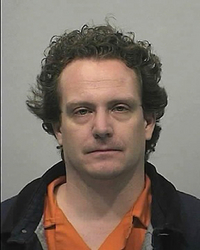
Stephen Jenson
An internal audit of the lapse reveals that at least eight employees knew about the porn by early June 2011 but did not report it.
The issue resurfaced six months later, in November, shortly after news broke that top officials at Penn State chose to cover up eye-witness accounts of assistant football coach Jerry Sandusky molesting young boys. U-M President Mary Sue Coleman sent a campus-wide email reminding people to report possible crimes.
On Nov. 18, three days after Coleman's email, a hospital security official called university police to report the crime. Police began investigating the report on Nov. 21.
"It seems abundantly clear that absent Penn State, the male pediatric resident at the heart of this controversy would have continued his medical education uninterrupted," writes U-M social work faculty Karen Staller, in an article set to appear in "Cultural Studies <=> Critical Methodologies" journal's August issue, which will be dedicated to issues surrounding the Penn State scandal.

Mary Sue Coleman
"Eventually, he would have had extensive contact with children and held a position of public trust," continues Staller, the vice chair of the faculty senate's advisory committee on university affairs. "The university staff, students, and employees who knew about the incident would probably continue to live with an uneasy feeling that something should have been done."
Earlier this week, an external report of the Penn State scandal was publicly released, confirming that top university officials failed to report allegations of sexual abuse and further implicating longtime football coach Joe Paterno in the cover-up.
Staller concludes that the "institutional culture" at both Penn State and U-M partly facilitated the failure to report suspicious activity.
"Secrecy, privacy, and other forms of confidences contributed to the delay" at U-M, Staller writes.
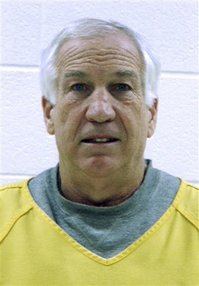
Jerry Sandusky
Associated Press
In her article, Staller highlights how a Penn State janitor witnessed Sandusky performing oral sex on a boy in the shower. Visibly distraught, the janitor told his supervisor and co-workers about what he saw. Yet no report was filed. Employees later told a grand jury that they were afraid to say anything in fear of retaliation.
Later, when discussing the U-M case, Staller said it was "deeply concerning" that the "female pediatric resident who reported the incident ended up leaving the University attorney’s office in tears" and found the attorney intimidating, leading to "a feeling that she should not have come forward with the report."
Staller writes that the internal audit of the six month lapse, ordered by Coleman in December and released Feb. 10, "all but ignores the fact that a pediatric resident was found to have child pornography" and instead focuses solely on the reporting lapse.
In a statement released in February, Coleman said the internal review revealed a "significant breakdown across a number of units responsible for the safety, security and well being of people on our campus" and "shows poor judgment on the part of several employees who could have done more in May."
An external review of the lapse ordered by the Board of Regents is currently underway.
Jenson faces federal charges of possessing and viewing child pornography. Hearings in his case are ongoing.
Kellie Woodhouse covers higher education for AnnArbor.com. Reach her at kelliewoodhouse@annarbor.com or 734-623-4602 and follow her on twitter.
Comments
Rudra N Rebbapragada
Mon, Jul 16, 2012 : 5:48 p.m.
What is Spirit or Soul? I am not talking about fiction or religion. I am simply sharing my view about the nature of true or real man. We have been simply discussing the external behavior of two individuals at two different Schools of Higher Education. At both the places, I witness the same problem. The Institutions and the individuals are not concerned about knowing the true or real man. The real man has moral, and rational nature and hence can discern right from wrong, and make the distinction between good and evil. This ability displays the presence of Spirit or Soul, a vital, animating principle that is associated with basic functions like consciousness and intelligence. When man knows that he has a Spirit or Soul, he automatically uses his sense of discernment and changes his behavior which is conditioned by external influences. The wickedness that is described in this story demonstrates the problem of Spiritual Ignorance at both the places of higher Learning.
swcornell
Mon, Jul 16, 2012 : 4:58 a.m.
I'm sorry, I don't see how these two incidents are even related? How is some guy looking at porn on the internet the same as a grown man having sex with a boy in public showers? I understand that statutory rape is a despicable crime! Viewing porn on the internet, is that really a crime? I get nudity on my TV, am I guilty of something?
YpsiVeteran
Mon, Jul 16, 2012 : 1:02 p.m.
To answer your second question first; the porn involved in the UM case was child porn. I don't believe you are getting child porn on your TV. If you are then yes, you are guilty of something. Images of children being sexually exploited and/or assaulted are against the law, not to mention an abomination. The incidents are related because UM caused the discovery of the images to be kept secret, and did not report the incident to the police for around six months.
UtrespassM
Mon, Jul 16, 2012 : 12:37 a.m.
Associate Dean of the College of Medicine, Dr. Hutchinson recently sent everyone in the health system an email asking people to report occupational safety violation. But did the 16 years old girl know she was put in danger when she was told to process human tissue directly from the operation room.
Kai Petainen
Mon, Jul 16, 2012 : 1:58 p.m.
question -- what day did they send that email?
a2citizen
Mon, Jul 16, 2012 : 1:01 p.m.
Dude, viewing child porn is illegal.
Cash
Sun, Jul 15, 2012 : 6:33 p.m.
Interesting take by an ex-FBI agent. http://www.deadlinedetroit.com/articles/1195/ex-fbi_agent_bo_schembechler_would_have_handled_penn_state_scandal_differently
YpsiVeteran
Mon, Jul 16, 2012 : 1:07 p.m.
That was interesting. The agent is right; there are no "degrees" of honor and/or integrity. You either do the right thing or you don't, and it defines your character.
pu2um
Sun, Jul 15, 2012 : 6:04 a.m.
President Coleman deserves no credit for her email reminder "that a community's values are lived out in the actions of each of us as individuals." The Attending Physician had already raised the issue with the Resident and reported the incident directly to Risk Management Director Boothman on November 11th, four days before President Coleman's campus-wide email. The timing of President Coleman's November 15th campus-wide email seems suspect. According to the internal investigation, on November 12th, RM met with the Resident and immediately briefed Chief Medical Officer Campbell. On November 14, RM contacted Deputy General Counsel Marchak and met with an attorney regarding the incident. It's too hard to believe that the DGC did not immediately report the incident to General Counsel Scarnecchia. If so, wouldn't the GC immediately advise Coleman of the incident? Would Coleman have sent the email without consent of counsel? I should think not. Thus, it's not easy to believe that Coleman knew nothing about the child porn doc when she sent the email. What was her purpose? The warrant against Jensen was executed on December 2, 2011. Coleman was notified immediately and she requested an audit the next day. Yet, on December 5th, Coleman addressed SACUA "about the impact on the University and the relevance of recent events at Penn State" and failed to disclose that the child porn case was on the horizon. What does that say about the role of faculty governance? Coleman's choice of legal firms for the external investigation demonstrates her lack of commitment to the very values she professed on November 15th. And, the Regents appear to have lost control of the institution. The University community deserves better. Nothing short of a transparent investigation, and the charging of everyone involved, will restore integrity to the UM brand. UM's culture of cover-up cannot be allowed to persist.
Arborcomment
Sun, Jul 15, 2012 : 5:31 p.m.
Remember, she was prepping for the Obama visit at the time. Incredibly bad timing for this to come out so soon after Penn State.
Sparty
Sun, Jul 15, 2012 : 3:49 a.m.
Why a trash job, based on hypothetical possibilities at UM. Let the local University haters rejoice and begin their commenting, or as Romney might say COMEBACK to the McCarthy Era.
Arborcomment
Sun, Jul 15, 2012 : 4:52 p.m.
You're on the wrong end of the fishing pole on this Sparty. BB is correct. When did they know and what did they do about it? But a do like the "yeah-but"* in bringing in Romney. *"yeah-but": type of attempted rebuttal bringing in other topics not-related to subject at hand.
Michigan Man
Sun, Jul 15, 2012 : 11:59 a.m.
A2 does seem to have its share of perverts in the medical (Pediatrics) delivery business. Just like PSU, A2 loves that diversity of behavior in its citizens and when suspected child abuse/child neglect laws conflict with the A2 culture, screw the laws. Wonder if East Lansing citizens think the same way?
Basic Bob
Sun, Jul 15, 2012 : 4:33 a.m.
A better analogy would be Watergate. Evidence of illegal activity and allegations of coverup. If that's trashing an institution, they don't need our help.
anotheruofm
Sun, Jul 15, 2012 : 12:49 a.m.
What about person #9 that knew about this Marilyn Hollier Director, Security and Entrance Services at University of Michigan Health System. Are you telling me that she didn't know about this?
Joe Kidd
Sun, Jul 15, 2012 : 1:06 a.m.
Not sure the issue is what she knew. Perhaps it was what her superiors told her to do. Her statement would be a good one to know.
anotheruofm
Sun, Jul 15, 2012 : 12:32 a.m.
Is this the reason why they got rid of the deputy police chief Charles Noffsinger?
Mick52
Sun, Jul 15, 2012 : 12:10 a.m.
Nope. I do not think this is accurate. "On Nov. 18, three days after Coleman's email, a hospital security official called university police to report the crime. Police began investigating the report on Nov. 21." What this article does not point out is if President Coleman's email was the impetus that lead to the "hospital security official" report the incident. Why wasn't that included here? Also who reported it to the UMPD? A hospital security official tells us nothing. AA.com is assuming that is why, as apparently is the author of the article. Does Staller include that in her study, that the report was made because of Ms. Coleman's email? When things like this happen, it almost always comes out. The more people that know about it, the more likely someone will come out with the information. It is incredibly bad management to expect employees to keep secret a major issue. That is a big chit in a bunch of pockets which can lead to a whole lot of protection, inappropriate promotions, etc. Almost like you have to pay off those in the know to keep them quiet, with no regard to the ethics those people hold. I do think the reason, trying to avoid bad press is the same with PSU and the UM case, but the people making those decisions do not understand typical behavior. When a lot of people know about something like this, sooner or later the info comes out. Another thing I would point out is that if public organizations, like a university are perceived as not acting properly, you may see your legislature taking over, passing laws that require reporting, etc, which is why the Clery Act was passed at the federal level.
Mick52
Mon, Jul 16, 2012 : 2:11 a.m.
Exactly. I agree. But the article implies it. The problem here is that Hosp Security should never need anyone's approval to notify UMPD.
trespass
Sun, Jul 15, 2012 : 1:44 a.m.
Hospital Security was not responding to Coleman's email. It was the office of the Director of Clinical Affair who told Hospitla Security to report the incident to DPS after they got the second report. Coleman spoke to the faculty senate executive committee after she had already ordered the internal investigation and told them that nothing like Penn State could happen at UM. She only admitted to knowing about the incident after the delay in reporting was reported by AA.com.
Basic Bob
Sat, Jul 14, 2012 : 8:35 p.m.
At least eight people knew by June 2011. Can we get a list?
trespass
Sun, Jul 15, 2012 : 1:38 a.m.
A2citizen- the chair of the compliance committee is Associate Dean of the College of Medicine, Dr. Hutchinson. The Chief Compliance Officer is Jeanne Strickland. One thing that has not been noted is that one of the major accomplishments claimed by Scarnecchia was to re-organize the compliance procedures. At the time of this incident, the Chief Compliance Officer reported directly to President Coleman. Thus, those that assume that Coleman was way up the chain of command are mistaken. One of her direct reports knew about the incident. Did she tell Coleman?
Arborcomment
Sun, Jul 15, 2012 : 12:01 a.m.
And 6, 7, and 8 have either resigned or moved on. Wondering if #1 has perhaps moved to another teaching institution/residency as well?
a2citizen
Sat, Jul 14, 2012 : 10:01 p.m.
By name: 1. The resident 2 Corbie Wells (a supervisor of security services) 3. Latrice Taylor (security investigator) 4. Brian Eichert (security investigator) 5. Jim Simonis (data security analyst) 6. Suellyn Scarnecchia (now a law professor at U-M) 7. Susan Kay Balkema (attorney at UMH General Counsel) 8. Chief Compliance Officer (possibly Scarnecchia???) By Title: 1. The Resident 2. The Attending Physician 3. Compliance Chair 4. Chief Compliance Officer 5. General Counsel 6. Attorney from Health Systems Legal Office 7. Lead Attorney 8. HHC Security Supervisor 9. HHC Security Officer 10. Data Security Analyst (Health Systems) a2com. the above information was gleaned from your articles
Arborcomment
Sat, Jul 14, 2012 : 9:38 p.m.
As soon as they retire, resign, move on, or make tenure.
Pickforddick
Sat, Jul 14, 2012 : 5:32 p.m.
Everyone involved with this must be terminated from the UofM if there is ever going to be any credibility. It is time to punish those who were wrong and move on.....stop defending the criminals for crying out loud.
VillageJen
Sat, Jul 14, 2012 : 4:13 p.m.
If I knew that a colleague was looking at child pornography I'd have raised so much noise that your ears would still be ringing. But then, I'm not a professional worried about keeping my job. I'm just a mom with a Zero Tolerance policy.
UtrespassM
Sat, Jul 14, 2012 : 3:27 p.m.
If it was not president Mary sure Coleman's email, Stephen Jenson would be still here viewing child porn in "doctors office."-----Thank you, president Coleman! The medical system is "too big to fail", the local leaders can ignore president Coleman's instruction, do whatever they want to do, bulling, covering......
YpsiVeteran
Sun, Jul 15, 2012 : 1:39 a.m.
I think the point of this article is that many people (including me) believe that if Jerry Sandusky had not been arrested the first week in November, 2011, and the other senior PSU administrators charged, then Ms. Coleman would never have sent that email on or around November 15, 2011, and hospital "security" would not have been prompted to act, irrespective of her email.
Scott
Sat, Jul 14, 2012 : 3:26 p.m.
"The only ones who can fix the medical system are the doctors" Dr. Ora Pescovitz CEO U of M health services Base salary $850,000 Bonus $150,000
a2citizen
Sat, Jul 14, 2012 : 4:17 p.m.
#1 on the list of people who should lose their job.
Scott
Sat, Jul 14, 2012 : 3:16 p.m.
Since doctor's are Gods in this country I'm surprised they didn't give him a raise. But he was only a resident. Only good for 6 months.
81wolverine
Mon, Jul 16, 2012 : 1:16 a.m.
My family has already found that the medical community protects their own. Just try pursuing a case of medical malpractice anywhere in the country. Guess who is on the medical review board? Doctors. And since they have control of all the patient records, it's nearly impossible to prove anything unless it's ridiculously obvious. This guy's case was easy because of readily available internet records. Another thing is the courts will side with doctors many times because of their "impeccable credentials". Guess what? They're ordinary people just like the rest of us who make mistakes and commit crimes (me excluded on that latter account). It's time they get treated as such.
Michigan Man
Sat, Jul 14, 2012 : 3:10 p.m.
I thought the smartest people in the nation were at U of M?
TFT
Mon, Jul 16, 2012 : 12:32 p.m.
No. People that stood by and did nothing to help when a child was dieing all because the "Ethics" committee got involved. All I can say is Karma on the UofM for their actions of the past. They have not changed nor will they. They may/maynot fire a few people, but it will still be a club where they look after each others back and not really care too much about the people coming to them for care.
Craig Lounsbury
Sat, Jul 14, 2012 : 4:59 p.m.
I'm not sure a correlation between intelligence and moral compass exists. Ted Kaczynski was a pretty smart guy.
Michigan Man
Sat, Jul 14, 2012 : 4:57 p.m.
BBS - At one time in my healthcare career - I had full responsibility for reporting suspected child abuse/child neglect. I reported 100's of suspected cases back in the day. One of the easier things I ever did was to make the report. My reporting did not suggest guilt, innocence or responsibility of any party - it was done to protect the innocent victims. I do know what I am speaking about - been there + done that.
Billy Bob Schwartz
Sat, Jul 14, 2012 : 4:36 p.m.
This isn't about smarts. It's about responsibility and fear and what you understand to be going on. Unless you have been involved in such a situation, you should consider carefully before making it into an issue of intelligence. A lot of research has been done on not reporting a crime (see the classic case of the murder of Kitty Genovese as a starter, as it led ot much of the research on this.) The law needs to be very clear (I think it is) and people need to be educated about their responsibilities in this kind of thing, and then the authorities need to protect the reporting person against any and all reprisals.
Old Salt
Sat, Jul 14, 2012 : 2:45 p.m.
I wonder just how many more of these insidents have not been reported at the U of M and other schools of higher efucation..
Scott
Sat, Jul 14, 2012 : 3:27 p.m.
You'd have to find out were the bodies are buried.
Urban Sombrero
Sat, Jul 14, 2012 : 2:23 p.m.
One thing about this case, as well as the Sandusky case, that I just do not understand: People witnessed the law being broken (ie, child porn or a child actually physically being assaulted). It was reported to the higher ups in the schools. Yet, nothing came of it. WHY did no one just go to the police? What happened, in both cases, was definitely a crime. Why not go to the cops first? University legal departments and football staff aren't the ones who are there to investigate crime. I don't understand why the cops weren't the first ones called.
Urban Sombrero
Mon, Jul 16, 2012 : 12:05 a.m.
You all make convincing, yet depressing, arguments. Thanks for your answers.
Arborcomment
Sun, Jul 15, 2012 : 2:12 a.m.
Agree Ypsi, And UM had their chance to incorporate hospital security into UM Police either as they stand now or as sworn POs. Didn't take either choice - rice bowls and fiefdoms.
YpsiVeteran
Sun, Jul 15, 2012 : 1:50 a.m.
Yeah Arbor, and I think that's the overriding issue here. As I posted below, in response to UtrespassM, until the university president causes all calls about possible crimes to be routed directly to the real police, as they absolutely should be, she has no claim to any high ground and must be held completely responsible for the consequences.
Arborcomment
Sun, Jul 15, 2012 : 1:25 a.m.
Hopefully, when/if the report sees the light of day - we may see if there is credence to your thinking Ypsi. One point however, if she had immediately picked up the phone, called 911 and reported the thumb drive she had just discovered... She'd be talking to hospital security.
Joe Kidd
Sun, Jul 15, 2012 : 1:19 a.m.
Not quite Billy Bob. You are referring to a state law that requires suspected child abuse reporting. It pertains to a range of occupations all who are required to report any evidence of suspected abuse they see done to a particular child. It does not include child pornography possession. Even though a child was abused by the person producing the image, it is not applicable to that law. If someone saw an image and knew who the child was, that might apply.
YpsiVeteran
Sun, Jul 15, 2012 : 1:07 a.m.
I'm sorry Arborcomment, with all due respect, I get that hospital security performs like most other in-house security outfits except on steroids...take reports, carry guns, whatever...but where you lose me is "what she thought were the proper authorities." What's more likely is she reported as she knew the hospital/university EXPECTED her to. Any adult who's paying even the slightest bit of attention, and especially one with the chops to be admitted to UofM Med School, can tell the difference between a real police officer and a security guard. I fully believe she reported to the agency that she was made to understand she should report to, the agency her employer has gone to great lengths to insert between their little world and the real world, but I don't for second think that she couldn't tell the difference between a real cop and hospital security, if not immediately, then at the very least as the incident/investigation progressed, or more significantly in this case, did NOT progress. Just like at Penn State, at NO time did any adult involved give a thought to protecting children. All anybody thought about was either their own well-being or insulating the university/hospital.
Arborcomment
Sun, Jul 15, 2012 : 12:09 a.m.
Ypsi, if you'd actually worked there, you would understand beyond "noise and crap". Hospital Security acts like the Police, 911 calls are answered by Hospital Security, HHC subdues patients when ordered by attendings, takes "reports" just like a Police officer, "investigates" theft and damage to property. The resident did the right thing and reported, and she reported to what she thought was the proper authorities. After that? Then you'd be correct - noise and crap.
YpsiVeteran
Sat, Jul 14, 2012 : 10:11 p.m.
Urban, short answer: pathetic lack of integrity and unchecked self-absorption. I agree with you completely. Everything else -- all the excuses about being confused btwn. security and police, "the lawyers told us not to," blah blah blah -- is just noise and crap. Report Crimes To The POLICE. How freaking hard is it?
Billy Bob Schwartz
Sat, Jul 14, 2012 : 4:30 p.m.
The law of this state requires public school personnel to report suspected child abuse to the law: particularly the local police or child welfare people or prosecutor's office. If you don't, it may be jail time for you. Don't report to your boss or the bishop or the principal or the chief of staff or the coach or any other person but the police. If you are wrong, so what. Unless you do it as a way of getting at someone you don't like, it's the right thing, and required thing, to do. Same with child porn. Report it, feel good about yourself, and if they fire you for it, file a lawsuit.
Scott
Sat, Jul 14, 2012 : 3:18 p.m.
Because everyone is scared of losing their job these days. On top of that, we've become a nation of selfish people who only care about ourselves.
Arborcomment
Sat, Jul 14, 2012 : 2:34 p.m.
Urban, You ask good questions. In the UM case, the reporting resident thought she was reporting to the proper authorities - UM Hospital Security. They are not the Police and report to UM Hospital Administration - an entity with a self-interest in this matter. She did the right thing but put it in the wrong in-basket and from there... We await.
Another Michael
Sat, Jul 14, 2012 : 1:56 p.m.
http://csc.sagepub.com/content/12/4/274.abstract http://csc.sagepub.com/content/current http://www.sagepub.com/journalsProdDesc.nav?prodId=Journal201379#tabview=title Links to Staller's abstract, the journal's table of contents, and the "about the journal" page, respectively. Let the reader decide whether the line between "scholarly" and "rampantly speculative" might be somewhat blurry here.
a2citizen
Sun, Jul 15, 2012 : 12:43 a.m.
Staller's work is like Freeh's: basically an opinion piece with no new information (except for 1 email Freeh's investigators stumbled across). And damn those emails. The FBI report may not be scholarly, speculative or peer-reviewed poetry. But it will be accusatory. I guarantee the FBI has reviewed every single email from all the concerned parties. So let's agree to wait for the FBI's report. But remember, the FBI does not release reports. They file charges.
Another Michael
Sat, Jul 14, 2012 : 9:16 p.m.
If a reader wants to take this article's use of the word "scholarly" as equivalent to "authoritative," their logic would be equally faulty. The journal gives preference to "risk-taking manuscripts" (when it's not publishing peer-reviewed poetry), and it dedicated an entire issue to the PSU scandal. I haven't read the article either, but this doesn't strike me as a landing point for rigorous scholarship so much as provocative think pieces. Hey, if being compared to the RCC and PSU embarrasses the University into changing its policies to take issues like this more seriously in the future, then that's great. Let's just base our evaluation on the facts, not on false claims of authority. From everything that's available in front of the paywall, it appears Ms. Staller wrote a compare-and-contrast essay. Let's call it that rather than pretending that she's uncovered some sort of causal connection between the two scenarios.
a2citizen
Sat, Jul 14, 2012 : 4:16 p.m.
Mike, very few commenters here are going to pay to read the entire article. But if they want to "rampantly speculate" whether it's "scholarly" based on an abstract their logic would be faulty.
a2citizen
Sat, Jul 14, 2012 : 1:41 p.m.
a2.com: Please correct headline. Change "might not" to "would not"
Arborcomment
Sat, Jul 14, 2012 : 1:40 p.m.
Question: Previous reporting on the UM incident indicated it was a member of the UM Med Faculty that "re-reported" the incident either to Hospital Security (again) or directly to the UM Police in November. Why is it important? Hopefully Staller's article, or more importantly, the much delayed investigative report will touch on the "culture" of the UM medical complex and the roles of security there and relations with staff and residents. Personal work experience there came with anecdotes and general "advice" given to security officers on dealing with residents: 1) they are in a demanding position (understood). 2) they work long hours in a potentially stressful job (understood). 3) back them up in altercations and protect hospital employees and property (understood). 4) they are subject to their own discipline system through the chief of residents and the hospital administration, write a report and leave it at that (see the issue here?) Odds are, the original reporting resident, who left the U attorney's office in tears, found out about #4 above via the hard way.
Arborcomment
Sun, Jul 15, 2012 : 6:36 p.m.
Change: Director of Clinical Affairs requested "re-reporting" and is a member of UM Medical Faculty. Thanks to "Trespass" for keeping track.
Arborcomment
Sun, Jul 15, 2012 : 1:44 a.m.
Thanks, seems the list is growing. Very early A2.com story had a mention of faculty (or it could have been in the comments).
trespass
Sun, Jul 15, 2012 : 1:20 a.m.
The UM pediatrics faculty member did not re-report the incident to either UM Police or Hospital Security. It was reported to Rick Boothman who is in the risk management division of the office of the hospital's chief of staff, Skip Campbell. They still took a week before they instructed Hospital Security to report it to Campus Police.
MikeB
Sat, Jul 14, 2012 : 1:37 p.m.
"It seems abundantly clear that absent Penn State, the male pediatric resident at the heart of this controversy would have continued his medical education uninterrupted," writes U-M social work faculty Karen Staller. If that statement was turned in at a high school English class, it would be an excellent instructional point to a high school sophomore who was trying t become a better writer. It is no different than me saying to a parent "It seems abundantly clear that your child, when they become an adult, will commit a crime and use drugs?" As I have seen evidence of some children turning into adult who use drugs and commit crimes. Faulty logic of this nature, i.e., a syllogism, was written about by Greek Scholars more than 2000 years ago and apparently the flawed logic persists. What we know is Stephen Jenson is no longer there, the University has taken steps to not only rid themselves of the alleged offender and has looked at how their process has failed. A heinous crime committed by an individual and aided by others at the school. Even if the charges are not true the individuals who did not report the incident should be terminated. Ms Staller should learn to write, perhaps remedial English at a local Community college?
Cendra Lynn
Sat, Jul 14, 2012 : 7:46 p.m.
And if YOU want to get an A on your comment, please change "It is no different than me saying" to the correct: "It is no different than MY saying" Just saying...
a2citizen
Sat, Jul 14, 2012 : 2:05 p.m.
Mike, Did you read Staller's paper or just the excerpt in this article? Please read Staller's paper or at least cite the document then, without your own faulty logic, give us your opinion. By the way, I admit I didn't read her paper because it cost $25.00
Craig Lounsbury
Sat, Jul 14, 2012 : 2:04 p.m.
did you read the paper she wrote? Or are you drawing conclusions from the quote you sited? How do you know that quote isn't a summation of information that allowed such a conclusion?
Carole
Sat, Jul 14, 2012 : 1:04 p.m.
This is all totally disgusting to me -- adults preying on children and university officials don't do a dang thing about it. In my opinion, all those who knew and did nothing, should lose their jobs.
Billy Bob Schwartz
Sat, Jul 14, 2012 : 4:21 p.m.
Amen.
Craig Lounsbury
Sat, Jul 14, 2012 : 1:20 p.m.
I agree
Silly Sally
Sat, Jul 14, 2012 : 12:49 p.m.
Hey HEY, ho HO, Mary Sue Coleman has got to GO! It was on her watch and she placed the coverup mechanisms in place. What if she were Richard Nixon? She, to would be yelling Hey HEY, ho HO, Mary Sue Coleman has got to GO!
bedrog
Mon, Jul 16, 2012 : 1:32 p.m.
boy ..you sure do like to repeat yourself ,as if "inanity squared" = good sense.
MikeB
Sat, Jul 14, 2012 : 1:37 p.m.
Yes, you are silly
fairfield
Sat, Jul 14, 2012 : 12:43 p.m.
What this means is that Universities are very much like the Vatican: what matters most is to protect the reputation of the Church or University, then to protect your friends and colleagues, no matter what; children and other patients do not count -- lawyers can silence them or buy them off (or they just die)!
Jojo B
Sun, Jul 15, 2012 : 5:27 a.m.
Let's generalize even more. Any body (institution, company, government, religious organization, etc.) is always more concerned about its power, money, and reputation than the welfare of the little people who get squished in its wake. Only when the masses turn negative and threaten to revolt do you start to care about the little victims. While I don't agree with this, that seems to be the normal ethics... or lack thereof.
xmo
Sat, Jul 14, 2012 : 12:34 p.m.
Let's Fire Mary Sue and the head of the legal department! That's what would happen at any company but since this is a University, I guess we have to give her a raise and move the Legal Department head to a position teaching at the Law School.
Tru2Blu76
Sun, Jul 15, 2012 : 8:33 a.m.
Having extensive insider experience with management in private corporations, I can emphatically say that, if anything, there's far LESS effort put into investigating and reporting crimes of any kind IN corporations. At least with public institutions, there's mandated transparency and accountability. With private companies, the direction is exactly opposite, with a hefty prejudice against "government regulation." So what you say is basically 100% MYTH.
David
Sat, Jul 14, 2012 : 12:23 p.m.
Its not so much the crimes that were committed that have outraged the nation. It is the administrative arrogance of the cover-up.
rrt911
Sun, Jul 15, 2012 : 8:24 a.m.
Really David? What's wrong with that picture? That kind of thinking is what causes these problems. It should never be bigger than the victim of sexual assault, in this case, the children photographed.
Ron Granger
Sat, Jul 14, 2012 : 12:02 p.m.
The other critical takeaway is that there is never just one roach. Surely this isn't the first time the University has covered up potentially criminal matters. The football program at Michigan is "too big to fail". Same for the medical system. Mess with them at your own peril.
Kevin McNulty
Sun, Jul 15, 2012 : 1:02 a.m.
I worked at UMDPS for 28 years, became an investigator in 1984, was sworn in when the department became a police dept and was a detective for about 12 years and did many major cases, some high profile, including in the hospital and athletic department. During that time I was never instructed to drop a case, not investigate a case thoroughly or "look the other way." I was instructed to treat everyone the same regardless of who they were and never investigate any case in a manner that would protect the University. I am not saying something might have been covered up higher up the chain, but it is not easy to keep this stuff quiet and eventually is comes out. It's ethics. You don't want anyone questioning your ethics.
Wondering
Sat, Jul 14, 2012 : 11:58 a.m.
Does anyone really believe that these high-profile cases are the only cases of egregious abuse within such systems? If such obvious abuses were allowed to continue sometimes for a very long time, and were covered up throughout multiple layers of the bureaucracy with very few consequences throughout those multiple layers, there are of course many other instances. Some folks just get caught and fortunately justice is done in those cases. Hopefully everybody learns from those who do get caught about the important line between appropriate and inappropriate/illegal behavior, particularly in institutions where significant power differences exist among members. And hopefully everybody who knows about the other instances feels VERY uncomfortable for a VERY long time about those situations where justice was not done. It has been my experience that those uncomfortable feelings do eventually cause chickens to come home to roost where they should, no matter how long it takes, even if there is not a public lawsuit to show for it.
CincoDeMayo
Mon, Jul 16, 2012 : 3:58 a.m.
...neighbors. But then when you do report it, you pay the price. You may get to avoid years of uncomfortable feelings, but you pay the price in terms of intimidation, retaliation, hurt relationships, mis-communications, bad reporting, bad justice, negative consequences due to lack of professional knowledge and/or procedure. NOT that I don't want these things reported. Actually I am hopeful that increased awareness will lead to increased reporting - which in turn will result in an increase in appropriate procedures and consequences for everyone involved.
Billy Bob Schwartz
Sat, Jul 14, 2012 : 4:19 p.m.
Oh, and don't forget all the medical personnel in the country. And camp counselors. And little league coaches and boosters. And church folks working with kids. And scout leaders. And....
Billy Bob Schwartz
Sat, Jul 14, 2012 : 4:17 p.m.
I was just thinking the same thing. Penn State and Michigan are just two universities among a huge number of them in the U.S. Then there are the public and private and so-called publicly financed privately run schools. Then there are pre-schools, and on and on and on. This isn't even the top of the iceberg. It's barely a snowflake. We need to really emphasize the illegality and moral dapravity of suspecting something like this is going on and not acting. At the very least, how about an anonymous phone call? The rule should be: If you wonder if you should report it, you SHOULD report it.
Ricebrnr
Sat, Jul 14, 2012 : 11:41 a.m.
In other news...laws forcing Universities to report crimes on campus due to lax history of reporting crimes on campus....report at 11...
Mick52
Sun, Jul 15, 2012 : 12:32 a.m.
That is the issue here. The Hosp GC's office decided nothing could be investigated further so it did not have to be forwarded to UMPD. That is a Clery violation because security depts are required by Clery to report. Who knows, maybe a hospital lawyer did not study criminal law, but it is hard to believe they did not know about federal reporting regulations.
Ricebrnr
Sat, Jul 14, 2012 : 11:52 a.m.
If this article is true, why didn't U of M learn anything from the fines that even closer by EMU was assessed in recent times? You know one of the larger ones ever assessed for violating the Clery Act.
trespass
Sat, Jul 14, 2012 : 11:34 a.m.
When the UM General Counsel resigned they did not choose one of her two deputies to be the interim General Counsel but intstead reached down to one of their subordinates. What does that tell you?
Scott
Sat, Jul 14, 2012 : 3:21 p.m.
The subordinate was connected in some way. It's like the mob.
trespass
Sat, Jul 14, 2012 : 11:32 a.m.
The UM external review was supposed to take 6 weeks but the Regents announced at last month's meeting that it would not be released until sometime in the fall. What they are not telling you is about the FBI investigation of the delay in reporting and that they probably don't want to issue a report until they know what the FBI report is going to say.
Arborcomment
Sun, Jul 15, 2012 : 4:39 p.m.
Mick, you nailed it. Rice bowls and fiefdoms, joined with Hospital concerns on mantaining observation (and intervention) on liability (not just in this incident, but everything from slip and falls to major crimes) created a path for this incident to happen. They had their chance when UM Police was established, didn't do it. When you pay a UM Police Chief $180k a year - you'd expect more for your $$$.
Mick52
Sun, Jul 15, 2012 : 12:29 a.m.
Both of these investigations are way out of whack and mean nothing. Byt that, I mean this is a simple investigation, no where near as complicated as PSU's. I see no reason for the FBI to investigate any "delay" in reporting this, the only federal offense here might be a Cleary violation and those are usually done by the Dept of Education. I am surprised the FBI agreed to take this. This incident is clear and should be easy to investigate. The question is why did Hosp Security take this to the Hospital General Council's office and not ship it over to UMPD? I do not believe they did know it was a crime. My thinking is that the hosp GC office had instructed Hosp Sec, and maybe other units, to bring high profile incidents to them first for review, a serious mistake in criminal matters. If there is a delay in getting this done, that is a flaw with the investigating agency. There are no good reasons for an investigation to take this long. If there are, they should be made public. If say, a key witness left the U and refuses to talk that is an issue, but here there are many people who know what and why this happened. That is why I think it is all known already. There is not going to be anything dug up my this law firm that is no known already. I am sure everyone at Hosp Sec, UMPD and the UM admin already know the answers, so spending money on this is a huge waste, especially by hiring a law firm, because as you point out, there is a perception that a law firm works for you to protect you. The problem with this investigation would be to get people to talk truthfully and to be assured they can speak with no fear of future retaliation. And the bottom line is they did bring it out publicly.
southsiderez
Sat, Jul 14, 2012 : 2:40 p.m.
Why is annarbor.com not reporting on the FBI investigation?
Jim Van Buren
Sat, Jul 14, 2012 : 11:17 a.m.
So when is the report from the 'external review' due to be released? Are the people doing the review credible or are they handpicked by Mary Sue to assure finding of no fault on her part?
YpsiVeteran
Sun, Jul 15, 2012 : 1:23 a.m.
Doug, if Ms. Coleman was even a little bit serious about wanting to ensure the right thing is done in the future, she'd immediately create an obvious and publicized distinction between all these various in-house "security" personnel and the real U police, and she would require that all reports of potential crimes be routed directly to UofM PD, period. There's not a single legitimate reason to send/allow security guards to take reports of possible crimes. None, other than obstruction and obfuscation.
Ricebrnr
Sat, Jul 14, 2012 : 11:53 a.m.
Doug, Horse, barn door, CYA That is all
Doug
Sat, Jul 14, 2012 : 11:44 a.m.
Jim, You need to read the entire article. You missed this part: "U-M President Mary Sue Coleman sent a campus-wide email reminding people to report possible crimes."
trespass
Sat, Jul 14, 2012 : 11:30 a.m.
The UM hired a law firm so they can keep any documents they want to cover up under attorney/client privilege. They also chose a lawyer who brags on his website about defending corporate executives against federal investigations of bribery and corruption.
average joe
Sat, Jul 14, 2012 : 11:16 a.m.
I wish that I would have stayed in college & got that degree so I would be able to conclude that these two events were related.
yohan
Sat, Jul 14, 2012 : 10:53 a.m.
A UM faculty member publishing a article that is critical of UM administration? Wow! Looks like her days at UM are numbered.
Scott
Sat, Jul 14, 2012 : 3:20 p.m.
God bless brave people. So few left these days.
Silly Sally
Sat, Jul 14, 2012 : 12:50 p.m.
Hey HEY, ho HO, Mary Sue Coleman has got to GO!
A2lover
Sat, Jul 14, 2012 : 11 a.m.
Yes, very brave of her, or she has professional suicide tendencies. Hopefully she has another job lined up. And now the Board of Regents have ordered an external review which, if what we are told about the Penn State Board external review, is standard practice to deflect more scrutiny of the situation and take the heat off of the higher ups for a while. Universities are ugly places.