

Q&A with Dr. Richard Weinblatt: When police officers commit suicide
There is a pervasive sadness in our community over the death of Police Chief Greg O’Dell. Even if you didn’t know him, you came to admire him through the beautiful memories shared by his friends and colleagues at the Ann Arbor, Eastern Michigan University, and University of Michigan police departments following his suicide. He was an excellent public servant. Former Ann Arbor Police Chief Dan Oates, who spoke at O'Dell's funeral, said his death was “yet another casualty of our dangerous and stressful profession.”
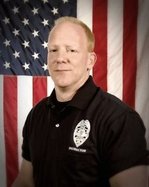
Dr. Richard Weinblatt
Weinblatt: Chief O’Dell appeared to be an amazing man, went to law school, retired a deputy police chief, over three decades of law enforcement experience, an FBI law enforcement graduate, chief of a couple of campus police departments, really amazing. By all outward signs he seemed to have everything to live for. So, why? It is unfortunately a little known public secret of law enforcement that the suicide rates for this profession are much, much higher, and more likely to see a seasonal spike around Christmas and the holidays, than the general population.
Lucy Ann: Contrast the rate of the number of suicides in cops to the general population.
Weinblatt: There have been several studies. The Centers for Disease Control number of 12 per 100,000 (general population) is dwarfed by law enforcement. A New York City Police study revealed the rate to be 30 per 100,000. Another study by a police chief association detailed that the rate is double that of others while in the line of duty. There are unusual factors that go into a law enforcement officer’s life that are attributed to that.
Lucy Ann: Due to their line of work?
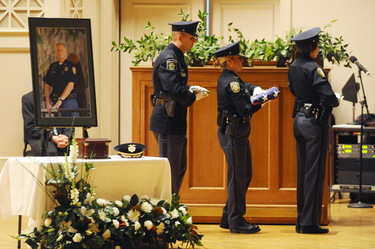
Officers at the memorial service for Eastern Michigan University Police Chief Greg O'Dell. The suicide rate is much higher among police officers than the general population, according to Dr. Richard Weinblatt, a former police officer who now teaches criminal justice.
Melanie Maxwell I AnnArbor.com
Lucy Ann: Knowing police officers as well as you do, what do we need to look for and how do we get someone with these kinds of issues the help that they need before this happens?
Weinblatt: One of the problems is law enforcement is a macho profession, and that’s true for officers and deputy sheriffs who are male as well as female. It’s a very macho profession and not one where you reach out for help. They have to go it alone a lot of times. We saw this after 9/11. There was a huge spike in law enforcement officers from the New York City Metropolitan Region who crossed the Hudson River to New Jersey to clandestinely seek out psychological counseling because they were afraid to do it in New York City proper because it might be a career-ender for them or at least they perceived it that way. Agencies have gotten a little better at this over the years at recognizing that setting up psychological services separate from their headquarters physically makes officers feel a little safer doing that. They’re afraid it’s going to be a career-ender because if you had a police officer come into your home would you want them to be unstable? People don’t like to think of law enforcement officers in that regard. We need to make services available for them, get rid of the stigma, and we need to recognize that police officers are still human beings. They can still hurt and they see some horrific things. It’s the greatest show on Earth, law enforcement, because you can’t make up what we see in real life, but it is also a very tragic slide show. We need to start spotting risk-taking or risks that are out of character. We would also look for a rise in vehicle collisions, an officer who’s driving more recklessly, they don’t seem to care as much. And then, of course, substance abuse, which we see in the general population as well. Using drugs and alcohol to self-medicate, those are some other clues. Look for downsizing, where all of a sudden they’re giving away possessions that meant a lot to them. We’re finding out through Facebook, Twitter and social networking that people are actually crying out for help a little bit more and we need to take those cries seriously. Don’t dismiss them. If somebody seems to be really despondent or in a vast state of despair we need to take that seriously and listen to them and get them help if they need it.
Lucy Ann: It seems that we are more comfortable with talking about depression. Many of us get help for it by getting the medication we need, we go on with our lives and we live happy, healthy lives. If a police officer feels like he or she is suffering from depression, are they easily able to get the medication that they need and still have their careers intact and if not, how can we change that culture in police forces?
Weinblatt: You’re very astute and very perceptive. That is a problem. We have to balance things. We have to balance the welfare of the officers, we have to balance the welfare of the public that he or she serves. It’s a very important thing. When you start talking about putting officers on medications, for example, the employing law enforcement agency has to take into consideration with medical advice how that drug affects their ability to do things as simple as judgment and being able to shoot a firearm. These are very serious things. If it affects shooting, you can just imagine the lawsuits. I think administrators, law enforcement educators and trainers need to be open to officers seeking help. Unless there is a demonstrated medical connection between the help that they’re receiving and their inability to perform, then we should allow them to continue to do their job in at least a modified, non-negative capacity, and of course, confidentiality should always be maintained. But administrators aren’t confident in that yet. They’re a little more so than they used to be, but we’re not quite there.
Lucy Ann: There has to be a culture shift, there has to be some way around this to save lives. What would you tell the police forces who were touched by Chief O’Dell’s life to help them have successful lives and careers?
Weinblatt: They need to know that they’re not alone. Those who knew Chief O’Dell are impacted more and they need to group with their peers, they need to be able to grieve openly, and they need to go through the grieving process, and it is a process. There are steps that people traditionally go through and law enforcement officers are human beings and are no different. I think that the agency there is handling it very well by being open about it. They did not do what was done for many years, which was cover up the suicide. I would imagine they are having a ton of internal discussion at all different levels from command staff all the way down to patrol officer. So I think they’re going a step in the right direction. I applaud the agency for doing that.
Lucy Ann: Sometimes one’s legacy can be so far-reaching and I believe that’s what has happened with Chief O’Dell. Perhaps this has opened our eyes and helped that culture shift in the future for other officers.
Lucy Ann Lance co-owns Lance & Erskine Communications, which produces “The Lucy Ann Lance Business Insider” (M-F, 8 a.m.-11 a.m.) and “The Lucy Ann Lance Show” (Saturdays, 9 a.m.-12 p.m.) on 1290 WLBY. The programs are live streamed at www.1290WLBY.com, and podcast on www.lucyannlance.com. The above interview is a condensed version of a longer conversation that is edited for clarity. The complete audio interview is posted online at www.lucyannlance.com.
Comments
RJA
Sat, Jan 7, 2012 : 3:42 a.m.
I for one appreciate the Q & A in this column. All Police Officers are HUMAN as much as any human being. They do have private lives, as most of us do. I wouldn't even think about asking why? (there is no single answer to be honest) Those that knew him loved him, lets just leave it at that. My heart goes out to his family and friends, now may Mr. O'Dell rest in Peace.
DiAnne
Sun, Jan 1, 2012 : 5:19 p.m.
The more we talk about this will help officers and their command staff to understand, not stigmatize, and reach out and encourage counselling the better. In NY 2 weeks after 9/11 I spent hours talking, and arranging some help for an officer who felt that there was something abnormal about the horror he had witnessed and that he could not appear "weak" to his buddies by letting them know how profoundly it had affected him and that he might loose his job if he went to the police counselling staff that the department had available. He felt that he had something wrong with him that it bothered him so much and had a hard time seeing that the situation was the abnormality.
Brad Arnsparger
Sun, Jan 1, 2012 : 6:31 a.m.
Focus on all the positive touches AAPD... Regretfully, I did not know Greg. I've only recently learned of him through my former Office Manager at Forsyth P.D., Robin Sykes (whom worked with Deputy Chief O'Dell in AAPD Administration); from this, I know...that I missed meeting a great and very admirable person in Greg. To all of you whom are reeling from this, collect yourself, remember only the positive and, for the Chief, move the ball forward. Too often, police-suicide rears it'd ugly head. It affects us all too often as a cadre. Matter of fact, tragic to know, this circumstances occurs better than 2 times the rate of all suicides in the general population. And further yet...it takes the lives of about 300 police officers nationwide each year, coast to coast. That's double the number, on average, that law enforcement looses to on-duty deaths. I cannot do Greg O'Dell the justice that his family and professional accomplishments can. After all, I didn't have the pleasure of connecting with him. But truly, let Greg's passing not go without learning. This tragedy is all to real and familiar in our line of work. Let God be with you Greg and let the positive touches you made on those around you, last well into the future. Chief Brad Arnsparger Retired - Forsyth P.D.
Ron Granger
Sun, Jan 1, 2012 : 12:12 a.m.
What kind of psche screening do University police recruits, and command officers, undergo? They are in a position of making life and death decisions. Why don't we drug test police officers? They regularly handle drugs. They need to be physically fit to protect their own safety, and some say that creates pressure to use steroids.
Ron Granger
Sun, Jan 1, 2012 : 3:11 p.m.
It you have information on that, I'd love to see it. Especially in Washtenaw County. Regular folk are drug tested whenever they have accidents, get hurt, etc. And I just don't see that standard applied to the police profession.
a2citizen
Sun, Jan 1, 2012 : 5:33 a.m.
Ron, most police departments give their officers drug tests.
julieswhimsies
Sat, Dec 31, 2011 : 10:03 p.m.
A good man has died a tragic death. We do not need to know all the details of his untimely demise. He and his family have a right to their privacy. I believe that the reason most police officers and civilians who are depressed fear the stigma of mental illness. If you seek treatment for mental illness...especially, if you are hospitalized, this stigma will follow you around for the rest of your life. It will stay in your medical records for eternity, and even could affect your current and future employment. What most people do not understand is that Depression and PTSD are curable. Many doctors will tell you that you need to be medicated for the rest of your life. This can rob a patient of hope, which is critical to wellness. However, there is hope. Complete recovery is possible.
Mick52
Mon, Jan 2, 2012 : 5:35 a.m.
Good post Julie. Depression is an illness and in not way an indication of any "stigma." Many employers understand that. Those who don't and apply a stigma to a person who has suffered this illness is not worth working for.
bunnyabbot
Sat, Dec 31, 2011 : 5:25 p.m.
I have so far from refrained from commenting on the suicide of Chief O'Dell. I also have not liked the speculation that some commentors have had as to why he killed himself, wheteher it was depression or something else. It is none of my business. It is a morbid obsession and selfishness for the general population to think they have a right to know why he did it. I find it disqusting that annarbor.com would publish this Q&A so close to his service, also I did not see anywhere in it where this posting where it says Dr. Weinblatt, who did not treat O'Dell. This is a disclosure that should be present. Leave his family and his friends alone.
bunnyabbot
Mon, Jan 2, 2012 : 4:25 p.m.
@murphys dad, I don't assume how his family would feel about these pieces, I don't assume anything regarding this. Just as I don't assume that Police officers in a more stressful job than most would be at a greater risk of not being able to handle that stress. I don't assume stress was involved in this case. I don't have more respect for police officers after this than I did before and it won't change my view of police officers, because I always had great respect for the profession. I don't think that stress or suicide is a taboo topic. I do however think the family and friends of this man deserve respect and to publize it as they see fit, otherwise the media and "Dr's" are writing articles for thier own purposes.
Murphy's dad
Sun, Jan 1, 2012 : 5:58 p.m.
While I would agree that there are some in the media who would take advantage of a tragic story like this, I fail to see in this q&a any of the sensationalism that modern media is far too often guilty of. You and many people might find this piece disgusting, and you are entitled to that opinion of course, but I'm of the opinion that this is journalism at its best, thought provoking and eye opening. If the O'Dell family can take any sliver of comfort in this tragic event, let it be that at least one person who read this now has a greater understanding of the pressures that those in Greg O'Dell's profession face, and the huge toll it takes on many. I know I'll keep it in mind the next time I have contact with a police officer.
moveon2011
Sat, Dec 31, 2011 : 5:23 p.m.
Even policemen have PRIVATE LIVES ....
huh7891
Sun, Jan 1, 2012 : 12:06 a.m.
Amen.
paul wiener
Sat, Dec 31, 2011 : 3:38 p.m.
As tragic and sad as Officer O'Dell's death is, I don't see that much is to be gained by making him part of a statistic only a week after the tragedy. The fact is, at this point we don't have a clue as to why he did what he did; his being in law enforcement is the only sure thing we know that attaches to suicide statistics. But who the man was as a particular individual remains the news story and will be the only profound memorial that counts for the many people who loved him. The tragic end of this individual man, presumably known to many, is what makes him terribly, unforgettably human.
Craig Lounsbury
Sat, Dec 31, 2011 : 3:32 p.m.
Any suicide is a tragic event for those left behind. My prayers go out to family and friends dealing with this sad event. based on the quote above "....staggering statistics concerning cops and suicide.... " I started Googling around this morning. My admittedly limited research seems to suggest there are no nationally kept statistics on suicide rates by profession. At least none that I found. There are plenty of statistics based on geography, age, race, sex, but not profession. Again not that I found, not on a national level. I did run across some studies at a more local level that suggest that when one factors in the statistics of age, sex and race to the equation that police may actually have a lower suicide rate than their "age/sex/race/" peers. Here are some links I found... <a href="http://nyp.org/news/hospital/nypd-suicide-myth.html" rel='nofollow'>http://nyp.org/news/hospital/nypd-suicide-myth.html</a> <a href="http://ajp.psychiatryonline.org/article.aspx?Volume=159&page=2069&journalID=13" rel='nofollow'>http://ajp.psychiatryonline.org/article.aspx?Volume=159&page=2069&journalID=13</a> <a href="http://www.policeone.com/health-fitness/articles/137133-Police-Officer-Suicide-Frequency-and-officer-profiles/" rel='nofollow'>http://www.policeone.com/health-fitness/articles/137133-Police-Officer-Suicide-Frequency-and-officer-profiles/</a> <a href="http://www.cops.usdoj.gov/html/dispatch/April_2009/suicide.htm" rel='nofollow'>http://www.cops.usdoj.gov/html/dispatch/April_2009/suicide.htm</a>
Tesla
Sat, Dec 31, 2011 : 3:27 p.m.
Thank you very much for trying to help us understand.
Kai Petainen
Sat, Dec 31, 2011 : 3:20 p.m.
"I will say it's very unusual to see a man who has a stable career all of a sudden go over to another organization, that being the University of Michigan for three months, and then go back to his original employer" ditto.
CincoDeMayo
Sat, Dec 31, 2011 : 4:53 p.m.
However, in this case, "that being the University of Michigan" may be the operative words.
zax
Sat, Dec 31, 2011 : 3:02 p.m.
first off let me express my sadness at the loss of Chief O'Dell to his family and the community. Moving forward I think there are some ideas we should all think about. If police officers are reluctant about seeking mental health help, then perhaps it should be a job requirement. Just as physical health is required, mental health should be equally important. Making counseling, either individual or group counseling available and necessary. I would rather our officers receive necessary medications and continue working with good mental balance than to keep them depressed and suicidal and using a gun. Wouldn't their handling of situations and guns be better with any necessary counseling and or medications, and a better state of mind?
Hunterjim
Sat, Dec 31, 2011 : 7:05 p.m.
Most Police Agencies (including AAPD) do require mental health evaluations after conditional offers of employment are made. Additionally some positions with in the departments also require the evaluations.
halflight
Sat, Dec 31, 2011 : 2:02 p.m.
Thanks, Ms. Lance, for reporting more extensively about depression among police officers. Dr. Weinblatt's comments apply to all people who suffer from depression. Often the symptoms of the disease, a sense of hopelessness and isolation, prevents people from seeking the help they need, even if they're employed in a less macho profession.