

Q&A with Donna Duvin: Local Red Cross streamlines itself to offer services in tough economy
Navigating the economic rocky road has been particularly difficult for area non-profit organizations, many of which have been challenged with a downturn in giving coupled with a need that is greater than ever. Donna Duvin, executive director of the American Red Cross of Washtenaw County, revealed on my show on 1290 WLBY this past week a new approach they are taking to conserve resources.
Lucy Ann: There’s a Red Cross consolidation happening between Washtenaw County and Lenawee County. Tell us about that.
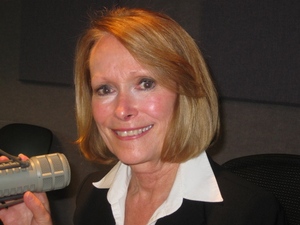
Donna Duvin is the executive director of the American Red Cross of Washtenaw County, which is consolidating with the Lenawee County chapter.
Lucy Ann: So, the Washtenaw County Chapter will now fold in the Lenawee County Chapter. Will there be a name change?
Duvin: It will be the Washtenaw-Lenawee Chapter of the American Red Cross. Lucy Ann: No one is being put out of a job in this transition?
Duvin: That’s correct. What’s really exciting for us is that we’ve been working as partners with Lenawee County for the last four years. We’ll still be able to rely on the great volunteers in Lenawee to deliver services and the support of Lenawee County residents. A lot of times, especially during the summer months, we kind of watch the storms dance around Ann Arbor and sometimes they miss us entirely. Yet you can almost always see them move through Lenawee County. Perhaps it’s an area that’s a little less populated (but) they have some significant challenges and we want to be able to address that.
Lucy Ann: How many full-time staff do you have serving the Red Cross Chapter here in Washtenaw County?
Duvin: We have eight full-time paid staff. We’ve reduced the number of paid staff here in Washtenaw County by about sixty percent and that was in response to the economy. We’re very committed as an organization to balancing our budget, and that hasn’t been easy. It’s taken a lot of sacrifices as it has with other institutions in the area.
Lucy Ann: With this change, there will be no full-time staff in Lenawee County?
Duvin: That’s correct. The choreographing of the services will come from the administrative offices in Ann Arbor but the boots on the ground, the people who are delivering great services, are going to be the volunteers who have always been engaged in Lenawee County. They have a great history of providing services there. As a matter of fact, one of the biggest blood drives in the country is on 9/11 through the Michigan International Speedway, and that’s a blood drive that is now acting as a model for other blood drives across the country.
Lucy Ann: That has been run by the Lenawee County Chapter?
Duvin: That’s correct, with the support of lots of volunteers.
Lucy Ann: How important are volunteers to the American Red Cross and what kind of numbers are we talking about locally?
Duvin: Volunteers are just absolutely essential to what we do. We have a ratio in Washtenaw of about 60 volunteers to one paid staff member. Lucy Ann: Many people think of the American Red Cross in terms of blood drives. It’s much more than that, although that is a critical component of what you do.
Duvin: Absolutely. We’ve been working non-stop, especially in the area of disaster services. We had the Japan Earthquake which hit, and although we did not deploy our own volunteers for that, we had an outpouring from the community that was unbelievable, donors wanting to support that relief effort. In April we were hit with a series of spring storms, the tornado that devastated Joplin as well as the hurricane season which followed immediately after that. We just recently deployed a volunteer for their 103rd assignment that we had sent local volunteers out on in the last six months alone. It’s not just the stuff they see on the news but every other place where the community is connecting with someone in need. We have people here in our area who also care for people who have been devastated by emergencies and disasters across the county.
Lucy Ann: What happens when there is a fire and a family has been displaced locally? Duvin: … The call comes into us via the 911 dispatch, just like they call out the fire departments. Typically it’s a second call that goes out after the fire department has been dispatched. They call an on-call coordinator for us who is a volunteer. We have volunteers that cover for us 24/7. That person takes the call and then they call up a team of volunteers who are on call for that week who then report to the chapter and pick up everything they need to be able to respond at the scene. And in the meantime, they’re collecting information from the fire department about how many families have been affected and what their level of need might be so that by the time we get to the scene, which is typically only an hour since we got that initial call, we’ve got a pretty good idea about what those families are going to be needing to be able to get through the night. Our volunteers respond with immediate assistance for a hotel stay or replacing clothing or medications that have been lost.
Lucy Ann: Who pays for all of that?
Duvin: This is all taken care of by the donations that come in from the public in advance. We have a very generous public that makes all of that available. In some ways we consider that our insurance policy for the county. You know, you pay in your donations to the American Red Cross never knowing who’s going to need that help, and perhaps one day it might even be someone you know or even your family.
Lucy Ann: Let’s talk about the efficiencies that you’ve been able to realize at the Red Cross. When residents and community members are giving money they want to be able to make sure that it’s being spent wisely.
Duvin: We’ve been undergoing a transformation over the last couple of years that will prepare the Red Cross to serve and to ensure that service for years to come. … It’s meant a lot of hard work and a lot of sacrifice for all of us, but I think we are coming out the other side with a really streamlined organization that’s really pointed at service delivery and maximizing the efficiencies. For us, that’s meant letting go of some of the administrative tasks that all the various chapters used to be involved in and now we’ve centralized a lot of that back office support, so that we’re not as involved in the accounting piece or the human resource function.
Lucy Ann: What’s your budget?
Duvin: We are sitting right now at $1.5 million and that’s for Washtenaw. We’ll be gaining the expenses for Lenawee County around another $50,000.
Lucy Ann: Is it realistic to be able to raise that funding?
Duvin: We’ve actually reduced our expenses over the last four years by about $200,000 and so we’re operating very lean right now and really counting on the community to help us to cover those expenses which deliver services in our local communities.
Red Cross Washtenaw County chapter is hosting the Red Cross Ball on Saturday, Oct. 22 at Barton Hills Country Club. Visit the American Red Cross online at www.wc-redcross.org.
Lucy Ann Lance co-owns Lance & Erskine Communications, which produces “The Lucy Ann Lance Business Insider” (M-F, 8 a.m.-11 a.m.) and “The Lucy Ann Lance Show” (Saturdays, 9 a.m.-12 p.m.) on 1290 WLBY. The programs are live streamed at www.1290WLBY.com, and podcast on www.lucyannlance.com. The above interview is a condensed version of a longer conversation that is edited for clarity. The complete audio interview is posted online at www.lucyannlance.com.