

Public housing struggles: Lack of air conditioning among problems cited by Ann Arbor Housing Commission
One of the ugly side effects of an extra hot summer in Ann Arbor is that more fights seem to break out around the city's low-income public housing units.
That's what Jennifer Hall, the city's Housing Commission director, told members of the Ann Arbor City Council during a special work session Monday night.
"One of the things I personally am concerned about is we don't have air conditioning in any of our units except our high-rises," Hall said. "When folks are in their residences and it's no relief from the heat, a lot of times people go outside, they congregate in the parking lots, fights start."
Hall provided an update Monday night on the Housing Commission, including where it has made progress in recent months and where struggles remain.
She said it would take $300,000 to $375,000 to provide air conditioning for all units, and she's starting to think that's a major need given how hot this past summer was.
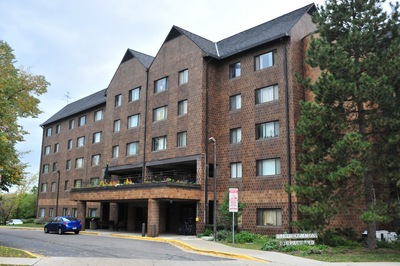
Baker Commons, located on Packard Street just east of Main, is about to get a new steel roof thanks to funding from the Ann Arbor Downtown Development Authority. The 64-unit building at Packard and Main is one of several properties where the Ann Arbor Housing Commission has struggled to keep up with maintenance needs.
Ryan J. Stanton | AnnArbor.com
"We have a difficult clientele to work with, more so than the private sector," she said.
The Housing Commission manages and maintains more than 350 low-income housing units in Ann Arbor with an estimated $14.5 million-plus in deferred capital needs. It also oversees about 1,400 tenant-based rental vouchers throughout Washtenaw County.
Hall rattled off a list of many items she wished the commission could address, but she said funding is a major challenge. In an ideal world, she said, she'd have $200,000 to $300,000 for security cameras, and another $80,000 to $200,000 a year to hire private security guards.
"Security cameras, we have some at some of our sites — three or four of them — and we just need to add more," she said. "It's something our tenants are asking for."
Council Member Stephen Kunselman, D-3rd Ward, said he doesn't see why the city would put money toward private security instead of hiring more police.
"I would take either one," Hall replied. "We'd love to have more police on our sites. We actually almost had a police officer move into one of our buildings, which is allowed, and it just didn't work out, but we have an open invitation to any police officer that wants to move into one of our buildings."
Hall said some of the Housing Commission's properties need to be demolished and rebuilt at this point because they're functionally obsolete or past their prime, and some are flooding.
Luckily, Hall said, the U.S. Department of Housing and Urban Development, after years of funding cutbacks, recognizes it's not providing enough funding for capital improvements, so it has a new program that the Housing Commission plans to apply for by an Oct. 24 deadline. She said it would preserve public housing by converting units to project-based Section 8 housing.
"We'd get additional new vouchers from HUD, we'd be able to access private capital instead of using public HUD funds, so we'd be able to access things like low-income housing tax credits, FHA loans — all different kinds of funding," Hall said, portraying it as an opportunity to leverage new revenue.
"Basically refinancing and recapitalizing projects by making them not public housing, because public housing can't access those funds," she said. "It's just a different kind of funding source and all of the similar rules are in place. People still pay 30 percent of their income just like they do now."
Hall said some tenants could be eligible to get vouchers one or two years after the conversion, and they could take those vouches and go into the private sector and use it on private housing. She said she had a meeting with public housing tenants and many are excited about that.
If the city gets approved by HUD to go that route, Hall said she'll likely come back to the City Council in January or February to discuss the issue in more detail.
Kunselman said he's not keen on the idea.
"It really is about privatizing public housing and I just don't think that's necessarily the direction that we need to go," he said. "Certainly I'm not going to support turning over ownership of public-owned buildings and properties to a private entity just so they can access additional funding. That would dramatically change the system and it's much more unpredictable."
Council Member Sabra Briere, D-1st Ward, asked Hall to clarify whether the voucher program she's talking about requires privatizing public housing. No matter what happens, Hall said, either the Housing Commission or a nonprofit organization has to be part of the ownership structure.
"You're not selling it off to a private developer to redevelop and then you walk away," Hall said. "We still have to be part of that structure. And so we would still be the staff, we would still be maintaining the buildings, we would still be doing all the work, but the legal entity that owns the building, that would have to change in order to access financing."
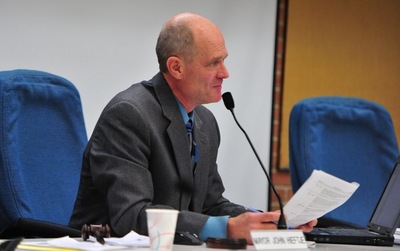
Mayor John Hieftje
"The issues of air conditioning and other things like that — you know, these structures were built not necessarily to be top of the line," he said. "But we do need to make upgrades, and over time I think what we did hear from the director of the Housing Commission is that HUD does recognize they're not providing enough capital money for improvements and this is their investment as well."
Hall painted a more bleak picture, saying there really are only three options: "Stay with what we're doing and keep not having money, stay with what we're doing and have the city pay out of the general fund to pay for improvements, or change the structure."
Mayor John Hieftje said he's encouraged to see Hall pursuing creative solutions to the commission's problems. But he said he can't see the city using general fund dollars to help the commission — it'll just have to keep tackling its issues one at a time.
"But I certainly understand those challenges," he said. "I've seen the chart that shows where federal funding has been going for the last 30 or 40 years and it's not a good direction."
The Housing Commission in recent months has created a preventative maintenance plan and hired a new facilities and maintenance manager, which Hall said has been helpful.
"We went and did duct cleaning of all of our sites," she said, noting all of the gutters have been cleaned and fixed to reduce risk of water damage.
"We fixed all the retaining walls and landscaping," she added. "We ground down all the sidewalks and replaced all the concrete that were trip hazards."
The commission also is about to install so-called "fire stops" above stoves in all high-rise units to prevent kitchen fires. The way it works, Hall said, if a stove catches fire, the device will detect the smoke, open up, and essentially drop a bunch of baking powder to smother the fire.
Roof replacements have been started on several buildings, and the commission is working with the Downtown Development Authority on a roof replacement at Baker Commons.
The commission also is looking at energy efficiency upgrades. So far, Hall said, it has completed about a third of the $900,000 in recommendations from energy audits.

Housing Commission Director Jennifer Hall
Ryan J. Stanton | AnnArbor.com
Hall said the Housing Commission's staff has gone through training to learn how to work with mentally ill tenants and how to deal with crisis.
The commission also hired a new program assistant — a position vacant for more than a year — to handle wait list and leasing duties.
While it used to take more than 100 days on average to turn around a unit between tenants, Hall said, that's now down to 21 days on average, and the goal is to get it down to 14 days.
Hall said those are the kinds of strides that are improving the commission's bottom line. The commission now has about a 99 percent occupancy rate within its units.
Hall said one of her remaining concerns is the commission has the lowest-paid staff in the city and its maintenance technicians and receptionists are able to leave and go work for other city departments, immediately making thousands of dollars more per year.
Ryan J. Stanton covers government and politics for AnnArbor.com. Reach him at ryanstanton@annarbor.com or 734-623-2529. You also can follow him on Twitter or subscribe to AnnArbor.com's email newsletters.
Comments
Mermaidswim
Thu, Oct 11, 2012 : 11:38 a.m.
Windows being sealed shut sounds like a building code violation, and eliminates the possibility of natural ventilation. I have to say, from personal experience, I believe AC is be a mental health issue.
Richard Carter
Wed, Oct 10, 2012 : 2:51 p.m.
Why not do some actual testing? I can certainly agree that something should be done if an apartment gets to 100 degrees and its windows are sealed shut is just as indefensible as an apartment that gets down to 40 degrees in the winter, maybe even worse as you can always ADD clothes and blankets but there's only so far you can go the other way. If they have to live with, say, 80 degrees and a fan and have no health issues, I'm all for that too. But also, if you end up, say, subsidizing window A/C for a significant portion of a building (say the most sick and elderly), there comes a point where central air is likely cheaper anyway.
A A Resident
Wed, Oct 10, 2012 : 2:19 p.m.
If air conditioners in fact reduce violence, perhaps the money would be better spent by sending the air conditioners to al-Qaeda?
a2roots
Wed, Oct 10, 2012 : 2:18 p.m.
The HC problems never go away. The same problems today as they were years ago when Harry Kerr was running it. Put in ac window units and they will be gone and sold in a heart beat. Why not manage the properties aggressively and get rid of the troublemakers. My estimate is there are at least 4 and probably 5 generations living in the units. The system keeps providing and they keep taking. Let us see some data regarding the residents and how much has been spent over the years at the various sites. The public will be astounded at the amount of money and other resources spent on these residents and units. The city via the HC has owned and operated the worst housing in the city for decades. Sorry Ms Hall but you bring nothing to the table that has not already been tried.
Mike
Wed, Oct 10, 2012 : 1:23 p.m.
I don't have air conditioning at my house and I don't go out and beat up my neighbors and get drunk either. This is a bigger problem than spending taxpayer dollars on air conditioning................
Davidian
Wed, Oct 10, 2012 : 12:38 p.m.
I have an idea, it worked for me: learn a skill, get a degree, and after 20 years of busting your butt in the job market you'll be able to afford your own home with central air. Problem solved.
vg550
Wed, Oct 10, 2012 : 11:48 a.m.
I don't remember anyone had air conditioning in the 40's and 50's. We had "fans". When I got married in the 60's I still didn't have any A/C. Still used fans until we saved up for a small window air conditioner. Wasn't until I was in my late 30's and could afford it, that we actually got real A/C.
Arieswoman
Wed, Oct 10, 2012 : 10:07 a.m.
I live near the public housing on Platt Road. These are not being maintained very well at all. There are no storm doors on the units. Grass does not get mowed. Trash all over the place. I think Ms Hall needs more than security at some of these units. We have had problems with some teenagers also.
Jeffersonian
Wed, Oct 10, 2012 : 11:03 a.m.
Maybe the tenants should pitch in and help maintain their environs- probably not.
Tru2Blu76
Wed, Oct 10, 2012 : 9:04 a.m.
I am definitely disgusted by some of the politically motivated sarcasm aimed at the disadvantaged people here. But I must say, the fly in Ms. Hall's ointment (consisting of "cooling criminal activity") somehow misses a central fact: AAHC has ALWAYS screened applicants AND ALWAYS responded by evicting those who participate in criminal activity. Only in this case: something's not working right because - in some units (apt. buildings) there's NO crime at all while in others - the crime rate has become dangerous to everyone in the area. The AC is really for scientific / medical reasons: to provide COOL EVENINGS which allow the human body to "rest" from the stress created by high temperatures (which we've seen plenty of in the past 12 years). Jen Hall: wake up and learn what AAHC has been doing for decades. Otherwise: please shut up so you don't FURTHER ENCOURAGE politically motivated sarcasm. Someone IN those units are not doing what other people in other units do routinely - like calling for police assistance when they see criminal (or potentially criminal activity). United we stand or divided we fall: applies to those being helped as well as our neighbors and ourselves. (Oh but wait, one political party insists that we are all potential "makers" and "job providers" OR slackers mooching off of society - a myth just like the fictional characters in that preposterous novel, Atlas Shrugged.)
Jack Campbell
Wed, Oct 10, 2012 : 4:29 a.m.
Wow, really, they need AC or they will riot?I don't have AC either, but Im not suggesting tax-payers buy it for me. Too many leachers in this town. Affordable housing is nothing but a drag on A2.
Veracity
Wed, Oct 10, 2012 : 4:26 a.m.
The Ann Arbor Public Housing Commission will never obtain the $14 million necessary to make repairs to its 350 units so that they become safe and liveable. A millage or city tax will be needed to provide money for renovations. A better choice would be to sell the properties to private property management companies such as First Martin and McKinley who have the funds and knowledge to properly maintain the properties.
Scylding
Wed, Oct 10, 2012 : 2:47 a.m.
Glad to see so many Ann Arbor libs realizing the lunacy of the nanny state and saying NO to providing air conditioning as a violence prevention tactic. What utter idiocy! This is akin to the NY transit authority's new policy to deny approval for any ad that might provoke a violent reaction. It actually incentivizes bad behavior. Want something? Get violent until you get it. Two-year olds figure this out in a heartbeat. You think the dependents on the nanny state won't do the same? You underestimate them.
Gretchen Ridenour
Wed, Oct 10, 2012 : 2:19 p.m.
Scylding, please note that in my entries above I spoke about access to AC for low-income individuals who are sick and elderly and have no resources as a humane thing to do. I don't believe that other writers here in favor of AC have said it is necessary for violence prevention. That is lunacy!
Goofus
Wed, Oct 10, 2012 : 2:28 a.m.
Ship 'em to Ypsi.
Jay Thomas
Wed, Oct 10, 2012 : 11:24 p.m.
Ypsi is majority affordable rental housing already. What it needs is more middle class owned homes.
Steven Taylor
Wed, Oct 10, 2012 : 5:43 p.m.
No thanks, we've got plenty, and with Hamilton Crossing opening back up after renovations. I'm sure we will see our fair share of heat related issues come next summer.
Laura Jones
Wed, Oct 10, 2012 : 12:38 a.m.
Perhaps the answer is better single units, instead of high rises. High rises require AC due to their design. I am all for a limit on time for using public housing for able bodied adults. After that, there should be a payment plan if you want to stay on to save for a deposit etc. should you need to stay on for a limited time. I grew up in the south without AC - it can be done, but we had houses designed to be lived in without AC - lots of cross ventilation from windows which all had screens. That is obviously not the case in the unit pictured above.
EyeHeartA2
Wed, Oct 10, 2012 : 12:33 a.m.
Bummer. My first house on AA west side didn't have AC either. Oh, and by they way, I didn't expect anyone to buy it for me.
julieswhimsies
Thu, Oct 11, 2012 : 6:21 a.m.
We are talking about high rises here...not houses. Sure. I could live without AC in my house. It has excellent cross ventilation. High rises are a different story. What about the elderly who cannot afford AC units. High temps can kill the elderly...with or without fans.
julieswhimsies
Tue, Oct 9, 2012 : 11:33 p.m.
I live in a house with A/C . We use it sparingly due to the high cost. A high rise with no A/C? Just open the windows and deal with it? I am astonished at the callousness of some of these posters.
Dog Guy
Tue, Oct 9, 2012 : 11:26 p.m.
If a city builds a zoo but does not keep its creatures happy, invoke the laws against neglect.
GP
Tue, Oct 9, 2012 : 11:19 p.m.
So taxpayers should pay for AC because people can't control themselves or their children? I think I just went Republican.
Scylding
Wed, Oct 10, 2012 : 2:37 a.m.
Welcome to sanity, GP. Only, go conservative, not necessarily "Republican."
grye
Tue, Oct 9, 2012 : 11:06 p.m.
There are many houses in Ann Arbor and the surrounding communities without air conditioning. AC is not a right, it's an extra. If the public housing is for infants or the elderly, then there should be some consideration, but most people really don't need it in Michigan. The hot weather may make it uncomfortable, but not deadly. I grew up in the desert in Southern California where the temperatures were as high as 125 degrees in the summer and my parents lived there for several years without AC. Just how did the early settlers make it during those dog days of summer?
tommy_t
Tue, Oct 9, 2012 : 10:19 p.m.
"There are many in this old world of ours who hold that things break about even for all of us. I have observed, for example, that we all get the same amount of ice. The rich get it in the summertime and the poor get it in the winter." Bat Masterson
Tom Joad
Tue, Oct 9, 2012 : 10:06 p.m.
Ironically it's ubiquitous air conditioning that necessitates building more coal-powered electric plants which spew more carbon dioxide into the atmosphere raising the earth's temperature and creating Summer heat waves. I refuse to buy an air conditioner and pay the high electric bill, so I let my body adapt to the heat and not artificially cool it at great expense.
whale11
Tue, Oct 9, 2012 : 10:02 p.m.
Maybe some kind of voucher system would work. Because of my age, air-conditioning is important, but I forgo cable television. Choice is important. It can be empowering. Let people decide how the want to save and how they want to spend.
Ron Granger
Tue, Oct 9, 2012 : 9:35 p.m.
"One of the things I personally am concerned about is we don't have air conditioning in any of our units except our high-rises," Hall said. "When folks are in their residences and it's no relief from the heat, a lot of times people go outside, they congregate in the parking lots, fights start." -- So we need to give them free a/c so they don't break the law? A lot of people not on the public dole endure without a/c. For most, it is a luxury and not an entitlement.
Jay Thomas
Tue, Oct 9, 2012 : 9:06 p.m.
Unbelievable... now they want cameras and guards for the inmates.:P "Affordable housing" is a money pit and costs more than just paying someone to rent their private housing. The problem is that the minute the housing is for section 8 people (who only pay a small fraction) the rent goes up. Government programs make housing unaffordable and the "projects" need to be rebuilt every few decades. Ka-ching! So much for sustainability. Oh, and the police make too much to live there... nice fantasy, lady.
Steven Taylor
Wed, Oct 10, 2012 : 12:50 a.m.
I remember, as an "Explorer Scout" in Ypsi, we held our meetings at the police 'mini-station' in what is now Paradise Manor on Michigan Avenue, west of Second Ave.. Talk about a 'tuck an run' into a building. If I worked in law enforcement, the last place I'd care to live is Public Housing. I'd be a target.
nowayjose
Tue, Oct 9, 2012 : 9:01 p.m.
What?! No A/C? What am I even paying taxes for anyways? So help me if I find out there's no free flat screens with free HBO I'm going to loose it.
nekm1
Tue, Oct 9, 2012 : 8:52 p.m.
I say, this is the perfect example of a Green building! 40 years ago and before, no one had air conditioning! people used fans or enjoyed the out doors and cool nights. Folks already get free food, cell phones, health care, power and lights, free transportation, bridge cards, etc.... Here is a chance to enjoy our Green future!
GoNavy
Tue, Oct 9, 2012 : 8:48 p.m.
Wow, talk about first-world problems. I grew up without air conditioning until two years before I graduated high school, then attended a college without air conditioning in the dorms. Deal with it. All of humanity did for approximately 10,000 years.
EcoRonE
Tue, Oct 9, 2012 : 11:46 p.m.
We were coming out of the ice age 10,000 years ago and the temperature has been getting warmer - or haven't you noticed because you sit/sleep in air conditioned comfort all day.
Janet Neary
Tue, Oct 9, 2012 : 8:39 p.m.
I'm not a big fan of public housing, but we should be ashamed of how badly we have maintained property for which we have responsibility, while seeming to have enough money for a lot of new things. This new director seems to be working hard to improve things with limited resources. The million dollars of so (if memory serves) that we spent on the new bike/walking path on Washtenaw, for example, would have gone a long ways to meeting our obligations here. And then there's the large amount in the fund for public art -- something worthwhile, but again not something that should come before obligations we have incurred here.
Mike
Wed, Oct 10, 2012 : 1:33 p.m.
I have renovated these places and they are trashed by the people who live there. They then complain that the places are in poor shape and expect to be treated like those who actually pay for their lving spaces. If they can't take care of the free housing buil a camp and let them live in a tent. Once they learn to behave and stay off drugs offer them an apartment. No acountability and no strings attached to the public money. Drug testing should be mandatory.....period
aanative
Tue, Oct 9, 2012 : 11:54 p.m.
No. Not ashamed. Tired of pouring public $$ into myriad programs, services, and funds, so that others have comforts far in excess of necessities. I'm glad if remediation or overdue maintenance is being performed, but am fatigued with never-ending pleas for 'more'. Oh, and bike paths are not the topic here, nor is public art.
hairman
Tue, Oct 9, 2012 : 8:33 p.m.
We had NO air conditioning in the 1950's & early 1960's. We did NOT get in fights.We had manners and respect for one another. If you are on ANY assistance because YOU cannot afford to take care of yourself BIRTH CONTROL should be MANDATORY. I DO NOT want to pay for you to have children.
Enso
Thu, Oct 11, 2012 : 12:57 p.m.
What happened to that supposed RESPECT you had when you were a kid. A lot of good it did you, old timer...
EcoRonE
Tue, Oct 9, 2012 : 11:52 p.m.
I recall a lot of disrespect and bullying in the 50's and 60's and the hot summers were not enjoyable. Perhaps you're thinking of some tv land make believe that never existed but that you imagine. I do recall that in the 50's they actually did forcibly sterilize people. Funny you didn't remember that reality.
julieswhimsies
Tue, Oct 9, 2012 : 11:25 p.m.
Wow. Maybe we should just sterilize the poor. Good grief.
Jonathan Blutarsky
Tue, Oct 9, 2012 : 9:05 p.m.
And I'm betting you don't want to pay for birth control either...
Gretchen Ridenour
Tue, Oct 9, 2012 : 8:21 p.m.
Let's remember that the goal of low-income housing is not to get residents to live downtown and go out every day to spend and support local businesses. How much expendable income do we think low-income individuals have? Be realistic. I'm sure they would all rather have high incomes and be able to spend money in the community, but that is not their current lot in life. While I agree that AC is a "want" and not a "need", we must consider that most individuals living in low-income housing are seniors (many with chronic medical conditions) and those others with medical disabilities. For most of these residents the lack of AC can negatively impact their health. Window AC units are a reasonable option if the apartment units can accommodate them, but that may not be logistically feasible in all cases. People who are living in low-income housing due to their circumstances are not 2nd class citizens.They have a right to safe, reasonable accommodations. Would you be okay having your elderly or chronically ill family member with limited financial resources living in an unsafe apartment building with no AC, no cable, no preventative maintenance, and no repairs? I doubt it. We all need to be looking at the big picture at the community level and not act like those in need are greedy for wanting life's basics.
Jeffersonian
Wed, Oct 10, 2012 : 11:48 a.m.
I'm all for offering the elderly and infirm decent living conditions- not for the low income people and not in the center of the city where the tax base can be used for subsidy elsewhere. Many hard working people cannot afford to live anywhere near the center of town and underwriting a few lucky poor people to make the beneficent class sleep better is a poor option.
Gretchen Ridenour
Wed, Oct 10, 2012 : 2:29 a.m.
OK, let's not get carried away. I'm not suggesting that everyone should have free AC, but access for those who can afford it is reasonable. And I'm not suggesting that everyone be given free cable, or even HD, PPV, sports packages, etc. But I do think it is reasonable to have cable hook-up available for those who might be able to afford at least basic cable. Is it a luxury for a low income individual to have access to the networks with local news channels? I totally get it, and agree that we have to spend our tax dollars wisely, but this should apply to all programs and services, not just those benefitting low-income folks.
Steven Taylor
Wed, Oct 10, 2012 : 12:46 a.m.
Gretchen, while I'm sure a portion of those that are utilizing public housing (old, infirm, etc). I'd suggest that most here aren't considering them 2nd class citizens for their circumstances. But when I see residents of various city housing projects (Hikone Park and others) driving newer cars than myself, wearing designer clothing, with the newest IGizmo. But I also know that the old and infirm also functioned prior to the invention of AC. I suggest instead of dumping more taxpayer funds into it we perhaps talk to the residents (They've got to disclose things like income in order to be allowed to live in public housing, right?) Talk to the residents about their financial situation, If their finances can support it, suggest to them they purchase said unit, if not, subsidize it, but don't just go... "Free money, here, have an AC unit" Cause that money gotta come from somewhere and it comes from my tax dollars.
GoNavy
Tue, Oct 9, 2012 : 8:50 p.m.
No cable? BANISH THE THOUGHT.
bunnyabbot
Tue, Oct 9, 2012 : 8:19 p.m.
So saying that people in these housing situations need AC because they go outside and fight. Are in need of security cameras and security guards as well for their safety doesn't lead much credence to the people defending the inhabitants of being upstanding citizens. AC is not a necessity, maybe for elderly or the inferm, not for people that are just low income. A lot of people don't have AC. If you need at least 68 degree weather year round to be comfortable it's time to move out of state.
moveover2012
Thu, Mar 7, 2013 : 7:55 p.m.
FUNNY we can send man to mars/moon but to give our fellow men AIR ....so much for progress TECHNOLOGIY for ALL
Enso
Thu, Oct 11, 2012 : 12:56 p.m.
The elderly ARE low-income.
nickcarraweigh
Tue, Oct 9, 2012 : 8:13 p.m.
What'll they want next, furnaces?
Jeffersonian
Wed, Oct 10, 2012 : 11:42 a.m.
yes so we can put them to work forging small metal parts for the air conditioning.
Sasha
Tue, Oct 9, 2012 : 7:46 p.m.
There was a time when indoor plumbing and electricity weren't standard. Times change. These units are cable ready also, should we remove that access because of the population being served? Unless you've lived in one, you can't understand what those units are like in the summer. Overall, I think Ann Arbor Public Housing is great. The locations are convenient and the services are stellar. There are a few things that need improvement, but so is the case with any organization. I'm glad to see that resident issues are being addressed.
Scylding
Wed, Oct 10, 2012 : 2:59 a.m.
@Sasha: nobody in subsidized housing should be able to afford either A/C or cable. Are you kidding me? Do you know how many middle-class families have cut out cable and have come to use their A/C sporadically just to get through these tough times? I don't have either. I figure it's more important to put money into the college funds than to spare my children some sweat and keep their minds numb in front of the garbage that's on cable. Yet the middle class should help pay for A/C units and cable for people who already depend on our taxes for their housing? Sorry, nagada!
EyeHeartA2
Wed, Oct 10, 2012 : 12:37 a.m.
Sorry Charlie. Times don't change that much from when I didn't have AC. BTW, many of my neighbors don't have AC. They don't expect me to pay for it for them either.
Jay Thomas
Tue, Oct 9, 2012 : 9:08 p.m.
Parkway Meadows was cable ready from the beginning. You've got the money for cable tv but the rest of us need to pay for your housing. Everything is upside down in this country.
AJD
Tue, Oct 9, 2012 : 7:45 p.m.
Seriously, AC - hum....no I've worked for the better part of 25 years so that I can finally afford a place with AC and I rarely run it due to the expense I incur.... because if I use it, I actually pull out my checkbook and pay for it. Strange concept to some, i know. And I'm not a conservative person, rather I'm a crunchy liberal as some would say. But dang, when the heck does it stop? We need to help those less fortunate, those who need a hand to move forward, but AC, Cable etc - seriously? NO.
moveover2012
Thu, Mar 7, 2013 : 7:52 p.m.
it is the less fortunate THAT WORK for the last 40-50 years .IT is the VETREANS that fought your fight ..while you went to college, they only thing is that congress over the years has not adjusted to the COST of LIVING MINUM WAGES or salarys and pension ...Just see the price of gas.WE do pay for aircondtion or gas or Electrix, telfon groceires .check with your grandparents an d see How they live. If you live in a cement building you better have AIR>.
Mike
Wed, Oct 10, 2012 : 1:28 p.m.
AJD - you just jumped to the top of my all-time liberal list and restored my fiath in humanity..........
aanative
Tue, Oct 9, 2012 : 11:48 p.m.
AJD, totally agree. A/C is terrific, but certainly not a basic need, and not when working stiffs have to actually dig into their pockets to pony up the expense for their own comforts. And sure, Sasha, residents are responsible for their own electricity, but how many tenants in public housing also get subsidized utilities thru DTE or MichCon programs for low-income residents? Sure wish someone (else) would subsidize my every want.
Sasha
Tue, Oct 9, 2012 : 7:49 p.m.
AJD, Residents are responsible for their own electric. If they can't afford to run it, then they won't. The same goes for cable. If they can't afford cable, then they don't have it.
Sarah
Tue, Oct 9, 2012 : 7:41 p.m.
I live very close to some public housing buildings & we had a ton of problems with teenagers who live there over the summer. Yelling & blaring music in the middle of the night... Fighting in the parking lot... Jumping around on top of vehicles... Swearing & saying rude things to others in the neighborhood... Our whole neighborhood is getting a little fed up. But it seems like there is nothing we can do about it. Except move, which we'll be doing in a couple of months. We don't have air conditioning in our house either, but we're still respectful of others. Nonetheless, if putting in air would keep them from acting like that, then I'm all for it.
gofigure
Tue, Oct 9, 2012 : 7:41 p.m.
Why can't they do the same thing some of us have done. Buy a window air conditioner?
Tru2Blu76
Wed, Oct 10, 2012 : 8:44 a.m.
Just to correct your inaccuracy: in fact, most public housing DOES NOT PROVIDE FOR and even prohibits hanging of individual (and dangerous and inefficient) window air conditioners out of the widows (which are sealed to prevent exactly that kind of practice).
Steven Taylor
Wed, Oct 10, 2012 : 12:38 a.m.
Logic is not often found in the workings of government! hush you!
Ron Granger
Tue, Oct 9, 2012 : 9:33 p.m.
The a/c unit is cheap compared to the electric bill.
xmo
Tue, Oct 9, 2012 : 7:35 p.m.
Really AC? If we bought these people Ocean side condos in Southern California, they would not need AC. Plus they could play in the sand or the ocean all day. We probably would need to give them spending money and a imported car just to show we really care.
Enso
Wed, Oct 10, 2012 : 12:46 p.m.
Exactly! Screw the elderly and single parents! Let them ROT!
Mike
Tue, Oct 9, 2012 : 7:26 p.m.
"But I certainly understand those challenges," he said. "I've seen the chart that shows where federal funding has been going for the last 30 or 40 years and it's not a good direction." And it's not going to get better anytime soon. The great society experiment is crumbling under it's own weight while more and more people are failed by the school systems and forced onto the government dole. I don't think this is going to end well..............
Hot Sam
Wed, Oct 10, 2012 : 5:10 p.m.
Perhaps if we didn't send dollars to Washington in hopes of getting 50 cents back...
smokeblwr
Tue, Oct 9, 2012 : 7:15 p.m.
More AC? Keeping people inside watching TV? This sounds environmentally unsustainable. Think of the extra coal-fired electricity needed. I thought the whole point of getting people to live downtown was so they went outside and spent their money supporting local business, not cooped up watching TV in their air conditioned subsidized condo.
smokeblwr
Wed, Oct 10, 2012 : 12:10 p.m.
Sooo....why are we getting a warmer climate? It is because we all use too much durned electricity! So, obviously throwing more coal in the furnace will cool us all down.
Tru2Blu76
Wed, Oct 10, 2012 : 8:41 a.m.
What you thought is obviously wrong. The first 12 years of the 21st Century have all been record setting "warm" years. The most vulnerable people (elderly and disabled) are least able to cope with the hot outdoor conditions in summer. "Think of the extra coal-fired electricity needed" -- sure and think about the facts above. You thought: the "whole point" was to get people living downtown outside, spending their money [to] support local business. First off: half the businesses downtown aren't "local." And the other half are high priced restaurants and boutiques - not exactly the likely places you'll find people having to live in subsidized housing. Question: how did you "think" of this obvious contradiction in the first place?? Could it be, you were "guided" by political (aka, right wing) propaganda to "think" that badly?? Or is sarcasm aimed at the disadvantaged your only job??