

'Union mentality' column an exercise in prejudice, not legitimate commentary
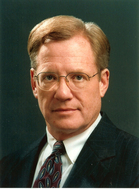
Thomas Wieder
Warner clearly had the right to write his column and to try to get it published. AnnArbor.com clearly had the right to publish it. But it shouldn’t have done so. Although I strongly disagree with it, there’s nothing illegitimate about the viewpoint that unions are bad or do mostly bad things. Unfortunately, Warner went well beyond that, engaging in the worst sort of stereotyping and guilt-by-association.
Imagine, if you will, columns titled “The Catholic (or Jewish or Muslim) mentality,” “The female (or feminist) mentality,” or “The black mentality.” How about “The colored mentality?” It isn’t hard to find examples of that last phrase in publications in the early 20th century. Isn’t it offensive, and beyond the bounds of reasonable public discourse, to suggest that every member of a group thinks the same and acts in the same way?
Warner said: “The union mentality looks out the window on a snowy morning and says: ‘That might be enough to serve as an excuse for not going to work.’” This isn’t a criticism of union actions or policies; it is a suggestion that a worker who belongs to a union is lazy and looks for excuses not to do his or her job.
Is there really much difference between the classic racist characterization of blacks as “lazy and shiftless” and Warner’s depiction of the union worker as inclined to find any excuse to not show up for work? That’s not a view that deserves publication on an editorial page; it’s simple prejudice.
It is one thing to write a column arguing that the Catholic Church is “corrupt,” because sexual abuse by priests was ignored or covered up by some in the Church’s hierarchy. It’s quite another thing to say that “the Catholic mentality excuses sexual abuse by priests.” It’s one thing to argue that “moderate Muslim clergy and lay people should more vocally criticize Islamic terrorists.” It’s quite another thing to say that “the Muslim mentality condones terrorism.”
Warner attacked and demeaned individuals for being associated with unions: “[T]he concept of unionized professionals is an oxymoron. The union mentality is incompatible with operating as a professional.” By this reasoning, virtually all teachers, nurses and police officers are not professionals. Warner would, apparently, also strip the “professional” label from University of Michigan medical interns and residents, who have bargained collectively for over 35 years through their House Officers Association.
In the rhetorical history of this country, the use of the word “mentality” to characterize whole groups of people has been associated with attempts to demean and disparage disfavored racial and ethnic groups. Think “colored, negro, slave, Irish, Polish or Indian” mentality. If negative traits of thinking or acting can be attributed to a whole group of disfavored people, it is much easier to justify treating them badly, and worse than, favored groups. That’s exactly what Warner’s rhetoric invites.
Surprisingly inflammatory language could be found even in establishment newspapers and other publications for much of our nation’s history. This largely disappeared in recent decades as greater sensitivity developed around issues of race, gender and ethnicity. Before the advent of the internet, getting “published” to anything approaching a large audience meant getting through the filters imposed by the editors of daily newspapers and the news directors of radio and television stations.
The downside was that some legitimate viewpoints may have been effectively suppressed. The upside was that some truly vile, racist, sexist, false or inciting material was not widely distributed. Now, there are few effective filters, and almost any material can reach large numbers of people.
I would have hoped that AnnArbor.com, which still passes its news stories, columns and letters to the editor through the filters of accuracy, fairness and appropriateness, and which tries to be the main source of local news and opinion to a diverse audience, would not have published this exercise in prejudice.
What is particularly strange is what happened when I posted on AnnArbor.com’s website a comment in response to Warner’s column. It said, in part: “This column is little removed from old racist treatises about the ‘colored mentality,’ about those ‘lazy, shiftless Negroes.’” The comment was removed by an AnnArbor.com’s staff member, who said the comment “was removed due to an offensive, off-topic analogy."
So, according AnnArbor.com, Warner’s entire column of prejudice directed at unions and, more importantly, individuals who belong to them, was acceptable for publication, but my statement comparing it to other examples of prejudice, was not. The Ann Arbor community is entitled to expect a higher, and more consistent, standard of journalistic practice than this.
Ann Arbor resident Thomas F. Wieder is an attorney who retired from active practice in 2003. He continues to do pro bono work, primarily for the American Civil Liberties Union.
Comments
snapshot
Sat, Apr 9, 2011 : 8:12 p.m.
There's two sides to every story. Wieder would not only like to see his side be publicized, but takes the generic "union mentality" article to the heights of "hate crime" and "religious persecution" issues while advocating "censorship". I think this reflects the "union mentality" much better than Warner's article.
Bear
Wed, Apr 6, 2011 : 12:16 a.m.
You who are negatively criticizing this article & don't know what you are talking about. And whatever 'code word' you exchange for 'union mentality' doesn't change it's basic falseness & prejudicial root. I cannot believe the level of ignorance that is being exhibiting here. I work hard, with a core group of professional stagehands. We do a great job, every time, because people's lives & safety depend upon us doing our job right, EVERY TIME! We cross-train and watch out for each other and check each other's work in order to maintain a high level of safety & perfection in order to make the show happen. We do more than just show up. WE WORK HARD! We pride ourselves on a job well done. If you don't maintain a level of professionalism, learn how to do the job properly, don't work hard; you don't work with us or for us. We don't tolerate mediocrity! Entitlement? Since when is a living wage for your labor, entitlement? I bristle at the thought of a lot of people here wagging their tongues with the negative comments, who haven't a clue, but think they know everything about the union they are criticizing. Let me tell you right now, most of those know-nothings wouldn't last a day in our business. Warner's column had zero facts in it & a few bald faced lies. His quote of what it costs for labor at the Michigan Theater & Hill Auditorium is pure fabrication and innuendo. This article, effectively put's Warner's opinion into it's proper perspective. As hogwash not worth lining the litter box with.
Will Warner
Fri, Apr 8, 2011 : 2:50 a.m.
Bear: $6000 was the estimate I was given when making inquires into renting the Michigan Theater. Poster Nate, above, seems to have been given the same number. The figure cause both us to abandon our plans. Perhaps you could answer a question for me. Are artists arriving at Michigan Theater permited to carry their own insterments into the theater or is that handled by stage hands?
Bear
Wed, Apr 6, 2011 : 12:27 a.m.
I keep trying to write without anger, forgive me if I cannot. The lies & innuendo leveled at myself and the many professionals I work with, admire & learn from moves me to fierce anger. The level of ignorance shown in many of these negative comments is appalling! Get a clue before you even think to criticize my profession! I am passionate about it. You want to talk about what happens when you lower the standards in my profession? The stage collapse at the Pontiac Silverdome recently is a good example. Not one of my union brothers would have allowed that fiasco to happen. NOT ONE! We do it right or we don't do it - PERIOD! PROUD TO BE A UNION MEMBER!
Bear
Wed, Apr 6, 2011 : 12:21 a.m.
oh, and many are the time when we work 12 hours a day, 6 days a week, Mr. Warner! How dare you even imagine that you can invoke the spirit of Joe Hill in your column. If you work on a movie, the minimum you will work is 12 hour days, six day weeks, for months on end in most cases. But then, it would be a stretch of the imagination to believe that any of you critics actually have any experience or facts to rely on. So much easier to be an armchair quarterback than to actually know what you are talking about in the first place.
grye
Tue, Apr 5, 2011 : 2:43 p.m.
Let me throw in my 2 cents on the subject. The biggest problem with unions today is that they are focused soley on the salaries and benefits of the union member without any regard or input as to the success of the organization. The employee/union member needs to be focused on the success of the company for without success, there are no jobs. Supporting decision that are detrimental to the company will be detrimental to the employee. Supporting poor performing employees just because they are union members is detrimental to the success of the company. Supporting a member's rights to fair and equal justice is important, however unions have taken this to the extreme thus providing the foder that is often thrust back in return. Unions need to keep up with the times, look to the future, and ensure their members will be the reason a company is successful.
David Briegel
Thu, Apr 7, 2011 : 3:17 p.m.
These remarks are just plain silly in light of the sacrifices and give backs unions have bargained recently! You and Will Warner would have a nice time together.
Halter
Mon, Apr 4, 2011 : 8:51 p.m.
Two observations that fit the entire bill.... 1) Despite having 95 votes, my post was removed from the "Most Popular Comments" highlights -- clearly being critical of AnnArbor.com is enough to have you ousted.... 2) This has degenerated into the exact type of in-fighting that posters here have responded to negatively.
Moscow On The Huron
Tue, Apr 5, 2011 : 1:51 p.m.
Halter - the Most Popular thing often doesn't work right. Sometimes comments with zero votes show up there. What's really funny is when the place-holder for a deleted comment stays there.
Jen Eyer
Mon, Apr 4, 2011 : 9:10 p.m.
Halter: Your comment is still at the top of the Most Popular Comments section. That is filled automatically based on the number of votes; we do not have the ability to manipulate it, nor would we want to.
Tom Wieder
Mon, Apr 4, 2011 : 1:54 p.m.
@Roadman - I'm glad that you support my "right to publish" my views. I support Will Warner's, and yours, as well. But that's not what we're talking about. Warner didn't "publish" his views - AnnArbor.com did. And it certainly had a right to. It also had a right not to. I argue that it should have exercised its right not to. We all have the right to publish all sorts of things - claims that Tina Fey is really a Martian, that Newt Gingrich shouldn't be President, because he's fat, that Rick Snyder has the worst record of any governor in the history of the country. That doesn't mean that our local newspaper/dotcom should publish those opinions. Certainly, there must be things that you would object to seeing published by your favorite newspapers or magazines and would urge them not to do so, because they are vulgar or cruel or inciting or whatever. YOU might even regard someone's writing as patently racist. (No, I'm not saying Warner's column was racist, or that he is.) Would you just happily accept your newspaper's decision to publish such racist writing, or might you tell them that they shouldn't? Perhaps, you'd let anything pass unchallenged. I don't, and neither do many others.
Terminal
Mon, Apr 4, 2011 : 2:07 p.m.
Thanks Tom. Some people don't understand that it is an exercise in freedom to call out nonsense when they see it and make a reasoned argument against it.
Will Warner
Mon, Apr 4, 2011 : 12:51 p.m.
@Tom Wieder: "Instead of saying 'union members are lazy,' you described an instance of laziness and associated it with being a union member." …. "You just started with the negative trait and attached it to the members of the group." But I wasn't describing instances of laziness. I was describing failure to identify with one's employer, and associating that with unionism. Do non-union workers fail to identify with their employers? Some do but they have a hard time making a career of it. An adversarial relation with one's employer is central to unionism (indeed, it's a source of pride), as is resistance to high levels of productivity. I describe the ways in which unions place themselves in opposition to their employers; you call it laziness. I attached a negative trait to a way of thinking that produces a culture, and claimed that way of thinking and culture have come to define organized labor.
Terminal
Mon, Apr 4, 2011 : 1:45 p.m.
It's a specious claim at best.
Terminal
Mon, Apr 4, 2011 : 1:42 p.m.
Some people don't know when their foot is their mouth all the way up to the kneecap.
Will Warner
Mon, Apr 4, 2011 : 11:06 a.m.
@Tom Wieder: Tom, on the subject of unionized professionals, we're still stalking past each other. You show me a platypus and say, "what do you think of this mammal?" I say, "it's an odd mammal that lays eggs." You say, "well, we no longer view egg-laying as incompatible with mamalhood." Earlier I wrote "One becomes a professional to rise in the world -- to rise to a level of attainment, skill, value, and irreplaceability that has no need of collective bargaining." What is your reaction to that?
Roadman
Mon, Apr 4, 2011 : 4:12 a.m.
Tom Wieder: I believe that Will Warner's column was well-intentioned and should have been published. Even though I have had differences of opinion with you over the years in some things you have authored, such as conflict of interest questions relative to Leigh Greden raised in Arbor Update and the Progressives of Washtenaw website and your attacks on that great statesman Mark Ouimet in the per diem controversy on this online resource, I support your right to publish such editorials because the public is good at recognizing bad Free Speech when they read it - such as your rantings described above. The ACLU just won a big First Amendment victory, Tom, in the Westboro Baptist Church case; that opinion mentioned the role of the media in disseminating offensive Free Speech. As you find Warner's opinions offensive, I have found yours distateful but I support each of your rights to publish these rants in the media, both as journalistic propriety and protected Free Speech.
socdoc
Mon, Apr 4, 2011 : 2:07 a.m.
@Tom Wider If I might interject, I think the problem here is the assumption by many anti-unionists that having collective power gives union members an *unfair* advantage--such that collectively bargained contracts produce guaranteed jobs for union members but contain no measure for accountability to ensure a job well done. This is not only false, it's based on faulty reasoning, and it is based on an equally faulty assumption that without the threat of the immediate loss of one's job, no worker could possibly have any other motivation for performing, to a high level, all the responsibilities of one's particular job. Can you see how they believe a "carrot" can never equal the motivational power of a "stick?" For many anti-unionists it is often rampant cynicism that impedes them from recognizing that pride in, and a passion for one's work, and a positive working relationship with one's boss/employer are far bigger motivators for most humans than is mere money. You'd be surprised how a displeasaed supervisor can make most people feel shame and regret. However, it's just a fact of life that earning a living wage is essential in order for any individual to continue to work, but that is not what ultimately provides job satisfaction. If I had only been concerned with making lots of money I would not have chosen to be a university professor. Believe me, my degree in the private sector would earn a person at least 3 to 4 times the money I currently make. Like me, many nurses, police officers, firefighters, and an array of public service workers want primarily to make a positive difference in the lives of others--it's what keeps us from being lazy too :-).
Tom Wieder
Mon, Apr 4, 2011 : 12:41 a.m.
@Will Warner You attempt to dismiss the House Officers example of medical professionals working as union members by suggesting they are simply on their way to true attainment of professionalism. Nice try. Virtually every prosecuting attorney in the country is a salaried employee of a governmental body - local, state and federal. You can't be a self-employed prosecutor. These lawyers, many of whom make a career of it, aren't on their way to someplace of higher professionalism. If these prosecutors are in a public employee union, does that mean they're not "true professionals?" And what about police officers, almost all of whom are unionized?
Tom Wieder
Mon, Apr 4, 2011 : 5:18 p.m.
Roadman- Yes, some (I don't know about "most") suburban municipalities use private attorneys for ordinance violation work, but my basic point, that the prosecution bar in this country is composed, overwhelmingly, of public employees is demonstrably true. I have never belonged to a union, although I'm not sure what that has to do with anything.
Roadman
Mon, Apr 4, 2011 : 4:20 a.m.
Tom: You can be a self-employed prosecutor. Most suburban city attorneys are not municipal employees, but sign retention agreements as independent contractors and prosecute ordinance violations in the District Court. Did you, Tom, have union membership when you interned in the 1970s for the City Administrator? I did not think so. Ann Arbor's police technicians are not unionized, but the officers are. What unions, if any, have you belonged to, Tom?
Tom Wieder
Mon, Apr 4, 2011 : 12:40 a.m.
@Will Warner - "I define a thing I call 'the union mentality,' a mindset, a way of thinking, and I condemn people who subscribe to it, but not those who don't." Will, this doesn't answer my criticism in any way. You didn't say "all union members are lazy," but you clearly suggested that using flimsy excuses to avoid work is part of the thinking of union members more than it is of non-union members. Instead of saying "union members are lazy," you described an instance of laziness and associated it with being a union member. You made the same prejudicial association. You just started with the negative trait and attached it to the members of the group, instead of starting with the group and attching the trait to them. It's no different.
Tom Wieder
Mon, Apr 4, 2011 : 12:19 a.m.
@sbbuilder - You seem fixated upon my comment that Warner cited anti-union "horror stories" without citing any facts to back them up. That's exactly what he did. But I could probably have left that observation out, because it's not really important to my point. Even if he could fully document a few instances of such "horror stories," it doesn't significantly support his generalizations about unions, and it certainly doesn't justify attributing a certain "mentality" to union members. It would be like saying that the University of Michigan football program has generally been a lousy one with terrible coaches, and cite Bump Elliot and Rich Rodriguez. The examples are true, but the general point is not. Anecdotes may be quite useful to a discussion, such as illustrating a point for which there is general supporting data, but the anecdote should be demonstrably factual, not something made up. In fact, although Warner talked about veteran union members telling new ones to slow down or do less work he didn't even claim that he ever witnessed this, saying only "You undertsand me if you ever heard a union veteran tell a new hire..." The proper use of anecdotes in discussions or on blogs isn't the issue. It's prejudice. One way prejudice is fostered, however, is to use anecdotes - real or mythical - to generalize about whole groups of people.
sbbuilder
Sun, Apr 3, 2011 : 10:46 p.m.
Mr Wieder Perhaps it was too much to hope for a response. You felt you needed to launch your opinion piece by slamming those who wrote personal anecdotes '...none of which was documented.' What, then, is your litmus test for anecdotal legitimacy? Does every anecdote need factual proof in order to enter these pages? What is your acceptable level of proof? Are anecdotes simply to be banned altogether? Having written some of those anecdotes, I was stung by your implied assertion. How does that square with '... by not publishing vulgar or prejudiced or inciting or hateful or factually inaccurate or just badly written material. ' I found your remarks both prejudiced (because, of course, any anecdote criticizing unions can't of course be true), and inciting (because it left those of us who commented with little recourse to disprove your contention).
Will Warner
Mon, Apr 4, 2011 : 5:05 p.m.
sbbuilder: Thanks for carrying the load. I appreciate it. Will
InsideTheHall
Sun, Apr 3, 2011 : 10:40 p.m.
The auto industry did not leave Michigan for China or Mexico. It left to go to Kentucky, Tennessee, Alabama, Mississippi, and the Carolinas. Why did the transplants set up shop outside of Michigan? Two reasons: First, the state that is over regulated and over taxed. Second, the "union mentality" with uncompetitive wages, benefits, and "not my job" work rules. When Michiganders bemoan the state of Michigan perhaps they need to start looking in the mirror.
John B.
Mon, Apr 4, 2011 : 10:37 p.m.
Space: When I worked in construction in Arizona, I was initially paid $2.50/hour. I had to accept that because *someone* was willing to do the work for fifty cents per hour (an undocumented person). Does that make it right?
Left is Right
Mon, Apr 4, 2011 : 3:41 a.m.
RayA2, Nevertheless, *someone* was willing to do the job for less. Semi-skilled labor is a commodity and they're your competition. The same quality or better? Same protections? Time will tell.
RayA2
Mon, Apr 4, 2011 : 2:14 a.m.
Auto jobs left the state because it was possible to pay someone less to do the same work in a red, right to work state. It is the anti-union legal framework of these ridiculously named right to work states that allows capital owners to get wealthier at the expense of the workers. Collective bargaining is as much a right as the right of ownership.
Tom Wieder
Sun, Apr 3, 2011 : 9:04 p.m.
I have not, in any sense, advocated censorship. Everyone has a right to voice his or her viewpoint, no matter how extreme. No has the right, however, to demand that any particular media outlet disseminate it. Every publication or media outlet has the right to decide whether to carry it or not - that's not censorship, that's editorial judgment and freedom. And every reader or customer of a media outlet has the right to argue that the media outlet should exercise its editorial judgment in a responsible way, by not publishing vulgar or prejudiced or inciting or hateful or factually inaccurate or just badly written material. That's not censorship. When the government prevents you from voicing your views, or prevents a media outlet from disseminating it, that's censorship. For the record, my column is my own, not a position statement by the ACLU. AnnArbor.com added the identifying information.
Will Warner
Mon, Apr 4, 2011 : 10:44 a.m.
What Tom says about censorship is true. Tom wanted AA.com to conclude only that my column did not deserve to be published, not that it couldn't be. He was urging AA.com to exercise a form of self-censorship, which is not censorship in the bad, political sense. (The term "self-censorship" here does not imply that my column represented the views of the publisher.) As a matter of logic, only the government is capable of actual censorship because it is only the government that the Bill of Rights restrains. Our concepts of freedom of speech do not guarantee that I will find a publisher to disseminate my speech.
David Briegel
Sun, Apr 3, 2011 : 10:35 p.m.
macabre, that is just plain silly!
Macabre Sunset
Sun, Apr 3, 2011 : 9:38 p.m.
You certainly have a right to express that opinion. As do I. And mine is that you owe an apology to every man, woman and child in America who has relatives who suffered under the extraordinary pain of slavery and the resultant Jim Crow laws. Invoking their names in response to Warner's column was inappropriate.
Jay Thomas
Sun, Apr 3, 2011 : 8:34 p.m.
There is very little tolerance in this town anymore for dissenting views. Everyone needs to be exactly like us... or get out. What's funny about that is liberals are the ones always preaching tolerance. Apparently they will tolerate you only as long as you agree with them. So now they are trying to make opposition to unions into the moral equivalent of racism so that you can't even get a hearing in the first place. Classifying their political opponents as bigots has become standard operating procedure for liberals and it is really nothing more than bottom of the barrel invective. If this descent into extremism continues from them I fully expect that one day we will wake up to find that even opposition to taxation will be labeled as a hate crime. Any neutral observer in today's America can easily observe that all of the attempts to silence people come from the left of the political spectrum. That this column is from someone with the ACLU should come as no surprise to any person who looks beneath the surface, for that organization was founded by Roger Baldwin, and Baldwin wrote that his goal was communism.
Mick52
Sun, Apr 3, 2011 : 10:40 p.m.
Yup. If you want to see Big Brother coming you have to look to the left, that is where he will come from.
Moscow On The Huron
Sun, Apr 3, 2011 : 9:18 p.m.
There is a very solid reason they do this: it means they can then call it "hate speech," and that criminalizes it. It the next step in suppressing differing opinions.
socdoc
Sun, Apr 3, 2011 : 9:12 p.m.
@Jay I don't think the problem here is dissent or tolerance for opposing viewpoints, but rather the manner in which the debate proceeds. In my debate classes (so very long ago!) we were taught that showing mutual respect for individuals/groups was necessary in order for any real communication and understanding of the issues to proceed. We were also taught that resorting to gross generalizations and name-calling merely distracts from addressing the pertinent issues under consideration. In my experience debaters who employed those tactics were sanctioned and didn't win debates in school. Admittedly none of us are perfect, we all occasionally let our tempers get the best of us, so we all probably need to stop resorting to name-calling and gross-generalizations--myself included on occasion--and try to address the issues. I also have to respectfully say that if you look at the historical records, it has consistently been the left who have fought for free speech.
DFSmith
Sun, Apr 3, 2011 : 9:09 p.m.
Jay, true words.
Macabre Sunset
Sun, Apr 3, 2011 : 7:45 p.m.
Wieder has nothing better to do than try and compare the union's plight to those who have experienced horrible racism. Disgusting. The ACLU has become irrelevant because it lost sight of it's fundamental goals. This is a shining example.
socdoc
Sun, Apr 3, 2011 : 9:37 p.m.
Mr. Weider spoke about the use of gross generalizations about union members and how they equate to a form of prejudice that is no longer socially acceptable, particularly when referencing minority groups. He never stated, or in any way implied, that union members are being as badly treated as Blacks, or any other racial or political minority. His piece was simply asking for annarbor.com to focus on more informative, issue-based opinion pieces rather than those with a relatively simplistic message of "I don't like that group because they are all bad for these reasons." Such pieces are just inflammatory, similar to all the shock-jocks in radio and on television, and their only appeal is to make people get angry and call each other more names. That's adolescent entertainment (or at best "info-tainment) not news.
Macabre Sunset
Sun, Apr 3, 2011 : 9:31 p.m.
To people like you, having one issue in common with the enemy makes you the enemy. And that is part and parcel with the "union mentality" we're complaining about. You have absolutely no interest in the actual argument.
Terminal
Sun, Apr 3, 2011 : 8:08 p.m.
Ummm, just about everything
Macabre Sunset
Sun, Apr 3, 2011 : 8:07 p.m.
Re-read his letter, then. He absolutely makes the comparison. It's the sole point of his letter. Your response is a far better example of a straw-man. What makes you think I'm a Karl Rove supporter? Where have I ever written anything supportive of his political party?
Terminal
Sun, Apr 3, 2011 : 7:56 p.m.
Straw man arguments used to distract and misinform learned from the Karl Rove school of debate. When you don't have facts, make things up to distract from the real issue. When you're losing the argument resort to distraction and misinformation. Twist words to fit your premise instead of standing toe to toe. Mr Weider makes no such comparison. You did and call it his.
Terminal
Sun, Apr 3, 2011 : 7:01 p.m.
Union busting and anger against unions and public employees such as ending collective bargaining and union contracts, is purposely stirred by the Right and furthered by the lamestream media like annarbordotcom, is nothing more than a way to cut Democratic political candidates off at the news by limiting or stopping dues used for political purposes. This fight would be fair if it weren't for the SCOTUS allowing corporations, lobbyists and rich CEO's to give unlimited amounts of secret money to the candidates they favor, most often conservative, Republican and Tea Partiers.
Terminal
Mon, Apr 4, 2011 : 1:51 p.m.
@macabre I fail to see where socialism ss any part of this discussion. More straw man distractions worthy of Karl Rove.
DFSmith
Sun, Apr 3, 2011 : 9:08 p.m.
Terminal- in the 19th and early 20th century, the Union movement did a lot of good. However, since about the 1980s, Unions, having gotten very powerful, have done nothing but ruined America's economy. If you dont want to face the truth, there is nothing one can do, but folks like I will continue to vote in people who are committed to cut the Union movement down to size. Peopel in michigan are sick of Unions and their bullies , wh yelse d oyou think Virge Bernero lost t he governor's Election last november so badly?
Macabre Sunset
Sun, Apr 3, 2011 : 8:08 p.m.
That may have been true until 2008. More soft money is coming from the Democratic side, now. But that may change again in 2012, as many people are frustrated with the move toward socialism.
Terminal
Sun, Apr 3, 2011 : 8:02 p.m.
We'll never know how much money that anti union ,multinational foreign corporations give to political candidates because the conservative Supreme Court allows them to hide who they donate to. Unions are far and away outflanked by the money from corporations, CEO's and the Chamber of Commerce.
Macabre Sunset
Sun, Apr 3, 2011 : 7:50 p.m.
Rather ironic, considering the level at which the unions support the candidates they favor, most often liberal, Democratic, and race-baiting fools.
bedrog
Sun, Apr 3, 2011 : 6:36 p.m.
Ironically, an ACLU- affiliated commentator seems to seek abridgement of a particualar view with which he disagrees. BUT , as one who unabashedly does NOT support institutionally facilitated crazy-talk ( as the ACLU sometimes seems to!) I agree that this commentary is on point in chiding a2.com for giving space to a patent rant. I and others have called the organization to account on similar such cases ( notably the printing of self promotional "news items' by a local patent hate group) and after a number of such instances the editors/moderators finally seem to have gotten the message ( on that case at least) so i applaud the crankiness of the present opinion writer.
DFSmith
Sun, Apr 3, 2011 : 6:32 p.m.
it is indeed ironic that a lawyer who is involved with the ACLU is calling for the censorship of an article that he disagrees with. This is no better than the attitude displayed by the Taliban and other assorted extremist Islamists, people who cannot tolerate dissent in any form.
Marvin Face
Sun, Apr 3, 2011 : 11:34 p.m.
Sorry, David. Hitler was never mentioned until you did it. Its all you this time. Thanks for playing.
David Briegel
Sun, Apr 3, 2011 : 10:24 p.m.
Marvin, actually it was DF's comment! I was mocking HIM and YOU took the bait! Pay attention! Love your photo! DF used Taliban instead of Hitler! I never use such silly analogies!
Marvin Face
Sun, Apr 3, 2011 : 9:06 p.m.
Finally. Godwin's Law! Thanks David Briegel!
David Briegel
Sun, Apr 3, 2011 : 8:14 p.m.
Terminal, I was waiting for the Hitler comparison. Silly indeed. Mr Wieder merely stated the obvious!
socdoc
Sun, Apr 3, 2011 : 8:11 p.m.
I read his opinion as simply a statement about free speech verus libelous speech.
Terminal
Sun, Apr 3, 2011 : 6:50 p.m.
Are we reading the same opinion piece? Where is there anything written or said or implied that Mr Weider is calling for censorship? He's just calling out Mr Warner for his broad brush tarring of all union members for having a so called "union mentality". Whatever that is. And Mr Weider and a bunch of others including myself is calling out annarbordotcom for giving Mr Warner a soapbox to cast out his prejudices against union members. Comparisons to the Taliban and Muslims are so passe' and really let us know where you stand on the issues. Throwing those kinds of loose accusations around does nothing but choke off debate. annarbordotcom must be in big trouble financially to have to trot out this hit making troll bait on a daily basis instead of doing serious reporting of local news,
Will Warner
Sun, Apr 3, 2011 : 6:19 p.m.
@Tom Wieder "In response to Will Warner's comment: He says that he didn't mean "mentality," exactly, but "creed" Tom, let's not mischaracterize each other's arguments. I'm not backing off of "mentality'; I'm explaining it. I define a thing I call "the union mentality," a mindset, a way of thinking, and I condemn people who subscribe to it, but not those who don't. My column does not contain the words "all union members are 'lazy'." Those are your words. On the professionalism issue, we are talking past each other. I think the word implies more than you think it does. One becomes a professional to rise in the world -- to rise to a level of attainment, skill, value, and irreplaceability that has no need of collective bargaining. That place where all those interns and residents in your example are headed.
Terminal
Mon, Apr 4, 2011 : 2:17 p.m.
@macabre. Still more distraction on your part. Now you're telling us that it's lazy people and primarily lazy union members who are causing bankruptcy. Then it's your claim of "Socialism". Balderdash and Poppycock! What does that have to do with anything in Mr Weider's or Mr Warner's opinion pieces?
Macabre Sunset
Sun, Apr 3, 2011 : 7:54 p.m.
If the vast majority of you were not lazy, maybe our country wouldn't be going bankrupt. Maybe you wouldn't be lazy, personally, if the union system didn't reward longevity instead of competence, political correctness instead of innovation. I don't know if you're lazy personally, Terminal, but I do know that your affiliation is a haven for laziness and incompetence.
Terminal
Sun, Apr 3, 2011 : 7:47 p.m.
Still waiting for your apology Mr Warner. You don't know me. I am not lazy nor do I have a "union mentality". Yet you call me and many of my union brothers and sisters lazy. The vast majority of us work hard, pay taxes, support their community, send their kids to public schools, volunteer for local non profits, give to charities. care for aging parents just like I suppose you do. It's unfair and prejudiced to make such broad based generalizations about people when you don't know them.
DFSmith
Sun, Apr 3, 2011 : 6:46 p.m.
Will, Mr Weidner is just trying to besmirch you personally, and misrepresent what you wrote last week. Like I said in my comment below, it is indeed ironic that Mr Weidner, who claims to be involved with the ACLU, is calling for the censoring of ideas he doesnt agree with.
Terminal
Sun, Apr 3, 2011 : 6:39 p.m.
Why not just call it what it is. Human nature. Some people are lazy. And you don't like those people. Neither do I. It has nothing to do with unions. Non union workers, professional or not, have the same capacity for "laziness" and non productivity as anyone else. Some people, union affiliation or not, not everyone and not every union member has what you call a "union mentality" but your opinion piece broad brushed an entire segment of society.
sbbuilder
Sun, Apr 3, 2011 : 5:46 p.m.
Mr Wieder You chose to begin your opinion piece with an attack on Mr Warner's piece by using a back-handed slap at the integrity of those who provided anecdotes. That was your decision. I have offered to counter your presumption, yet you have seen fit to ignore the challenge. Perhaps you didn't mean to place such emphasis on this point? But maybe you did, and now that you are called to account, you now stand mute. Not a very good defense, sir. You decry the emotional stirrings of this debate while at the same time stir the emotions of this debate. Pot calling the kettle black.
Tom Wieder
Sun, Apr 3, 2011 : 5:22 p.m.
@Moscow On The Huron at 12:22 PM on April 3, 2011 "Here, I'll explain it for you. The argument being invoked used here is as follows: Warner says union workers are lazy. Racists say blacks are lazy. Therefore, Warner is a racist." No, Moscow, that is not logical. Many racists say, or imply, that blacks are "lazy." That is prejudice, since not all blacks are lazy. Some anti-union people say, or imply, that all union members are "lazy." That is prejudice, since not all union members are lazy. My argument that is that spouting such prejudice against union members should be no more acceptable, and no more likely to be published by AnnArbor.com, than prejudice against blacks. I am not saying that Warner is racist, I am saying that he is spouting prejudice, not unlike prejudices against blacks, women, gays, Catholics, Jews, Irish or Poles. I'm not saying that Warner is racist, sexist, anti-Catholic, anti-semitic, etc., only that his statements are the same kind of statements, but directed at his chosen target.
Mick52
Sun, Apr 3, 2011 : 10:37 p.m.
Tom you should not have compared Mr Warner's opinion to racism. Not even prejudice. What he wrote does not rise to that level. Over blown claims of racism are defeating the ability to deal with real acts of racism. Also union activity as conducted by people in various unions varies. To compare medical residents and interns at U-M Hospitals with other unions - like those protesting in WI- is silly. Do you think they are unionized when they finish?
Moscow On The Huron
Sun, Apr 3, 2011 : 9:15 p.m.
Tom, I could agree with you, but then we'd both be wrong.
socdoc
Sun, Apr 3, 2011 : 8:21 p.m.
Macabre, there is quite a difference between a simple analogy and the "racism card," as you call it. I don't understand why it's so wrong for Mr. Weider to argue that prejudice of any sort, no matter the target, is problematic. And it is problematic, primarily because it's an attempt to "shoot the messenger," so to speak, rather than squarely address and argue the issues. Please don't misunderstand my anaolgy about "shooting the messenger" as it is strictly an anology, not a prescription.
Macabre Sunset
Sun, Apr 3, 2011 : 7:48 p.m.
What should we call the "union mentality" instead? I understand what you're saying here, but instead of giving us an alternative, you're playing the racism card. Are you Johnny Cochran trying to win a trial, or are you trying to further the discussion? I suspect the former, unless you have a comment on the very real issues Warner is trying to illustrate.
Tom Wieder
Sun, Apr 3, 2011 : 5:05 p.m.
In response to Will Warner's comment: He says that he didn't mean "mentality," exactly, but "creed" -which is defined as "a system of belief, principles, opinions." So, it is part of the "creed" of unions, or union members, to look for flimsy excuses not to go to work, as Warner suggested? I'm sorry, Will, but this doesn't help your case. You are still, essentially, accusing unionized workers, as opposed to non-union ones, of being lazy and/or irresponsible. That is an attack on the character of individuals, based on their membership in a group, not a criticism of the group's policies or actions. That's prejudice. As for your statement that "the professions – medicine, law, accounting, etc. – cannot be practiced as a member of a union...," it simply makes no sense. Are the medical residents and interns at U-M Hospitals not practicing the profession of medicine, because they are members of, and represented in wage-and-benefits bargaining by, the House Officers Association, which is, for all intents and purposes, a union? There is nothing in the concept of being a professional that says that you must be a self-employed entrepreneur. If that were true, the tens of thousands of lawyers who work as salaried associates for large law firms wouldn't be professionals, either. Only, the few partners would be.
socdoc
Sun, Apr 3, 2011 : 8:27 p.m.
I am a university professor, and a union member. The union not only protects our right to intellectual freedom so that all academic perspectives may be heard and considered, it has acted recently to forego any pay raises in order to keep our students' tuition from being raised. That's right, us greedy lazy professional union members acted selflessly for the good of our community/students. But guess who raised the tuition anyway, despite the huge savings that the faculty union handed over?
Will Warner
Sun, Apr 3, 2011 : 4:45 p.m.
In his response to my guest column, Mr. Wieder seems mostly to object to my use of the term "union mentality." A mentality is a mindset, a way of thinking. I used the term to name a set of toxic attitudes that in my experience animate and permeate unionism, tough certainly not every union member. If there can be, not a "female mentality," but a "feminist mentality" then there can be a "unionist mentality." I suppose I could have taken the time to state the obvious -- not every member of a union carries the unionist mentality. Unions are creedal organizations; I was describing the creed. Of the 255 comments generated online by my column (the majority critical), Mr. Wieder's was the only one to find my use of the term significant; everyone else seemed to know what I meant. But after accusing me of finding others guilty by association, Mr. Wieder finds me guilty by association with people who have use the term "mentality" to mean what they meant but not what I meant. To answer another point, I stand by my charge that the professions – medicine, law, accounting, etc. – cannot be practiced as a member of a union. Perhaps the word "professional" connotes more to me than to others. It implies a certain way of facing the world, a certain kind of relationship in business. A lawyer, for example, cannot have an adversarial relationship with his clients; he would not conduct business through the mechanism of formal grievances; he would not engage in a work stoppage while simultaneously preventing his clients from seeking other representation. He wouldn't because those things are, in a word, unprofessional.
timjbd
Sun, Apr 3, 2011 : 8:02 p.m.
"I played fair, bargained hard, worked hard and now Mr Warner, who doesn't even know me, labels me as lazy and good for nothing because I was a union member. Mr Warner, I demand an apology. You don't know me, yet you demean me and many of my union brothers and sisters." Yes, that's exactly what he has done and so has Annarbor.com in publishing his article. And being a union member, they've done it to me, too. And every teacher, fireman and cop in Ann Arbor. Not to mention everyone who works hard every day keeping the city of Ann Arbor a nice place to live. In lieu of an editorial page, these articles pass for the political viewpoint of Annarbor.com itself. Good to know where we stand in the eyes of our hometown paper.
Terminal
Sun, Apr 3, 2011 : 6:18 p.m.
I was a union member for 29 years, worked hard every day I could (no paid vacations and five paid holidays annually) took my work seriously and provided the best service and skills from my union apprenticeship then into my journey and master levels. I went through many ups and downs and was laid off from my chosen PROFESSION during economic downturns in the past decades. Instead of going on unemployment I went to other states, away from my home and family to find employment. I taught other apprentices the value of having a skill and contributing to society in a meaningful way, by working hard, being part of the community in which we work and being loyal to the union that helped improve their and their families lives by collectively bargaining for better wages and benefits. No one got rich but we were able to pay mortgages and maybe have enough left over to send our kids to college. Many of the construction projects I worked on continue to serve many people every day, possible even Mr Warner. None of them have burned down and no one was electrocuted (I was an electrician). I played fair, bargained hard, worked hard and now Mr Warner, who doesn't even know me, labels me as lazy and good for nothing because I was a union member. Mr Warner, I demand an apology. You don't know me, yet you demean me and many of my union brothers and sisters. You won't get any respect from me until you show some yourself.
Terminal
Sun, Apr 3, 2011 : 5:32 p.m.
Tarring entire groups of people with a broad brush of generalities based on anecdotal evidence and popular hearsay is wrong and you know it, Mr Warner. Doing so makes you no better than others who do the same thing. Yet annarbodotcom gives you a soapbox and call it journalism. Shame on both of you.
Townie
Sun, Apr 3, 2011 : 5:07 p.m.
I agree. You have a 'rightwing let employers do what they want with workers' mentality.
Vivienne Armentrout
Sun, Apr 3, 2011 : 4:25 p.m.
The debate about unions needs to be conducted in the context of the rapid fall in wages and employment that are creating a drastic gulf between a majority of our population and the genuinely affluent. A recent story in the New York Times, <a href="http://www.nytimes.com/2011/04/01/business/economy/01jobs.html?_r=1&src=me&ref=business" rel='nofollow'>http://www.nytimes.com/2011/04/01/business/economy/01jobs.html?_r=1&src=me&ref=business</a> highlighted how even those who are fully employed are having trouble maintaining a middle-class existence. According to the story, a report shows that a single worker needs to earn twice the minimum wage in order to pay basic expenses and save for emergencies and retirement. Before trade unions were established, many U.S. workers were virtually serfs, working long hours for little pay or security. Recent trends in "conservative" rhetoric and governance indicate a wish to strip workers of all forms of redress and to minimize the cost of labor, including the cost of responsibility for the long-term well-being of workers. The easy way to do this is to demonize unions in general.
Terminal
Mon, Apr 4, 2011 : 3:20 p.m.
@moscow. Don't let any opportunity to distract from the relevant argument (particularly when you're on the losing end) pass you by.
Moscow On The Huron
Sun, Apr 3, 2011 : 9:13 p.m.
Exactly, Mike K. The current administration is failing so bad in the area, doing things that are devaluing the dollar, and printing money like it was bubblegum cards, that every dollar we make and every piece or wealth we have, be it property or savings, is worth less and less every day. Blaming it on rich people is just a cop out and an attempt to draw attention away from the failed President and his incompetent administration.
David Briegel
Sun, Apr 3, 2011 : 5:13 p.m.
Your last paragraph quite accurately sums up our current dilemma. It is the desire of the corporatists to bring American standards down to the standards of the third world and China rather than to bring American standards to them. It used to be the goal of America to bring our values and standards to the rest of the world. The desire for a hungry working class to provide labor under whatever conditions management dictates (like their illegal immigrant servants) is their number one goal and will radically change the meaning of America to the rest of the world. There is nothing "conservative" about this radical change in direction and rhetoric! Treatment of workers, health care, reasonable retirement benefits are just some of the areas that distinguish the civilized and more progressive Western democracies that we should be emulating. The "conservatives" now wish to take America in the opposite direction!
Mike K
Sun, Apr 3, 2011 : 5:12 p.m.
I read that article. Could inflation be a cause?
fjord
Sun, Apr 3, 2011 : 4:10 p.m.
And once again, the cannibals come out of hiding to prey upon themselves. As the unions go, so too go non-unionized workers. The rights and benefits that unions fought for did not only benefit unionized employees — companies with non-union workforces had to improve their own compensation packages to compete with unionized companies. This works in reverse, too. Take away the rights and benefits that unions fought for, and guess what happens to rights and benefits of non-union employees? Please don't drink the Republican Kool-Aid on unions. They are not the enemy. Sure, they have their issues, and many are in dire need of serious reform. But this blanket attack on the very concept of unions is foolish, and many of those who are attacking them most loudly will suffer in the long run if their goals are achieved. Unions are a distraction from the real villains in this collapsed economy. Anti-union anger is misdirected, and the product of puppets — better to look upward and see who's pulling the strings. (And no, I am not a member of a union, in case you were wondering.)
Mike K
Sun, Apr 3, 2011 : 9:56 p.m.
Thanks for your response socdoc. Two observations about Enron. First, as typical from a left perspective, Enron is an exception. There will always be corruption. It sicken's me as well. Secondly, though I'm no expert on Enron, it doesn't exist anymore, and according to what I've read, Kenneth Lay was on his way to prison. That's accountability. Maxine Waters and Charles Rangel get what? What is not accountable is how GE gets away with paying no tax on their earnings. That is a crime our government seemingly allows. Yes, socdoc, accidents happen. It is sad. But to generalize the exceptions is a mistake, but candidly all too common from the left. Yes, corporations exist to make profits. It is cynical to believe their motive is "evil". Perhaps some 60 or 70 years ago there were abuses, but as progressives well know, times have changed. We are all more enlightened about what is right and what is wrong.
socdoc
Sun, Apr 3, 2011 : 8:49 p.m.
@Mike K. Hmmm, Enron, they were so "accountable" when they were finally caught breaking the law they took millions of their employee's and stockholder's retirement money with them. Monsanto, so "accountable" they are still in business even after poisoning and killing thousands of innocent people in Bhopal, India. There are unlimited examples of similar corporate disregard for human welfare. The corporation form is one of conscienceless profit-making, no matter who or how many get hurt. If left unregulated/unchallenged they will conitnue harming vast numbers of people. Sir, I resepctfully must state that you are simply incorrect in your assumption that bad businesses get punished for harmful behavior by failing financially. Too often the reverse is true, businesses/corporations actually get financially rewarded for acting in exceedingly harmful ways--and unions were formed as a way to limit the harm powerful businesses/corporations can, and do, do.
Mike K
Sun, Apr 3, 2011 : 5:10 p.m.
fjord - I think you might have it in reverse. Isn't that what all the buzz is about? What we have is unaccoutable government paying excellent benefits to their unionized workers at taxpayer expense, while the taxpayer has had to share more cost of benefits from the accountable private sector. I use the word accountable because if a business is not financially responsible, then it's no longer a business. The private sector must continually reduce costs and improve efficiency. Can one say the same for a government? I don't think what you call "anti union anger" is misdirected; I wouldn't even call it anger. You are correct that there needs to be reform. Some have more zeal for reform than others. One problem is that it that the disparity is so glaringly obvious. Too bad politics will get in the way of reform.
sbbuilder
Sun, Apr 3, 2011 : 5:04 p.m.
fjord I would like to see the look on the faces of all those non-union auto plant workers in OTHER states when it is suggested to them that they are better off with unions. Time and again they themselves have rejected union participation. Your argument falls to pieces in light of that bit of info.
Tom Wieder
Sun, Apr 3, 2011 : 3:27 p.m.
A few points of rebuttal. I did not call Mr. Warner "racist," and I have no idea or opinion about whether he is or isn't. I said his article was an exercise in "prejudice," of which there are many forms. Ascribing characteristics of thought or behavior (e.g. laziness, tolerance of violence, excessive drinking, etc.) to a person who is in a particular group, without evidence that the individual has those characteristics, is prejudice. It is completely legitimate in the discussion of public issues to criticize the statements and actions of any institution or organized group, whether it's the Catholic Church, the Democratic Party, the UAW, the Chamber of Commerce, or Citizens Against the Conference Center. What I argued is that assuming and asserting negative thought patterns about every member of a group has no part in such a discussion. That's what Warner did, and I don't think those comments were appropriate for publication by others. My column is not about unions or unionism or anti-unionism. Other than saying that I don't share Warner's view about unions, I said nothing in their defense. This column is about civil discourse, about how we, as members of a democracy, try to talk about and solve important problems. And it is about the responsibility of news organizations to foster a constructive process, not an angry and divisive one.
Edward R Murrow's Ghost
Mon, Apr 4, 2011 : 2:28 a.m.
Tom, If you're looking for civil discourse, you'll seldom find it in A2.com discussions. Good Night and Good Luck
Mick52
Sun, Apr 3, 2011 : 10:25 p.m.
I am with Moscow, the tirade of comparison of a person's opinion on unions and racism has the implications he is accusing the writer of racism. And now to say not racism, but prejudice? C'mon. Gene if A2.com chooses not to print an article, that does not qualify as censorship. Besides A2.com is not the govt, they can censor anything they want. I do agree many articles written by the typical citizen should not be printed based on quality, not content.
Moscow On The Huron
Sun, Apr 3, 2011 : 9:09 p.m.
You did accuse Warner of racism when you made this parallel: Is there really much difference between the classic racist characterization of blacks as "lazy and shiftless" and Warner's depiction of the union worker as inclined to find any excuse to not show up for work?" If you did not intend to make that accusation, then you need to do some editing.
timjbd
Sun, Apr 3, 2011 : 7:56 p.m.
"Sir, why do you in the second paragraph advocate censorship by stating A2.com should not have published Warner's letter?" Maybe you should read it again.
genetracy
Sun, Apr 3, 2011 : 6:42 p.m.
Sir, why do you in the second paragraph advocate censorship by stating A2.com should not have published Warner's letter?
Terminal
Sun, Apr 3, 2011 : 3:47 p.m.
Unfortunately, annarbordotcom's business model is seemingly designed to exploit divisive issues for profit and not to enlighten or inform.
Basic Bob
Sun, Apr 3, 2011 : 3 p.m.
Let's stop calling it "Union mentality", but instead "Entitlement". This is less divisive and more inclusive. Mr. Warner is opposed to union members' entitlement to a job while failing to work. Mr. Wieder is opposed to Republican entitlement to county commissioner per diem payments. Who's in favor of Entitlement?
Terminal
Sun, Apr 3, 2011 : 3:51 p.m.
Entitlement works both ways. Entitlements like tax breaks and gutted public safety regulations for corporations, CEO's, highly paid administrators, college presidents, SPARK, business buddies and gold partners of Rick Snyder, etc...
Top Cat
Sun, Apr 3, 2011 : 2:50 p.m.
This is hilarious. Only an attorney could use so many words to say absolutely nothing of value.
Terminal
Mon, Apr 4, 2011 : 2:59 p.m.
Don't forget that 50% of all attorneys graduated in the bottom half of their class.
Mick52
Sun, Apr 3, 2011 : 10:18 p.m.
I was thinking that too. Reminded me of an article I read in an early English class on what not to do titled, "How to Say Nothing in 500 Words."
Mike K
Sun, Apr 3, 2011 : 3:45 p.m.
Top Cat - I just read Tom's comment below, and thought the exact same thing; then I scroll up to find your post. You are so dead nuts on. Thanks!
Mike K
Sun, Apr 3, 2011 : 2:10 p.m.
The stretch of a lifetime likening unions to religion, creed sex.... And to suggest that Ann Arbor. com shouldn't have published the opinion piece. That's really American. Tom, really? Please.
stunhsif
Sun, Apr 3, 2011 : 2:05 p.m.
Read your entire opinion piece Tom and could not disagree more strongly with everything you said. Your attack of Will Warner as a "racist" because he is not pro-union is simply pathetic , it is a slap in the face for those who have battled real racism.
Edward R Murrow's Ghost
Mon, Apr 4, 2011 : 2:26 a.m.
It's not what he said. Read it again. Carefully, this time. Good Night and Good Luck
maestra27
Sun, Apr 3, 2011 : 6:56 p.m.
It wasn't an attack, it's called an "analogy."
Terminal
Sun, Apr 3, 2011 : 3:44 p.m.
Why are we not shocked that you disagree?
sbbuilder
Sun, Apr 3, 2011 : 2:02 p.m.
Mr Wieder I'll go one step further. I'll provide you personally with names, dates, locations, basically everything you demand as evidence of union misbehaviour of you will agree to publish a public retraction and apology. How about that? Your article hinges on the notion that anecdotal evidence is to be regarded as suspect at best, and make believe at worst. How is one to defend against such an allegation? You, good sir, have laid down the gauntlet, and I am picking it up. Have a good Sunday.
Terminal
Mon, Apr 4, 2011 : 3:18 p.m.
@sbb Why do you need a quid pro quo to tell us what you know? Put your cards on the table. You can already see all of mine.
sbbuilder
Sun, Apr 3, 2011 : 5:35 p.m.
Terminal I will gladly supply proof of my own experiences. You, for your part, must agree to the same terms I stated for Mr Wieder. Having found them factual, you will then publish a recant and apology. Agreed?
Terminal
Sun, Apr 3, 2011 : 5:23 p.m.
Well, I'm calling yours. Prove it.
sbbuilder
Sun, Apr 3, 2011 : 4:58 p.m.
Terminal I tried to do that on a previous thread and was deleted. The offer still stands, though, because that would be calling his bluff. Matt Cooper I didn't say, or imply, that the abuses are one-sided. I was responding directly to an ad-hominem statement by Mr Wieder. He implied that anecdotes are falsified, or non-proven. I was offering to supply that proof. Much can be said on both sides of the argument as to whether unions are still relevant. Unions have proven useful in the past. Please be careful what you read into my comments.
Terminal
Sun, Apr 3, 2011 : 3:53 p.m.
Instead of extorting Mr Weider for a response to your straw man argument, why not just come out and give all of us the facts or link to where you get your info?
Matt Cooper
Sun, Apr 3, 2011 : 3:22 p.m.
And SS, I will provide you with just as many, if not more, examples of corporate misbehavior where the union I was a business rep. for saved the jobs of those who were unjustly fired for things they didn't do. For you to think or assume that the misbehavior is one-sided is foolish in the extreme.
DonBee
Sun, Apr 3, 2011 : 1:57 p.m.
One fact free column rebutted by another fact free column. Welcome to the Opinion Columns at AnnArbor.com.
Mick52
Sun, Apr 3, 2011 : 10:14 p.m.
Funny DonB
sbbuilder
Sun, Apr 3, 2011 : 1:56 p.m.
Mr Wieder I was one of those who descibed union 'misbehavior'. " It was a harsh attack on unions, and union members, and included some familiar generic "horror stories" of union misbehavior - union workers telling others to work more slowly, "ridiculous" work rules, etc. - none of which was documented." I take exception to your statement that 'none of which was documented'. Without the freedom to name names, detail specific circumstances, etc., your rejoinder becomes so much hyperbole. What you are in effect saying is that unless we can prove our case in a court of law, then any anecdote is less than useless. Did we just make those stories up? Somehow, union membership has declined in our country dramatically over the past three decades. There must be some reason for that. Perhaps there are also just a few legitimate 'stories' that would corroborate the decline of unions?
RayA2
Mon, Apr 4, 2011 : 12:29 a.m.
With the decline of unions has come stagnation of wages and loss of benefits. With their continued decline we will get the kind of society into that found in places like Mexico City and Manilla. Those born into wealth will live in their walled off communities with their heavily armed guards. The decline of unions has more to do with the aristocracy's set up of right to work states and use of offshore manufacturing as leverage than anything else. Sure unions have their problems. I think any working person is an idiot not to defend and encourage the right to collective bargaining.
Terminal
Sun, Apr 3, 2011 : 3:55 p.m.
Let Mr Warner provide his own corroborating evidence instead of asking those who disagree with him to do his legwork. Mr Warner might have better credibility if he had dome some homework instead of just spewing crazy talk.
Moscow On The Huron
Sun, Apr 3, 2011 : 2:06 p.m.
In the words of Ed McMahon, "You are correct, Sir." These were accounts of first-hand experiences. They ARE documentation.
Huron74
Sun, Apr 3, 2011 : 1:44 p.m.
Who is Tom Weider to judge what is or isn't "legitimate commentary"? And he's with the ACLU?
genetracy
Sun, Apr 3, 2011 : 6:35 p.m.
Wiedner said the column should have been published. Sounds like censorship to me. In other words, "Free speech for me, but not for thee."
Terminal
Sun, Apr 3, 2011 : 6:28 p.m.
Please find me something that could convince me that Mr Weider or the ACLU is limiting anyone's free speech rights. He's just calling Mr Warner's opinion baseless, prejudiced and openly implies that all union workers have a "union mentality" (whatever that is). It's no different than racists saying that all Mexicans like to eat beans or that all Black people are "shiftless".
Huron74
Sun, Apr 3, 2011 : 5:31 p.m.
@terminal Donating your time to a cause you believe isn't "un-American". But I think that it is hypocritical for an ACLU volunteer lawyer to support limiting others free speech rights.
Terminal
Sun, Apr 3, 2011 : 3:56 p.m.
And works for free. That's just plain un-American!
northside
Sun, Apr 3, 2011 : 1:07 p.m.
Warner's column isn't worth getting that worked up about. He clearly fancies himself a William Buckley intellectual conservative, right down to the profile picture with glasses resting on the end of his nose. But his writings wouldn't earn anything above a D in a freshman-level course.
Terminal
Sun, Apr 3, 2011 : 1:14 p.m.
Which is exactly what annarbordotcom is shooting for. "D" level writing for the "D" level readers.
Moscow On The Huron
Sun, Apr 3, 2011 : 12:55 p.m.
"What is particularly strange is what happened when I posted on AnnArbor.com's website a comment in response to Warner's column. It said, in part: 'This column is little removed from old racist treatises about the 'colored mentality,' about those 'lazy, shiftless Negroes.'" The comment was removed by an AnnArbor.com's staff member, who said the comment 'was removed due to an offensive, off-topic analogy.'" Cry me a river. Mr. Wieder, apparently you don't spend much time around these parts. Every user of the Web site gets comments removed for completely unexplained, inconsistent and ridiculous reasons. They even resort to blaming it on Canadians. Go read through the "Comment Moderation Guidelines" article and you'll see what I mean.
Terminal
Sun, Apr 3, 2011 : 12:53 p.m.
Hey annarbordotcom. How long was Mr Warner's opinion piece on the home page? Will you allow Mr Weider's opinion piece to stay just as long?
timjbd
Sun, Apr 3, 2011 : 6:47 p.m.
By the way, Yes- I am a union member (NABET Local 31) and Yes- I found it highly offensive.
timjbd
Sun, Apr 3, 2011 : 6:43 p.m.
Tony, Are you the one who approved of the Warner column? I'd be interested to know how far up the food chain something like that is considered worthy of publication in a "newspaper" these days.
Tony Dearing
Sun, Apr 3, 2011 : 1:28 p.m.
Yes, the response is getting the same treatment on our homepage that Mr. Warner's piece received.
Moscow On The Huron
Sun, Apr 3, 2011 : 12:50 p.m.
This article is full of amazing failures of logical thought. Tying union struggles to maintain their grip on their ability to waste public money through their inefficient and unnecessary operations to the great civil rights struggles of our nation's history is 100% bogus. For example: "Is there really much difference between the classic racist characterization of blacks as "lazy and shiftless" and Warner's depiction of the union worker as inclined to find any excuse to not show up for work? That's not a view that deserves publication on an editorial page; it's simple prejudice." So, you're calling the guy racist? That is, your logic went like this: Warner is calling union workers lazy. Racists call blacks lazy. Therefore, Warner is a racist. The bio at the bottom of the article indicates you are or were an attorney. Therefore, you know this logic is bogus and any judge would laugh at you if you tried to use it in court. However, you use it anyway, which means you are knowingly and intentionally employing a fallacy. This is the typical fallacious liberal technique: they have failed in the arena of debating ideas, so now all they have in their bag of tricks is to attack people, calling them racist. Even though we see this happen every day, it is still disgusting. When I got to the bottom of the article I saw "He continues to do pro bono work, primarily for the American Civil Liberties Union" and it all made sense.
Mick52
Sun, Apr 3, 2011 : 10:12 p.m.
I had the same thought as Moscow. The author here is way off base in his comparisons. To imply racism to the original story is just plain dumb. I have been in two unions and seen several operate and due to my experience they are not worth the money you pay for dues. They are a tool if you have bad management, but a bad manager will get you anyway. I would prefer strong worker protection laws over a union any day.
David Briegel
Sun, Apr 3, 2011 : 10:12 p.m.
Moscow, That is not a racist statement, but rather an accusation of prejudice! Look it up!
Moscow On The Huron
Sun, Apr 3, 2011 : 9:05 p.m.
No embarrassment, I assure you. For that to happen < would have to place some value on your opinion, and that is far from reality. I realize you really want it to not be there, and you desperately want it to not be true. However, I read the story, and see these words: "Is there really much difference between the classic racist characterization of blacks as 'lazy and shiftless' and Warner's depiction of the union worker as inclined to find any excuse to not show up for work?" In this single sentence, the author indisputably he draws the parallel between the Warner's statement and racists. If Wieded didn't indent this parallel to be made, then he has some editing to do.
northside
Sun, Apr 3, 2011 : 5:55 p.m.
Digging yourself a very deep, embarrassing hole Moscow. Time to put the shovel away? Prejudice means prejudgment, a biased attitude. People can be prejudiced about a lot of things - race, gender, age, sports teams. Prejudice can be positive - a favorable attitude toward a group - as well as negative. I'm prejudiced in favor of fans who root for my favorite sports team, against those who root for our rival. So it's no wonder you wrongly think the author is calling Warner racist, despite his repeated use of the term prejudiced. You clearly do not understand the difference between the two.
Terminal
Sun, Apr 3, 2011 : 5:20 p.m.
No, Moscow, you're the one making the extrapolation to include racism. What Mr Weider is saying that Mr Warner's unsubstantiated and grossly generalized comments about unions and their members is the same kind of broad brush tarring that racists use to when describing ethnic minorities. Nobody is calling anyone a racist except you.
Moscow On The Huron
Sun, Apr 3, 2011 : 4:22 p.m.
Here, I'll explain it for you. The argument being invoked used here is as follows: Warner says union workers are lazy. Racists say blacks are lazy. Therefore, Warner is a racist. Generalized, that would be, "If Person A makes a claim about a union worker, and Person B, a racist, makes the same claim about a black person, then Person A and Person B have the same motivations." This is, of course, a fallacy. In this article, the author is implying it, though not stating out outright, hoping the reader will allow it to be inserted between the lines without questioning it. This is even more removed from the left's typical claim used to bash those who diasgree with Obama, being: ""If Person A disagrees with Obama's policies, and Person B, a racist, disagrees with Obama's policies, then person A is also a racist." Everybody knows that a fallacy, but the left continues to use it anyway.
Terminal
Sun, Apr 3, 2011 : 4:19 p.m.
Meaning that even if it's the truth, it doesn't change Moscow's mind
Moscow On The Huron
Sun, Apr 3, 2011 : 3:46 p.m.
I know both terms very well, yes. I am also familiar with the concepts attached to the terms. And I know that this author is claiming author or the previous editorial. is racist. I realize you don't agree with me, and that's fine, but it doesn't change anything.
northside
Sun, Apr 3, 2011 : 3:18 p.m.
Moscow you seriously don't know the difference between racism and prejudice?
ronaldduck
Sun, Apr 3, 2011 : 3:13 p.m.
I repeat. YOU changed his statement from "prejudice" to "racist". A2.com, capitalisation is only for emphasis, not shouting.
Moscow On The Huron
Sun, Apr 3, 2011 : 2:02 p.m.
Nice try. But the author used the word himself three times.
ronaldduck
Sun, Apr 3, 2011 : 1:13 p.m.
You reached into your bag of tricks when you changed his statement from "prejudice" to "racist". You know full well that there is a huge difference between the two.
Caferacer
Sun, Apr 3, 2011 : 12:49 p.m.
Clearly this is a divisive issue... Unions have such a poor public image and likely it is well deserved in most cases. Surely in some organizations a Union is still a need but in today's modern companies most policies protect workers from management abuse. Group bargaining is the equivalent of the "school bully" calling out for a fight after school. Generally Unions are bad for business and bad for productivity. People should be held accountable on their personal merit and not protected just because they are a member of the big school bully. Unions may have been necessary in the early decades of modern business but frankly today they protect employees who in most cases should likely be fired.
Terminal
Sun, Apr 3, 2011 : 1:12 p.m.
The evidence is clear. All one has to do is read what is written and how topics are chosen for publication at annarbordotcom.
Moscow On The Huron
Sun, Apr 3, 2011 : 1:10 p.m.
Terminal, please provide some kind of evidence that "the lamestream media like annarbordotcom is dominated by anti union hacks and their scurrilous rhetoric."
Caferacer
Sun, Apr 3, 2011 : 1:02 p.m.
Certainly the media plays a huge part. Perhaps Unions need to invest more in bringing modern abuse to the light of general public and how the Union helped resolve the issue. I'm sure there are abuse cases that Unions handle today that resolve real management abuse, they should communicate these in some way where the general public should have some awareness. That would help improve the perception...
Terminal
Sun, Apr 3, 2011 : 12:57 p.m.
Please provide some kind of evidence for your little more than conservative talking point, claims. All your doing is repeating Mr Warners scurrilous comments. Over and over and over ad nauseum.
Terminal
Sun, Apr 3, 2011 : 12:54 p.m.
Why do unions have a poor public image as you say? It's because the lamestream media like annarbordotcom is dominated by anti union hacks and their scurrilous rhetoric.
Terminal
Sun, Apr 3, 2011 : 12:41 p.m.
Mr Warner is entitled to his opinion but annarbordotcom will "print" pretty much anything to stir the pot and increase their hits. Mr Warners piece was nothing more than troll bait to get the commenters worked up.
Terminal
Sun, Apr 3, 2011 : 12:49 p.m.
I should add that Mr Warner's piece was nothing more than unsubstantiated fact-less spew that clearly reflects annarbordorcom's policies and politics. Mr Dearing, is Mr Warner being considered for an editorial position at your failing enterprise?
David Briegel
Sun, Apr 3, 2011 : 12:27 p.m.
Tom, very well said. Furthermore, the comments in response to Will's column that were allowed to remain were also extreme in nature and very demeaning to the millions of honest working men. One could just as easily have posted anecdotal evidence of management laziness and incompetence in the extreme. I truly believe that most people have a desire to work effectively, professionally and with pride when given an honest working environment where communication is two way and open. Most of the time it is management that becomes the obstacle to that worthwhile goal. After all, management is in control of the working environment. Furthermore, the use of demeaning rhetoric is now being used to serve a radical political agenda. Our citizens deserve better in these rapidly changing times.
Halter
Sun, Apr 3, 2011 : 12:16 p.m.
Here here....your article here is well written, carefully thought out, and correct. For the most part, I have personally stopped reading most (if not all) of the "Opinion" pieces that AnnArbor.com publishes -- not the least of which, they are mixed in with real hard-news postings in the same news thread like this was Facebook. Equally, I have strong feelings against any paper that allows "comments" on hard news stories themselves anywhere other than Opinions or Letters to the Editor. I have read too many stories about misfortune, fires, deaths, that are followed by half a dozen "comments" about how people somehow deserved it, that it was their fault, that they should have seen it coming. It turns my stomach at the lack of compassion, and the old rule about keeping your mouth shut when no comment is necessary. Over the past two years I have gone from cancelling my print copy of The Ann Arbor News, to cancelling my print copy of AnnArbor.com to the point where I check the website once per week and get more than enough of a "snapshot" of the shoddy work being presented by this editorial staff -- and our painfully splintered community. Your opinion is one of the best I have read here in years.