

Many factors taken into consideration when determining one's cause of death
A badly traumatized human body is found in an alley behind a high-rise building. The first order of business is of course first aid if there is any possibility the poor soul might be alive. If that is not a possibility, identifying the deceased is now the most important mission, but even if identification is “easy” what have you got? Did the person fall—an accident? Did the person jump—a suicide? Was the person pushed—a homicide? A “psychological autopsy” assists investigators in answering these questions.
In the end it will be up to the medical examiner (ME) to actually determine the “manner” of death. There are four manners of death for the ME to chose from: natural, accidental, suicide or homicide. There is actually a fifth manner of death, but it will leave room for doubt for families, friends and insurance companies and that is “undetermined” or “undeterminable.”
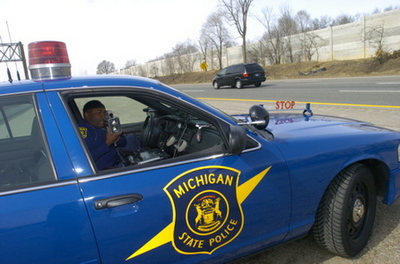
Police try to avoid ruling deaths as "undetermined" when dealing with cases that take a bit of sleuthing.
File photo
Police investigators and the medical examiners office work very closely to answer the questions surrounding a person’s death. The basic division of labor here is that the police are in charge of the scene of the death right up to the body. The medical examiner who will send an investigator (MEI) is in charge of the body, which is an important piece of evidence in this case.
The police and ME work very closely together to figure these cases out. Before any post-mortem examination and autopsy in the morgue the scene will be thoroughly investigated. Before the scene is worked by investigators, a psychological autopsy of sorts will already have begun.
A psychological autopsy is a collaborative effort between the medical examiner’s office, health care and mental health professionals, as well as the police to try to establish a person’s state of mind at the time of their death. The basic assumption here is that a person’s personal history is a good predictor of future behavior.
From a police perspective, I liked to have all the information I can obtain from prior police reports before I respond to a suspicious death scene. There may not be time to read every police report, but police reports contain a wealth of information. When the identity of the deceased is already established from the scene, starting a profile on the deceased is important.
Checking criminal histories, driving records, past police reports and now social media sites can provide police investigators with a wealth of information. If a person is never mentioned in a local police report it means either that person is a very straight arrow, good citizen or they just moved into the area.
Most of our names will be in a police report somewhere as reporting a crime, witnessing something, being a driver who got a ticket or into a crash, an owner of damaged or stolen property, someone the police assisted in some way, a victim, suspect or arrestee.
Being a suspect or an arrestee means a person has been in trouble with the law. If that person was involved in a violent crime or youth gangs, the chances of that person meeting a violent end are more probable. There is a lot of truth to the old adage, “Live by the sword, die by the sword.”
If the deceased person was a violent criminal checking through the police reports for other people involved in the violent crimes either on the same side as the deceased or opposing that person may provide the first clues on who might have pushed the person to cause their fall into the alley. Thus before a detective gets to the scene they may be thinking homicide.
The police reports may show the deceased was involved with vice-related crimes such as use, sale or manufacture of drugs, prostitution or gambling. If so these affiliations place a person at greater risk of becoming a homicide victim.
If on the other hand this person has lived in the area for a long time, has not appeared on police reports and the addresses around of the incident also are not in many police reports, perhaps we are dealing with an accidental death. Time to closely examine the scene for any obvious clues the person was working high up in an adjacent building.
A cautionary note as Washtenaw County residents venture outside and onto ladders this spring: a death investigator’s rule of thumb is that a fall from a height greater than three times the height of the victim can be fatal. Be careful climbing on roofs and ladders.
The most common use of a psychological autopsy is in the cases of suspected suicide — as in the hypothetical case of the body in the alley, which might be someone who jumped.
The majority of people who commit suicide do not just wake up one morning and decide this is the day to die. The exception to this rule of thumb is that when suicides occur suddenly and without warning, they normally are due to some sudden severe life-altering event — things like “embarrassing” arrests or events, terminal medical diagnoses or hyper-emotional romantic break-ups. These events have to be uncovered by thorough investigation and interviews.
Most people who attempt or commit suicide have suffered from depression, substance abuse or other psychological disorders for a long while. This will manifest itself in police reports in the form of medical assists, ambulance requests, check on the well-being calls, overdoses, suicide attempts, suspicious incidents or behaviors, petitions for mental health evaluations and mental health commitments.
If a person’s behavior has not quite risen to the level of police intervention, it is very likely the deceased has some medical or psychological evaluation history that the medical examiner’s office will have access to. Most MEI's check hospital records before they respond to a death scene, like the police investigators check police records. These psychological autopsy checks certainly are not the end all, but they can provide some direction in a death investigation.
For those deaths where the ME and police investigators simply can not ascertain the state of mind of the victim& #8212; like drug overdoses, which usually are accidental, or suicide — the manner of death must remain “undetermined.”
Lock it up, don’t leave it unattended, be aware and watch out for your neighbors.
Comments
BhavanaJagat
Fri, Mar 15, 2013 : 6:22 p.m.
The Basic Assumption: I am concerned about the psychology of the investigator and the basic assumption used in describing this story. My personal history may not predict the behavior of other persons. If there is a record of some traffic violations, some evidence of recreational drug use, some psychological intervention for suicidal thoughts, and history of some past illness; this personal history would not contribute to the fact of my dead body being discovered in an alley besides a high-rise building. The dead body is a witness to the life of the individual. If the dead body is the only witness, it speaks and tells if the injuries discovered were inflicted during the life of the individual, or after life has passed away. The basic assumption is that of the presence of life before death intervened.
snapshot
Fri, Mar 15, 2013 : 5:48 p.m.
"Being a suspect or an arrestee means a person has been in trouble with the law." This statement is disturbing to me as it assumes guilt with no "conviction". Just because one is "suspected" or "arrested" does not mean "been in trouble with the law". It could be the result of a vindictive officer or a misunderstanding. I'm reminded of Kinsey's "humorous" report of the officer who pinted his loaded weapen at an ususpecting woman peaking into his surveillance van. I wonder what the "story" would be if the weapon was accidentily discharged and killed the woman? What that officer did was a crime and fellow officers thought it "humorous". What kind of "psychological autopsy and predictive behaviour" would Kinsey apply in this case of an officer brandishing a loaded weapon in an unsuspecting citizen's face as a joke ?
mady
Fri, Mar 15, 2013 : 2:30 p.m.
Rich, thank you for writing about this subject in an informative manner, while at the same time giving it the dignity it deserves. yet one more reason why your publishers(who are they, by the way, and is there any way I can contact them?) reallllly should publish this!
Reason
Fri, Mar 15, 2013 : 10:16 a.m.
Really enjoy these columns and always learn something new and interesting. One of the best things about Annarbor.com!
eze
Fri, Mar 15, 2013 : 12:53 a.m.
The police officer in the stock photo appears to be trying to catch speeders. I'm not sure how that helps determine a cause of death.
actionjackson
Fri, Mar 15, 2013 : 12:10 p.m.
Speed kills!
Paul
Thu, Mar 14, 2013 : 10:13 p.m.
It sometimes still comes down to a guessing game. Look how some deaths were ruled accidental only to later on be reclassified as a murder. Sometimes months/years later. I firmly believe not all agencies are the same when it comes to investigations.
Tru2Blu76
Thu, Mar 14, 2013 : 7:10 p.m.
"... a death investigator's rule of thumb is that a fall from a height greater than three times the height of the victim can be fatal." - which is why my rule of thumb is to never get higher than 1X my own height. ;-) As for cause of death: you can put me down as, "Wanted to live but Life's Game Clock ran out." When it becomes more appropriate to raise such questions about me.
BhavanaJagat
Thu, Mar 14, 2013 : 6:28 p.m.
Life and Death - Who is the Witness? As I mentioned in some of my comments relating to the death of a young student near EMU campus, I had the opportunity to investigate the problem of death that happens in military units, camps, and military establishments. Due to the constitutional separation of powers, military forces function under their own rules and regulations and we do not seek assistance from the civilian police unless we have determined that the death is caused by murder. I would approach the problem of death from a different direction. I would like to know if there is a witness to the life of the individual who is reported as deceased. In military service, we have an advantage as we constantly try to know the men in our command. Even then, things happen. When, where, and who found this person alive, that is dead now, are the questions to be asked. What was the activity or condition that was observed by the witness to the life of the individual. We have to travel that journey and arrive at the destination called death. In a city like Ann Arbor, it could be difficult to find a witness, but it would not be unreasonable to proceed from the point of life to death while death comes under investigation. I have buried/cremated our dead men without conducting autopsy examination as we had enough evidence to determine the cause of death from witness statements and physical examination of the scene and the body.
pegret
Thu, Mar 14, 2013 : 5:13 p.m.
Interesting column, Rich. But your last two paragraphs regarding psychological autopsy checks reiterate a very sad fact about the state of mental health care in our society today. If a majority of people who attempt or commit suicide are already on the 'radar', there have been attempts to seek help by or for them that have fallen flat. It's a shame in this day and age that so many good people are lost to us due to the lack of proper mental health care.