

Michigan needs to ban the use of hand-held phones while driving
There is a health epidemic in America that claims an estimated 1,000 lives every year and sends thousands more to the hospital. Yet the cure is readily available.
When you’re driving in the your car, stay off your cell phone. It’s that simple.
People know that. They recognize the risks of using cell phones while driving, but they continue to do it anyway. This form of distracted driving has become so pervasive and dangerous that it’s time to take action against it, both socially and legislatively.
We call on Michigan to join others states that have banned the use of hand-held phones while driving, and we think this action should be coupled with an awareness campaign much like those that urge people to use seat belts or not to drink and drive. Such efforts have unquestionably made our roads safer; we now need the same approach to get people of their phones when they’re behind the wheel.
If you have any doubts about the dangers of using cell phones while driving, we hope you have read our recent series of stories on distracted driving. This reporting project, done in conjunction with our seven sister newspapers in Michigan, has offered a grisly, distressing account of the human toll from accidents caused by distracted driving.
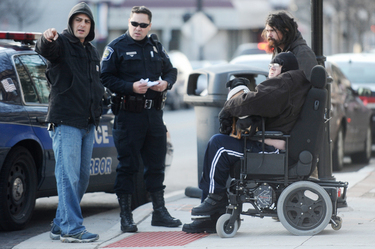
Gerald Foster was in his wheelchair and using a crosswalk last December when a driver reportedly talking on a cell phone struck him in downtown Ann Arbor.
Melanie Maxwell I AnnArbor.com
The problem has become so serious that many states, including Michigan, have banned the practice of texting while driving. But that’s clearly not enough. Last December, the National Transportation Safety Board called for a total ban on use of cell phones while driving. “No call, no text, no update is worth a human life,’’ NTSB Chairman Deborah Hersman said at the time. “It’s time for all of us to stand up for safety by turning off electronic devices when driving.’’
Americans shouldn’t have to be told that. They know that cell phones and cars can be a deadly mix. In one survey by the AAA Foundation for Traffic Safety, 88 percent of people who responded agreed that using a cell phone while driving is dangerous, and yet two-thirds said they had talked on a cell phone while driving within the past 30 days. That behavior isn’t going to change unless we legislative it and stigmatize it.
Right now, nine states ban the use of hand-held cell phones. Michigan should join them. For some people, the existence of the law could be all the nudge they need to change their behavior. But enforcing such laws is difficult, and some people seem so addicted to their phone that they’ll flout the law anyway. That’s why legislation should be accompanied by an awareness effort similar to the “You Drink, You Drive, You Lose’’ campaign that targets drinking and driving.
Actually, the analogy between the two issues is quite apt. Some studies have concluded that cell phone use in a car can be as dangerous, or even more dangerous, than driving drunk. Society used to have a more lenient attitude toward drinking and driving, but that’s changed, and we need a similar change in attitude toward the use of cell phones while driving.
The next time you’re in a car and feel the need to talk on your cell phone, ask yourself: is this call so important that it’s worth risking my life — or someone else’s? The answer is sure to be no. So do yourself and other motorists a favor, and hang up the phone. You might not be breaking the law — yet — but you’ll be a making our roads safer for you and the motorists you’re sharing it with.
(This editorial was published in today's newspaper and reflects the opinion of the Editorial Board at AnnArbor.com.)
Comments
Steve
Tue, Feb 14, 2012 : 6:02 a.m.
We should approach this problem like the Europeans. Phones, food, and drinks in the hand of the driver are all ticketable offences in many countries. Many German cars didn't come with cup holders until recently (we Americans can be influential). They take theirs cars seriously. Cars are for transportation not entertainment.
Frank
Mon, Feb 13, 2012 : 2:09 p.m.
This article isn't "news" or a "top story". It's an editorial piece and it's disappointing that annarbor.com's editors allow this piece to be grouped on the top of the page with "Top Stories".
Stuart Brown
Mon, Feb 13, 2012 : 6:09 a.m.
The fallacy here is that passing a law and making something illegal will actually be effective in changing behavior. One study that made it into the news refuted this assumption in regard to cell phone use while driving. The fact that something has proven to be dangerous does not mean enforcement actions by police will be effective at mitigating the behavior in question--we can end up not changing the behavior but also having the additional burden of having our rights diminished as well if we rely on ineffective law enforcement. The problem is that only the money from the fines is tracked; we never see estimates showing the reduction in illegal behavior as the enforcement increases. I suspect the reason for this is due to the fact that the numbers would show the behavior continues regardless of how many tickets are issued begging the question of why enforce at all?
actionjackson
Mon, Feb 13, 2012 : 5:42 p.m.
Driving itself is not a "right" it is a privilege. Cell phone use while driving is dangerous to all on the road. What about helmet laws. They only protect the individual on the motorcycle. Seat belt use, air bags, speed limits all protect and are requirements to manufacturers and individuals alike. No where in our Constitution gives you a "right to drive"
Tex Treeder
Mon, Feb 13, 2012 : 3:37 a.m.
True story. I was in a terrible accident the other day. I was driving down I-94 during a snow/rain/ice storm and my car hit a patch of ice. I wasn't going very fast, but I skidded sideways, went off the road, flipped over (just once; it was enough) and spun around a couple of times. After the car stopped moving, I popped my seatbelt and crawled out of the car. Minor scratches and a big bruise from the seatbelt were the only damage, at least the only damage to me. The car was totaled. I was not talking on my cell phone, nor was I texting. Sometimes accidents just happen. That's why they're called accidents. Enough with this sort of legislation. Be responsible for your actions.
4Reason
Mon, Feb 13, 2012 : 7:16 p.m.
Seatbelt saved your butt, eh? And to think people once argued against them the way you do about not banning cell phone use while driving. Besides that, the location of a patch of ice can't be predicted. The fact that you were paying attention may have made the biggest difference. The results of distracted driving can be predicted--if your luck does not hold out, you, or someone else, will be injured, or die. I've been nearly hit twice as a pedestrian, by drivers talking on the cell, and nearly been hit by other cars while driving, by drivers distracted by cell phone conversations. As you don't have a "right" to drive drunk, you don't have a "right" to be impaired by your distractions. People will not, as a rule, be responsible without some external encouragement. The laws of physics do not cut you any slack when you hit a patch of ice, or another car. Your chances of survival are much greater if you avoid an accident altogether.
actionjackson
Mon, Feb 13, 2012 : 2:25 p.m.
Evidently not slow enough! Try real snow tires. I have been driving I-94 daily and have not had even a slight slip from new snow and ice tires. That combined with driving for conditions will keep "accidents" from occurring.
MRunner73
Mon, Feb 13, 2012 : 12:20 a.m.
You can write an article every day or see toughter laws passed. The issue is how to enforce the laws. It would be great to drive every mile and not see anyone holding a cell phone in one hand and the steering wheel in the other. It would be great to see police pulling someone over and issuing a ticket to a cell phone law offender every couple of minutes but it won't happen.
stunhsif
Mon, Feb 13, 2012 : 12:02 a.m.
I spend several hours most days on the road and much of that time is on my blue tooth phone speaking with customers and coworkers. I never use internet or text while driving, I am with "towny" on this one. I am fine with banning hand held phones but not blue tooth devices. But if they are going to ban hand held phones , then they need to ban everything else that can cause a distraction and that includes screaming kidlets in the back seat. I am way more distracted by my wife in the front passenger seat arguing with my 3 year old in the back seat about why we cannot stop at McDonalds for french fries. A 3 year old's wailing is far more distracting than any cell phone use. Go Green Go White
james
Sun, Feb 12, 2012 : 10:26 p.m.
When are we going to ticket unsafe pedestrians? In Ann Arbor especially, I can't tell you how many people I see walking against the lights, jaywalking, and just being all-around unsafe when it comes to vehicles. Yet, nobody cares in Ann Arbor. Hypocrites at its finest!!
justcurious
Sun, Feb 12, 2012 : 10:13 p.m.
Our family does use cell phones a lot - maybe 350 minutes a month. We both are guilty of cell phone use in the car. I try to use speaker phone in the car, but I know that I am still distracted from the business of driving. I would be in favor of a law banning cell phone use while the vehicle is moving. I would expand that to include bluetooth phone use because, as others have said, it is the mere act of conversing that provides the distraction. I would obey the law and am going to try to stop using my phone while driving now. It's not worth the consequences.
justcurious
Sun, Feb 12, 2012 : 10:14 p.m.
Should have read "does NOT use cell phones a lot".
Mike
Sun, Feb 12, 2012 : 8:46 p.m.
There have already been plenty of studies that show that outlawing cell phones and driving do not decrease accidents. I know it makes liberals feel good to enact yet more repressive laws. It just doesn't do any good in the real world where the rest of us have to live.
justcurious
Sun, Feb 12, 2012 : 10:07 p.m.
Please post the link to those studies.
st.julian
Sun, Feb 12, 2012 : 8 p.m.
speak of government over reach! You can't protect everybody from everything. perhaps we should prohibit listening to radios, Talking in cars, or having passengers in cars.
towny
Sun, Feb 12, 2012 : 7:43 p.m.
Tesla posted : Starting this year the Department of Transportation in Michigan has began a new law covering commercial drivers and their use of cell phones while driving. This new law is for Interstate truckers who go state to state and is not a total ban. They can still use hands free. Bluetooth etc. I just realized this proposed ban is for complete no use of phones. I misunderstood I thought hands free was OK. Total ban no way. This will not work there is too much business done on the roads by way to many people. What about emergency's. Professionals on the road almost all use a bluetooth device. Just like always the few spoil it for every one. What is wrong with bluetooth it is handsfree. I think the main distraction is when people are fumbling with there phones.
garrisondyer
Sun, Feb 12, 2012 : 7:27 p.m.
A responsible driver can talk on their cell phone while driving and knows when he or she is in a situation that warrants putting the phone down until later. Why should us responsible drivers have our freedom to use the phone we pay for taken away simply because some people can't handle it? Irresponsible people need to be held accountable for any problems/accidents that they cause, period. Leave the rest of us alone, because we're driving safely and defensively out there, even if we're (gasp!) also talking on our cell phones.
LiberalNIMBY
Sun, Feb 12, 2012 : 7:21 p.m.
Here's a quote from the same writer in this same publication two years ago: "[W]e can't bring ourselves to support efforts by the Ann Arbor City Council to pass a ban on the use of cell phones while driving. Research has recently shown that such bans on a statewide level have had no effect on accident rates, and we suspect the same would be true for a city-only ban. Surely there are better uses of council's time." How times have changed. And council should be ashamed of the blood that has gotten on their hands in the meantime.
EyeHeartA2
Mon, Feb 13, 2012 : 2:37 a.m.
The point at the time was that a city only ban is confusing - probably as stupid as the crosswalk law, but the morons in city council hadn't dreamed up that pile of garbage yet.
garrisondyer
Sun, Feb 12, 2012 : 7:28 p.m.
How is it the city council's fault? It's the fault of any idiot who drives irresponsibly and causes an accident, whether influenced by a phone or not. Let's put the blame where it belongs and move on.
AMOC
Sun, Feb 12, 2012 : 7:08 p.m.
Hands-free cellphones and voice-actuated "info-tainment" systems are just as distracting as hand-held cell phones. Sending texts while driving is hugely more distracting and dangerous than either one, because the driver's eyes are off the road for each character. However, referring to texts giving directions or an address can be less distracting than referring to paper directions or audible directions from a GPS, because the driver can choose when to consult a hand-held device which is highly legible / glows in the dark. Many drivers can handle some amount of distraction under some driving conditions. Many people rely on their cell phones to conduct business while in transit, and almost all of them do so safely. It seems to me that legislation, especially blanket bans, is premature except in the case of sending text messages. Texting while driving is already banned in Michigan, and that ban should remain. All drivers need to be aware of their own threshold for dangerous distraction, and take steps to keep their attention on traffic conditions first, with conversations in person or by phone, information or entertainment second in line.
Doug
Sun, Feb 12, 2012 : 6:20 p.m.
There is technology available so that the speed of a cell phone can be determined and automatically shut off. This would solve them distraction problem and not take up valuable law enforcement time.
nuseph
Sun, Feb 12, 2012 : 5:55 p.m.
I'm no angel when it comes to distracted driving. But my biggest issue is people who try to execute turns and lane changes while talking on the phone. Holding a phone to your ear necessarily cuts off some of your peripheral vision. People can try to draw in comparisons to food, maps, makeup, etc., but those are few and far between by comparison.
E. Daniel Ayres
Sun, Feb 12, 2012 : 5:37 p.m.
As a victim of a distracted driver, I heartily support efforts to control/limit distracted driving. I ended up spending over $6500.00 and wasted a man-week when my trusty Ford Ranger Long-Bed pickup truck was destroyed. My insurance company was out another $3200, all because a teenage girl wasn't paying attention to the road and rear-ended me at 45 miles per hour after three other cars had seen me signal a left turn and come to a stop on a surface street. The others all were able to slow and pass me on the right, but she ran into me full tilt even though my turn signals were on and I was stomping on the brake to "flash" and trying to get her attention. Both of us could have been killed! With that background, I find myself asking if there is a way to engineer "hands free" options which are adequate to allow talking or messaging while driving. Auto makers seem to think so. What isn't clear is whether or not the NTSB has difinitive unbiased studies of the use of these new hands free options which warrant banning them as well. If unbiased research indicates that the hands free option does distract drivers, I would heartily oppose it too!
Steve
Tue, Feb 14, 2012 : 5:59 a.m.
Glad you survived and I hope you're OK. While there are many technological options to limit phone usage while driving, I still think the fundamental problem is a lack of appreciation for how much mass and energy is involved. Maybe people should be required to push their cars up a hill once in a while to get them to understand how much power they're controlling with that little pedal.
garrisondyer
Sun, Feb 12, 2012 : 7:23 p.m.
I hope she was ticketed up the wazzoo. ...And it's a shame she doesn't have to pay all of that money when she caused the whole accident. A responsible driver on a phone wouldn't have caused you all that grief and wasted time/money. She should be held accountable for her actions, but we shouldn't all have our freedom to talk on a phone while driving taken away simply because irresponsible people can't handle it.
RoboLogic
Sun, Feb 12, 2012 : 5:32 p.m.
Hands free device... or not at all.
djm12652
Sun, Feb 12, 2012 : 4:36 p.m.
This is just what we need.....another law for drivers to ignore. Currently on the books, no texting....and that is blatantly violated in Ann Arbor. I can't tell you how many times...but at least once a day...I have to stop while in the crosswalk for someone texting while pulling up to a red light here in downtown, and not even looking up! For one of the smartest towns in America, we have a whole lot of stupid people...or wait forit...people entitled to text and drive....or hold the phone up to their ear and not really pay attention to pedestrians. But then again this is Ann Arbor, where when a light turns yellow, it means speed up and blow it red...just to get that half block ahead. I am always amazed to find out just how many important people with important things to do are in this town. So important that they will totally dismiss the well being of others as well as their own safety...stupid is as stupid does! Smart town? Think not....my dogs obey the rules better than most of arborites
actionjackson
Sun, Feb 12, 2012 : 4:17 p.m.
Cell phone use is way overused. What can be so important as to take your attention away from 100 ft. per second of a couple of tons of steel rolling down the road. It is often times too late for someone to see this as they are in a hospital bed or the funeral home from this unimportant use of communication. I would no sooner talk or text as I would drive 70 mph into oncoming traffic playing "chicken." There are plenty of exits from freeways, parking lots, or other means of pulling over to take a call or to make one. What's the rush anyway?
Tru2Blu76
Sun, Feb 12, 2012 : 4 p.m.
I'm 100% for the ban on use of cell phones (and other distracting devices) while driving. I only want to be sure that it's made clear that using a cell phone to report an emergency - while driving - would remain legal. I say this because CB radios are used by drivers for that purpose and cell phones should be considered in the same light. Further, I'd recommend that all retail businesses (in addition to banks, hospitals, etc.) post signs restricting cell phone use while on the premises. Cell phone use in such places / situations as check-out lanes in grocery stores is becoming an obnoxious epidemic. I'm fed up with people chatting obliviously in check-out lanes when they should be attending to their transaction instead of holding back all the people behind them.
Camilla Roper
Sun, Feb 12, 2012 : 3:59 p.m.
The average US vehicle weights 4,000+ pounds. Do we really want to turn on the ignition and set it on the road with no one at the wheel? Distracted driving -- whether, eating, drinking, smoking, applying makeup, batting at kids in the backseat, or focusing attention on a phone call in your hand or hands-free -- is not a behavior conducive to survival of the species. And when someone else's driving behavior has this potential control over us or our loved ones' destiny, this is unjust and requires change. Ten years from now, the US will (hopefully) look back on this distracted driving time and see it as barbaric and just plain stupid, as in, "What were we thinking?" People need to be in communication, some almost constantly, in this day and age. But the place to do that is in a bus, or on a train, or in a car or van pool, not driving oneself in a vehicle. Developing these options is right on point. More bike paths are also a good idea, but I personally as a pedestrian have been run into twice by cyclists using a hand-held device. So, keeping the constant communication can work, but we must separate the driver and the communicator.
cornelius McDougenschniefferburgenstein jr. 3 esq.
Sun, Feb 12, 2012 : 6:42 p.m.
ya i love listening to 20 idiots screaming into their phone for hours on the bus.
mg0blue
Sun, Feb 12, 2012 : 3:53 p.m.
Anyone ever driven with two toddlers in a car? My point exactly. I'm going to start a grassroots movement to ban ALL KIDS IN CARS!
djm12652
Sun, Feb 12, 2012 : 7:57 p.m.
yes I have, well behaved though
C. S. Gass
Sun, Feb 12, 2012 : 3:53 p.m.
Why don't we just ban cars altogether. They're dangerous. They have more kinetic energy than a bullet from a .44 Magnum. And while we're at it, let's ban cellphone use while walking too. You might fall down an open manhole or trip and break your ankle. On second thought, let's just ban cellphones. All of them, all the time. Someone might say something offensive on them and someone else's feelings might get hurt. THEN we should ban leaving your house, because you know it's a dangerous world out there and you might get hurt. Please stop trying to 'life proof life' Lansing Legislators. And to those of you Sheeple clammoring for more laws to make you feel safe, understand this: 1. These laws don't reduce accidents. Look at the statistics of states that have passed them. Nothing changes. 2. You are a disgusting affront to freedom loving people the world over. 3. Government, be it state, local or federal is not the messianic saviour that you make it out to be when you whine your prayers to them for deliverence into further restriction and bondage. WE NEED NO MORE LAWS!
djm12652
Sun, Feb 12, 2012 : 4:44 p.m.
exactly, what we as a society needs to do is refrain from dumbing down our children and willy nilly issuing licenses to those that don't even have the brains of the box the rock came in. I am against more laws that infringe upon our freedoms, however, I am also against current laws not being enforced. Unfortunately we don't have the police presence available to make sure distracted drivers AND pedestrians adhere to already established laws.
mg0blue
Sun, Feb 12, 2012 : 3:55 p.m.
Amen
Tony Dearing
Sun, Feb 12, 2012 : 3:45 p.m.
One analogy that hasn't been drawn here is between this issue and seat-belt use. Before Michigan passed the seat-belt law in 2000, about 70 percent of people used their seat belt. By 2008, that percentage had climbed to nearly 98 percent and Michigan had the highest rate of seat-belt use in the nation. There was significant opposition to the law at the time, but the combination of the new law, enforcement and awareness campaigns changed behavior. Today, virtually everyone in Michigan uses seat belts and without question, the result has been fewer deaths and serious injuries on the road. It's true that you can't legislate everything, but like the seat-belt law, this is an opportunity to change behavior and save lives, and that's why we have supported it.
Tex Treeder
Mon, Feb 13, 2012 : 3:49 a.m.
This was a disingenuous piece of legislation. The original legislation was passed with the promise that seatbelt use would not be a stopping violation; that is, the cops couldn't pull you over for not wearing a seatbelt, but they could ticket you if you were pulled over for speeding and then found to not be wearing your seatbelt. However, in a fit of nanny-statism, the state legislators ignored their earlier promise and made seatbelt use a stoppable violation. So much for promises. The ends justify the means, I hear some people saying already. Look at the increased used of seatbelts and the decreased injuries and death rates. I wonder if those are the same people who enjoy having their civil liberties removed one by one, for example by organizations such as TSA. It's the same logic: If you have nothing to hide, you shouldn't object to being searched. You can't object to lower death rates, therefore you shouldn't object when the government removes your right to choose. We can only speculate when all things will be mandated by the government. Cigarettes will be a moral evil, as will jaywalking, swearing in public or parking beyond the allowed time on a meter. Anything which is not mandatory is forbidden!
cornelius McDougenschniefferburgenstein jr. 3 esq.
Sun, Feb 12, 2012 : 4:32 p.m.
wrong the only reason people buckle up is cuz cops can see shoulder harness.if one is bluetoothing they will claim"i was talking to the voices in my head.
mg0blue
Sun, Feb 12, 2012 : 3:56 p.m.
There have been speed limits for even longer.....
Bernhard Muller
Sun, Feb 12, 2012 : 3:43 p.m.
I don't generally use a cell phone while driving. But, in the last several years I have done so on several occasions. On each occasion it was to call 911 (or its equivalent) to report a recently occurred accident. It usually was unsafe to slow down and stop to make the call, and waiting until the next exit would take too long. The law should allow for such exceptions.
fman
Sun, Feb 12, 2012 : 3:36 p.m.
It's not the phone use that is dangerous, it's the user!! If you can't handle talking on a phone while your driving, maybe you shouldnt have a license! I run a tile installation buisness in Ann Arbor and Im in my truck a lot, it's my mobile office. My cell phone is a VERY important part of my buisness!
garrisondyer
Sun, Feb 12, 2012 : 7:16 p.m.
THANK you, fman. I'm planning on also writing a similar comment, but I just couldn't bear to stop reading these comments until I saw someone who brought up this point. Talking on the cell phone isn't inherently dangerous! It's all the other crap! And if you let a conversation get that distracting, then you shouldn't have, because you're DRIVING! People need to take a little personal responsibility here... Don't take away this freedom just because some people can't handle it.
G.Wiener
Sun, Feb 12, 2012 : 3:23 p.m.
Though I, like any sane person, would hope that cell phone calling/texting while driving soon becomes illegal, experience has shown me that it won't make the slightest difference if such a law is passed to anyone's driving habits, except perhaps in the way certain lawsuits are settled. Certain police with nothing better to do may also find it a productive way of pulling in ticket revenue. It bears reminding that Michigan does NOT require car inspections, which more or less moots this latest effort to mandate driver safety.
Twanders
Sun, Feb 12, 2012 : 3:22 p.m.
While I agree that texting while driving is HIGHLY DANGEROUS, I have to ask in regards to banning cell phones while driving? Why now? Cell phones have been around for years and all of a sudden there's this anti talking while driving movement. Let's focus on the real problem which is likely the texting, reading emails and googling while driving epidemic. Most phones nowadays are smart phones and have these capabilities. A campaign that educates drivers and really reminds us on a daily basis of the dangers makes sense, but "stigmatizing" it does nothing to stop it, if it did we wouldn't continue to give out DUIs. Legislating it also isn't going to make people stop, nor is enforcing the legislation, again, if it did, we wouldn't have to have traffic cops. Education and prevention. Simple.
Tesla
Sun, Feb 12, 2012 : 3:28 p.m.
Smartphones. Period. Your so called "Cell Phone" is not rally a phone. It's a very powerful computer linked to the internet that can do anything a computer at home can do that just Happens to make phone calls as a bonus. It's not just about making a phone call now.
hut hut
Sun, Feb 12, 2012 : 3:20 p.m.
Stop calling car wrecks or fender benders "accidents" when they involve distracted driving. Car wrecks involving distracted driving, for any reason, are NOT ACCIDENTS!
jcj
Mon, Feb 13, 2012 : 3:44 a.m.
If you slip and fall on a wet floor is that an accident? If a dead limb from a tree on your property falls on someone is that an accident? From Wikipedia An accident or mishap is an unforeseen and unplanned event or circumstance, often with lack of intention or necessity. It implies a generally negative outcome which may have been avoided or prevented had circumstances leading up to the accident been recognized, and acted upon, prior to its occurrence. Given this definition a crash caused by a distracted driver Does fit the definition! "a generally negative outcome which may have been avoided or prevented had circumstances leading up to the accident been recognized, and acted upon" If only the distracted driver had "acted upon" (had not used their cell phone) (had not looked down)
E. Daniel Ayres
Sun, Feb 12, 2012 : 5:42 p.m.
Would you charge the "distracted driver" with a misdemenor or a felony depending on the severity of the incident, or leave it as it is now where "no fault" auto insurance laws penalize the public who could recover civil damages if charges were filed?
Tesla
Sun, Feb 12, 2012 : 3:19 p.m.
Starting this year the Department of Transportation in Michigan has began a new law covering commercial drivers and their use of cell phones while driving.
InsideTheHall
Sun, Feb 12, 2012 : 3:06 p.m.
No more government intrusion into our lives! The Nanny State is out of control. It's dangerous driving at night.....will that be banned next??????
scott
Sun, Feb 12, 2012 : 7:05 p.m.
The only solution to any problem is to move somewhere far away!
hut hut
Sun, Feb 12, 2012 : 3:22 p.m.
Maybe you'd prefer someplace with a government less intrusive? Try Somalia.
ChelseaBob
Sun, Feb 12, 2012 : 3:01 p.m.
People still slip and fall in bathtubs a lot. Lets outlaw those. And hundreds of people choke on hard candies. Lets outlaw those. Teenagers present all kinds of risks. There must be a way to lock them up....... When does it stop?
steve h
Sun, Feb 12, 2012 : 4:59 p.m.
not necessarily craig, suppose someone slips in the tub and is gravely injured and near death. Family calls 911. A fire department response, a police response and an ambulance. Lots of emergency vehicles asking for the right of way. Accidents happen when emergency vehicles respond because people don't pay attention. For sake of argument, let's say it snowed overnight and this fall happened in the morning. There wasn't time to shovel the driveway/sidewalk and throw some salt and now one of the responders slips and hurts themselves. Now the original fallen person is transported to the hospital and takes up a bed in the ER because they are gravely injured. The hospital is very busy so someone in the waiting area has to wait longer to be seen by the doctor and ends up having a massive heart attack and dies. So craig his argument does not fall short. There can be other innocent victims involved in a simple fall in a bath tub.
Craig Lounsbury
Sun, Feb 12, 2012 : 3:51 p.m.
for sake of argument if you slip in the bathtub you only kill yourself. In that regard the comparision falls short.
jcj
Sun, Feb 12, 2012 : 2:51 p.m.
While we are on the subject. Does anyone have a problem with driver that have their dog in their lap while driving? Probably not here in doggy heaven!
hail2thevict0r
Sun, Feb 12, 2012 : 2:46 p.m.
This article is basically ignoring all of the evidence out there that says that using a hand-held phone is just as dangerous as using a hands-free device while driving. I'm sorry but you can't ban every distraction on the road and plenty of people do dumb stuff all the time in the car and you can't ban it all. I just don't don't see the point. Not only will people continue to use their phones but how on earth do you prove if someone is using a hands free device?
Craig Lounsbury
Sun, Feb 12, 2012 : 2:34 p.m.
A few studies indicate that there is little difference between "hand held" and "hands free" with respect to distraction. Th act of conversing with someone who is not physically present is the key part to the distraction. I would suggest if your going to ban in the name of safety then don't do half a job that allows the false premise that "I can't be drunk because I only had lite beer" mentality. That is in essence the Ann Arbor.com editorial stance. .... "We at Ann Arbor.com oppose distracted (drunk) driving unless its committed with a hands free (lite beer) devise. Then we don't care.
A2James
Sun, Feb 12, 2012 : 2:30 p.m.
"That behavior isn't going to change unless we legislative it and stigmatize it." Well, with that grammatical nightmare, nothing's going to change, lol. Unless we LEGISLATE IT. (Isn't Tony Dearing one of the top editors for Annarbor.com? Wow.)
ViSHa
Sun, Feb 12, 2012 : 2:28 p.m.
The problem with a lot of cell phones NOW is many/most are smart phones. People are not just talking, they are reading emails, googling, etc... How anyone can think reading emails/googling is as distracting as eating a hamburger, putting on lipstick, etc... is beyond me. Completely different thought processes. And you can't make laws that say-- you can't text, read emails, surf web while driving, etc..--but you can have phone conversations. iMO
Tony Dearing
Sun, Feb 12, 2012 : 2:28 p.m.
A comment was removed because it violated our conversation guidelines. Please don't post comments that include profanity or abbreviations that represent profanity. Thanks.
jns131
Sun, Feb 12, 2012 : 2:23 p.m.
Major English here. The first line says American.....should it not be America? Just curious.
Tony Dearing
Sun, Feb 12, 2012 : 2:32 p.m.
Thanks. I corrected that.
G-Man
Sun, Feb 12, 2012 : 2:20 p.m.
Pretty soon we'll have to ban riding in a car! If you ban cell phones you should also ban eating! Also, no talking! You shouldn't be able to talk to the person next to you because you might be distracted, you might even look at them as you talk...? I think Billboards should be banned. We shouldn't have that distraction when we drive! We might take our eyes off the road to look at a billboard..... If billboards are banned, i think street signs should also be banned... We could get caught up in looking at street signs...... And what about traffic lights? Those darn lights are always causing problems....... I guess now we'll have to make the car manufacturers take all the dashboard gizmo's like the Ford Sync i now have with my cell phone in the dash!! No back seat DVD players in the headrests for back seat people...they could distract the driver too......... No Smoking, either...... That would be bad if you are puffing and daydream about something.. Think about this.... this is just another attempt to erode personal liberties and freedom...... I don't think it is the majority of people. If you can't concentrate on driving while you're driving, then you shouldn't be driving..... If you can't drive a car and talk at the same time, then you shouldn't be driving.. It is simple. I agree that texting while driving is unnecessary and likely dangerous, but don't take everyone's cell phones away...........
Rae
Mon, Feb 13, 2012 : 1:51 a.m.
Yes, I agree, too. It's just another attempt to erode our personal liberty and freedom to do whatever we want to, whenever we want to, even if it puts us and the people around us (pedestrians, bicyclists, and other drivers) in danger.
towny
Sun, Feb 12, 2012 : 7:26 p.m.
I agree 100%. Good post.
steve h
Sun, Feb 12, 2012 : 2 p.m.
Let's just ban cars. Then there will be no "epidemic" of deaths from distracted driving no matter the cause.
scott
Sun, Feb 12, 2012 : 7:04 p.m.
Only cell phones are dangerous, cars are safe regardless!
towny
Sun, Feb 12, 2012 : 1:56 p.m.
I agree with all the top posters. Where do you draw the line. I have seen many people driving with there knees while they are doing something stupid with there hands. With all the recent articles about this I could hear the cry coming. Sorry, if you ban this you better ban everything else. Keep taking away our rights and we will be living in a communist country. My main concern is with young drivers. I do not believe many children at 16 years our ready to be driving on the roads. My children did not get there license's until 17. Young adults should not get there full license's until at least 18 years old. Look at the startling number of accidents 16 year old 's have recorded. I use a bluetooth and have for years. But, keep taking away our rights and see what we have left. Nothing.
kathryn
Mon, Feb 13, 2012 : 12:19 a.m.
I sense that since you use a hands-free phone and have therefore become "used" to doing it, you are resistant to information that shows that it is a distraction and dangerous and that you will resent being told to give it up. That doesn't change the science. People who drink and drive regularly, also feel that they are able to "handle it" and are not a "real" risk...and they are wrong. As for the "ban this-ban everything" argument...that's just a distraction. If something is becoming a real danger to the community at large, then it needs to be restricted. I do, however, agree with licensing driver at an older age....my kids are over 20 and still don't drive.
stunhsif
Sun, Feb 12, 2012 : 2:20 p.m.
Good common sense post Townie. I use a blue tooth as well and live on my phone for business. Go Green Go White
Hal Innes
Sun, Feb 12, 2012 : 1:55 p.m.
Some have commented on why pick on cell phones while leaving out other distracting behavior. Although a valid point you have to choose your battle wisely. I have seen too many near miss incidents and have almost been on the receiving end of cell phone distraction. I just want to be able to cross a street or wait at a traffic light on my motorcycle without getting blasted by a one-ton or greater vehicle. Since people can't seem to police themselves in this matter, we're left with no choice but enactment of a new law.
Richard Wickboldt
Sun, Feb 12, 2012 : 1:53 p.m.
Yes we need to ban using hand held devices while driving a car. As noted the statistics clearly show it is deadly and injurious to people. I have experienced many close calls and consider myself lucky to be alive. Let's hope Annarbor.com continues with articles getting all distracting activity when driving outlawed. It is common sense and goes against what we learned to even be issued a driver's license. Anybody who is caught practicing distracting activities while driving should have their driver's license revoked for many years and if a repeat offender never allowed to drive a vehicle. The city of Ann Arbor should pass very strict laws concerning distracted driving to protect the many bike path users the city wants to get on the streets.
Jon Saalberg
Sun, Feb 12, 2012 : 1:49 p.m.
How dangerous is texting while driving? Very. This comprehensive test of texting vs. driving while drunk vs. driving unimpaired should convince even the most hardened skeptic: <a href="http://bit.ly/vUR71S" rel='nofollow'>http://bit.ly/vUR71S</a>
djm12652
Sun, Feb 12, 2012 : 8:33 p.m.
@garrisondyer...very difficult when a lot of the drivers aren't capable of walking and chewing gum at the same time. If you watch people try to parallel park a Prius and they can't...it speaks volumes about the level of competency of a lot of sober drivers...and a distraction or substance and whoa...it's Russian roulette on the road. I had a young person on a cell phone blow a red light Friday night in the bad weather...[east-bound on Stadium turning north onto Main...yeah you know who you are] luckily I saw them coming and was able to avoid a t-bone in my driver door. Although my larger vehicle would not have been damaged as much as that little Honda Civic....So it's not just the phones, drinking, toking...it's really just stupid people!
garrisondyer
Sun, Feb 12, 2012 : 7:09 p.m.
Yeah, but how dangerous is talking on the phone while driving? Not at all, if you're making sure to drive safely at the same time.
Lisa
Sun, Feb 12, 2012 : 1:41 p.m.
I have been around cell phones since they came in a bag. I no longer use one .It is in my car as a car tool for emergency. This is the era of my cell phone and I pods they have become people best friends. No longer do people walk down the street and say hello they are having conversations on their cell phones, they date there cell phones, they grocery shop with there cell phones they go out to eat with their cell phones. eating dinner out while your family is trying to enjoy a night out surrounded by text ers driving downtown is like a circus ride with a blindfold. I think if someone feels their that important bring the beeper back pull over and converse on you cell phones . My body has been damaged enough from irresponsible people abusing their cell phones, learn to have conversations with people learn to enjoy your surroundings abound. Its a device a tool not a portable friend!
ShawnS
Sun, Feb 12, 2012 : 1:28 p.m.
The studies I've seen about cell phones and the effects on driving determined that there is NO statistical difference between the effects of hand-held or hands-free types of in-vehicle phone usage. BOTH cause major mental distraction. The issue is how the brain works, the distraction of having a conversation with an external person is nothing like having a conversation within the vehicle OR holding a french fry or anything else. People still seem to think the danger is what your hands are doing, that is not the issue at all. Policy makers really need to concentrate on the science here, just like in other areas of political debate. Common-sense solutions will only address the common-sense problem---and thus will not be effective at addressing the complete driver-distraction issue that cell phones present.
arbormike
Sun, Feb 12, 2012 : 1:21 p.m.
While talking on a phone and driving is distracting, being a horrible driver is more dangerous. There are some really, really bad drivers out there people.
craigjjs
Mon, Feb 13, 2012 : 1:33 p.m.
How many horrible drivers believe themselves to be good drivers and complain about the other horrible drivers?
LB
Sun, Feb 12, 2012 : 2:09 p.m.
Even worse yet, how about the terrible driver on the road, and talking on the cell phone!
Major
Sun, Feb 12, 2012 : 1:20 p.m.
As much as I like having a cellphone, they should not be used while driving. In the phone vs passengers argument, when you talk with passengers, you don't take your eyes off the road. With a cell phone you have to look away from the road. Doing that, even for a fleeting moment, you might as well be driving blind, more than enough time to find yourself piloting your car where you didn't mean to be. As much as I HATE being told what to do by people that are dumb as dirt and absorbed in self interest (legislators) this law may be necessary! Another thing people must realize...driving is a PRIVLAGE not a right!!!
Major
Sun, Feb 12, 2012 : 4:23 p.m.
Wish I knew what censored person here had to say, one thing worse than dumb as dirt legislators telling me what I can and can't do, is to be censored!! A2 dot com, please get real, and get out of the dirt!!!!
Kronoberger
Sun, Feb 12, 2012 : 1:19 p.m.
Actually I'm not only in favor of banning hand held devices while driving, I think they should be banned for pedestrians on the street. It is annoying to be behind someone ambling down the street slowing pedestrian traffic and not attending to others because they are talking on the phone. And while I'm at it I might mention that I find rude people who are so utterly plugged in to their MP3 players that they cannot acknowledge a greeting from a fellow traveler in this world of woe. I console myself with the thought that they will all be prematurely deaf. A plague on antisocial electronics! May their networks fail!
djm12652
Sun, Feb 12, 2012 : 8:21 p.m.
Exactly! The technological advances we have seen in the last few decades are contributing to the thought processes that are making us into a very lazy, rude society, anonymous and unaccountable.
marzan
Sun, Feb 12, 2012 : 1:14 p.m.
Absolutely should be banned. It's dangerous and everyone knows it. I know someone who was killed because of a cellphone being used while driving.
djm12652
Sun, Feb 12, 2012 : 8:10 p.m.
@stunshif...btw never knew they had them but I digress....exactly...any distraction can be fatal. Doesn't mean squat what the distraction it is still deadly...and how many people in this state are smokers? I believe it's down to around 25 to 30%. Cell phone users in this town? Probably 95% if not greater. I read an article last year that stated about 28% of all traffic accidents are alcohol related...less than 2% were due to sudden health issues, diabetes, heart attack, strokes while driving...that leaves over 70% of accidents caused by negligent and/or distracted drivers.
stunhsif
Sun, Feb 12, 2012 : 2:17 p.m.
And just recently there was an article about a young man killed by a snowplow driver who got distracted by fumbling around to find his smokes. Go Green Go White
Brad
Sun, Feb 12, 2012 : 1:12 p.m.
Why only hand-held phones when the research shows that it is the cell phone use itself that is the major factor, not whether it is held in the hand or not. Even your own "article" seems to say this. And the comparison to drunk driving is fairly lame. "Some studies have concluded ". Yeah, and "some studies have concluded" that the moon is made of green cheese, too. If you have a scientific study that you'd like like to use to bolster your position, then provide a citation. If all you have is some anecdotal fluff, leave it out.
Goober
Mon, Feb 13, 2012 : 11:49 a.m.
I was taught at a young age not to eat the cheese if it was green.
Mark Wilson
Mon, Feb 13, 2012 : 2:21 a.m.
Brad wrote: "If you have a scientific study that you'd like like to use to bolster your position, then provide a citation," but instead of providing a citation for his own opinion, he wrote "research shows". This is what stands for argument these days? Lame.
Mark Wilson
Mon, Feb 13, 2012 : 2:19 a.m.
From Wikipedia - Confirmation bias (also called confirmatory bias, myside bias or verification bias) is a tendency of people to favor information that confirms their beliefs or hypotheses.[Note 1][1] People display this bias when they gather or remember information selectively, or when they interpret it in a biased way. The effect is stronger for emotionally charged issues and for deeply entrenched beliefs.
jcj
Sun, Feb 12, 2012 : 2:48 p.m.
@Tony While looking for "studies" did you look for studies that seemed to lesson the impact of driving and cell phone use? Or just studies that proved your point? I used to use scripture to prove a point. And then I found myself ONLY looking for scripture that backed of my position while ignoring scripture that did not. My point is only that we need to be honest with ourselves and give a fair look to subjects. I am NOT condoning cell phone use while driving.
Tony Dearing
Sun, Feb 12, 2012 : 1:39 p.m.
Thank you for making these points. You are right that references to studies should include links. I've added a link to information on a preliminary study and final report by researchers at the University of Utah. I'm including the link here as well: <a href="http://unews.utah.edu/old/p/062206-1.html" rel='nofollow'>http://unews.utah.edu/old/p/062206-1.html</a> Here's another link, this one to an article in the Economist that refers to similar finding by researchers at Carnegie Mellon. <a href="http://www.economist.com/node/18561075" rel='nofollow'>http://www.economist.com/node/18561075</a> You are also correct that studies have not shown the use of hand-free devices in cars is safer. The ideal would be, as the NTSB as recommended, to ban all use of cell phones in cars, but no state currently goes that far. At the least, we'd like to see Michigan join the nine other states that ban use of hand-held phones in cars. It seems more feasible to get that through the Legislation. One other note. This is not an article. It is clearly labeled at the top and at the bottom as an editorial. Thanks for offering your thoughts. There's a good discussion going on here.
scott
Sun, Feb 12, 2012 : 12:59 p.m.
I disagree with the notion that this needs to be legislated, but I like the idea of stigmatizing texting while driving. In fact I will commit to egregiously honk at people texting and even start driving into their lanes while next to them to get their attention. Maybe we could sell fake "cell phones" to throw at people texting while driving!
A2comments
Sun, Feb 12, 2012 : 1:23 p.m.
In fact I will commit to egregiously honk at people texting and even start driving into their lanes while next to them to get their attention. Yeah, that's safe...
Carole
Sun, Feb 12, 2012 : 12:58 p.m.
In my opinion, I believe that cell phones are a total distraction period. Driving, walking, whatever. Usually the individual is so engrossed in the conversation, they are not paying any attention to what is going on in their surrounding area. This also goes for runners and walkers who use ipods and are not aware of whats happening around them. Basically, it all boils down to be totally responsible for one's self -- if you are that, that you are responsible for all those around you.
snoopdog
Sun, Feb 12, 2012 : 12:10 p.m.
Why are we just picking on cell phones right now, because of recent and prevelant articles in the news. Cell phones are the top of the "danger of the day" club. You want to outlaw hand held phones in a moving vehicle , ok ! Then outlaw eating, putting on makeup, reading and smoking in moving vehicles as well. Distracted driving is distracted driving. While we are at it, let's raise the age to 18 for getting a license and make the process one that truly demands competance. And one more thing, get the junk cars off the road. Ticket those folks that drive around in death traps. Good Day
Steve
Tue, Feb 14, 2012 : 5:53 a.m.
+1 for vehicle inspections. I had family from NY visit me a few years ago. My brother commented on a pickup truck with its rear fender held on by the only bit of sheet metal that hadn't rusted. It was flapping in the wind and ready to go. He asked how cars like that pass inspection. He could not believe that once a car is sold some cheapskate could drive it for 40 years, risking the lives of others on the road.
Goober
Mon, Feb 13, 2012 : 11:47 a.m.
Pardon me EyeHeartA2? Michigan does not have a mandatory car inspection requirement to renew car registration. Texas, does, Virginia does - but Michigan does not. If they did, a lot of the junkers now on the road would be in the junk yard.
EyeHeartA2
Mon, Feb 13, 2012 : 2:30 a.m.
You guys crack me up. You don't think anybody inspects vehicles prior to registration? You need to get out more: What are the inspection criteria for passenger cars and light duty trucks? Safety inspections for passenger cars and light-duty trucks require that the following items be checked: suspension components, steering, braking systems, tires and wheels, lighting and electrical systems, glazing (glass), mirrors, windshield washer, defroster, wipers, fuel systems, the speedometer, the odometer, the exhaust systems, horns and warning devices, the body, and chassis. For most vehicles in the 42 county, Non-I/M region this safety inspection will also include a Visual Anti-Tampering Check. The Visual Anti-Tampering Check is an examination of the vehicle to see if the required emissions components have been tampered with or removed. For more information concerning the 42 County Visual Anti-Tampering Check please reference Section 175.80 of Subchapter E, of the Vehicle Equipment and Inspection Regulations. For a complete list of the rejection criteria for passenger cars and light duty trucks, please visit Subchapter E of the Vehicle Equipment and Inspection Regulations <a href="http://www.dmv.state.pa.us/inspections/safety_motorist_faq.shtml#Q01" rel='nofollow'>http://www.dmv.state.pa.us/inspections/safety_motorist_faq.shtml#Q01</a>
Sparty
Sun, Feb 12, 2012 : 3:19 p.m.
Yes, didn't you read that section in the Constitution that defines what a junk car is? It's right after the section defining equal protection for all under the law.
Silly Sally
Sun, Feb 12, 2012 : 3:06 p.m.
Ah, snoopdoggy the nanny state. Wanting to decide if my car or truck is "good enough" or pretty enough for him or her. What a snoop. Wow. What about my bedroom, do I wash my sheets often enough? What makes them "deathtraps" Age? Paint" Rust? How can thsi snoopy person tell? We presently have laws about tire tread depth, working brakes, stearing and such. Seatbelts have been required since 1965, shoulder harnses since 1970. If a car from before that time is drivable, it is very well cared for. Sillyness to the max. Did snoopy snoop check his or her brake fluids? We had better get a government inspector out to his home to find out. We can't trust himt to have done so himself.
joe golder
Sun, Feb 12, 2012 : 2:07 p.m.
Time to get rid of the passenger seat and put up a sound proof barrier!
Peter
Sun, Feb 12, 2012 : 1:48 p.m.
"We can't do this particular good thing because there's all these other good things that we wouldn't do at the exact same time, even though doing this good thing wouldn't diminish our ability to do those other things in any way!"
Goober
Sun, Feb 12, 2012 : 11:46 a.m.
If drivers lack common sense and allow talking on a device to be a distraction, then by all means enact laws to penalize those that are caught. This should also apply to reading maps and books while driving, eating (sometimes with both hands), putting on make-up and nodding off. In all of my years driving, I have seen all of these more than once. Better yet - we should get behind our city council, mayor and other city leaders by building a train station, expanding bus service and building more bike paths. This way, we can reduce the opportunity to drive cars.
djm12652
Sun, Feb 12, 2012 : 8:01 p.m.
don't forget shaving...guys checking in the mirror to make sure that they're looking good for the next important meeting...
1bit
Sun, Feb 12, 2012 : 1:43 p.m.
Good points. I was cut in front of the other day by someone pulling out of a drive (by the way, why do people who cut you off always feel the need to then drive at 10mph?) and as I evaded her, I looked over and saw that she had a big hamburger in one hand and was leaning over searching her purse or something else. I'm as guilty as everyone else in not always being 100% attentive behind the wheel, but I've always got both hands on the wheel at least.
hank
Sun, Feb 12, 2012 : 11:45 a.m.
I read a study of behavior concerning talking on a cell phone while driving. It equates to being impaired as if you had a couple of beers.
jcj
Sun, Feb 12, 2012 : 2:42 p.m.
If you read a study done by cell phone companies you will have a certain result. If you read a study done by someone that wants to ban cell phone use you will have a different result. Just saying p[ay no attention to studies until you know who commissioned them!
stunhsif
Sun, Feb 12, 2012 : 12:28 p.m.
I read a study that says smoking while driving , grabbing your cigmo, fumbling around to find your lighter or matches is equal to having a couple beers as well. Distracted driving is distracted driving. Go Green Go White
Chip Reed
Sun, Feb 12, 2012 : 11:27 a.m.
Some people say that it is no more dangerous than talking to a passenger in your car. One big difference is that the passenger you are talking to is right there and may be aware of changing situations on the road (traffic, weather, etc.). A passenger can pause in their conversation when the driver starts getting busier, but someone on the other end of a phone conversation would not be aware of these changing factors.
johnnya2
Sun, Feb 12, 2012 : 11:11 p.m.
Actually Sparty,. did I miss the part of the constitution that reads the government shall allow anybody to driver a car? You are REQUIRED to be licensed. If you can not follow the rules, you will have your license taken away. Simple.
Sparty
Sun, Feb 12, 2012 : 3:16 p.m.
Yes, let's outlaw legal adults from driving their junk cars? I'm sure that passes the Constitutional smell test.
snoopdog
Sun, Feb 12, 2012 : 12:14 p.m.
On the other hand, how about five 18 year olds whooping it up in a car. I would say that is far more dangerous than a single driver using a cell phone. Good Day