

Tax reform efforts in Lansing could hurt Michigan's wind energy industry
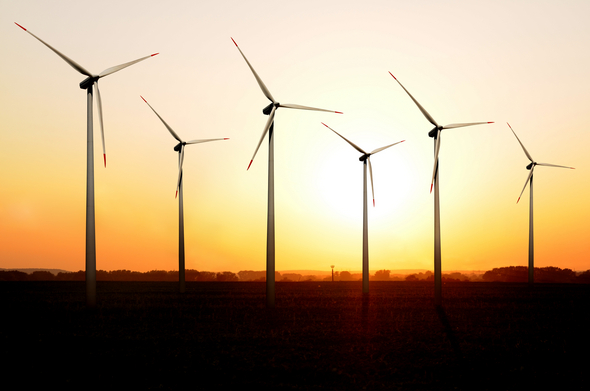
The Legislature's move to eliminate Michigan's personal property tax for businesses could hurt the state's wind energy industry by eliminating the incentives for local governments to site wind farms.
Stoupa | Dreamstime.com
A perfect example of this is the proposed personal property tax reform and its impact on Michigan’s wind industry. Wind energy projects are under way in all regions of the state, from the Upper Peninsula to the Thumb and across several portions of western and central Michigan. According to the American Wind Energy Association, at least 31 facilities statewide manufacture components for the wind energy industry and an additional six facilities are planned.
In Saginaw, the Merrill Technologies Group has made a significant investment in the manufacturing of turbines. In Monroe, Ventower Industries opened the state’s first wind tower manufacturing facility on a former brownfield site. Estimates are that Ventower may eventually employ as many as 300 people. Much of this progress is due to the current tax system, which provides predictable revenue from wind energy projects to local governments and makes the projects appealing to local communities.
An eight-bill personal property tax reform package - designed to improve the state’s business climate and jobs outlook - passed the Senate Finance Committee on May 1 and could have unintended consequences for Michigan’s wind industry by changing the economic benefits to local communities from the siting of wind facilities.
If communities lose this incentive to support wind projects, it could make it more difficult for Michigan to reach its goal of having 10 percent of its energy from renewable sources by 2015. Some potential ways to avoid this would be changing the way wind energy facilities are classified under the General Property Tax Act or developing a separate wind generation based tax.
Community leaders across the state should feel confident that wind energy can provide not only a stable base of tax revenue but -- perhaps more importantly -- a steady source of employment for the next generation and beyond.
So, as lawmakers continue to debate the personal property tax reform issue and look to create jobs and improve our business climate, we urge them to identify all industries where growth is taking place to avoid unintended consequences.
Shanna Draheim is a senior consultant for Public Sector Consultants, a Lansing-based research and program management firm, with specialties in governance and regulation, health care, education, energy, and environmental policy.
Comments
xmo
Mon, Jan 7, 2013 : 9 p.m.
If it wasn't for tax incentives, could these "Green Energy" projects be viable? It seems the taxpayer is the only loser in these "Green Energy" projects. Of course, if you don't believe in "Man Made Climate Change" you might ask yourself why are doing this at all? I 'm waiting for the science!
Cold
Wed, May 9, 2012 : 12:43 p.m.
The left protected the snail darter from dams ( hydroelectric power) and the spotted owl (Lumber industry) and many others from untold horrors. One has to wonder why they approve of Eagle and Migratory birds and Bats being killed by these wind farms? The hypocrisy is astounding.
Richard
Tue, May 8, 2012 : 9:51 p.m.
Industrial wind is corporate welfare that should be eliminated as soon as possible. Industrial wind turbines cause real harm to humans and animals when sited too close, a fact that the industry desperately tries to cover up and deny. Their tactics are failing however, as more and more people are forced to abandon their homes after being sickened by turbine noise and rumble. The turbines also harm the tax base of the host community, as people leave the area, while others avoid buying there and home values decline. In addition, most of the players are foreign, so we export our tax dollars to line the pockets of foreigners. Industrial wind can not stand on its own as a business, or as a source of power. It disrupts the grid, as base load power sources have to cycle up and down to accommodate winds inconsistent availability. In the final analysis, wind energy subsidies are the means by which big coal, big oil, big nuclear and big gas mine the US tax code to increase their bottom line profits on thier existing conventional electrical production.
treetowncartel
Tue, May 8, 2012 : 4:41 p.m.
I drive by the wind farm east of US-127 between Ithaca and Alma on a regular basis. I find it almost intoxicating to look at those big propellers swinging.
JDed
Tue, May 8, 2012 : 2:14 p.m.
Click on the Public Sector Consultants link . . . .
G. Orwell
Tue, May 8, 2012 : 1:40 p.m.
Wind energy is not effective and it is another boondoggle to enrich the insiders. Those connected to Al Gore and Goldman Sachs. Not only that, it harms the environment because it kills thousands of birds every year. One wind farms is in California is killing 500 eagles a year. Finally, people investing in windmills must not have considered the cost to maintain them. There are around 14,000 windmills in the U.S. that are not functional and abandoned. 14,000!!!! What an environmental disaster. You can blame the eco-fascists that scared the world about about man-made global warming. Sky is falling! I cannot believe people fell for that. Whenever the media and government hype something, be very suspicious.
Jim Kress
Wed, May 9, 2012 : 12:14 a.m.
Links, though I doubt any facts will sway the religious fervor of the 21st Century Luddites: http://www.beaufortobserver.net/Articles-NEWS-and-COMMENTARY-c-2011-11-19-257122.112112-14000-wind-turbines-have-been-abandoned-in-the-United-States.html http://www.minnesotansforglobalwarming.com/m4gw/2011/11/14000-abandoned-wind-turbines-in-the-usa.html http://sayanythingblog.com/entry/america-has-14000-abandoned-wind-power-turbines/ http://projectavalon.net/forum4/showthread.php?35547-14-000-Abandoned--Wind-Turbines--Across-The-US..- http://blogs.dailymail.com/donsurber/archives/46519
justcurious
Tue, May 8, 2012 : 3:55 p.m.
Sheesh!
Ivor Ivorsen
Tue, May 8, 2012 : 3:37 p.m.
Craig, Most of this silliness comes directly from the infamous "infowars" family of websites run by Alex Jones. These sites take conspiracy mongering to a whole new level. For example, did you know that 14,000 Americans died as a result of the Fukushima nuclear disaster in Japan? No? Well that's because your Government, the United Nations, Al Gore, Goldman Sachs, the Trilateral Commission, the FDA, and the SPCA have all conspired the keep it from you!
Ivor Ivorsen
Tue, May 8, 2012 : 3:26 p.m.
Wow, what a surprise, more verbatim talking points from professional nut/paranoid and conspiracy guru Alex Jones. By any chance, are these 14,000 windmills near the concentration camps that Alex contends the U.S. Army is building to house political opponents of President Obama?
Craig Lounsbury
Tue, May 8, 2012 : 2:43 p.m.
do you have a link to the 14,000 abandon windmill allegation?
JDed
Tue, May 8, 2012 : 1:12 p.m.
So how exactly do the communities lose the revenue? The same way they lose the revenue from all the other businesses? They get taxed over and over again on the same piece of equipment? SO if you have a 100 year wind turbine, a community would lose out on 100 Yr's of PPT? What is the economic benefit and how is it lost? The opinion piece does not clearly lay out the argument.
Craig Lounsbury
Tue, May 8, 2012 : 2:45 p.m.
good point