

226-acre addition to Ann Arbor Greenbelt draws criticism from council member who questions cost
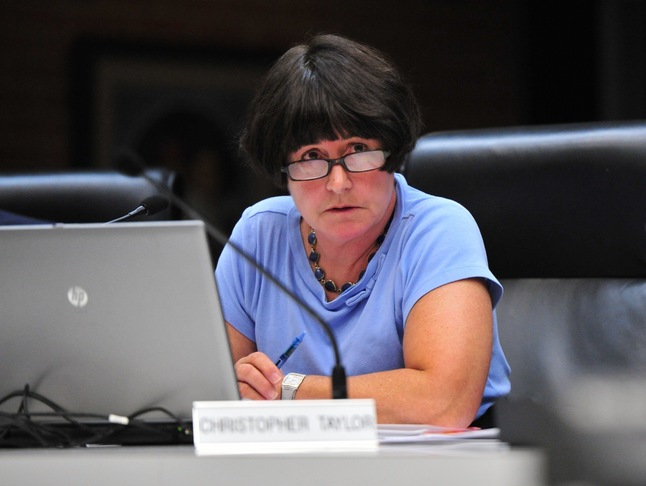
Ann Arbor City Council Member Jane Lumm, an Independent who represents the 2nd Ward, was the lone dissenter as the council voted 8-1 to approve the latest additions to the Greenbelt, a ring of preserved farmlands and open space around the city.
Ryan J. Stanton | AnnArbor.com
The Ann Arbor City Council voted 8-1 this week to approve the purchase of development rights on the two properties with dissent from Council Member Jane Lumm, who didn't think the city was getting a good enough deal or leveraging enough outside funding.
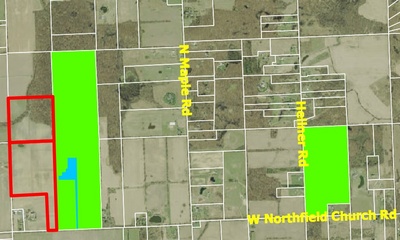
The red outline shows the 90-acre farm in Webster Township the Ann Arbor City Council voted to preserve. The green areas are other Greenbelt properties already preserved. Download larger map.
Courtesy of City of Ann Arbor
The Robbin Alexander Trust Farm in Webster Township came at a total cost of $394,417, including a purchase price of $342,000 plus due diligence, closing and endowment costs.
The city leveraged a $167,580 grant from the federal Farm and Ranchland Protection Program, putting the city's share of the cost at 58 percent.
The Robert H. Schultz property in Superior Township came at a total cost of $523,567, including a purchase price of $468,000 plus due diligence, closing and endowment costs.
The city leveraged a $229,320 FRPP grant, putting the city's share at 56 percent.
The city pays for Greenbelt purchases using proceeds from its Open Space and Parkland Preservation Millage, which brings in more than $2 million annually from city taxpayers.
The purchase of development rights keeps the property in the hands of the owner but ensures the land can't be developed and will remain preserved as open space.
The Greenbelt program was approved by Ann Arbor voters in November 2003, at a time when a significant amount of development activity was occurring around Washtenaw County and farmland was being sold for development.
Ann Arbor voters authorized a 0.5-mill tax for 30 years, which provides funds for parkland acquisition within the city and the preservation of open space, agricultural land, and other natural habitats outside the city in a designated Greenbelt district.
Lumm, who was elected to council last November, said there generally have been some good Greenbelt purchases in which city dollars have leveraged additional dollars. But she said she had a problem with the city paying such a large share for the latest purchases.
"In both of these instances, there are just two funding sources — the federal government and the city," she said. "There's no other state or other local participation."
Lumm, who has raised similar concerns in the past, called that a significant lost opportunity and said she couldn't support the purchases.
"I would continue to encourage the Greenbelt Advisory Commission to come forward with proposals that better leverage the Greenbelt dollars," she said.
Lumm said she thinks the townships where the farms are being preserved clearly benefit from the purchases and "they need to step up as well."
Mayor John Hieftje said the ideal situation when the Greenbelt was first proposed a decade ago was that the city would pay about a third of the costs for most purchases.
"One of the things that changed is the state used to participate in these purchases, and with the financial difficulties, that has gone away," he said. "But for the most part, the city has paid about 50 percent of costs … and there are some properties where the Greenbelt Commission feels they just need to make a move on those properties even though the ideal financing may not be available."
Hieftje said the city is lucky to have the federal Farm and Ranchland Protection Program as a partner and should take advantage of that as long as it's around.
The city's Greenbelt Program has protected more than 3,700 acres of farmland and open space surrounding Ann Arbor and has leveraged more than $19 million through grants, landowner donations and other locally funded programs, including contributions from townships. City officials boast that the program has been able to leverage more than a dollar for every dollar it has put up.
The City Council is expected to vote Oct. 1 on another Greenbelt purchase: the 73-acre Daniel E. and Amy Hornback Farm along Pontiac Trail and Brookville Road in Salem Township.
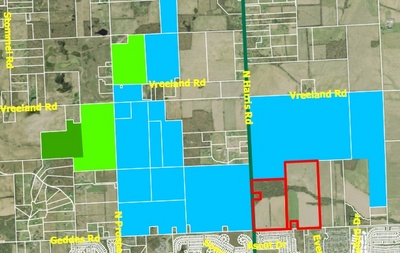
The red outline shows the 136-acre farm in Superior Township the Ann Arbor City Council voted to preserve. The bright green areas are other Greenbelt properties, the darker green area is a city park and the blue areas are county conservation lands. Download larger map.
Courtesy of City of Ann Arbor
Additionally, Salem Township and the Washtenaw County Parks and Recreation Commission each have agreed to contribute 20 percent — or $64,200 — toward the purchase.
The city also partnered with the county three months ago on the purchase of a 32.7-acre farm in Northfield Township. The county took the lead and purchased the fee title to the property with the intention of owning it. The city put up $61,312 to cover 25 percent of the purchase price.
The city also purchased the development rights to the 59-acre Newton Farm in Ann Arbor Township earlier this year. The purchase price, not inclusive of other costs, was $323,828 — $158,676 of which was covered by an FRPP grant, while the city and township each paid $82,576.
On another Greenbelt purchase this year, the city acquired the development rights to the 25-acre Van Natter Farm in Webster Township for $126,867 after getting the land owner to make a $22,000 donation, which knocked 20 percent off the purchase price.
The city also purchased the development rights on the 136-acre Boike Farm in Northfield Township for $502,307, inclusive of due diligence, closing and endowment costs.
The city was able to get a $115,860 land owner donation, knocking 20 percent off the purchase price, but did not leverage any other outside funding.
The city is inviting the public to join the Greenbelt staff on Sept. 22 for a tour of properties that have been preserved through the program. The tour also is expected to shine a spotlight on local agriculture and provide a chance to speak with local farmers.
Those interested are asked to pre-register by Sept. 14. The tour will depart at 10 a.m. from the park-and-ride lot at 3700 Plymouth Road and return at 1 p.m.
The mode of transportation will be an air-conditioned, luxury motor coach. The cost is $10 and light refreshments will be served.
To register, contact Ginny Trocchio at 734-794-6000 ext. 42798 or gltrocchio@a2gov.org.
Ryan J. Stanton covers government and politics for AnnArbor.com. Reach him at ryanstanton@annarbor.com or 734-623-2529. You also can follow him on Twitter or subscribe to AnnArbor.com's email newsletters.
Comments
Stuart Brown
Sat, Sep 8, 2012 : 9:56 p.m.
The money supporting the Green Belt should be re-purposed to support the Fire Department! Put the issue on the ballot and let voters decide.
Gerry
Fri, Sep 7, 2012 : 6:03 p.m.
Why should we limit urban sprawl? Who would want a sustainable, populated, vibrant center with walkable neighborhoods when we could have a smog-choked, congested metropolis like Houston? Besides, look how well tearing up countryside to build new development at the expense of rebuilding existing communties has worked in metro Detroit. I don't know where the mayor gets off accusing Jane Lumm of not having a vision...
Frustrated in A2
Fri, Sep 7, 2012 : 5:35 p.m.
So the city keeps buying property outside of town while the university keeps buying property in town constantly taking things off of the tax roll. Is the city looking down the road and preparing to move the whole city west while the university takes over what's currently known as Ann Arbor Lol?!?!
Sully
Fri, Sep 7, 2012 : 4:49 p.m.
Is there really any practical defense for this Greenbelt? Most proponents seemed to have championed it for purely aesthetic reasons such as "strip malls and big houses with big yards look icky".
Belgium
Fri, Sep 7, 2012 : 7:33 p.m.
Then you're not reading the comment thread. There are some very good answers to your question had you taken the time to read what others had written.
Top Cat
Fri, Sep 7, 2012 : 4:46 p.m.
My personal thanks to the poor chump taxpayers of Ann Arbor. You have succeeded in increasing the value of my acreage in Webster Township. Luv ya!
Lifelong A2
Fri, Sep 7, 2012 : 4:45 p.m.
Ms. Lumm actively opposed the Greenbelt proposal in 2003. Despite her opposition campaign, the City's voters overwhelmingly voted to raise their own taxes to support this program. Nine years later, she's still ignoring the will of the voters by opposing the program -- and, in this case, she also voted against what Mr. Ranzini points out is a great deal. Shame on Councilmember Lumm for ignoring Ann Arbor voters AND not doing some simple math.
EyeHeartA2
Fri, Sep 7, 2012 : 4:47 p.m.
"Good deal" now THAT's funny. Good deal for the farmer who gets my money. Not for me who just paid for this scrap of land I need to go on a bus ride to see.
northside
Fri, Sep 7, 2012 : 4:30 p.m.
@ Ryan Stanton: Why is it that the 1 council member who opposed the purchase gets the headline and more focus than the 8 who supported it?
alterego
Fri, Sep 7, 2012 : 4:29 p.m.
One of the great things about living in Ann Arbor is that from within the city center, I can be surrounded by farms and forests with only a 15-minute drive. The greenbelt is a great idea however it is funded.
EyeHeartA2
Fri, Sep 7, 2012 : 4:28 p.m.
Love 'ya Jane. You are the bravest lady I know.
Macabre Sunset
Fri, Sep 7, 2012 : 4:14 p.m.
Must be nice for council-member friends who have farmland they don't want to develop. They get all the benefits of the open space, plus a nice big chunk of cash from the taxpayers. What do we get? A lower tax base and impediments to growth.
badge823
Fri, Sep 7, 2012 : 3:56 p.m.
Our City parks look like hell now with tall weeds, uncut grass, poor ball diamonds, etc. The City can't take care of what it already owns without spending money for any future land that we'll have to maintain.
Ross
Fri, Sep 7, 2012 : 4:32 p.m.
We don't really have to maintain it.... at all.... Either still active farmland, or preserved natural areas.
jcj
Fri, Sep 7, 2012 : 4:17 p.m.
AMEN! I saw a city worker FINALLY watering the trees at Vets. Too little Too late!
Jay Thomas
Fri, Sep 7, 2012 : 3:05 p.m.
When we finally get to the borders of South Lyon and Canton... can we please stop?
Ross
Fri, Sep 7, 2012 : 4:39 p.m.
I think thats logical! haha. Once you reach your neighboring towns, it's time for them to protect their own surroundings if they so choose.
EyeHeartA2
Fri, Sep 7, 2012 : 4:30 p.m.
We will NEVER stop. Not as long as WE have some of YOUR money to spend. Signed; Mayor Lieftje
newsboy
Fri, Sep 7, 2012 : 2:58 p.m.
It's time to get this back on the ballet for elimination. We are tired of paying the way for others in this town while our seniors and hardworking folks sink into bankruptcy, foreclosure and despair!
Stephen Lange Ranzini
Fri, Sep 7, 2012 : 2:12 p.m.
@YouWhine, @G. Orwell, @xmo & @B2Pilot: The theory here being pursued by our city leaders is to buy the land now, to combat future suburban sprawl. To understand the rationale, I highly recommend you read "Suburban Nation: The Rise of Sprawl and the Decline of the American Dream" by Andres Duany, Elizabeth Plater-Zyberk and Jeff Speck. Andres Duany is the guru of the New Urbanism movement. There are many reasons to not live in a suburb. For example, data indicates that people who live in suburban communities because they make more trips by car and get less exercise, live on average ten years less than those that live in walkable urban environments and for the last ten years of their life, they are also less healthy, on average. For example of a good summary of this argument, read: www.baconsrebellion.com/2012/05/americans-need-to-drive-less-walk-more.html Whether or not Ann Arbor taxpaying home owners can *afford* the Green Belt Millage public policy or not is a separate question from the policy debate about whether or not suburbs are a good lifestyle choice or not, or whether or not the Millage is getting good value for the money being paid for development rights. In the long run, there will be less suburban sprawl and home prices in Ann Arbor will be higher with the Millage in place than without, however that does little to help senior citizens and others living on a fixed income who want to continue to live in Ann Arbor and don't want to have to sell their home if they cannot afford the taxes and increasing cost of living.
G. Orwell
Fri, Sep 7, 2012 : 3:36 p.m.
Like I said, it is in the guise of helping us and saving the planet. I'd suggest you Google, "Agenda 21 for Dummies." That's just the title of it. I am not saying you are a dummy. You seem very bright.
Stephen Lange Ranzini
Fri, Sep 7, 2012 : 3:15 p.m.
@Tom Whitaker: Please post your comment on the main thread too, so more people will see it. You raise some really excellent points!
Tom Whitaker
Fri, Sep 7, 2012 : 3 p.m.
I voted for the greenbelt millage and I also support making downtown more livable. In fact, a few years ago I moved my family to a neighborhood close to downtown and campus. We went from a Walk Score in the low seventies to one in the high nineties--using our cars less and less all the time. Many of our neighbors did the same thing over the past 10 years. We all expected, based on the policies and programs being endorsed by mayor and council, that more families, working people, and seniors would be joining us in making downtown and its surrounding neighborhoods their permanent home. But something has changed in local government. Our leaders have lost sight of the previous goal of increasing the number of downtown residential units and have instead begun focusing on making life easier for commuters. They built a huge new parking structure, began pushing for commuter trains from Howell and Detroit, and now are proposing a countywide bus system to make it even easier to live in the boonies where taxes are lower and property costs less. They are even paying for a commuter bus from Canton. Almost all new residential construction is for UM students--little, if any, for working people, families, or seniors. So here we are, citizens of Ann Arbor, spending millions to buy up development rights outside the city, while at the same time, spending millions more Ann Arbor tax dollars (and giving away our bus system assets) to make it more convenient to live in the townships. Meanwhile, the planning for what to do with prime, city-owned lots downtown has shifted away from building more residential units or amenities for residents, to building more office space, hotels, and conference centers.
Ross
Fri, Sep 7, 2012 : 1:57 p.m.
For everyone spewing vitriol in response to this article: WE, the citizens of Ann Arbor, VOTED, very successfully I might add, to support this exact type of action. A conservation easement on active farmland might just sound like a government hand out of cash to some of you. But that's an ignorant way to look at it. The easement prevents development and sprawl FOREVER - this is non-negotiable going forward. Yes, the housing bubble has burst and the rapid development of our rural surroundings has gone down somewhat. But it could come back quick, and with a force. The "development opportunity" for sale signs are back up on most of the farmland properties in these areas that are not already under conservation. The threat of a crappy, bland, ecosystem-destroying subdivision popping up on any of these parcels is very real. Without a concerted effort to protect some of this land, we could end up with none of it left. Take a look on google maps, or take a drive through areas like livonia, westland and canton sometime. Disgusting, endless subdivision sprawl with almost no parkland or preserved open space, and no city-center for commerce and walk-ability. This is not a sustainable solution for housing human beings over the long term - gasoline will not be cheap and plentiful forever. Furthermore, the farmers on these lands in question are paying somewhat ridiculous tax rates per acre, fairly based upon the projected development potential of the land. Thats what makes the temptation of selling to a developer so real - it can be hard to afford to stay. So these payments for the easement cover those costs.
Mike
Sun, Sep 9, 2012 : 2:59 p.m.
Ross- why don't you set a good example and tear your bland, ecosystem destroying house down and return it to mother nature? There is nothing wrong with good development. With your mindset we would never build anything again and people would live in tents on the land, unlike you who has a place to live.................
jcj
Fri, Sep 7, 2012 : 11:09 p.m.
Ross "Furthermore, the farmers on these lands in question are paying somewhat ridiculous tax rates per acre" Once again do your homework! Look at the county records then get back with us.
jcj
Fri, Sep 7, 2012 : 11:01 p.m.
Ross "Go look up the voting results and I bet you'll find the strongest support coming from entrenched neighborhoods of Ann Arbor consisting primarily of long term residents" Easy to say. But I bet not! I am one long time resident of Ann Arbor (I would venture to say probably much longer than you) that did NOT vote for it!
Sully
Fri, Sep 7, 2012 : 5:14 p.m.
Essentially this arguement is that local government should pass and promote laws in an attempt to restrict people's personal lifestyle choices for "the greater good". There are many resons people choose to live in the townships instead of the city. I, personally, live in the city for various reasons, but the fact is, living in the townships you can have a larger house for less money, more personal space, less noise, less traffic and lower taxes in some cases. Choosing to live in the subarbs or the city are people's individual choices, and to to tear down the subarbs because they don't meet your personal aesthetic vision is just nonsense. If you want more people to live in the city, give them a positive reason to, instead of just disgouraging subarban growth.
average joe
Fri, Sep 7, 2012 : 4:59 p.m.
Ross- On Your assertion that these farmers pay a "somewhat ridiculous tax rate", since I know these two farmers I can assume that they already were involved with the preservation program run by the state. They would only pay a small percentage of the actual tax bill based on their income through a tax refund.
Ross
Fri, Sep 7, 2012 : 4:38 p.m.
jcj, your premise is that the greenbelt millage was passed primarily due to temporary residents of ann arbor? Really? Go look up the voting results and I bet you'll find the strongest support coming from entrenched neighborhoods of Ann Arbor consisting primarily of long term residents, like the west side, north side, etc. Macabre, most folks who pay attention and are concerned about environmental matters are opposed to new subdivisions for a LOT of reasons. 1) they normally do NOT provide open recreation space or retain natural areas. 2) they destroy any semblance of natural ecosystem that was existing before the lots are clear-cut, bulldozed, and terra-formed. I.E. destroyed. 3) The houses are almost always built extremely fast and of very low quality. Thus they have a horrible energy footprints and take copious amounts of energy to heat and cool. 4) Their (formerly) rural locations require everyone that lives there to drive a car to EVERYTHING they do in a normal day. the result is you get fat and lazy while spewing carbon emissions all day long. This is simply a clear and undeniably UNSUSTAINABLE way for humans to live on this planet.
Macabre Sunset
Fri, Sep 7, 2012 : 4:20 p.m.
Why all the vitriol toward subdivisions? What's wrong with having a neighborhood where your kids can have a yard and there isn't the incessant noise from car stereos and trucks and drunken strangers piling out of bars at all hours? Stephen's "book" is like a McPhee epic: just plucks numbers from nowhere. Studies show people live longer where there's less noise. Most newer subdivisions maintain plenty of open space, because that's what the residents want. Open space they can use - not taxpayer-subsidized open space that only benefits a few. This is a lousy, corrupt program.
jcj
Fri, Sep 7, 2012 : 4:15 p.m.
The problem is the "we" you speak of includes those who will be in OUR city 2-4 years then gone! And those voters are usually like sheep whatever the "progressives" say is how they vote!
Mike
Fri, Sep 7, 2012 : 1:52 p.m.
Two million dollars is removed from the pockets of taxpayers each year. This is money that could be spent in so many other ways, plus the lost tax revenues. Who dreams up this kind of stuff? Probably the same folks who cry that we don't have enough money for other basic government needs.....................
Mike
Fri, Sep 7, 2012 : 1:48 p.m.
How did we ever let the government get into the business of buying and hoarding lad ? Is this what we want our government to spend our tax dollars on? There are unintended consequences of this kind of governing. Properties are taxen off of the tax rolls, land prices will have to rise due to the artificial shortage created, and housing will become more expensive as a result. In order to make up the shortfall in revenues you will be asked to pay even more in property taxes.Those who voted for this also voted for another tax increase in the future to make up the shortfall. Between the University of Michigan and our local government removing these properties from the taxable base future tax increases will be unavoidable.
RUKiddingMe
Fri, Sep 7, 2012 : 1:33 p.m.
There are plenty of people that support you, Ms. Lumm. I'm glad to see you're consistent, and hope you have the patience and fortitude to continue to ask the questions this city needs to ask, and try to reign in the craziness.
Dog Guy
Fri, Sep 7, 2012 : 1:29 p.m.
I was amazed that a tiny green bug could destroy my 44" dbh white ash, but that bug had many associates. The greenbelt tax by itself is not causing foreclosures, but with the help of bus, library, art, and a legion of other wasteful ever-increasing property taxes many homeowners are finding their homes eaten more thoroughly than by termites. Being a socialist ninny deferring to a group conscience means never having to say you're sorry.
xmo
Fri, Sep 7, 2012 : 1:19 p.m.
What is wrong with Development? People need places to live,work & shop and now we have "BIG GOVERNMENT" coming in an buying up all of this land so that weeds can go on it! Only in Ann Arbor!
jcj
Fri, Sep 7, 2012 : 10:13 p.m.
Ross Feel free to do your homework or at least read the article BEFORE commenting! The city leveraged a $167,580 grant from the federal Farm and Ranchland Protection Program, putting the city's share of the cost at 58 percent.
Ross
Fri, Sep 7, 2012 : 4:44 p.m.
jcj, these programs are funded by millages, voted upon by the citizens of a particular area. It's a collective decision to take action. Feel free to move out and go live in a suburban wasteland of vapid commercialism if you so choose.
jcj
Fri, Sep 7, 2012 : 4:10 p.m.
"This is a popular conservation model that is spreading across all progressive areas of the country" Definition of a "progressive" Anyone that is in favor of spending every cent of someone else s money!
Ross
Fri, Sep 7, 2012 : 1:49 p.m.
Wrong - No, NOT only in Ann Arbor. This is a popular conservation model that is spreading across all progressive areas of the country. People want a guarantee of preserved open space. We VOTED for this. Maybe you didn't, but you're in the minority view. Most of the parcels being discussed in this article are active farmland - you know, locally growing the FOOD that you eat. Otherwise, growing weeds = nature. Stop watching so much TV and get outside!
bunnyabbot
Fri, Sep 7, 2012 : 12:56 p.m.
Ok, so the farmland is paid for so that farmer Fred doesn't sell to a developer instead, Farmer Fred and his family still live/farm it and own it and pay taxes on it and still keeps it in his family? geez, I wish I had some farmland so A2 could offer me 500g just to put in writing I wouldn't sell it for a strip mall.
B2Pilot
Fri, Sep 7, 2012 : 12:51 p.m.
I still have a hard time seeing how this benefits the city residents. We [the city] are buying property development 'rights' for property I'm not allowed to step foot on. I have piece of mind that the city is surrounded by a few farms that I can see from the road is the simple answer I guess. The reduced available property makes the available vacant property values higher making it more expensive to live in the area for young people or any potential future farmers. Like my father used to say nothing is forever even though we are buying development rights now whose to say that 10 years from now it will be in the best interest of the city to sell these rights or northfield or webster townships may decide they want a Meijer or Google office on one of these sites. Very complex dynamics to this whole idea and process
Pete
Fri, Sep 7, 2012 : 9:16 p.m.
B2, Would you rather see farms, or would you rather see strip malls, surrounding Ann Arbor. Those are the choices. Any housing developed would be away from the main roads you drive on. It would be gas stations, fast food, and marginal businesses along any road you would be likely to drive on.
Ross
Fri, Sep 7, 2012 : 4:46 p.m.
Like Scio said, permanent restrictions on future development. Not 10 years, or 20, but permanent protection against housing or commercial development. Keeping our farms (FOOD) local, or eventually converting to protected natural area, are things I like to protect. As well as 2/3 of my fellow Ann Arborites, apparently.
ScioReader
Fri, Sep 7, 2012 : 4:02 p.m.
The deed to these properties now permanently prevents development. 10 years. 20 years. whatever.
jcj
Fri, Sep 7, 2012 : 12:50 p.m.
Slang Dictionary rathole definition a bottomless pit. (Typically with throw and down as in the examples.) : Why do they keep throwing money down that rathole?
PSJ
Fri, Sep 7, 2012 : 12:44 p.m.
Sellers - congratulations. You receive a tidy sum and retain your land. What a deal! Citizens of Ann Arbor - caution! Your tax dollars only entitle you to drive-byes and the ability to look at these parcels. Hiking? No way. How about a family picnic? Only at your peril - you could be cited for trespassing. Want to take a look at your purchases? Be sure to take a detailed map with you. Otherwise it will be impossible to distinguish these greenbelt parcels from many, many others. Other parcels for which the owners have retained the development rights; parcels that THE MARKET for land has determined are not economically viable for development.
jcj
Fri, Sep 7, 2012 : 12:42 p.m.
What a joke some people are! When you talk about "leveraging outside funding" all your doing is taking from a different pocket. You think that money comes from China? EVERY government entity in this country thinks it gets free money if they can get a "grant" from the Federal Government. The joke is on ALL of us.
Alan Benard
Fri, Sep 7, 2012 : 12:35 p.m.
Jane Lumm: We live in a city. We want it built up in the city's core and surrounded by green space.
alterego
Fri, Sep 7, 2012 : 4:35 p.m.
Hey Brad - How long are you willing to drive once the countryside within 15-minutes of town is developed?
Brad
Fri, Sep 7, 2012 : 1:49 p.m.
Who is this "we" you speak of? It certainly doesn't include me. We have huge amounts of park space in town, and if that isn't enough I'm happy to drive the 15 minutes that it takes to get to it in the country.
G. Orwell
Fri, Sep 7, 2012 : 12:30 p.m.
What if the greenbelt program is not about saving farm lands and open spaces. Rather, it is about restricting where people can live. The ultimate goal being to crowd everyone into cities. Using our tax money to do it. Obviously the politicians won't tell you this. It will always be masked in the guise of helping the environment and us.
antikvetch
Fri, Sep 7, 2012 : 12:23 p.m.
Why don't we extend the greenbelt to the Canadian border? Lot's of Detroit we could buy. I'm sure Conan Smith would be happy to kick in somebody eles's money to help -
Basic Bob
Fri, Sep 7, 2012 : 3:58 p.m.
Brownfields + Greenbelt = Brownbelt
Youwhine
Fri, Sep 7, 2012 : 12:14 p.m.
What a scam... You get to sell the "rights" to your farm for over hundreds of thousands of dollars? You keep the land in your name, get to continue farming it and keeping any proceeds, and all you have to do is promise not to develop it? Has anybody noticed that it isn't 2001 anymore? There aren't exactly a lot of groups snatching up property in the townships and turning it into large developments anymore. That pesky "housing bubble" thing sort of put an end to that. Especially the areas where they are buying this land. These are parcels in areas which have no septic or sewer services available? Yeah I am pretty sure that they were going to throw up a subdivision or Wal-Mart or something at Pontiac and Brookville REAL SOON. It's a good thing the city bought that and stopped the sprawl.
ScioReader
Fri, Sep 7, 2012 : 4 p.m.
And THAT's why now is the time to buy! Buy the development rights on the cheap BEFORE the next boom period. I grew up in NJ. We sure as heck do not want to look like that!
jmac
Fri, Sep 7, 2012 : 12:11 p.m.
I am waiting for the final purchase of greenbelt parcels encircling Ann Arbor which is when building will commence to place a giant moat around the entire city...that should work well to keep everyone else out...
Basic Bob
Fri, Sep 7, 2012 : 3:56 p.m.
Don't forget the Reimagining Washtenaw DDA toll bridge.
annarboral
Fri, Sep 7, 2012 : 11:51 a.m.
A better choice would be to convert the Ann Arbor Airport to a green belt. It's owned by the city, would serve all its citizens. Now it just serves a handful of airplane owners that should be at Willow Run anyway. It would also reduce air & noise pollution. What's not to like?
Youwhine
Fri, Sep 7, 2012 : 12:20 p.m.
Let me guess, you bought a house in Stonebridge or some other neighborhood off the end of the runway WELL after the airport was built and now you want the airport shut down... You would probably be surprised at how many different peopole/businesses are served by the A2 Airtport.
M
Fri, Sep 7, 2012 : 11:08 a.m.
Thank the Lord someone is looking out for the little guy. Lumm once again proves she's the only one on the council with a brain. Paying farmers half the value of their property to get nothing and have them do nothing is a gigantic waste of money. Ann Arbor will strangle itself on it's own belt.
Rod Johnson
Fri, Sep 7, 2012 : 2:04 p.m.
It was not Council but the voters that approved the Greenbelt law, so it shouldn't be Council you're blaming but the voters. If your case is so strong, why not start a campaign to repeal the law?
Stephen Lange Ranzini
Fri, Sep 7, 2012 : 11:05 a.m.
To clarify, I meant that the total purchase price is $3,450 an acre and $3,800 an acre. The city mileage fund itself is only paying 58% and 56% of the total purchase price, or $2,000 to $2,128 per acre.
Dan Ezekiel
Fri, Sep 7, 2012 : 11 a.m.
Development rights for two more magnificent farms, at a cost to city taxpayers of well under $3,000/acre. Respectfully, Jane, no one anticipated prices that low when the millage was passed. The same economic crash that has lowered development values has also kept the state and townships from having more to contribute. Ann Arbor has funds, because voters passed the millage overwhelmingly, and now is the time to take advantage of low development values to permanently protect green space.
Stephen Lange Ranzini
Fri, Sep 7, 2012 : 10:55 a.m.
In the case of these two properties, the city is paying roughly $3,450 and $3,800 for the development rights per acre. Since developable farmland is selling currently for $7,500 an acre (it used to be $20,000 an acre) and leasing rights for farming are worth about $4,000 an acre currently in the market, the city is not over paying at all, and in fact in the current environment, I believe land such as this is quite inexpensive. If your desire is to buy low and control the most land with the dollars available, now is the perfect time to buy aggressively, not later when the economy is stronger and more money is available for purchases, when prices have doubled or tripled.
Stephen Lange Ranzini
Fri, Sep 7, 2012 : 1:57 p.m.
@RUKiddingMe: With the purchase of development rights, the only thing that isn't purchased is the right to till and farm the land. The value of that is set by the value of the crops the land will generate, minus the cost of doing the farming, including a profit margin for the farmer to do the work. So, essentially, the upside value to the land *is* being purchased, and the residual that is not being purchased only goes up with the value of crops versus the cost of production and the profit margin required to entice a farmer to do the work, the "real value" of which is a relatively stable value over long periods of time if you take into account impacts of inflation. The development rights could in the future be sold, as any property right can be.
RUKiddingMe
Fri, Sep 7, 2012 : 1:25 p.m.
Stephen, are you equating the purchase of land with the purchase of its development rights? We get NOTHING for paying this money except the warm fuzzy feeling that we're delaying development on land no one's really interested in rigth now. And this is not the first time the city overpaid to add land to this whole program.
Youwhine
Fri, Sep 7, 2012 : 12:09 p.m.
Of course there is a slight difference. If you pay the $7500/acre for land you get to OWN the land and do with it what you please (within zoning/legal limits), and profit from what happens on the land. This is not what the city is doing. The city is simply paying $3800/acre in order for the landowner to promise not to develop it... Something which is not likely to happen, anyhow.