

Ann Arbor school officials propose cutting 70 teaching positions, high school bus service
This story has been updated to show the elementary schools being paired
Ann Arbor school district officials Wednesday night unveiled proposed budget cuts for next year that would eliminate 70 teaching positions, eliminate transportation for high school students and put two principals in charge of four elementary schools.
Class sizes will increase at every level of the district, interim superintendent Robert Allen said during his presentation on the proposed eductions to the Ann Arbor school board. Despite the budget problems, no schools will be closed under the plan.
Allen said the reductions proposed Wednesday for the coming year’s budget were by far the hardest cuts he’s had to suggest since he came to Ann Arbor five years ago. He said it was impossible to keep cuts from affecting students after having to cut about $18 million last year.
“We tried to do it in a manner that was thoughtful and equitable,” he said. “Everyone will feel these cuts and share the pain.”

Robert Allen
Officials must close a budget deficit of approximately $15.6 million for the coming fiscal year, and the reductions presented by Allen make up about $13.1 million of that total. Additional revenue from schools of choice and an increase from $35 to $40 in the cost of parking in the Pioneer High School lot for University of Michigan football games will raise at total of about $1.3 million. The district will use $683,000 of reserve funds to balance the rest of the budget.
The cuts announced Wednesday do not take into account the possibility of the failure of the countywide special education millage renewal on the ballot for May 3. If voters reject that renewal, the district would need to cover an additional $6 million.
Eliminating 70 full-time teaching positions, four administrative positions, three paraprofessional positions and two central office positions — one of those being transferred to a grant — will save about $7.1 million in total.
Allen said the district would attempt to eliminate positions through attrition, benefiting from retirements and not filling other vacant positions.
For more information on positions being eliminated and class sizes would be affected, click here.
Under the plan proposed Wednesday, Angell Elementary and Pittsfield Elementary Schools will share a principal, as will Wines Elementary and Abbot Elementary Schools.
Interim deputy superintendent for instruction Lee Ann Dickinson-Kelley said the plan was developed with great consideration and has been discussed with faculty members at all four schools.
“It will be imperfect,” she said. “But, we will work really hard given the circumstances we find ourselves in.”
Allen said the alternative to consolidating the principal positions at the four elementary schools was closing a school.
If the district were to close a school, officials would have to redraw attendance lines throughout the district because no school building could simply absorb the student population of another school, Allen said.
Some of the more dramatic cuts in the proposed reductions are the elimination of transportation for high school students and the elimination of after-school shuttles at middle schools, which would save about $1.482 million, Allen said.
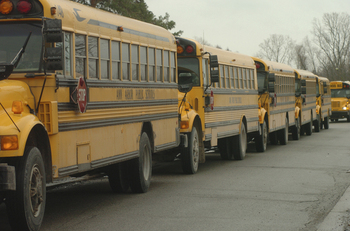
Bus service would no longer be provided for Ann Arbor high school students next year under a proposed budget plan.
“We have been in discussions with the AATA, in terms of looking at … opportunities for AATA to make adjustments to some of their route times to parallel the bell times at our high schools,” Allen said, adding that the biggest concern for district officials are students who live in outlying areas not accessed by AATA routes.
According to Michigan law, school districts are not required to transport regular education children if the board of education decides against providing the service. However, the school district is obligated to provide for the transportation of a special education student if a committee has determined the transportation is necessary.
Besides the cut in transportation, other proposed cuts to district operations, for a total savings of $2.142 million, would include:
- Elimination of one support position.
- A renegotiated natural gas contract.
- Elimination of two positions in the information technology department.
- A reduction in maintenance costs by $300,000
- Elimination of one support position in the human resources budget as well as a cut to legal fees in the department.
The district will save $1.1 million through a step freeze in wages negotiated with the Ann Arbor Education Association and will get health care savings of about $1 million. The district will also save money in supplemental pay reductions totaling $500,000.
Discretionary departmental budgets will be reduced about 7 percent to save $500,000. Reducing the number of noon hour supervisors in elementary schools will save $200,000. Transfers to building budgets will be reduced by $100,000, and transfers to athletic departments will be reduced by $475,000.
“We have to scrutinize every purchase that we make,” Allen said.
Trustee Irene Patalan said she could tell how hard the proposed reductions were on district administrators by the looks on their faces as Allen presented the budget.
She thanked Allen and the other administrators and expressed her confidence in them to guide the district through the tough changes.
“We have gone through cutting every single year you’ve been here and I’ve been on the board, and I felt from the words and pauses that I could tell this one was really tough,” she said to Allen.
Trustee Glenn Nelson said per capita income in Michigan had risen 25 percent during the past 10 years, citing state statistics. He said in that same time school districts are receiving the same foundation allowance they received 10 years ago, a fact that is causing cuts such as the ones announced Wednesday.
He compared the situation to a family in which the adults’ income went up 25 percent but they refused to share the money with their children.
“In the family of Michigan, that’s what we have,” Nelson said. “We have the adults in charge, saying over the last 10 years we recognize we have 25 percent more income for every person but not a dime increase for the education of K-12 students.”
Kyle Feldscher covers K-12 education for AnnArbor.com. He can be reached at kylefeldscher@annarbor.com or you can follow him on Twitter.
Comments
Dorina
Sun, Apr 24, 2011 : 2:53 a.m.
My best friend used to work in the AAPS finance office. If parents knew how much money is wasted and handed out for admin perks, they'd all protest and homeschool their children. ***Don't believe the AAPS cries.*** The AAPS admins wring their hands because they might now have to cut some of their perks and put more money where the money is really supposed to go: the children's education. ? If the administrators have a heart for children, let them show it. Consider this: "According to the Salvation Army, Commissioners W. Todd Bassett and his wife Carol A. Bassett jointly received basic living allowances and grants totaling $64,210 for 2004 plus housing valued at $34,116." If they can oversee the operations of the Salvation Army on that salary, why can't the top AAPS admins lead the schools on a more modest income, given the economic hardships we are going through? For every one of them, there are dozens of others, just as qualified, and more passionate about education and children, who are willing to work for much less.
Edward R Murrow's Ghost
Sat, Apr 23, 2011 : 2:35 p.m.
I think there are many, many people on this site who need to run for the school board in the next election cycle. They KNOW exactly what needs to be done to solve the schools' problems. They see fit to undermine and to slander the school board and the school administrators EVERY time there is a piece on A2.com about the schools. And these very same people (in another discussion strand) see no problem in advocating the rejection of the WISD Special Ed millage. Time to man-up, people. If you know how to do it better, run for the school board. Good Night and Good Luck
Madman Is Back
Sat, Apr 23, 2011 : 1:29 a.m.
Mrs. Dick. Kelly is not telling the truth that staff was consulted about sharing principals.The community should ask those staff members at those schools if they were consulted. She is trying to spin this it and make it appear that "the staff" supports this. Get rid of Kelly and a couple of the other non-performing princiapls and you save money, keep teachers and programs, maintain transportation, and begin the process of healing and developing faith in the words that our school administators speak the absoulute truth. It is adminstrative foolishness at a supreme level. If Kelly were sincere she would cut the princiapls at both Dicken and Lakeside and combine the administartive responsibilites with Eberwhite and Lawton. Kelly needs to be more honest, sincers, and completelty truthful.
ViSHa
Sat, Apr 23, 2011 : 1:18 p.m.
they could probably recoup some of their student losses by cutting the principals you suggested.
DonBee
Sat, Apr 23, 2011 : 12:42 p.m.
It is typical that AAPS says they did "A" and did not. It goes all the way back to the Skyline meetings, where people in the meeting came up with one set of recommendations and the reported results were so far from what the meeting discussion had been it was not funny. No AAPS does not report honestly what they do. Never have, never will. The BOE passed a resolution to put the "check register" on the website each month. Go find it, I dare you to. Creditable and AAPS should not be used in the same breath.
maestra27
Sat, Apr 23, 2011 : 12:55 a.m.
@ Sallyxyz There is so much that goes on in schools that is misunderstood by the general public. I wish that lawmakers and the general public truly understood the complexities of public education today, so we could work cooperatively to improve our system for everyone. With regard to your comment above, there is a federal law called the McKinney-Vento Homeless Assistance Act that requires public schools to provide transportation for students who fit the definition of "homeless." When you see a student being transported to and from school in a taxi, it's often a situation where that student meets certain criteria and qualifies for that service under the McKinney-Vento Act. Public schools do not have a choice but to comply with this law.
maestra27
Sun, Apr 24, 2011 : 11:57 p.m.
@ ViSHa The answer to your question is somewhat complex. I'll do my best to answer with the information I have. Funding comes out of the general fund for most costs associated with homeless students. Food services would get the same subsidy for homeless students if there are federal subsidies for any student who receives a free or reduced cost lunch. Title I pays for supplemental educational programming including some computer-assisted instruction for elementary, and even summer school or credit recovery for secondary. Transportation costs between school districts is often done cooperatively for homeless youth, which may mean that the districts share the cost 50/50. Hopefully that clarifies a little.
ViSHa
Sat, Apr 23, 2011 : 1:15 p.m.
do the funds for meeting this criteria come from general funds or title 1 funds?
DonBee
Sat, Apr 23, 2011 : 12:37 p.m.
maestra27 - And it seems AAPS and their BOE like the idea that it is "misunderstood". I see no member of the administration or the board that is out explaining what the options are and why they made the choices they made. Why buses and not sports? Why teachers and not administration? Why 11 districts in the county and 11 Superintendents? Yes, education is misunderstood.
Sallyxyz
Fri, Apr 22, 2011 : 9:55 p.m.
The whole taxi thing needs to be eliminated. I know of many students (all levels) who have private taxis pick them up at their homes, take them to school and then take them home, either after half a day or after a full day, all paid for by AAPS. This has to stop. How much $$ are we going to pay for these individual students when there is discussion about possible getting rid of buses at the high schools? PARENTS need to be responsible for their kids, even if that means making arrangements for transportation to and from school when a child is deemed not able to ride a bus due to behavioral reasons or any other reason. Carpooling or asking friends or relatives, etc, can be solutions, or perhaps the parents should pay for private taxis, if that is the only solution. The schools cannot afford to pay for private taxis services for students, period. Worse yet, I know of situations where parapros ride in the taxis with the kids,and in some cases are paid for the overtime this incurs. This is really over the top, IMO.
AMOC
Sun, Apr 24, 2011 : 3:48 p.m.
Sally - Those kids in taxis are the ones with IEPs calling for transportation to and from special programs / therapies / home. They have disabilities which make it difficult or impossible for students to be in one building all day, or AAPS has determined it's more cost-effective to transport students than to have the therapist / teacher travel. Or they are students for whom their PARENTS are paying for taxis because the parent must be at work during an unusual appointment ( braces adjusted, medical checkup, etc.) I did that several times before my high-schooler had a driving license.
cette
Sat, Apr 23, 2011 : 2:11 a.m.
Sallyxz, you are complaining abou special ed or behavioral kids...get some real PD and learn PBS.
ViSHa
Sat, Apr 23, 2011 : 12:51 a.m.
i've heard rumors to this effect but never understood why it happens. are the kids out of district? who decides these arrangements? principal's discretion? it would be nice if an unbiased accountant could go thru AAPS's books with a fine toothed comb and see if there are other things that could go first besides teachers and buses.
Andrew Smith
Fri, Apr 22, 2011 : 4:37 p.m.
Regarding school employees, I am told that the AAPS has 3,000 employees, of whom 1,200 are teachers. So we have 1,800 non-teaching employees - and only nine jobs being cut from that pool? While they want to eliminate 70 jobs from the 1,200 teachers? Disproportionate. I also know that, over the last few years, a number of AAPS teacher have used the AATA to take their students on field trips. This practice has been successful in terms of saving money and providing safe, efficient transportation.
DonBee
Fri, Apr 22, 2011 : 7:59 p.m.
According the AAPS "User Friendly Budget" there are 889 teachers in the classrooms total. So if there are 1,200 teachers - what do the other ones do? AAPS really needs to explain what their people do. If there are 3,000 employees, then less than 1/3 teach children. But of 76 cuts - 70 are teachers - 5 percent of the teaching staff The other 6 cuts represent less than 1 percent of the non-teaching staff I thought the mission of AAPS was to educate, not administrate.
CincoDeMayo
Fri, Apr 22, 2011 : 3:36 a.m.
By the way, a couple of my children attended a private school where parents usually drive on field trips, however, at least a few times, we actually used the AATA bus for transportation to our field trip destination. I can't say the usual riders were the most happy when we all squeezed on, but I mention it to let people know that it does work - quite well - for field trips to local destinations.
1bit
Fri, Apr 22, 2011 : 7:13 p.m.
Moscow: Maybe some sort of indemnity should be granted parents who drive in situations like this. I'm sure the lawyer's lobby won't care for it though...
Moscow On The Huron
Fri, Apr 22, 2011 : 1:58 p.m.
"parents usually drive on field trips" Any parent who's doing that had better have a massive umbrella rider on their car insurance. That's a recipe for a lifetime of poverty after getting sued by another kid's parents following an accident.
CincoDeMayo
Fri, Apr 22, 2011 : 3:34 a.m.
I want to second everything Claire Dahl and Dan Ezekiel have posted. Also I do think that a "CREATIVE AND REASONABLE PARTNERSHIP with the AATA" is possible. (And agree that "it would be inexcusable to leave transportation to individual families. That would be a hardship placed on a particular slice of our population and totally unfair. We expect all classrooms to be led by energized, prepared, dedicated teachers. We expect students to arrive at school safely and on time. To start the day with transportation woes and insecurities is to lower our expectations of system-wide excellence.") I used the AATA to get to my high school as an Ann Arbor student, and my children also use it. It is a transportation system that is already in place. If the cost to expand it - where necessary - and adapt the schedule - where needed - cost less than the current mode of school bus transportation, why not give it a try? However, someone will need to analyze exactly what will be needed to cover the routes appropriately taking into consideration all of the factors such as field trips and late school days. And run the numbers to make sure that it really is cost effective. I'm thinking that students would get passes much like students do now when they have 7th hour classes at Huron, and out-of-Skyline-area students who attend Skyline do now for their ride home. WTMC students are also allowed to ride the AATA bus home from Washtenaw Community College free of charge. I have heard concerns about who will be responsible for these students while they are on the AATA bus, but who is responsible for those students who now use the AATA bus for these rides home? I think it is workable. I am just not sure how much money it would really end up saving. Although, I am still inclined to support it if there is any savings at all, because I also think it is a waste, both environmentally and economically, to overlap these transportation options.
Tony Livingston
Fri, Apr 22, 2011 : 2:57 a.m.
Not only is Roberto Clemente way more expensive than any other AAPS school (except Stone), the kids are porvided with taxi service back to their home school. I am serious. There are kids that go 1/2 day to Clemente and are taxied back. What about consolidating and getting Clemente way closer to the other AAPS schools? If buses are eliminated for kids, will these taxi services still be in place?
Dan Ezekiel
Fri, Apr 22, 2011 : 2:12 a.m.
I'm really concerned about the cutting of after-school buses for middle schools. They run at 4 p.m., three days a week. They allow 6th graders to stay for intermural activities, both sports and academic activities like chess club and music practice club. They also serve the homework club members, who get a supervised hour after school to study in the library, with internet access they may not have at home. I teach at Forsythe, where many of our students live in Scio Farms mobile home park, seven miles away, according to MapQuest. Most of their hard-working parents wouldn't be able to pick up the kids at 4 p.m. There is no city bus to Scio Farms, so AATA wouldn't work either. As for pools, our pool is now closed and drained all but 12 weeks of the school year, so that savings has been achieved. That is the thing with structural deficits. After you have cut a valuable program or lost a teaching position (we have many fewer teachers at Forsythe now than a few years ago, serving the same number of students), you can't make that cut again. So you cut another program and lose more teachers by increasing class sizes yet again. Teachers and other staff have made and will continue to make many concessions. Some are visible, like lower pay and higher contributions for healthcare and retirement. Others are invisible to the public, like staying up later into the night to plan lessons and finish grading papers for larger classes. The teachers I know are determined not to let the cutbacks hurt their students. That is achieved through less family time and less sleep and yet more hours working in the evening, weekends, and during weeks when students don't have school. Teachers, custodians, lunch workers, bus drivers, nurses, police, and firefighters are not the cause of Michigan's economic woes. I love my job and wouldn't trade it away for anything. I'd be proud to have you come watch how we help our students learn and grow!
Justwhen
Fri, Apr 22, 2011 : 1:45 a.m.
Then Ann Arbor Public Schools also askied the custodian staff to take a huge pay cut last year. Then they turned around and hire "supervisors" some who were retired at a very high pay scale. What is wrong with this picture? These are the types of things that the public are not aware of. These "supervisors" are getting a pension and a paycheck from AAPS. Things that make you go Uhmmmmmm !
Dorina
Sun, Apr 24, 2011 : 2:49 a.m.
My best friend used to work in the AAPS finance office. If parents knew how much money is wasted and handed out for admin perks, they'd all protest and homeschool their children. ***Don't believe the AAPS cries.*** They wring their hands because they might now have to cut some of their perks and put more money where the money is really supposed to go: the children's education. ? If the administrators have a heart for children, let them show it. Consider this: According to the Salvation Army, Commissioners W. Todd Bassett and his wife Carol A. Bassett jointly received basic living allowances and grants totaling $64,210 for 2004 plus housing valued at $34,116. That is still considerably less than the salaries of some of the other top charities. If they can lead the Salvation Army on that salary, why can't the top AAPS admins lead the schools on a more modest income, given the economic hardships we are going through? For every one of them, there are dozens of others, just as qualified, and more passionate about education and children, who are willing to work for much less.
1bit
Fri, Apr 22, 2011 : 1:41 a.m.
"Trustee Glenn Nelson said per capita income in Michigan had risen 25 percent during the past 10 years, citing state statistics. He said in that same time school districts are receiving the same foundation allowance they received 10 years ago, a fact that is causing cuts such as the ones announced Wednesday." Kyle: No disrespect, but this was one that was pretty easy to fact check. Here are two graphs froms the State of Michigan that directly dispute Mr. Nelson's claim: 1. <a href="http://www.michigan.gov/documents/cgi/cgi_census_Real_PCPI_349653_7.pdf" rel='nofollow'>http://www.michigan.gov/documents/cgi/cgi_census_Real_PCPI_349653_7.pdf</a> , 2. <a href="http://www.michigan.gov/documents/cgi/cgi_census_Real_PCPI_Change_349654_7.pdf" rel='nofollow'>http://www.michigan.gov/documents/cgi/cgi_census_Real_PCPI_Change_349654_7.pdf</a> Over the past decade, real per capita income in Michigan is stagnant at best. I'm not sure on what Mr. Nelson based his claim, but would it be possible to update the story with his comment on this information?
Lisa Starrfield
Fri, Apr 22, 2011 : 12:20 p.m.
$2000, not $200. sigh
DonBee
Fri, Apr 22, 2011 : 11:58 a.m.
No one in Michigan has made headway in the last decade when adjusting for inflation, neither the schools or the taxpayers. The school's answer was to go after enhancement millages (failed in Washtenaw), special education millages, the Durant settlement, bond funds, and sinking funds. While this money has restrictions, it has freed up money for other purposes in the school districts. In total funding (all sources) in 2002 (oldest budget on the AAPS site) - the district had $190.7 million to spend in 2009 - the district had $243.9 million to spend. The 2010-11 budget on the site has not been updated for the state's change in the size of the cuts, so is incorrect. Updating that and other financial data would be useful for this conversation, but AAPS seems to have decided not to provide required financial data.
Lisa Starrfield
Fri, Apr 22, 2011 : 11:51 a.m.
Adjusting for inflation, school funding has dropped over $200 per student since Prop A
tmo
Fri, Apr 22, 2011 : 11:12 a.m.
@sh1 Your own numbers show income has been completely stagnant after adjusting for inflation
1bit
Fri, Apr 22, 2011 : 11 a.m.
You're looking at the wrong column in your link. Look at the column next to it for inflation-adjusted dollars.
sh1
Fri, Apr 22, 2011 : 3:41 a.m.
This site from michigan.gov shows a 23% increase per capita income from 1999 to 2009. <a href="http://docs.google.com/viewer?a=v&q=cache:35wZwg1J0yIJ:www.senate.michigan.gov/sfa/Economics/US%26MichiganPerCapitaPersonalIncome.PDF+michigan+income+per+person&hl=en&gl=us&pid=bl&srcid=ADGEESj49upUAv92cua7Fu65drk2dLRdaK1R-bHnsyAZqxhP8AfT8C23yk8nw6IsG4k3qs6LH9SgTI51ZwSFtjy0-3_aFzO1hrGjzMwGp5ehe4blhR3Vci5ziMp-Wty582UXr_W_fmG2&sig=AHIEtbR44qorviTLDj_NQrnPyLexKF55ww" rel='nofollow'>http://docs.google.com/viewer?a=v&q=cache:35wZwg1J0yIJ:www.senate.michigan.gov/sfa/Economics/US%26MichiganPerCapitaPersonalIncome.PDF+michigan+income+per+person&hl=en&gl=us&pid=bl&srcid=ADGEESj49upUAv92cua7Fu65drk2dLRdaK1R-bHnsyAZqxhP8AfT8C23yk8nw6IsG4k3qs6LH9SgTI51ZwSFtjy0-3_aFzO1hrGjzMwGp5ehe4blhR3Vci5ziMp-Wty582UXr_W_fmG2&sig=AHIEtbR44qorviTLDj_NQrnPyLexKF55ww</a>
Hot Sam
Fri, Apr 22, 2011 : 1:30 a.m.
I c continue to be amazed that the same people that get so upset at cuts in local education spending are silent when it comes to the BILLIONS that are wasted in Washington, and to a lesser extent Lansing in the name of education.
Hot Sam
Sat, Apr 23, 2011 : 3:02 p.m.
See we can agree on some things!!
Edward R Murrow's Ghost
Sat, Apr 23, 2011 : 2:23 p.m.
"Defense" Budget in excess of $700 billion. 20 cents on the dollar Killing people around the world vs. educating our children. Time to realign our priorities. Good Night and Good Luck
Hot Sam
Sat, Apr 23, 2011 : 2:10 p.m.
Two cents on a dollar...especially dollars we don't have...certainly can add up. The point I am making is that no one seems to want to address any waste in Washington. I would love to see thee justification for continuing to send this money there when we have a hard time paying teachers.
Edward R Murrow's Ghost
Sat, Apr 23, 2011 : 1:57 p.m.
$70 billion on a $3.4 Trillion budget, or about 2 cents on every dollar. But, as I said, this is all beside the point. You said the money was wasted. But you, apparently, can't substantiate that opinion with any facts whatsoever. Good Night and Good Luck
Hot Sam
Sat, Apr 23, 2011 : 11:46 a.m.
The Education Department budget is over 70B a year. Other programs and such put Washington's spending well above 100B a year. Since some posters are so in to details, how about some that show these expenditures bringing more benefits than if we kept the money here to pay our teachers.
Edward R Murrow's Ghost
Sat, Apr 23, 2011 : 11:32 a.m.
So, in other words, you can't answer my questions. Thanks. Good Night and Good Luck
Hot Sam
Fri, Apr 22, 2011 : 8:28 p.m.
While I realize that one mans waste may be another mans living, I look at departments and programs in Washington and ask if they have attained the objective they set out to accomplish The Education Department is one in particular whose funding I believe would be best left here at home. I also realize that we may not agree on all the things that I believe to be wasteful, but my point was that it is never discussed, and waste in Washington adds to the problems here at home. As far as Lansing is concerned, every time I ask why we need almost seven hundred school districts in this state, the subject just gets changed or goes away...
Edward R Murrow's Ghost
Fri, Apr 22, 2011 : 2:31 p.m.
Can you be specific? Which billions are wasted on education? On what programs? And by what metric do you judge them a waste? Good Night and Good Luck
Hot Sam
Fri, Apr 22, 2011 : 1:09 p.m.
BTW SH, if I have missed a post by you that has addressed this problem I apologize, but keep in mind, it puts you (and I) in a small minority!!!
Hot Sam
Fri, Apr 22, 2011 : 1:08 p.m.
I simply never see it on any of these forums SH...
sh1
Fri, Apr 22, 2011 : 3:31 a.m.
Are you keeping track of this? How do you know that people can't be against both? I know I am vocal about local cuts and federal waste.
Claire Dahl
Fri, Apr 22, 2011 : 1:13 a.m.
I consider these suggested solutions to the fiscal nightmares of Ann Arbor Public Schools to be totally damaging to our local system. Eliminate 70 classroom teachers? Increase class size to 40 at the high schools? Eliminate busing for high school students? Cast blame on union contracts? We take pride in having fabulous schools in Ann Arbor, but how can teachers continue to creatively and appropriately plan, teach to their personal strengths, diligently grade papers, return those papers in reasonable amounts of time and meet the ever-expanding expectations of all students, and concerned parents, if their classes are HUGE? There are not enough hours in the day to balance the increasing demands of excessively large classes. We cannot expect all students to drive, carpool or walk to school so we MUST provide transportation! We MUST! That transportation might be a CREATIVE AND REASONABLE PARTNERSHIP with the AATA, but it would be inexcusable to leave transportation to individual families. That would be a hardship placed on a particular slice of our population and totally unfair. We expect all classrooms to be led by energized, prepared, dedicated teachers. We expect students to arrive at school safely and on time. To start the day with transportation woes and insecurities is to lower our expectations of system-wide excellence. We should eliminate the budget for outside consultants and make use of the superb resources and expertise of our highly-educated staff. Professional development should not be lining the pocket of people who have no connection to Ann Arbor and who only use our district as a megaphone for their views. We should NOT be giving our new superintendent a hefty financial package that includes many perks BEYOND a meteoric salary. She is untested in Ann Arbor and we do not have the funds. "YES" to a huge increase in the price for incredibly convenient parking for UM football games.
Hot Sam
Fri, Apr 22, 2011 : 8:27 p.m.
While I realize that one mans waste may be another mans living, I look at departments and programs in Washington and ask if they have attained the objective they set out to accomplish The Education Department is one in particular whose funding I believe would be best left here at home. I also realize that we may not agree on all the things that I believe to be wasteful, but my point was that it is never discussed, and waste in Washington adds to the problems here at home. As far as Lansing is concerned, every time I ask why we need almost seven hundred school districts in this state, the subject just gets changed or goes away...
Sallyxyz
Fri, Apr 22, 2011 : 12:04 a.m.
Cutting some of the fat salaries of administrators would go a long way to reducing the deficit. I've never heard an explanation, for example, about why the new superintendent will make substantially more than the previous superintendent. Was Roberts underpaid? Has the job changed significantly? Has the cost of living risen significantly in A2? No, nada. Increasing class size only hurts the kids. With the "loose" discipline in many classrooms around the district, more and more students only adds to the chaos already present in some schools and classrooms. If there was more discipline imposed overall, and less "PC" and fear of A2 parents, larger classes could work, but not under the present culture in AAPS. Doing away with class principals is a bad idea. Most are hardworking and have a wide range of responsibilities. There are many requirements for graduation that need to be met and tracked administratively, teachers need to be reviewed, discipline for bad students needs to be meted out (suspensions, expulsions), and none of these tasks can be done by secretaries. Counselors already have their hands full in the high schools, at least, and adding the responsibilities of principles to them would be irresponsible. Cut fat salaries in Balas (superintendent and all assistant superintendents), freeze the top tiers of the pay scale for teachers (those who make more than $60,000, for example), and offer smaller increases each year for new teachers. Institute a credible review system and weed out the bad apples and those cruising along, doing a poor job while collecting (in some cases) big salaries. Salaries have to be addressed in a major way as well as a system for weeding out the poorly performing teachers, regardless of tenure.
Basic Bob
Thu, Apr 21, 2011 : 10:20 p.m.
Why it makes sense to close Community High School: 1. We have 3 full service high schools, each with at least 2000 capacity. These can absorb 400 students and still not be full. 2. The downtown property is valuable. 3. The building is 86 years old. 4. Less transportation, maintenance, supervision, and security required. 5. All the CHS teachers would still be in the system, and the operating cost savings can be used to pay additional teachers.
Basic Bob
Fri, Apr 22, 2011 : 3:07 p.m.
@Ed, you have me confused with someone else.
Edward R Murrow's Ghost
Fri, Apr 22, 2011 : 2:32 p.m.
Can't serve on the school board and on the Michigan Supreme Court at the same time. Good Night and Good Luck
Basic Bob
Fri, Apr 22, 2011 : 11:25 a.m.
@skgirl50, You are right in that the capacity is much lower than it was with the portables. But the portables are gone now, and there is no senior class at Skyline. Next year there will be roughly 400 more students at Skyline than this year, 300 fewer students at Pioneer, 100 fewer at Huron.
skigrl50
Fri, Apr 22, 2011 : 1:39 a.m.
I believe with the renovations at Huron and Pioneer many of their classrooms are now off line and there is no longer the larger capacity. For example, Huron had the large portables removed last summer and the auditorium is no longer sat up as classrooms.
Jay Thomas
Fri, Apr 22, 2011 : 1:33 a.m.
The community students should all be at Skyline only it's hip to be downtown (you can go places on your lunch break). Over the years many went to MYA at Forsythe which is on that side of town anyway. But this A2 and common sense is irrelevant to the discussion.
EyeHeartA2
Thu, Apr 21, 2011 : 11:32 p.m.
Basic logic, Basic Bob. Basic Bob for school board!! You can put a sign on my lawn if you like.
jns131
Thu, Apr 21, 2011 : 10:14 p.m.
They toyed with this idea last year. Remove, like they did in one state out east and make the parents drive them in or have them find out ways to get to school. That failed when the parents started screaming. So, they laid off all the drivers in transportation to save the custodians their jobs. Time to privatize the custodians and transportation get it over with. Ypsilanti is planning on removing transportation themselves. Willow Run will not be far behind. Plus they are consolidating as well. As for removing after school transportation? There would be no after school programs because most parents have no way to get their child home. So the after school programs at the middle school would be non existent. Might as well remove field trips because the teachers won't be able to afford the buses because there won't be any buses to do field trips with because there won't be any money allocated for this. I hate to say it, but Ann Arbor has over spent themselves and has painted themselves in the corner. I am still waiting to see how the teachers are going to get their money back in 5 years when they cut their pay and the board told them that they would make up the difference in 5 years. Hate to say it, but it looks like Ann Arbor is going by the way of Detroit. Lay them all off and reorganize. No after school programs, no buses, privatized custodians and food workers and privatized what ever they can to spend the money on themselves. Good luck Ann Arbor. Mine takes AATA because of one driver who pretty much told her she had to sit where she was told to sit. Yes, the driver can make the child sit where ever, but not at the expense of making the child feel bad about. So glad to hear WISD can't make a go of transportation. Can't wait until Trinity takes over. Good luck and good riddance to those who think they know it all but don't.
Lisa Starrfield
Thu, Apr 21, 2011 : 11:44 p.m.
AAPS hasn't over spent. Our revenue is getting cut again and again and again. The cuts for next year are unnecessary; the school aid fund wasn't short of money.
Fat Bill
Thu, Apr 21, 2011 : 10:06 p.m.
Just wait until this evolves to elimination of regular ed bussing altogether...you haven't seen anything yet. Epic traffic jams, and at the high school level, kids will start driving to school as soon as they are legal, rather than when they are comfortable. Stand back and witness the carnage. There is no safer way to get to school than on a school bus.
dogpaddle
Thu, Apr 21, 2011 : 9:21 p.m.
To sh1 and hanni, thank you for your supportive and fact-based comments. To those of you who keep suggesting the schools cut staff (teachers as well as invaluable support staff including transportation, noon supervisors, office staff, para-pros, food service, custodial, administrators, etc.) or school programs that are student centered (sports, arts, etc.), here's a money-saving idea: Instead of asking the district to cut an employee and their modest income in this ugly economy with rising inflation (checked the pumps lately?), especially to those of you who suggested replacing some teachers with an hourly para-pro (and too bad there aren't more of those such as one for every classroom) and let's pretend for argument's sake for just a moment that there was no federal or state law that required a certified teacher in every classroom, how about YOU give up a day (just one) of income and your time and go do that job you think is soooo easy that anyone can do it. Imagine how much money every school district would save if for just one day a school year, a parent or community volunteer (non-parent) came in an taught the class instead? And let's pretend there would be no chaos for the students by having a different adult every day for 182 days (6-7 times a day for middle and high schools). Still sound like a good idea to save money by cutting teachers? Just asking. And for those of you who think the district's budget woes would be solved by closing any of the three alternative schools, keep this in mind: if you go by how much each school spends per students to run, Community comes in between Huron and Pioneer. Total dollars a drop in the bucket compared to the big 3. Likewise for Stone and Clemente. Yes, those two look like they cost more on paper to educate a student, but with both buildings being small and not staffed with a lot of employees, the total dollars spent in percent of the rest of the school budget is very small.
DonBee
Fri, Apr 22, 2011 : 12:49 a.m.
dogpaddle - According to the "User Friendly Budget" posted by AAPS, the cost of School Formerly called Stone and Roberto Clemente is $4,064,339. ($1,858,271 for Clemente and $2,206,068 for Stone) By comparison Community costs the district 4,258,713. So if you call $4 million dollars "a drop in the bucket", then I can agree with you. For comparison Pioneer (the most expensive high school) costs the district $18,713,833
cette
Thu, Apr 21, 2011 : 10:48 p.m.
If the district is going to have larger classes, they should have parapro in those classrooms to help the students and the teachers....That's how they can stretch their money, not having student teachers acting as parapros...
Hanni
Thu, Apr 21, 2011 : 9:05 p.m.
As an Ann Arbor parent and educator (not public school teacher) I am so incredibly tired of all of you posters (who post repeatedly the very same thing) and whose only vision for remedying our situation is to disparage the teachers and to expect them to solve the disastrous state of K-12 education in our state and in the US more generally. Please, people, teachers' salaries, benefits or their unions are not the cause of this mess and they cannot be expected to fix it. Turn your class resentments not towards those who are struggling to make ends meet, to make their house payments, to send their kids to college (the situation the teachers I know face). Turn to those those top 1 or 2% of the earners who are not paying their share of taxes and who have shipped Michigan jobs overseas and depleted the tax base of our state. You people are so willing to be duped by all of those who rail against the teachers, the firefighters, the police officers and nurses (all so privileged because of their unions and their pensions). And you fail to see that given the state of our economy, these people are barely hanging on to a semblance of a middle class life. Your best solution is taking everyone down to the bottom. I guess the guys in Lansing who are raiding the K-12 education fund for the corporate tax cuts must be enjoying watching their strategy of "divide and rule" work so well. The teachers are the solution not the problem. Just ask your kids sometime how their day was! It's time to demand more sacrifices from the real elites and not from those who work shoulder to shoulder with us and our kids every day. Get real! And spare us your disrespect for the teachers. All of this negativity makes me truly think that some of us should start a parent support group for the beleaguered teachers -- to keep up their morale while their classrooms get rebuilt to accommodate 40 students instead of the 35 that my daughter currently has in all of her classes at Pioneer!
AMOC
Sun, Apr 24, 2011 : 3:38 p.m.
Hanni - How is it fair that some pay a higher percentage of income from similar sources than others? I know the Federal government does this, and that many progressives want to inflict this "progressive" tax code on Michigan as well. But how can you think it is "fair"? Doesn't fair mean treating people in similar situations similarly?
Jay Thomas
Fri, Apr 22, 2011 : 1:30 a.m.
Please tell us EXACTLY what 'their' "fair share" of the tax burden is. I've always wanted to know but never gotten a straight answer... it seems to be a constantly changing goal post. BTW Hanni, paragraphs are our friend.;)
Jaime
Thu, Apr 21, 2011 : 8:40 p.m.
Even before Snyder was elected governor the legislature was trying to find a way to steel school funds. It just took a businessman to figure out how. Tax cut for businesses and a funding cut for schools. The voters have spoken. Don't like it? If you weren't energized enough to vote last November, maybe you will be in 2012.
sh1
Thu, Apr 21, 2011 : 8:31 p.m.
Re. A2guy's stats: #1. The numbers used are total wages from W-2s. This means that any teacher supplementing his/her income with a second job, as many do, would appear to have a higher teaching salary on your list, which is false. #2. Being able to come up with one anecdotal example to claim teachers are paid over $100/hr is not statistically valid. #3. Show me the teacher who only works 182 days a year, 6 hours a day and I'll shut up.
AMOC
Sun, Apr 24, 2011 : 3:35 p.m.
Sh1 - The W-2s are issued separately by separate employers. If a teacher had an outside job, that income would not show up on W-2s provided by the school district. The amounts shown in a2guys' table are what the school district paid to the various individuals, not their total income.
sh1
Fri, Apr 22, 2011 : 3:27 a.m.
I was using his stats.
lynel
Fri, Apr 22, 2011 : 12:23 a.m.
I'm not sure, sh1, but don't teachers work 182 days with students and another 8 days in-service for more like a total of 190 days not 182?
aataxpayer
Thu, Apr 21, 2011 : 8:28 p.m.
The push back about swimming pools is remarkable. Why not open the middle school pools for two months every year to teach swimming and then close them and save some money? Can't we live with 3 full time pools instead of 8?
Lisa Starrfield
Fri, Apr 22, 2011 : 1:03 p.m.
Clague's pool was open for one quarter this year. It has already been closed for the next year and the locks changed so that staff cannot even get into the room.
aataxpayer
Thu, Apr 21, 2011 : 8:24 p.m.
To those that propose closing Community High, please keep in mind that it is the only AAPS high school that is well served by AATA routes. Without busing this will be a real advantage to keeping CHS open.
jasna
Thu, Apr 21, 2011 : 8:12 p.m.
I guess you can always find a statistic to support your arguement. I find it hard to believe that in Michigan, with the highest and fastest rise in unemployment of all states, and the mass exodus of people the past 2 years, that we have 25% more money. Maybe SOME people have 25% more income, but too many of us have 100% less income. I'm sure someone can find a different statistic that shows Michigan is broke, and not give the impression that it is thriving. These are tough decisions, and we need to get in there and fight for what little we can get.
aaps watcher
Thu, Apr 21, 2011 : 8:09 p.m.
Why has AAPS not consolidated school buildings? Yes, 6 high schools is way too many but our middle and elementary schools are under capacity as well----numbers are well under what they were 10 years ago. If you take a look at current enrollment numbers building by building (info for 2009/10 is on the WISD website---the last time I checked 2010/11 wasn't), it is clear which buildings can be consolidated. Certainly, paying for teachers is more important than paying for electricity, heat, maintenance at under capacity buildings---isn't it? When Skyline was being voted on, the demographers predicted that the high school population would go down and stay down for a while and it has. The last few years (including the year that Skyline opened) we've had the lowest entering ninth grade numbers in years. Yes, what's done is done, but student-focused adjustments must be made. These cuts will just chase more students away from AAPS to private schools and charters and that will add to the financial woes. And that's a shame because the greatest resource we have ---our students---deserve better.
AMOC
Sun, Apr 24, 2011 : 3:32 p.m.
louisrenault - You must have seen a different report than the one I and AAPSWatcher did. The projections in place at the time the Skyline construction bond passed said that the HS age and overall student population was just past it's projected 20 year peak. They excpected a few hundred fewer entering 9th graders each year. Then Pfizer left Ann Arbor, and the economy in the rest of the country tanked too. Michigan as a whole has had an absolute loss of population, where those projections had said that we would merely not grow quite so fast as other areas. In addition, AAPS has driven away the families of gifted students who have means to homeschool, use virtual schools, pay for either private schools or to live in a district (Dexter, Plymouth-Canton) that offers a gifted education program.
louisrenault
Sat, Apr 23, 2011 : 1:47 a.m.
At the time Sky. was finally voted in, demographers were predicting a big upswing in attendance, actually, based on the growth that had been happening at the perimeters of AA. However, one unexpected demographic event was the Pfizerizing of NE AA, causing a substantial loss of students/families in that area, and subsequent drops in attendance at local schools (and also taxes, as houses were down-valued thru massive oversupply).
John Spelling
Thu, Apr 21, 2011 : 7:46 p.m.
And no discussion of closing Community HS? Please, is there a directive from the school board that says CHS is a "hands-off" issue? That building should be closed and sold. Class sizes are going up around the district and teachers are being laid off to the benefit of this expensive school that serves but a few.
boy parent
Thu, Apr 21, 2011 : 7:34 p.m.
School Board: Please look at Northside school. Enrollment is way down due to parents choosing other schools such as Logan, wines and private school. This school could easily be supervised by another principal or closed and opened for alternative schools that would draw more children.
Samantha
Thu, Apr 21, 2011 : 7:17 p.m.
I rode the bus to high school the majority of my high school career. There are many students who this will greatly effect, particularly those who live outside where the AATA bus routes go, Scio farms being a primary example.
Jim Walker
Thu, Apr 21, 2011 : 7:13 p.m.
Cut administrators and staff instead, not teachers. Regards, James C. Walker
Macabre Sunset
Thu, Apr 21, 2011 : 6:48 p.m.
It's fairly simple. The unions have decided that a higher percentage of education money needs to go for pensions and tenure, and less should go for actually educating the students. Since the superintendent can only budget the latter, this is the inevitable result. The answer isn't in criticizing these decisions (though you'd think a sentient being would choose Northside first when selecting which principal to "consolidate" into retirement). The answer is in criticizing the school boards that didn't care about the children when negotiating the contracts in the first place.
Lisa Starrfield
Fri, Apr 22, 2011 : 1:06 p.m.
Actually, the state has raided our pension fund and is making the school district's pay for it while cutting school funding even more.
treetowncartel
Fri, Apr 22, 2011 : 2:31 a.m.
Riddle me this, do you want you and your family members to end up in a nursing home where the caregiver to patient ratio is dictated by a negotiated agreement, or the minimum standards imposed by the government?
Andrew Smith
Thu, Apr 21, 2011 : 6:30 p.m.
Getting rid of the yellow school buses is a good idea. We can save lots of money, even if we buy AATA passes for students. The students will still get to school. We should layoff non-teaching personnel first. Why cut 70 teachers and only 9 non-teaching staff? We can consolidate / eliminate / outsource services such as: payroll and HR (personnel).
skigrl50
Thu, Apr 21, 2011 : 9:23 p.m.
I don't think the plan is to buy AATA bus passes, the plan is to let parents pay for transportation. Transportation is not a state mandated educational service.
dogpaddle
Thu, Apr 21, 2011 : 5:46 p.m.
@cette: The retirement fund did change at the end of last school year (effective July 1). There was the big push to get 27,000 educators to retire last year while at the same time forcing them to pay 3% more toward their pensions. While that was found unconstitutional for other state workers, it still stands for educators.
Lisa Starrfield
Fri, Apr 22, 2011 : 1:08 p.m.
We already pay into our pensions. And a judge recently ruled unconstitutional the mandatory 3% toward retiree health care benefits we are told not to expect. But we haven't gotten our money back.
cette
Thu, Apr 21, 2011 : 5:50 p.m.
Nope, the 3% got earmarked for health benefits post retirements, not for pension costs ,and so it was ruled invalid. I meant the money the school pays the pension fund.
zip the cat
Thu, Apr 21, 2011 : 5:23 p.m.
Its high time we RECALL the entire school board.
skigrl50
Thu, Apr 21, 2011 : 6:03 p.m.
You know with citizens like we have in Ann Arbor, why would anyone want to have the thankless VOLUNTEER job of being on the school board?? If they were recalled, just who would you suggest be on the board? I for one, would never ever want that job... When is the last time you wrote to any of your board members and shared how you wanted them to vote on an issue??
dogpaddle
Thu, Apr 21, 2011 : 4:55 p.m.
For those of you who are under the false impression that teachers don't contribute to their health care, get your facts straight!!! When I was a teacher, I was paying $600 a MONTH toward my health care. Yes, AAPS paid more for their share. If you want to be angry and disgusted, let's be angry at health care costs which is destroying what used to be the middle class. And for the person who also erroneously commented that teachers get 20% contributed to pensions (I assume you meant from the school district), last time I checked, it was .06% (be sure and take note of the decimal in front of the zero - and I'm not complaining about that contribution - I'm just disgusted and angered by all the teacher/educator bashing that's this been going on all over the country). Public education and government workers are not your financial enemy. If you think that's true, perhaps you should sign up for a political science course at WCC. So let's band together and come up with some proactive solutions to the school district's budget issues much of which is no fault of the district's. Each of Dr. Allen's solutions alone are a drop in the bucket even though they almost total the deficit. But let's look at some of those and improve upon them. For example, why bump up PHS football parking by only $5. How about making it an even $50 to park there? And while as a local citizen, I also voted against Skyline in those original community meetings, it's too late. It's done. So quit complaining about Skyline. It's a done deal. Let's capitalize on what we do have. Supposedly it's greener than any other school. As for transport to it, AATA already adjusted their routes to serve it. So, yes, cutting transportation for high school in a city that has decent bus service isn't a bad idea. And with our obese population of young people, WALK! Exercise never hurt anyone.
CincoDeMayo
Fri, Apr 22, 2011 : 2:55 a.m.
I know. For having apparently the most luxurious healthcare available through the city of Ann Arbor, I am paying an awful lot out of pocket ---- thousands and thousands of dollars on a payment plan I have managed to stretch out for years.
DonBee
Thu, Apr 21, 2011 : 6:20 p.m.
dog paddle - Depending on the district and the level of program you sign up for you may or may not as a teacher pay toward your health care. (Appendix XII of the AEAA contract) there are 4 plans - from a top level plan with 10 dollar co-pays for prescriptions, life insurance, dental, vision, and long term disability to plan D which is Blue Care Network. The district (AAPS) pays $12,582.13 per teacher toward health care per year (June 14, 2010 supplement to contract) So if the cost of the health care plan exceeds $12,582.13, the teacher is responsible for the overage. My understanding from items posted here and elsewhere is that if a teacher choose the lowest cost program, they do not contribute at all.
Dennis
Thu, Apr 21, 2011 : 4:41 p.m.
And while all the cuts are going on what is Snyder and his Republican cronies doing? They're working on a law to restrict the teachers even more. They want to be able to take the teacher's certificate if they take part in a "Strike". The only place they are looking to save money is on the backs of our teachers. our children. Maybe they need to declare martial law and call out the Michigan National Guard. They could lay off all the police and firemen then and use the Guard to police the State, fight the fires, and keep those nasty teachers in line. We're paying them anyway, and it is a lot less than the police, firefighters, and teachers.
63Townie
Thu, Apr 21, 2011 : 4:34 p.m.
Where are the cuts to to administrative staff? "We tried to do it in a manner that was thoughtful and equitable," he said. "Everyone will feel these cuts and share the pain." Yeah, right. How about having the courage to cull the top of the food chain?
Bill
Thu, Apr 21, 2011 : 4:33 p.m.
Unfortunately for AAPS, the Board seems to operate like a corporate Board of Directors offering contracts that make no sense. Perhaps the public should consider a recall to remove the AAPS, fire a few administrators, close some school and outsource services like payroll and others where possible. There was an earlier comment that this situation wouldn't be happening if it weren't for the changes proposed by Synder. While this is true, the underlying problem still exists. Schools need to operate more efficiently. The unions need to also come to the table and propose changes to save some fo their own. Bring contributions to health plans to the levels paid by most private employees. If the teachers were to offer a proposal to reduce their cost and save staff, they could include a proposal to eliminate more administrative positions in exchange for their contribution which would then provide even greater savings. Has the district already identified the cuts if the May vote fails? There should be a plan ready to implement as I would say there is less than a 50% chance of passage.
Lisa Starrfield
Fri, Apr 22, 2011 : 1:13 p.m.
Folks keep asking that we bring contributions to health plans and pension to the levels paid by most private employees. But our compensation is not at the level of most employees with our education and experience. We've taken cuts, we've increased our health care costs and we've had positions eliminated.
cette
Thu, Apr 21, 2011 : 5:34 p.m.
It's not just that schools need to be more efficient. It's the retirement fund, it's just sucking the life out of the schools at this point. Why didn't Snyder change that?
dotdash
Thu, Apr 21, 2011 : 4:33 p.m.
The main thing is that the schools are having to make due with less money. Not that we are paying fewer taxes, just that less of it is going to the schools. Our main complaint should be to the legislature and the governor about their values, not with the school district.
treetowncartel
Thu, Apr 21, 2011 : 4:26 p.m.
FYI, carpooling is off the table with the new law that just passed. It limits the amount of occupants a newly licensed driver can have in the car.
treetowncartel
Thu, Apr 21, 2011 : 6:35 p.m.
Thanks, I stand corrected. I was just going off of what I have seen on the billboards along the highways.
skigrl50
Thu, Apr 21, 2011 : 5:57 p.m.
The new law does not apply to or from school... "The new requirements prohibit Level 2 license holders from having more than one, under 21-year-old passenger unless the individual is a member of the driver's immediate family, or the driver is traveling to or from school or a school-sanctioned event."
Jonny Spirit
Thu, Apr 21, 2011 : 5:13 p.m.
Only the first 6 months after they turn 16 read the law
ViSHa
Thu, Apr 21, 2011 : 4:11 p.m.
So they are willing to make these types of cuts and no mention of severing the contract with Singleton and PEG? How long does the contract go through or is it year to year? What other consultants does AAPS have on the payroll? 00Absolutely ridiculous! AAPS needs to lose bloat in administration and stop with the frivolous consultants. I also agree with a previous poster that if they are going to cut bus service in high school, they should change the starting time.
macjont
Thu, Apr 21, 2011 : 4:01 p.m.
To those who suggest that the answer is to ask teachers to take less pay and fewer or lesser benefits, I repeat what I have said elsewhere: Mama, don't let your babies grow up to be TEACHERS Don't let 'em pick guitars and drive them old trucks Make 'em be doctors and lawyers and such Unfortunately, mamas have been doing that for some time now. To understand, go to the medical and law school graduations this spring and check out the number of talented women in those classes. (My son's law school class of two years ago, more than 350 in number, was better than 50% female.) In the days of the "glass ceiling," those young ladies used to become teachers. (My law school class of 1975 had no more than 10 women.) So what some people seem to advocate is making teaching less attractive as a profession than it is now. With the changes some people seem to want, good luck trying to lure talented people away from law and medicine into teaching. Perhaps the most important question must be directed toward what our most intelligent, talented young people can be and are doing other than teaching. This is where our educational system has suffered most in recent years and, given prevailing attitudes and public policies, will suffer even more in the future. Some argue that teacher benefits are "unsustainable." What is really unsustainable is the delusional thinking that we can address problems of our educational present and future by the gimmicks being proposed in current public discourse. Teacher accountability driven by scores on a multiplying number of tests, "super-pay" for "super star" teachers --- all are destined to fail. Only by making teaching truly competitive with other professions will we be able to lure into the teaching profession the kind of high quality people needed to make our educational system truly competitive. Only with high quality teachers will our schools be what we want them to be.
skigrl50
Thu, Apr 21, 2011 : 3:59 p.m.
Busing FYI - This isn't convenient, but many other places have made this work. In the state of California, only 15% of 6.3 million school aged children are bused by their school districts. They estimate the cost is $1400/student in urban districts and $900/student in rural districts. In some of the districts there are now "private" school buses where families pay "tuition" to ride the school bus. In many districts in California, they have eliminated busing for all students at ALL grade levels except for a very small minority of special education students. I think that essentially, anything that is not mandated by the state or federal government can be put on the chopping block unless parents get involved in the process. That means sports, music, art, AP classes, etc... Get involved in your kids education folks, and for those of you who don't think it matters because you aren't utilizing AAPS, think again. If you own a home, living in a school district with excellence in education is one of the best ways to maintain your home value (well in this economy, to rebuild your home value).
bunnyabbot
Thu, Apr 21, 2011 : 3:55 p.m.
I went to Pioneer and never once rode the bus. The bus was always late and after several weeks of being wet and or cold it wasn't worth it. I would either get dropped off an hour early by a parent who drove passed the school on the way to work or got a ride with another student in the neighborhood, many times the only time I saw my schoolmate was on the ride to school as we were in different grades and never shared a class. I would then get a ride back home with someone else. Kids are great at finding someone in the neighborhood to get a ride with. Today you can easily find carpooling ads on craigslist and certainly the school could try to start a rideshare webpage or something. Kids often drop $5 or more at lunch time, time for some of them to learn about carpooling.
AMOC
Sun, Apr 24, 2011 : 3:22 p.m.
That would work pretty well in a subdivision, but out in the townships, there are many fewer options.
breadman
Thu, Apr 21, 2011 : 3:43 p.m.
AAPS are so far behind in teaching their students! My grandson just moved in another district in the state and that school district just taged him basic stupid. So not more parking is going to be needed for the high schoolers to park at. Wcc run out of parking spots, sounds like Ann Arbor is going too run into the same problem. More money is needed in the millage for the schools, So please vote for the school system. Balas needs a pay increase.
ViSHa
Thu, Apr 21, 2011 : 4:13 p.m.
@skigrl, two words: everyday math. (i'm just guessing, lol)
skigrl50
Thu, Apr 21, 2011 : 4:03 p.m.
I would be curious as to what district your grandson moved into and at what grade level. AAPS has some of the most advanced curriculum in the nation with some of the best performing students in the nation as well. How do you answer for all of the perfect ACT/SAT scores, National Merit Scholars, Presidential Scholars, GRAMMY music schools and on and on... Perhaps your grandson was not taking advantage of the curriculum.
mark
Thu, Apr 21, 2011 : 3:34 p.m.
There must be a way to regain control of our school district. So much is being done by this school board that just doesn't make any sense...building Skyline, keeping Community H.S. open, hiring incompatable Superintendents, offering excessive wages to incoming and untested Superintendents. Money that the district just doesn't have. Now this board is proposing eliminating transportation for our minor children. I am open to joining a group that will take up this fight. This district needs a financial manager that will come in, take a look at these 'cooked books' and clean house.
aataxpayer
Thu, Apr 21, 2011 : 3:21 p.m.
How many swimming pools does 1 town really need? Do we really need 8 owned and operated by AAPS + 4 owned and operated by the city + (at least) 3 owned and operated by UM + 1 owned and operated by the county? Good grief - that's at least 16 swimming pools owned and operated by the public sector.
CincoDeMayo
Fri, Apr 22, 2011 : 2:50 a.m.
Oh - probably Mack, huh? A few years back the city council did suggest closing one of the city pools. Of course, it was Buhr - on the SE side of Ann Arbor. At that time one of the city council people said that people could swim in their "backyard pools". Thankfully, since it is really a neighborhood hub, Buhr was kept open. However, the family pass became too high for many to afford any longer. The swim team there had to raise their own funds for starter blocks. I think three city pools for a city this size is fine. The UM pools are not easily available to everybody. The middle school pools are probably a luxury. It doesn't seem like outside organizations such as Pittsfield Rec, or the Ann Arbor Swim Club, find them valuable to "rent" anymore. The question is, how much would it really save to cease using these pools?
DonBee
Thu, Apr 21, 2011 : 10:26 p.m.
Mine can swim - Not because of AAPS. But many students get very little time in the pool over their whole time in the district.
Jonny Spirit
Thu, Apr 21, 2011 : 9:15 p.m.
Staff can not use the pools DonBee if that is what your saying. Sorry your son or daughter can not swim, I guess that is like and Math class, some kids fail and some pass. Sorry yours failed I'm sure the teacher just didn't want to teach that day.
CincoDeMayo
Thu, Apr 21, 2011 : 8:41 p.m.
City owned pools - Buhr, Vet's, Fuller and ??
DonBee
Thu, Apr 21, 2011 : 3:59 p.m.
One would think that with the school owning and operating 8 pools that all the students would learn to swim? At least enough to be safe at the beach or in a boat. But they don't. I wonder why? Could it be the banners hanging over the pools are a more important use of the staff and pool time?
Jonny Spirit
Thu, Apr 21, 2011 : 3:30 p.m.
Good idea, that will fix everything. Close all pools. Forget all those state champ banners hanging in the rafters for swimming. Pools? really that will save 15 million dollars? Ann Arbor only has 115,000 people living in it, so that would be about 7,200 people per pool.
grye
Thu, Apr 21, 2011 : 3:26 p.m.
What does that have to do with the problem? Are you suggesting we eliminate all swimming programs from the school system?
montyman
Thu, Apr 21, 2011 : 3:10 p.m.
I live on the south side of Ann Arbor. Every morning a bus from Milan comes and picks up probably about 30 kids who have choosen not to go to Ann Arbor schools . When these cuts are made, my kids wil be part of that group. It's sad to think about that but the reality is with both parents working, getting my kids across town to school every morning would be an imposibility. I've always been a vocal supporter of our local public school but this would make it impossible.
maestra27
Thu, Apr 21, 2011 : 2:51 p.m.
Please remember . . . none of these cuts would be necessary if our Governor wasn't raiding the School Aid Fund for higher education. Gov. Snyder proposed cutting $470/student in K-12 education, but our School Aid Fund is NOT BROKE! Michigan voters approved money for K-12 education through the lottery (1973) and Proposal A (1994), but Gov. Snyder wants to take that money and spend it elsewhere. Snyder's plan is to take $900 MILLION from the School Aid Fund and move it to higher education. The truth is, there is actually enough money in the School Aid Fund to give schools an INCREASE next year instead of making such drastic cuts. A cut of this magnitude will mean all districts (including Ann Arbor) will have to cut things like transportation, arts and sports while increasing class sizes. Please contact your State representatives if you want money earmarked for K-12 education to be used for that purpose.
cette
Thu, Apr 21, 2011 : 2:57 p.m.
The problem with that is, it's not our state reps that are the problem.
glimmertwin
Thu, Apr 21, 2011 : 2:33 p.m.
$101k per head. Not a bad gig if you can get it. I thought public education didn't pay well.
macjont
Thu, Apr 21, 2011 : 3:52 p.m.
Amazing! Why so little?
grye
Thu, Apr 21, 2011 : 3:24 p.m.
Only if you have a Masters Degree or PhD and about 30 years teaching. Like it? Go for it. You can actually do better on the outside.
Lets Get Real
Thu, Apr 21, 2011 : 2:31 p.m.
I'm shocked at this plan: Protection for administrator positions (2 verses 70 teaching positions); a $100,000 raise (from her present salary) for the new superintendent & a promise of a Rich Rod buy out even if she is awful; no concessions from teacher's salaries or their Cadillac health & pension plans; no expectation of contribution from retired employees getting disproportionate benefits (as compared to benefits for retired workers in business); Did I really read this? Who do you know that has had a 25% increase in their per capita income? Personally, I know more people whose income has gone down-one breadwinner, sometimes both, in a family unemployed - settling for underemployment or living on UE insurance. Are they crazy with that statistic? If there is so much increase in the per capita income, why are there not more income tax dollars, or more sales tax dollars when they spend that 25% increase in their income? Let's get real here - manipulating the numbers to spin their case is disingenuous. Get a turn around expert in there & watch the waste be revealed. We have buses in this town that are underutilized. There should be "talks with AATA" to determine how a collaborative plan can best use resources. Repurposing existing resources & allocating existing resources sensibly means thinking differently. We created the spoiled brats, now we need to teach them to be responsible adults. The "Daddy's Little Princess" days are gone. Grow up. Three month vacations, Winter Break, Mid-Winter Break, Spring Break, Holidays, Inservice Days, preparation periods are operational waste. Has anyone evaluated the months/days of the year it is most expensive to operate the buildings? Perhaps those should be the times the buildings are closed. Has anyone evaluated the energy effeciency of the buildings & simple savings strategies? More than just renegotiating the price of the energy? Let's Get Real-it is time for real change-
grye
Thu, Apr 21, 2011 : 3:03 p.m.
Teachers have a good health plan that has been negoiated with the contract. If this is unacceptable, then the contact will need to be ammended or changed at the next negotiation. Yes they have a pension that they must contribute towards. Don't like that? Change it at the next negotiation. If you are suggesting year round school, then the school days will need to be shorter. If you disagree, try to manage 30 to 35 students throughout the day. It is extremely taxing. Then you need to put in extra time at home to correct test, correct homework, read composition, review projects, write new homework, write tests, etc. When do you think all this extra work occurs? While the students are in the classroom and you are teaching them? If this goes on year round, when do the teachers take the additional education classes they need to maintain certification? When do they get a vacation? How long before they are completely burned out? You have no idea what teachers go through day in and day out. Take a week off from your job and sit in a middle school classroom shadowing the teacher. It will open your eyes.
EyeHeartA2
Thu, Apr 21, 2011 : 2:25 p.m.
Six High Schools. Six. 6 Six utility bills Six sets of administration Six building to maintain SIx set of staff/janitors etc. Six assests worth money. I suggest we close and maybe sell one. I suspect Pioneer, Huron and Skyline might be off the table. THAT is how you save real money, teachers jobs and busses.
EyeHeartA2
Thu, Apr 21, 2011 : 11:26 p.m.
"So your (sic) saying time to close a 50 million dollar school (Skyline)? Ummm probably not!" and as I said (twice befpre and now for the third time) - no I wouldn't. Those are your words not mine, so please don't try to put them in my mouth. Chelsea is not Ann Arbor. Chelsea may be growing. Ann Arbor is land locked. My post did not mention re-opening a closed school, in fact, it suggested we sell it off. We don't need those smaller schools now that we have Skyline.
Jonny Spirit
Thu, Apr 21, 2011 : 9:21 p.m.
Ahhh EyeHeartA2 if the school you close is an older one and in a year or two you want to re-open it could take millions of dollars to be spend to bring the building up to coed. (Electrical, Heating/Cooling, Ect.. Everything) So this is why I gave you an example of Chelsea closing a 2 year old building insteaad of a 30 year old building hoping they grow and can open up the new one. This is why I suggested closing Skyline (Bad Choice). Please read my post.
EyeHeartA2
Thu, Apr 21, 2011 : 7:03 p.m.
Ummm, Johnney Spirit; please read my post - you are not doing your alma mater proud. That is exactly what I DIDN'T say, but nice strawman. Why wouldn't you close a small school and absorb those kids into the bigger schools?
Jonny Spirit
Thu, Apr 21, 2011 : 3:24 p.m.
Just remember if you close one it will probably be one of the newer school buildings. Look at Chelsea they closed a brand new million dollar 2 year old building because if they closed the 30 year old building, and the district grew, and they needed more space, they would of had to spend millions to bring the old building up to today's standard codes. So your saying time to close a 50 million dollar school (Skyline)? Ummm probably not!
Sandy
Thu, Apr 21, 2011 : 2:12 p.m.
As a former AAPS student, teacher and current parent, I have seen a lot of changes over the years. I feel I need to say my piece about the sharing of principals. The schools have already cut out support for the teachers in many areas - including resources for children who have special needs. There are groups of students who need services - even self-contained classrooms (which used to exist up until the mid 1990's) for those who could not be successful in the regular classroom. Now, many of these children are placed in an over-sized regular ed. classroom without an aide. Often times there are several of these students in one classroom. The teacher must spend her time focusing on these children's behavioral needs while the rest of the class is waiting for instruction. The stress on the teachers and students is great - my own son will cry before school some mornings because one particular student who fits this bill. This said, without a principal in the building, where will the teacher go for immediate support when a child is out of control? Ask the office staff to do this? The principal already must meet the needs of all the parents, staff and students. How will s/he manage a doubling of her/his case load? As for teacher cuts - what?!?! So, the AAPS wants to increase classroom sizes, increase teacher workloads, increase the amount of stress for teachers and students, and REDUCE support???? This is crazy! I know many avenues of spending cuts have been explored, but let's let go of some other things - even if temporarily. Some districts have looked at expenses such as pool usage to cut. I know we all love our sports in Ann Arbor, but many of the swimmers are already on summer swim competitive teams. If they cut out the middle school pools ( I am sure the insurance is costly as is the maintenance) or even just shared pool usage, there could be some money saved. Let's get creative and stop penalizing the teachers and putting our academics at risk.
cette
Thu, Apr 21, 2011 : 2:29 p.m.
The problem with putting special needs kids in class without good behavioral support (BCBA's) is just what you described. Still principals aren't particularly good about behavior management either...
Will
Thu, Apr 21, 2011 : 2:11 p.m.
I am a professional with a master's degree earning a high salary with an expense account and generous vacation time. The numerous professional associates I know also have master's degrees and are earning six-digit salaries. Those who have been working 10 or 20 plus years earn higher. I understand that most teachers have master degrees or doctorates, Is this true? I also thought that entry-level salaries for teachers were around 30,000 or so...far less than most other highly-educated professionals. My guess is that the teachers who are earning 80,000 or above are those who have their mater's/doctorates plus years of experience as teachers. They would be making six-digits easily if they were in our corporate world! Who do we want to educate our children.....highly trained and experienced teachers or inexperienced people with inadequate education? I suspect we will lose many of them if their salaries keep getting cut. I know I wouldn't be a teacher for less than six-digits in salary. Even then, who wants to deal with all the problems they encounter on a daily basis?
Awakened
Fri, Apr 22, 2011 : 2:30 p.m.
They should be allowed to market their skills for what they are worth. They should not be forced to be teachers. Oh. Wait....
DonBee
Thu, Apr 21, 2011 : 10:23 p.m.
Will - Sit down with a financial professional and lay out the following: 1) I want to retire at age 55 2) I want to know for the rest of my life that I will get a percentage of my income in a tax free pension - lets pick a low number say 50% of my high 3 years 3) I want to know my medical insurance will be paid for the rest of my life no matter what the cost of the insurance is (reality is about an 80% chance this will happen) Now ask him to tell you how much you need to give him a month now to make that happen. Now have him help you figure out how much in the way of taxes you will have to pay on the money you are going to hand him. Now how much a month do you have to make to cover that and your salary? Now we are talking apples to apples. Sorry this is not a pure salary discussion.
Rork Kuick
Thu, Apr 21, 2011 : 3:20 p.m.
Not that simple. Not all degrees are equal as far as what skills come with them or what the compensation is. I'd guess masters degrees in engineering pay better than ones in French Literature for example. There's also factors like where that degree is from, and if you actually were any good. That's less an issue locally, since I figure around here the district can be quite picky, and get some of the better candidates - that is, the well-qualified teacher supply is quite large locally. Next, the low starting salaries are a bargained matter, and I suspect they help keep the shop closed - it discourages folks from wanting to switch to teaching. The experience differential is much smaller in other sectors (where we are more able to pay according to performance, which is more easily estimated than for teachers). Finally there's how many days or hours you are working per year. Note: I agree that I'd pay the best teachers around 80-90K/year and the very best and hard-to-get teachers even more and have higher starting salaries, but then we'd have to look at how the retirement and health insurance picture look - that's expensive, and more generous than other places I am familiar with. I am willing to pay more taxes to fund schools better too.
lou81
Thu, Apr 21, 2011 : 2:07 p.m.
I'm just baffled, we want to take money from the school funds to remodel a local mall. Is it not our responsibility to give the children the best education? Is shopping more important than the children? I question the decision making process. (hopefully this will not get my post deleted again).
DBlaine
Sun, Apr 24, 2011 : 1:21 a.m.
I'm talking about the NEW mall or whatever they're calling it that the developers want to build at the site of the OLD plaza.
Susan Montgomery
Thu, Apr 21, 2011 : 8:57 p.m.
Totally lost there, what new mall?
DBlaine
Thu, Apr 21, 2011 : 2:31 p.m.
The tax remittance from the mall involves NEW taxes. These taxes are not being collected now. Without the tax deal, the mall wouldn't be built. So tell me how this deal takes money from the schools? They're not getting those taxes now! It's hard to miss something you never had.
Roaring_Chicken
Thu, Apr 21, 2011 : 2:05 p.m.
Welcome to Bicycle-Friendly Ann Arbor, kids! Don't forget to sign up for the Commuter Challenge -- High School edition!
jns131
Thu, Apr 21, 2011 : 10:43 p.m.
I could not agree more with this comment.
Haran Rashes
Thu, Apr 21, 2011 : 1:56 p.m.
"Allen said . . . there are other options for high school students to get to school, such as the Ann Arbor Transportation Authority buses, carpooling and driving themselves." Perhaps Dr. Allen is unaware that you cannot drive alone in Michigan until you are 16 years old. Where does that leave most Freshmen and Sophomores who are under 16 years of age? Have the schools examined if Huron and Skyline have enough parking spots if every student over 16 years of age were to drive themselves to school? Also what happens to those parents who do not drive, cannot afford a car, or cannot afford an extra car for their child. As a parent who works outside Ann Arbor and leaves before my children do and get home after they are already home, I question the wisdom of even considering elimination of busing for High School Students. AATA is not an option, unless AATA is willing to completely restructure their routes to eliminate the downtown hub and spoke system they currently have in place. Since most students riding AATA will have to change buses at some point, will the School District accommodate them when they are late because of missed bus connections?
Awakened
Thu, Apr 21, 2011 : 7:14 p.m.
When I had children I assumed it would be my responsibility to supervise them and get them where they needed to be. I am grateful for services provided that assisted me, when they did, but the responsibility for you children is yours. Too many people do not understand the need to sacrifice. Ask parents sending their kids to private schools how they do it.
Thu, Apr 21, 2011 : 1:51 p.m.
I have no problem cutting bussing for high school. My high school children have never ridden the bus to high school. The bus comes at 6:30 am for a 7:40 start. It gets them to high school at 7:00am, so they can roam the halls for 40 minutes before school starts. With all the research showing how high school students need more sleep, why would we get students to school 40 minutes early in the morning, to do nothing? I know why, we need the busses to then take middle school kids to school, so the high school students get short changed, and have to sit around in the morning, unsupervised. My children can take the 7:10 AATA bus and arrive at school at 7:30, why would they take the AAPS bus? If AATA is willing to work with the AAPS to make sure there is coverage for all AAPS students, what a great plan. Kids could get more sleep; school could even start at 8:10 like middle school, since we won't be reliant of AAPS buses. A win-win for all.
AMOC
Sun, Apr 24, 2011 : 3:15 p.m.
Ahh, but you are mistaken in one aspect. Your kids are not roaming the halls unsupervised, they are roaming the grounds. The high schools don't let kids into the building until approximately 7:30 am. My kids also ride the bus to their schools, which ride takes over an hour. And they are regularly dropped off at their school with a half hour or more to wait until they can go inside. All this because AAPS teachers refuse to participate in supervising students outside their contractual hours of work, but the district compresses the start times of the school day for the three levels. Gotta love those priorities. If they eliminate HS busing, I would have to drive my kids 6-8 miles to the nearest AATA bus stop, and they would STILL have about a 50 minute journey with a transfer to reach their school. If there are no school buses, there will be traffic jams 2 or 3 times larger than the ones we now see at the high schools, because many of the students who could use AATA already do.
Duane Collicott
Thu, Apr 21, 2011 : 1:36 p.m.
"Wines Elementary and Pittsfield Elementary Schools will share a principal, as will Angell Elementary and Abbot Elementary Schools." Since Abbot and Wines are near each other, like about half a mile apart, how about they share a principal? And Angell and Pittsfield are closer to each other than they are to either Abbot or Wines. Why make these principals drive all over town?
Susan Montgomery
Thu, Apr 21, 2011 : 8:55 p.m.
G1inA2 - It says Angell and Pittsfield now only because Duane corrected them, as noted in Kyle's comment posted before yours...
G2inA2
Thu, Apr 21, 2011 : 8:30 p.m.
Duane--please re-read the article. It did say Angell and Pittsfield would share as would Wines and Abbot. Still not a good idea in my eyes.
Kyle Feldscher
Thu, Apr 21, 2011 : 2:20 p.m.
Duane- You were correct on how the schools are being paired, I've updated the story. Thank you.
Beth
Thu, Apr 21, 2011 : 2:16 p.m.
I was wondering about that, too - annarbor.com, can you clarify?
dotdash
Thu, Apr 21, 2011 : 1:58 p.m.
I think the article was wrong; it is Angell and Pittsfield that will share.
jmac
Thu, Apr 21, 2011 : 1:26 p.m.
I have 2 children in high school (at Huron, not out in the 'boonies' by any means) and both take the bus because the AATA does not provide service within 1 1/2 miles of my house. I currently drop both my kids off in the morning but neither me or my husband are 'available' at 2:30 in the afternoon to pick them up and take them back home because we are both working...and paying taxes! which I thought helped pay for these buses. Can someone tell me where my tax dollars are actually going ? Because they don't seem to be going where I need them to go. FYI, 1/3 of 4,700 students taking the bus is still almost 1,600 students. That's not a small number, I would say there's definitely a need there for bus transportation. Please, come up with some other ideas besides laying off teachers and cutting buses. All that does is hurt students, who are, after all, the 'end users' of the school system and should be the last people impacted by all this. As others have said, cut some salaries and jobs in central admin and farm some of those chores to outside firms.
Awakened
Fri, Apr 22, 2011 : 2:28 p.m.
I also pay for those busses. Even though I have no children in school and am on a fixed income. I can not afford to pay more.
jns131
Thu, Apr 21, 2011 : 10:41 p.m.
They can walk and they can ride their bikes home.AATA does have a bike rack on their front end. Mine does and is in great shape to boot. I do agree, children should walk further then do now. Otherwise Ann Arbor can do what MA is doing now. Make the parents pay for transportation which is close to $500 to $1000 a year.
Jay McNally
Thu, Apr 21, 2011 : 1:22 p.m.
Hey Kyle, Excellent reportage here. How about posting the salaries of all the employees in the Ann Arbor school district so that readers can get a better understanding of what is going on? There is no good reason that students should suffer cutbacks in a town a wealthy as Ann Arbor. I have a new talk show on WAAM 1600 (Saturdays, 7 a.m.) and have been covering the Saline school district. Last week on my web site I posted the W2 info from last year of all employees in the Saline district. I was amazed to see that: * 70 percent of all teachers make more than $70,000 * 53 percent of all teachers make over $80,000. It is a fair question if any of these teachers could make the same in the private sector today. I didn't calculate the per-hour scale they are making, but it's certainly over $100 an hour for many of them. The data for Saline is at my web site: <a href="http://jaymcnally.com/saline-area-schools-employee-wages-for-2010/" rel='nofollow'>http://jaymcnally.com/saline-area-schools-employee-wages-for-2010/</a> I filed an FOIA request for the info Financial data is fairly easy to get and could easily be posted on your site for all school districts in your readership area.
a2flow
Sat, Apr 23, 2011 : 2:31 a.m.
These claims are outrageous. $100 an hour? I love when people want to reference the contract hours. I would invite any of these people to come to any school and see how many people are there before and after the "contract" hours. As a teacher, I figure I put in an easy 40-45 hours per week while at school. This does not include lesson planning, parent contact, grading, or entering grades into PowerSchool. I would guess an average week is somewhere between 50-60 hours per week. If you do want to compare the numbers, figure a minimum of 50 hours per week times roughly 39/40 weeks a year. This does not include any college classes that would need to be taken. Beginning teachers would likely be in the 60-75 hours per week because they typically are less efficient or more overwhelmed by the large workload. Beginning teachers would also be more likely to be taking many college classes trying to get to their masters. For the record, most of my friends make more than I do in the private sector. For anyone with a college degree, all of them do. Most of them make twice as much as I do. Some work 40 hour weeks or less, another one works 50 hours plus minimum. I disagree that good teachers are overpaid.
siciliano
Fri, Apr 22, 2011 : 5 p.m.
A2guy Be careful when you look at just a list of salaries. Many of those names are administrators, teachers who also receive coaching pay (football starts in the middle of August and coaches average less than 10$ per hour when you count 2 a day practices and getting home after midnight on game days), and other positions who receive supplemental pay for taking on other jobs. I hope you remember to mention that on your radio show.
Dan Rubenstein
Thu, Apr 21, 2011 : 6:35 p.m.
A2Guy, you want to use 6 hrs./day ("contractual hours")? OK, what if that's all teachers really did. No grading, no assignment sheets, no staying to help kids. Just shows you are not to be taken seriously. No teacher works 6 hrs/day.
Jay McNally
Thu, Apr 21, 2011 : 4:40 p.m.
Here are more details: The Ann Arbor Schools HR Department and Communications departments have graciously provided information to me about district finances. The HR spokesman told me the teachers work 182 days and the contractual rate is 6 hours a day. That comes to an annual total of 1,092 hours. There is an excellent link on the upper right corner of the district's home page titled "Budget and Salary / Compensation Transparency Report" that has salary information. <a href="http://www.aaps.k12.mi.us/aaps/about/budget" rel='nofollow'>http://www.aaps.k12.mi.us/aaps/about/budget</a> On Section 4 of that page, there is a chart titled "Salary and Benefit Description of Superintendent and Employees with Salary Exceeding $100,000" This chart lists 88 employees who make more than $100,000. Of the 22 teachers are this list, the highest-paid makes $ 117,215.73, and that teacher's "total compensation" is $157.69. So, to compute the hourly rate: $ 117,215.73 / 1,092 = $ 107.34 an hour. Other simple math: $ 100,000 / 1092 = $ 91.57 an hour $ 90,000 / 1092 = $ 82.42 an hour $ 80,000 / 1092 = $ 63.40 an hour
DonBee
Thu, Apr 21, 2011 : 3:52 p.m.
Mich Res and Alum - Or we could look at it from the standpoint of what does it cost the district to keep a teacher and what the hourly total cost of compensation is (e.g. including benefits, retirement and salary). According to AAPS's own release in the "Easy to read budget" last year the average teacher cost the district $101,227.92 - this is not the salary. So to deliver 1,098 hours of instruction required by state law (<a href="http://www.michigan.gov/documents/mde/Section-2_250846_7.pdf)" rel='nofollow'>http://www.michigan.gov/documents/mde/Section-2_250846_7.pdf)</a> - It costs the district $92.19 an hour to have that teacher in the classroom. Now, this is not a fair way of looking at it, nor is your way fair. Most professionals work many hours beyond the 40 hours that we are technically paid for. No salaried person that I know in the private sector works less than about 55 hours a week, not including commute to and from work, and many have to travel each week to keep their job adding another 10 plus hours to their working week. I have no issue with teachers being well paid, they should be. But both sides need to be open and honest about costs. As I indicated above, AAPS has a BLOATED administration, and that should be the first focus.
Jonny Spirit
Thu, Apr 21, 2011 : 3:13 p.m.
"I have a new talk show on WAAM 1600 (Saturdays, 7 a.m.)" Who in the world would let you on the radio. Thank you for reminding me to not listen to that station. The fact you think that teachers only work 4 hours a day is ridiculous! Everybody wants to point the finger at somebody, and you can start with pointing right back at everybody that lives in Washtenaw county. There was a bond that should of passed last summer making $1.25 for every .80. You all voted in a money hungry, Rep. He loves the rich and wants to make them richer. The public is at fault for this, we did this to our selves. Thank you Mr. Synder for destroying Ann Arbor. Can't wait till you come home from Lansing to a waste land. Good Job Sir!
Sandy
Thu, Apr 21, 2011 : 2:29 p.m.
Please read the posted comments below re: teacher salaries. These are highly trained professionals who take a lot of crap. In the corporate world they would be earning at least this much. They work ALL THE TIME - evenings, weekends - and spend summers taking classes as required by the state to keep their license (which, by the way, they must pay for out of pocket).
DBlaine
Thu, Apr 21, 2011 : 2:28 p.m.
Yeah, what would people who have college and master's degrees make in the private sector? Why don't you tell me that?
A2Realilty
Thu, Apr 21, 2011 : 2:25 p.m.
I seriously hope that you fact check your public reports better than you have in your post. Reporting such grossly inaccurate things are completely unprofessional "Certainly over $100 an hour for many of them." Wow. So unbelievably wrong. Also, I doubt that 53% of all Saline teachers make over $80k; however, I don't have the data in front of me. Please be sure that you are looking at teachers and not administrators. Also, please be sure that you are looking at SALARY as you are reporting and not COMPENSATION which includes all benefits.
Mich Res and Alum
Thu, Apr 21, 2011 : 2:05 p.m.
$100 a year?! Seems like we should have invested a little better in somebody's math education.... Let's take 80k and take out 9 weeks for summer (2 weeks in June, 4 weeks in July, 3 in August - not the "four months" people through around...) and 4 weeks for Holiday, mid-winter, and spring breaks. That leaves 39 paid weeks. Now let's drastically underestimate the hours/week a teacher works - 40. $80,000 / 39 weeks / 40 hours per week = $51.30 per hour. No where close to the ridiculously false $100 per hour you rashly threw out. Now let's consider what a teacher really works - closer to 65 hours per week. $80,000 / 39 weeks / 65 hours = $31.56 So, $32 an hour for people generally educated with multiple degrees doing one of our society's most important jobs.... Not to mention teachers really only start at $39k in AA, so a starting teacher is making HALF that... only $16 an hour. Before you start asking for facts you should check yours. <a href="http://www.annarbor.com/09%20Aug%2017%20EA%20Framework%20TA.pdf">http://www.annarbor.com/09%20Aug%2017%20EA%20Framework%20TA.pdf</a>
grye
Thu, Apr 21, 2011 : 2 p.m.
If you want to run the schools like private schools, then there are many sacrafices the parents will need to make. Parents do a substantial amount of work at the private schools. Clean, garden, assist in classrooms, etc. I don't see that happening. Teacher now are cleaning their classrooms since the custodial staff has been scaled back. Current salaries are in line considering the educational requirements. Don't look at the employee's current salaries, look at the salary structure. Most teachers with the high salaries have been there a good many years. The high salaries should be expected with teachers that have been there a long time. This would be the same with any employment position. If you are going to report data to stir the pot, at least include all the necessary information.
dotdash
Thu, Apr 21, 2011 : 1:36 p.m.
A teacher making $70,000 doesn't sound outrageous to me -- that's $35/hr, not -- as your suggest -- $100. I agree with you, though. There is no reason a town as wealthy as AA should have 30-35 kids in a classroom. We need to cut ourselves free from the state if the state is going to cut funding this drastically. No sense everyone drowning.
Top Cat
Thu, Apr 21, 2011 : 12:59 p.m.
You read an article like this and then see that the Obama Administration is giving $25 million to Libyan rebels. I'm 59 years old and have never seen things in this country so off track. I fear and despair for what is being left for my children and their children.
free
Sun, Apr 24, 2011 : 7:08 p.m.
The same thing happened to Obama as happens to almost every politician. Once elected, you start worrying more about reelection and defending your "power base" than worrying about the wishes of those who elected you. By the end of his 2nd term, Bush was spending money like a drunken Democrat, and conservative Republicans hated him for it. Now Obama has fallen into the same trap of ignoring the wishes of his party's constituency in favor of corporate America's wishes.
Awakened
Fri, Apr 22, 2011 : 2:26 p.m.
Were you asleep during the Carter adminiistration?
Moscow On The Huron
Fri, Apr 22, 2011 : 1:51 p.m.
Tony, school funding is related to all other funding. When one is increased, it allows for less of the other. Also, school funding comes from all levels of government, including national.
jns131
Thu, Apr 21, 2011 : 10:37 p.m.
My husband I both agree on this point. Cut off foreign spending to foreign nations and start spending it on ourselves. Obama is killing our next generation but not realizing that we need that money here not over there to fund a bunch of rebels. Need to smell the the coffee Obama.
Tony Dearing
Thu, Apr 21, 2011 : 2:30 p.m.
We try to give commenters latitude to have the conversation they want to have but this side discussion has moved completely off-topic. This story is about local school funding and we encourage commenters to discuss that.
DBlaine
Thu, Apr 21, 2011 : 2:26 p.m.
Don't like our money spent in the Middle East? Get out of your car. Stop driving. Stop using fossil fuels. Until then, every president will do the same thing. And don't believe the crap about we need to drill at ANWAR or Texas. The marginal extraction cost of those wells is much higher than the Middle East. Won't happen until gas is much, much more expensive.
grye
Thu, Apr 21, 2011 : 1:53 p.m.
Oil. It's what makes the world go round.
Moscow On The Huron
Thu, Apr 21, 2011 : 1:23 p.m.
Don't forget the $2.84 billion loan for upgrades to an oil refinery... IN COLUMBIA.
dotdash
Thu, Apr 21, 2011 : 1:17 p.m.
I so agree with you. Rather than sending radios and night-vision goggles and ambulances to rebels (and if we are not shipping arms, I'm a monkey's uncle), we should be funding education. What in the world happened to Obama?
aataxpayer
Thu, Apr 21, 2011 : 12:53 p.m.
The 15.6 million cut is based on projected costs if absolutely nothing was done to reduce costs. In other words, the 15.6 million includes about 6 million of step increases, insurance cost increases and other expenses exceeding this year's costs. So in effect, we are trying to spend about 10 million less next year compared to this year. Even if all costs get frozen at this year's level 10,000,000 is a huge cut and many teachers will be laid off and class sizes will increase. I think the AAEA can and should do more, but we cannot expect 10 million in concessions from the AAEA. Much of the problem involves raiding funds formerly restricted to K-12 to fund community colleges. It may be constitutional, Gov. Snyder, but it was not the intent of Prop A. I hope the AAEA steps up with concessions and the board eliminates the high school "grade" principals before the millage vote so that voters understand that further cuts cannot be expected in those areas. Vote yes on the millage.
skigrl50
Thu, Apr 21, 2011 : 2:46 p.m.
Why does no one suggest concessions from AAAA? Although there are not nearly as many administrators, they are highly paid... Why does everything fall on the backs of the teachers?
DennisP
Thu, Apr 21, 2011 : 2:39 p.m.
I'll agree that Community Colleges have no business drawing from the K-12 fund. They already have their own millages and also collect tuition and fees from their students. The K-12 fund is for the public elementary and secondary schools. That said, the system of state allocation of school funds was made to erase the broad disparities in funding among school districts. It can serve that purpose and, with some notable political exceptions (Birmingham, Dearborn, Grosse Pointes), has but it still comes down to the districts with what they do with the money and how well they spend it. That pie is shrinking thanks to the mortgage mess and the economy in general so it will have its consequences. However, the question is whether this superintendant and board are, indeed, doing all they can. There have been some good suggestions and questions posted here by others. You'd think the AAPS would have considered them all as well before jumping to an incendiary topic like teacher layoff while decrying questionable estimates of 25 percent increases in income from a shrinking population that has experinced major depreciation in asset values for homes, 401k's, stocks and savings accounts all while inflationary pressures grow with rising food and fuel costs.
blahblahblah
Thu, Apr 21, 2011 : 1:13 p.m.
The lack of AAEA concessions at this point has me really questioning my millage vote. I don't expect $10mm but certainly more than what has been announced at this point. With only an interim super in place maybe the union feels it can hold its ground.
grye
Thu, Apr 21, 2011 : 12:40 p.m.
There are many critics of the local school systems and the need to look at cutting costs to the bare bones. Ann Arbor has cut several million dollars in expenses over the past 5 years. I would like to see the schools release a detailed report on the programs, positions, and support entities that have been scaled back or eliminated as well as the dollar savings during this time. Those that are critical of the school system operations can look at what has been addressed so far and then make informed assessments of the current budget as to where additional savings should be made. Unless you have a plan that can be addressed to the school board, you are only blowing hot air. Help the situation by making valid suggestions.
DonBee
Thu, Apr 21, 2011 : 3:42 p.m.
Gyre - According the "Easy to read school budget" the last detailed document that AAPS released - there were 49 Principals in buildings (or 52 principals overall) and 76 "office professionals" No updated information has been released in the last 12 months, so I can only go on what they published.
janofmi
Thu, Apr 21, 2011 : 12:34 p.m.
Thank you Mr. Snyder and those that elected him...Nearly $700 cuts in per pupil funding does not just affect the small school districts. Now the suburban and urban districts are beginning to feel the pain. Even those affluent districts in Oakland County are beginning to make deep cuts. Up to 60 kids in classes in Detroit. And even rising tuition at some of those wonderful private schools that only a few can afford to send their children to. Let's sacrifice our education system and the American dream.
joyce spiegel
Thu, Apr 21, 2011 : 12:30 p.m.
What about cutting down or out the Rec & Ed programs? These programs are extracurricular, not necessary and although enjoyable by people money could be saved and then added to the salary of the superintendent.
joyce spiegel
Thu, Apr 21, 2011 : 7:57 p.m.
I retract this statement, I did not have all the info. Rec & Ed is self-sufficient and indeed an important part of the community
DonBee
Thu, Apr 21, 2011 : 4:49 p.m.
Rec and Ed covers between 95 and 102 percent of its annual cost. It varies by the number of folks who participate in a given year.
skigrl50
Thu, Apr 21, 2011 : 2:43 p.m.
I believe Rec & Ed is totally self supporting
Basic Bob
Thu, Apr 21, 2011 : 2:34 p.m.
Rec Ed is already fee based. I don't know if it is completely self-supporting, but if it is, there is no benefit to cutting it.
dotdash
Thu, Apr 21, 2011 : 12:22 p.m.
This is why state-wide funding of education is horrible: because the state would rather give businesses a tax break, Ann Arbor schools will suffer. We should be agitating to be able to supplement state funding with more local money if we want, or at least be able to fund classroom teachers with Foundation money. They asked everyone to get into the same boat, and then they scuttled it. So here we are, going down with the boat. P.S. reduction of principals at the 4 elementary schools means a cut in classroom teachers because some teacher has to cover when the half-time principal is not in the building. So the only difference there is the difference between the teacher's salary and the principal's salary. Small potatoes. Principals are invaluable to maintaining a good school, and teachers are in short supply. Classroom sizes at Angell are already outlandishly large.
DonBee
Thu, Apr 21, 2011 : 4:48 p.m.
DotDash - In other districts the office professional covers. It works in hundreds of small districts in the state.
dotdash
Thu, Apr 21, 2011 : 4:17 p.m.
DonBee - the plan is not to have a staff person cover. The plan, as it was outlined to school officials, is to have a teacher cover. "Should be" is not always the way it is done.
DonBee
Thu, Apr 21, 2011 : 3:37 p.m.
In many cases the principal is out of the building and the staff person in the office covers. There is no reason to pull a teacher out to cover - the easy to read budget shows at least 1 staff person (called "School Office Professional" in the budget) in every building. They should as professionals be able to handle anything until the principal is back in the building.
Basic Bob
Thu, Apr 21, 2011 : 2:32 p.m.
Teachers are in short supply, except for the ones who would otherwise be on layoff.
grye
Thu, Apr 21, 2011 : 2:05 p.m.
Only small businesses are getting a tax break to eliminate double taxation on the money. Large corporations will not receive the same. Since small businesses employee the majority of the people, it seem fair not to double tax the money. This gives the business extra income to grow and employ more people. That's how the economy is going to grow. Yes, education is important and I am not for all the cuts, however I do see there are ways to cutback. I would like to see the state provide advise to the school system instead of letting them guessing what is best.
skigrl50
Thu, Apr 21, 2011 : 12:45 p.m.
And classroom sizes are going to get bigger throughout the district. They are estimating that the average class size in the high schools will be over 30 students next year, probably closer to 35.
snoopdog
Thu, Apr 21, 2011 : 12:18 p.m.
"Ann Arbor school officials propose cutting 70 teaching positions, high school bus service" But don't dare ask or demand the teacher's union to come to the table and negotiate reasonable and fair cuts to save their co-workers jobs and protect the kids and parents. Ludicrous and disgusting I say ! Good Day
jns131
Thu, Apr 21, 2011 : 10:34 p.m.
Don't forget....Ann Arbor promised to pay them back the cuts they took last year in 5 years. I am still waiting to see how they are going to pay em back when Ann Arbor has no money allocated to pay them back with. Good luck with that one.
Barry
Thu, Apr 21, 2011 : 5:29 p.m.
They've already taken cuts. Do some research. What do you propose? What pay rate is acceptable to you? Come on - what's a teacher worth?
Art Vandelay
Thu, Apr 21, 2011 : 12:16 p.m.
Or, we could renegotiate the teacher contract to make their wages more competitive with private school teachers or teachers in other states or even in other school districts around the state. When was the last time you saw a help wanted sign at a school? Or, we could cut the pension contributions from around 20% of pay to the 3% that most of the private sector gets. Or, we could get the teachers to contribute toward their health care insurance. I think even that other big educational institution in town asks for that. Then we can sit around and decide how to spend the surplus on the kids, in the classroom, on education instead of giving it all to the teachers as we've done for the past 25 years. Where's the petition to recall this school board?
Beth
Thu, Apr 21, 2011 : 5:25 p.m.
Please keep in mind that there is only so much local districts can do to control costs of teacher healthcare and retirement - a lot of that comes from statewide MEA agreements. So many people seem to feel that the district and AAPS teachers are not willing to make cuts here; the reality is that they can cut wages, but not many benefits without negotiating with the statewide union (not just the local members).
Barry
Thu, Apr 21, 2011 : 4:33 p.m.
Race to the bottom. Let's cut everyone's wages, and somehow the economy will magically improve. Teachers do contribute to their health insurance, they do contribute to their pensions. And how is your 401(k) working out? Are you sure you'll have a good retirement? Ah, no, let's make sure that everyone suffers. Awesome. Do you want to hand money to the kids? Are not teachers the primary factors in education - isn't that how we'd spend the surplus? Are are you really saying you want your taxes cut?
grye
Thu, Apr 21, 2011 : 1:03 p.m.
What should the salary structure be for a public school teacher? Mind you that it requires a college degree with not only a major but additional classes for the teaching certificate. On top of that the state mandates that additional education be taken to maintain the certification. A permanent certification can be obtained with a Masters degree but additional training is still required to keep ther permanent certification. And all this must be done at the employee's expense. So again I ask, what would you say is an acceptable salary structure for teacher over a 30 year period?
skigrl50
Thu, Apr 21, 2011 : 12:41 p.m.
Oh lets see... private school teachers... Small class sizes, parental involvement, ask a child to leave the school if things "don't work out". It's not the same job. It cots a whole lot more to live in/near Ann Arbor than it does in Kalkaska. Don't you think it is beneficial for your child's teacher to live in the community where they teach/educate your child? I think that is critically important.
A2Realilty
Thu, Apr 21, 2011 : 12:34 p.m.
Better yet, we could have all the teachers pay the city for the opportunity to teach here! Then we could use that income to improve the roads and bridges. Let's stop berating the teachers.
DagnyJ
Thu, Apr 21, 2011 : 12:10 p.m.
Close Community HS and sell the property.
say it plain
Fri, Apr 22, 2011 : 3:30 a.m.
Don't close Community, or move it to Skyline (really, people, Skyline will be full next year!), just make the demand for Community reflect what the school is supposed to be--an *alternative* program, not one in which you can take advantage of its special benefits (small size, more individual attention, more 'alternative-y' course offerings) and not have to truly buy into what it's supposed to stand for (a school without varsity sports, without AP classes, and with necessarily fewer in-house offerings in some categories of coursework). Currently many kids at CHS do team sports and theater programs and AP courses at any their districted comprehensive schools, in addition to getting very good extra help with CRs and college-course-opportunities that CHS counseling offers, *plus* all the benefits of the small-school experience. Take those unlimited menu perks away and I'd guess a decent bit of demand for the school would go with it, and then the kids who would most benefit from CHS can do so more easily with those freed-up spots! AAPS isn't really going to stop busses for the highschools but somehow keep shuttles for CHS students are they?! That would be ridiculous and totally unacceptable imho!
DagnyJ
Fri, Apr 22, 2011 : 2:59 a.m.
CHS has a "dean," a guidance counselor, and various support staff for a school that is not much bigger than the elementary schools being paired to share a principal. Yet CHS serves an overwhelmingly white and affluent groups of students. Why should little kids at elementary schools get fewer administrators so high school kids can be spared? At the very least, cut all the busing between CHS and the other high schools. And I seriously doubt that property is deed restricted. The building, however, is very old and expensive to maintain and operate. I do hope that CHS will share the pain of increased class sizes so it is comparable to HHS, PHS, and SHS.
DonBee
Fri, Apr 22, 2011 : 12:38 a.m.
Dagny J - Before anyone could start down this path, someone needs to check and see if there are any deed restrictions on the property that Community High sits on. If there are, it may not even be possible to do what you propose. Also with the recent reduction in property value in Ann Arbor, the schools would not get the full value of the property. Probably from a pure business standpoint, not the best idea right now.
KJMClark
Thu, Apr 21, 2011 : 7:49 p.m.
Community is in the most transportation-efficient location of any of the schools. They should expand Community.
Barry
Thu, Apr 21, 2011 : 4:30 p.m.
Community constantly has to turn away students. Aren't all of the school bashers for a market-based solution? There, you have a market - kids want to attend Community, and you propose to close it. Selling Community would give a one-time boost to funds, which I'm certain would be used by the anti-schools (sorry, ant-taxes) crew to justify voting down another millage. And then Community would be gone, funding would be cut, and the schools would continue to suffer.
local
Thu, Apr 21, 2011 : 1:54 p.m.
I agree with selling community, the property alone could help with the overall fund equity within the district. I didn't say to get rid of the program, just its location.
skigrl50
Thu, Apr 21, 2011 : 12:48 p.m.
Why do people think there will be space at Skyline? It will be fully utilized next year. There would not be room for another 400+ kids there...
Thu, Apr 21, 2011 : 12:26 p.m.
I think that's a great idea but with one additional feature. Move Community to the Skyline building and let them share the space. Sell the city property. Enrollment will be dropping and we're going to have too much space anyway.
dotdash
Thu, Apr 21, 2011 : 12:23 p.m.
You repeated harp on this, but what is wrong with Community? It is a great school, and there are kids for whom that kind of experience makes a huge difference.
skigrl50
Thu, Apr 21, 2011 : 12:07 p.m.
In many areas of the US, school busing is not provided. One of my concerns is with Skyline and all of the kids from the Pioneer and Huron attendance areas that have chosen to go there. Will these kids now be given the option to go back to their home high schools? Will there be busing to home building, cosmetology, what about the shuttles between schools? If this is elimination of busing is truly going to happen, perhaps now would be a good time to re-look at the starting times for high schools. They have always started so early because of the busing issue perhaps now they could start later so kids could actually be ready to learn. This would also give them a bit more time with public transportation.
tmo
Thu, Apr 21, 2011 : 12:04 p.m.
If there are going to be bus service cuts, let's start with the buses to/from CHS to other 'standalone' high schools. Enough with the redundancy and privileges to the lucky lottery winners.
louisrenault
Sat, Apr 23, 2011 : 1:51 a.m.
There is no direct service to CHS now, either. Kids take busses to their "normal" school for the area (Pi, Hur, Sky), and are then transshipped to CHS. Kind of like grapefruits, or tires.
a2susan
Thu, Apr 21, 2011 : 12:50 p.m.
when my son went to community there was never direct bus service. he took the bus that neighborhood kids took to Pioneer and then got a bus to community. for 3 years he either walked or rode his bike across town, which was very dangerous as he almost got hit repeatedly by drivers and probably got 20 flat tires riding AA streets.
WalkingJoe
Thu, Apr 21, 2011 : 11:54 a.m.
Build a school out at the edge of town and now you can't get the kids there. And I thought things where bad when my kids went to AA Public Schools.
blahblahblah
Thu, Apr 21, 2011 : 11:53 a.m.
Has the administration calculated how many of these bused high schoolers will consider other education options. The potential attrition rate for this group could easily offset the funding gains from the school of choice slots and more. The costs to expand the AATA's reach across the whole school district will still have to be subsidized by the city taxpayers, so this is nothing more than a financial shell game. Even worse for city residents, as those in the townships will never agree to help with the AATA's costs either.
DonBee
Fri, Apr 22, 2011 : 12:35 a.m.
blahblahblah - I spent time trying to figure out how to get mine to school at AAPS. It starts with a 2 mile walk to the commuter lot at Plymouth Road and US-23. Then they take a bus downtown, transfer buses. The good news is without busing, they will stay in shape and childhood obesity should be reduced in the high schools.
blahblahblah
Thu, Apr 21, 2011 : 12:52 p.m.
Other educational options to consider: homeschooling - no transportation dropping out - no transportation other district's schools of choice or private school- where transportation would be easier for family such as closer to home or parents work
skigrl50
Thu, Apr 21, 2011 : 12:07 p.m.
Any other educational options will also require transportation...
cette
Thu, Apr 21, 2011 : 11:51 a.m.
It would be far better to hire more paraprofessionals, they often are as good as the teacher, especially if class size increases. If they have to cut anything, I am onboard with transportation for highschool kids. Lots of them drive, lots of them could walk, though it's true about Skyline, something can be worked out, probably with AATA. What about a bigger paycut, and keep staff the same?
jns131
Thu, Apr 21, 2011 : 10:30 p.m.
Para Pros can be hired on a privatized level with the same service as what Ann Arbor pays them. Otherwise, Para Pros make out just the same as the teachers.
Barry
Thu, Apr 21, 2011 : 4:28 p.m.
What pay cut do you propose? Whose pay should be cut? It's fine to make such statements on AnnArbor.com, but you do realize that real people will suffer? Paraprofessionals - what a great term - will not meet the No Child Left Behind mandates. Ah, the race to the bottom now also in our schools...
15crown00
Thu, Apr 21, 2011 : 11:48 a.m.
Maybe it's time to cut the # of administrators AND their WAGES and BENEFITS.
Steve Pepple
Thu, Apr 21, 2011 : 11:48 a.m.
A comment containing name-calling has been removed.
KJMClark
Thu, Apr 21, 2011 : 11:36 a.m.
The problem with putting Skyline in a boonies location was transportation. And now we're talking about eliminating the transportation? Can we shut down the school and move to a location in town like we should have in the first place? And yes, a number of us said that when the district was considering where to put the school. How about you charge for parking at all of the lots, and charge for transportation on the buses? Neither the parking lots nor the bus transportation is free, so why not charge for it? We don't give away free backpacks or free food at the schools.
KJMClark
Thu, Apr 21, 2011 : 7:47 p.m.
Of course, in 1956 gas prices were low and would stay that way until the 70s. I don't recall any housing bubbles in the 50s either. And at what point in the 50s/60s did the AAPS threaten to shut off bus service? I seriously doubt that people then complained that we were in a housing bubble and gas prices were headed *much* higher. Those *were* my complaints at the time.
Moscow On The Huron
Thu, Apr 21, 2011 : 1:16 p.m.
Pioneer was in the boonies when they built it, and the same complaints were voiced then.
Neal Elyakin
Thu, Apr 21, 2011 : 11:30 a.m.
Regardless of how you may personally feel about the extent of cuts being proposed to help with the AAPS deficit next year, please don't make it any harder and vote YES on May 3, 2011 to renew the special education millage, which would generate $14 million countywide for mandated special education services to over 7,000 students in our county's school districts.
jns131
Thu, Apr 21, 2011 : 10:29 p.m.
Vote no on the mileage. Their special ed population is down by almost half, Ann Arbor.com said so and this would end misappropriation of funds on behalf of WISD and Ann Arbor. Use the general fund. That is what it is there for.
Cash
Thu, Apr 21, 2011 : 6:57 p.m.
Huron aka Stalin, Chill. they are working on a log in problem.
Dan Rubenstein
Thu, Apr 21, 2011 : 6:26 p.m.
Yes, Huron74, picture of Joseph Stalin, it is quite suspicious.
Huron74
Thu, Apr 21, 2011 : 4:09 p.m.
Who is this guy? No name or alias is listed.
Will
Thu, Apr 21, 2011 : 11:14 a.m.
Forgot to add: Robert Allen said that "everyone will share the cuts and feel the pain." Really? Even the new superintendent? She's going to have a reduction in her salary? I didn't think so!
Will
Thu, Apr 21, 2011 : 11:09 a.m.
A 5-year contract with a brand new superintendent for $245,000.00 per year base pay while cutting teachers, eliminating busing for high school students and increasing class size. Disgusting!
Blerg
Thu, Apr 21, 2011 : 11:06 a.m.
It is disgusting that the school board and central administration can justify a hefty pay raise for the new superintendent and only recommend the elimination of a couple positions of those they rub elbows with at Balas. How can they not look at outsourcing HR and payroll?!? They were so quick to do this with school lunch and busses, but they refuse to do the same for their office positions. It is unacceptable to increase the pay of the new superintendent and keep most departments at Balas untouched while cutting teachers and increasing class sizes.
Lisa Starrfield
Thu, Apr 21, 2011 : 11:04 a.m.
I'm really concerned that the after school shuttles at the Middle Schools will be cut. The buses allow students to participate in our homework club two days a week. Many of the kids who desperately need that extra help would not have a way home without them.
jns131
Thu, Apr 21, 2011 : 10:27 p.m.
They were short a teacher for one after school this past year. I volunteered but asked if it could be moved to another day because of my schedule. They told me no because parents depend on after school buses to get them home. Without the bus the child cannot do the after school programs. Sad to say it? But this would end after school as we know it.
local
Thu, Apr 21, 2011 : 11:17 a.m.
I agree with you totally. However, I still get a sense that in Ann Arbor parents aren't feeling the crunch like teachers are feeling it when sitting in meetings and hearing how our governor is cutting funding to education. Maybe now, after hearing the proposal, parents who are feeling how the cuts will affect THEM will finally stand up in opposition of the funding cuts taking place in Lansing. Like I have said to friends of mine who just assume things will work out (because AAPS has done a nice job in the past of sheltering families from these inconveniences), when it starts to affect them, then they will understand how Snyder's cut are costing all kids. Maybe this proposal is a little bit of a wake up call for some parents who should now get out and protest these cuts coming out of Lansing.
skigrl50
Thu, Apr 21, 2011 : 11:01 a.m.
I am totally surprised that essentially there are no cuts at central administration. Why does Ann Arbor still process their own payroll? No one processes their own payroll anymore! Why do we have so many assistant superintendents? AAPS hired a totally incompetent director of SISS last year, I certainly hope that position will be looked at closely, so that individual doesn't remain here for years soaking the district. I'm very curious about the high school bussing, does this Roberto Clemente students get no bussing? The AATA doesn't run out there and Roberto students essentially have door to door bus service costing the district $$. Why not also combine the administrators of Clemente and Stone, with such small programs one would think they could be easily combined.
DonBee
Fri, Apr 22, 2011 : 12:32 a.m.
I spent the early part of the evening crawling the state database (FID). The last year listed is 2009. Interesting information - AAPS spends over $4 million more per year for administration than Plymouth-Canton does. Plymouth Canton has more students and their grade schools are more spread out than AAPS. I would like to see AAPS get to P-C's administration costs before they touch teachers. If you want to look at FID, you can find it at: <a href="http://www.michigan.gov/cepi/" rel='nofollow'>http://www.michigan.gov/cepi/</a> If you want to see what education costs and compare AAPS with state averages, or other districts the FID 2009 comparison tool is really useful.
DennisP
Thu, Apr 21, 2011 : 2:29 p.m.
Those are all very good questions. Don Bee, as usual, also makes good points. These are the types of questions we'd like the news reportes to ask when they are collecting these stories. Instead, we get what amounts to a press release issued by the school superintendant and board. In effect, this is just campaigning for tax increases in the guise of a new story.
cheryl grace
Thu, Apr 21, 2011 : 10:54 a.m.
As an AAPS high school teacher, I am particularly concerned about the elimination of high school bus service and the impact this will have upon economically disadvantaged students. Think of how much money we have spent on Glenn Singleton's services to close the achievement gap - $345,000. Making it harder for students to get to school seems to fly in the face of this school district's commitment to equity work.
jns131
Thu, Apr 21, 2011 : 10:24 p.m.
AATA offers bus passes to children for $29 a month. If they cannot pay they need to present a welfare pass or whatever to show that they are economically disadvantaged. Ours takes AATA with two connections and gets to school on time every time. So, might want to hit their web site and see what bus yours can grab. Also? All AATA buses can carry a bike on their front end. This is what ours does. Loves it. Might also end childhood obesity? Just a thought.
Barry
Thu, Apr 21, 2011 : 4:24 p.m.
Given the budget crisis, and the reality that Singleton's contributions to closing the gap appear minimal at best, shouldn't his contract be cancelled? $345,000 with nothing to show, with the exception of placing society's failures on the schools.
DonBee
Thu, Apr 21, 2011 : 11:55 a.m.
The district is large enough that some high school students have a multi-mile walk. Since I benefit from the school having bus service, I am not going to ask for it to be retained, I will accept that cuts that have a direct impact on my family will happen. I would think though that changing the bus service radius for middle and high schools would be a better answer - but I bow to the new Super Superintendent and her staff. After all they are education professionals!
cinnabar7071
Thu, Apr 21, 2011 : 11:45 a.m.
What poor kids don't have legs and feet? I know the 1 1/2 miles I had to walked to high school sucked, but not nearly as much as what would happen to me if I were late.
DennisP
Thu, Apr 21, 2011 : 10:46 a.m.
"In the family of Michigan, that's what we have," Nelson said. "We have the adults in charge, saying over the last 10 years we recognize we have 25 percent more income..." Yes, the adults are in charge. We've seen what happens when the children are in charge...btw, how's that new giant boondoggle and personal monument to a previous superintendant on Maple Rd. doing? How is the debt service on the bonds going?
DonBee
Thu, Apr 21, 2011 : 10:22 a.m.
How about: 1) Cutting all the bond office personnel? 2) Consolidation of HR, purchasing, accounting and other non-education services with other districts? 3) Turning off PowerSchool since it is so poorly maintained (Teachers have never been trained, because the time has been used to close the achievement gap) 4) Consolidation of the school formerly known as Stone and Roberto Clemente in one building with one support staff? 5) Doing away with grade principals and replacing them with a secretary or a councilor? 6) 1/2 time principals in the grade schools? 7) Making all sports intramural ? 8) Doing something other than cutting teachers? This is the annual make the taxpayers unhappy message. Last year the original budget came out and by the time it was done, the number of teachers cut was no where near what AAPS threatened. This is the same tactic that Ann Arbor is using on police and fire. A realistic plan that cuts at Ann Arbor's oversized overhead compared to other districts would be a great place to start. I did not suggest cutting the superintendent because of the cost of laying her off.
maestra27
Sat, Apr 23, 2011 : 1:17 p.m.
@ DonBee With regard to your statement . . . "This is the annual make the taxpayers unhappy message. Last year the original budget came out and by the time it was done, the number of teachers cut was no where near what AAPS threatened. This is the same tactic that Ann Arbor is using on police and fire." I don't see this as a "tactic" at all. School districts across the State are forced into this position every year by our lawmakers. The Governor proposes cuts to education which is followed by months of negotiation. School districts are left in limbo until lawmakers determine the actual cuts. The only thing a school district can do is plan for a worst-case scenario. That's what AAPS is doing right now (planning for the worst). If lawmakers can figure this mess out at the State level, then AAPS may be able to modify their proposal and cut much less. Remember, it's only a proposal.
DonBee
Fri, Apr 22, 2011 : 12:28 a.m.
jns131 - When the grades and assignments are actually filled in, it is great. We have hit and miss with the teachers assigned to our children. I am glad it works for you.
jns131
Thu, Apr 21, 2011 : 10:20 p.m.
No touchie the power school. I need to keep track of our childs grades and how ours is or is not doing. I love power school and be lost without it. Hate to say it but if you are a parent? You would know each week how your child is doing and if your child is missing assignments. Great idea power school.
DonBee
Thu, Apr 21, 2011 : 6:40 p.m.
I am glad others have better luck with PowerSchool than we do. I am pleased that some (most) teachers post homework and grades on a timely basis.
Larry Kestenbaum
Thu, Apr 21, 2011 : 2:02 p.m.
I'm another parent who appreciates PowerSchool, and the direct access to assigned homework that it gives me.
A2Realilty
Thu, Apr 21, 2011 : 12:44 p.m.
DonBee - You usually do a pretty good job at presenting some comments based on research. Although our opinions differ somewhat, I respect what you have to say. In these suggestions, I think that 1, 2 and 4 make sense to pursue. Although the reality is that we won't find a ton of cash through those activities. It would likely be just a small percentage of the gap that needs to be closed. I like PowerSchool and my childrens' teachers use it well. I agree with Lisa's point and believe that #3 isn't a good idea. Leadership is desperately needed at the grade schools. While I believe that this leadership can be improved, I think that going without will be very damaging to the overall culture and efficiency of the grade schools. For this reason, #5 and #6 aren't ideas that I would support. Sports are a huge part of our society and provide a lot of developmental opportunities for kids. We just added some pay to play costs. Making these intramural would be a negative in the eyes of colleges to which our kids are applying and might also affect property values. We could increase the pay to play costs, but the intramural options isn't great. Personally, I would like to see the State's budget dump the absurd deflection of funds from K-12 to secondary education. This would have a big effect on the depth of these cuts. The idea of giving the money to secondary education is ridiculous and a terrible decision. Unfortunately, this isn't a decision that can be made at the City/County level.
Do not taunt Happy Fun Ball
Thu, Apr 21, 2011 : 12:28 p.m.
First - any organization that was concentrating on producing great students would do everything to keep as many good teachers and fire as many poor teachers as possible. This organization would understand that a 'bad product' would be replaced by a 'good product' in this case teaching. But the Union Leadership is not concentrating on that - they are concentrating on being re-elected to their cushy jobs. SO they would rather have fewer higher paid union members then have more less paid union members voting for them. Less paid workers would be more angry as well. Where are the kids in that debate - nowhere.
skigrl50
Thu, Apr 21, 2011 : 12:14 p.m.
There is a difference between Powerschool and Powerteacher... Teachers don't have access to Powerschool only to Powerteacher. If they aren't updating grades, it isn't because they haven't been trained.
DonBee
Thu, Apr 21, 2011 : 11:51 a.m.
Lisa - If that is true, why are my children's teachers hiding behind the excuse that they don't update PowerSchool because they have not been trained? The use of PowerSchool in your building is inconsistent, frustrating to parents. I was giving the teachers the benefit of the doubt, given they keep telling us that they don't know how to use it.
Susan Montgomery
Thu, Apr 21, 2011 : 11:48 a.m.
Definitely keep PowerSchool... Grade principals have already been limited, would be good to know what effect that has had before cutting further.
Lisa Starrfield
Thu, Apr 21, 2011 : 11:02 a.m.
Don.. We've ALL been trained on PowerSchool and if you got rid of it, you would have to increase secretarial staff.