

Ecology Center releases updated toxic toys database and mobile apps, calls for legislation
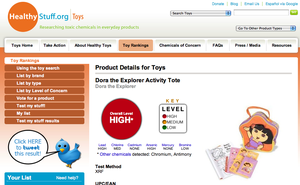
A look at the Ecology Center's database which lists tested toys as being of low, medium or high concern based on the levels of lead, mercury, arsenic and other elements are found in the toys.
The number of toys with lead in them has decreased markedly in the last year, but the number children's products on store shelves found with toxins in them is still high, the Ecology Center in Ann Arbor said Tuesday.
The results are available online today as part of the non-profit's third annual Consumer Guide to Toxic Chemicals in Toys, a database with more than 4,000 toys and more than 5,500 products it has tested for levels of chemicals deemed harmful by agencies like the American Academy of Pediatrics and the Environmental Protection Agency.
Out of more than 700 toys tested by the Ecology Center and its partners around the U.S., at least 18 percent on store shelves contained lead and a third contained one or more hazardous chemicals, the center found.
"Our whole goal is basically to help people take control over what they buy this holiday season," said MIke Shriberg, policy director for the center.
Organization leaders say they are hoping consumers will be able to use the information provided by its testing by creating mobile ways of accessing the database such as text messaging service and an application for Web-enabled phones.
The organization said it hopes awareness about toxins in toys will also help build backing for an overhaul of the federal chemical regulatory system and for support of a measure being considered at the state level called the Children’s Safe Products Act.
A few tips from the testing:
• About 90 percent of the toys found and tested came from China, about 9 percent came from other regions of Asia and less than 1 percent came from the U.S. That "Made in the U.S.A." stamp isn't a fail-proof way to avoid toxins, but those products did tend to be safer than imported toys, Shriberg said.
• The worst category by far is jewelry and accessories like purses, which are more likely to have toxic components to them, he said.
• Items from dollar stores or toys from vending machines had a higher chance of containing high levels of toxic compounds, he said.
News outlets around the country have picked up interest in this story including NewsDay and New York Daily News.
Comments
unclemercy
Wed, Dec 2, 2009 : 3:31 p.m.
thanks, china