

Man accused of drunken driving in death of Gary Lillie to face trial
The man accused of hitting and killing veteran’s advocate Gary Lillie with his car while he was intoxicated had his court case bound over to Washtenaw County Trial Court Friday.
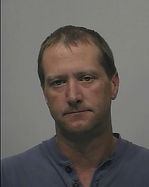
Kevin Warren
More details on the accident emerged at Friday’s hearing, which was a continuation of a previous preliminary hearing in September.
The Washtenaw County Sheriff’s Office investigator assigned to the case said during testimony that Kevin Warren’s Chevrolet Avalanche was traveling between 34 and 42 miles per hour when he struck Lillie with the passenger side of his vehicle, killing him almost instantly.
Detective Robert Losey said there was no evidence that Warren’s vehicle braked suddenly or swerved in an attempt to not hit Lillie.
Losey described a number of tests he did to determine the speed of the Avalanche, where the point of impact was and any possible movements the vehicle made leading up to the crash. He said the damage left on the Avalanche showed burn marks from Lillie’s black nylon shorts and green button-down shirt on the vehicle.
“The impact, we say and I observed on the vehicle, was consistent … with the striking of the pedestrian,” he said.
The charges come from the crash, which occurred after 11 p.m. Aug. 4 on Marshall Road near Baker Road. Police say Warren was eastbound on Marshall Road when he struck Lillie, 70, who was walking in the same direction.
In the previous hearing, Warren’s blood alcohol level was shown to be .12 after the crash — higher than the .08 legal limit in Michigan. A video from a police vehicle on sight showed Warren said he dropped his cell phone and was reaching for it when he struck Lillie. He also originally believed the collision was with a deer, according to his attorney, John Shea.
Warren is charged with operating while intoxicated causing death and leaving the scene of an accident resulting in death. If convicted, he faces a maximum of 15 years in prison.
Washtenaw County Chief Medical Examiner Jeff Jentzen testified the impact of the crash caused so many severe injuries that Lillie would have been dead immediately following the crash.
The official cause of death were head and neck injuries sustained in the crash and what Jentzen called “crushing chest injuries.”
The impact of the crash caused Lillie’s body to wrap around the front, passenger side of the Avalanche, Losey said. The injuries described by Jentzen were consistent with that finding, testifying there was deep bruising in Lillie’s legs, tears in Lillie’s liver and spleen and a hemorrhage into the chest cavity.
Jentzen said Lillie wouldn’t have been conscious at the scene and, even if he had received medical attention seconds after the accident, he would not have survived.
Losey said Warren’s vehicle never left the roadway and his investigation showed the vehicle’s low beams were on, but not the high beams. He said he and another investigator returned to the scene on Aug. 18 to conduct an investigation with nighttime visibility.
The other investigator wore similar clothes to what Lillie was wearing and Losey drove a different Chevrolet Avalanche at about the same speed Warren was allegedly going. Losey said he could see the investigator when he was still 250 feet away.
According to Losey, it takes about 1.5 seconds for a driver to make the decision to brake or swerve. If Warren was traveling 42 miles per hour, it would have taken him 183 feet to come to a stop and approximately 92 feet in order to swerve around Lillie, Losey said.
Washtenaw County Assistant Prosecutor Brenda Taylor said Warren’s decision to drive home immediately following the crash, return to the scene to check what he had hit and then drive back home to call police showed a guilty conscience.
“He went home and his conscience got the better of him. He went back to the scene, hoping to see a dead deer but instead he saw a jogger,” she said.
Warren will appear before Washtenaw County Trial Court Judge David Swartz on at 1:30 p.m. Nov. 10 for a pretrial hearing. He is not currently in custody.
Shea said Warren truly believed he had hit a deer, which is why he left the scene of the crash. He said he was grabbing his cell phone and felt an impact, and when he looked up all he saw was a flash of white, leading him to believe it was a deer. Lillie was wearing black nylon shorts, a white t-shirt and a green button down shirt when he was killed.
Shea said leaving the scene of a crash between a motor vehicle and a deer is not a crime, and it wasn’t until he returned that he discovered he may have hit Lillie.
“If he was trying to avoid the accident, he wouldn’t have made the call at all,” Shea said.
Kyle Feldscher covers cops and courts for AnnArbor.com. He can be reached at kylefeldscher@annarbor.com or you can follow him on Twitter.
Comments
Roadman
Sat, Oct 8, 2011 : 9:55 p.m.
According to Secretary of State records downloadable at <a href="http://www.michigan.gov" rel='nofollow'>www.michigan.gov</a> both A.P.A. Brenda Taylor and defense counsel John Shea have given donations to campaign committees of judicial candidates locally. Shea has also donated to a committee of a Michigan Court of Appeals judge (Kurtis Wilder) and Michigan Supreme Court justice (Michael Cavanagh). The Michigan Campaign Finance Network has questioned the legislative wisdom of allowing parties and counsel to give campaign donations to election committees of judges or judicial candidates that the parteis or counsel has or is expected in the future have cases before. In 2008 the local criminal defense bar pulled out all the stops to ensure one of theirs - Chris Easthope - got elected to the District Court bench in Ann Arbor.
john e le beau
Wed, Nov 9, 2011 : 6:41 p.m.
This is so sad, kevin is a decent kid,perhaps the court could show some passion. This guy needs a secound chance. the court needs to help.
goingfast3579
Sat, Oct 8, 2011 : 3:50 a.m.
i maid made a comment. before they were friends and neighbors. I got in trouble almost 20 years ago. lost my life because of liars and politicians.
Tesla
Sat, Oct 8, 2011 : 3:34 a.m.
I asked a legitimate question of Mr. Little. Relax A2.com. Have to give props though for being around at 11:30PM on a Friday to delete a comment within 2 minutes. lol
Merritt Lillie
Sat, Oct 8, 2011 : 1:41 p.m.
Tesla, What question did you ask?
Edward R Murrow's Ghost
Sat, Oct 8, 2011 : 1:12 p.m.
Don't be so quick to give "props". On nights and weekends the censors are Canadian contractors. GN&GL
Merritt Lillie
Sat, Oct 8, 2011 : 2:26 a.m.
Kyle, I didn't get a chance to thank you at the hearing today for your continued honest and fair reporting on my Uncle's trial. I do want to point out a mistake I noted in the beginning of this article. I don't want to nit pick, however I need to point out a correction. In paragraph 5 you stated, "He said the damage left on the Avalanche showed burn marks from Lillie's black nylon shirt and green button-down shirt on the vehicle." Gary was actually wearing black nylon shorts and a white shirt with a green button-down shirt over it.
dogman32
Fri, Oct 7, 2011 : 9:30 p.m.
I've read this article several times and have yet to determine who "Shea" is. His remarks sound as if he's a defense attorney but you wouldn't know it.
pauls
Sat, Oct 8, 2011 : 5:49 p.m.
John Shea is a defense attorney. Notice that all the cops and prosecutors' names are in bold, but Shea's is not.
Merritt Lillie
Sat, Oct 8, 2011 : 2:19 a.m.
Yes, Shea is Warren's defense attorney. Unfortunately through the quoted remarks that does sound confusing. However, Shea is simply restating Warren's testimonies that were already on record.
dogman32
Fri, Oct 7, 2011 : 11:22 p.m.
Thanks, jj
jjc155
Fri, Oct 7, 2011 : 10:01 p.m.
8th paragraph down talks about his defense attorney John Shea. That said, I had to re-read the article to find that, not sure if it was updated between my reads, LOL.
Marilyn Wilkie
Fri, Oct 7, 2011 : 8:26 p.m.
This is so sad. This man's life may only be worth 6 years of someone's time, or less? So, supposedly, he hit him, went home, came back and saw him, and instead of calling 911 then he went home again to call?
Marilyn Wilkie
Sat, Oct 8, 2011 : 12:28 p.m.
Not to attempt to try the case here, but considering where Mr. Warren's vehicle hit Gary, it is amazing to me that he could have gained that much speed after turning onto Marshall Rd. from Baker. He really must have gunned it around that turn. Maybe that is why his cell fell on the floor. Also, considering how strong an impact it was, I can't imagine not stopping the car. I also can't imagine not calling the police after going back to the scene and seeing him lying there in the ditch. Alcohol changes everything. When are we as a society going to say no more excuses for deaths caused by alcohol.
Merritt Lillie
Sat, Oct 8, 2011 : 2:17 a.m.
Marilyn, 911 tapes and records verify he was in deed at his home when he called 911 and reported that he may have hit a deer or a person. In court he testified that he did think it was a deer and he saw a flash of white that made him believe it was a deer. After hearing testimony, my thought is that the flash of light was one of Gary's tennis shoes which were reflective running shoes seeing as one of his shoes and sock were found in the debris field at the accident site. All in all it is a very sad a devastating loss of my family and the Warren family.
Marilyn Wilkie
Sat, Oct 8, 2011 : 1:43 a.m.
Or under the influence and figuring out what to do?
Sam Smith
Fri, Oct 7, 2011 : 10:44 p.m.
He probably was in shock, wouldn't you be? At least he called. Not excusing what he did at all but I'm sure he feels terrible.
Roadman
Fri, Oct 7, 2011 : 7:41 p.m.
I wonder why the County Prosecutor did not attempt a charge of second-degree murder as it has done in a separate recent local case were intoxication allegedly caused a vehicular-related death? That charge has a statutory maximum sentence of life in prison and alcohol-related vehicular homicide convictions for second-degree murder have been upheld for terms as high as 20-40 years in prison. Under the "3/5ths rule" of indeterminate sentencing applicable in the Michigan court system, the maximum sentence Swartz may impose is 10-to-15 years in a state prison. This is actually unlikely to be this high if the driver had no serious record. Reduction in time for good behavior and parole considerations could knock more time actually served off any prison term. The "hit-and-run" charge will be subject to concurrent sentencing meaning it will not add more time to a more lenghty sentence for a possible OUIL resulting in death conviction. All in all, it is likely he will actually serve less than six years in prison even of Swartz doles out the maximum term. This is a very sad case given the fact the victim was a distinguished veteran who reportedly helped many fellow veterans in the local community. It is the community's loss as well.
djm12652
Fri, Oct 7, 2011 : 8:24 p.m.
**walker, not jogger...my apologies.
djm12652
Fri, Oct 7, 2011 : 8:21 p.m.
I'm sorry for the family's loss. And lest we forget, innocent until proven guilty. It is sad indeed, much more sad than if anyone else had lost their life. I am taken aback by AP Taylor's remark about the alleged suspect's guilty behavior by going home first. I have seen and hit my fair share of deer at 11:00 pm, I don't think anyone expects to see a jogger that time of night; and going home to check vehicle damage in better light is something I have done more than once.
Ricebrnr
Fri, Oct 7, 2011 : 7:04 p.m.
Again, where is the hue and cry, the tearing of clothes, the gnashing of teeth over vehicular homicides? Where are the penalties that prevent those guilty of these crimes from the privilege of ever owning or operating them ever again? I guess it's OK because almost everyone drives or aspires to. Shame, shame.
Ricebrnr
Mon, Oct 10, 2011 : 5:36 p.m.
Oh ERMG, You usually have much better references and statistics to back your arguments than a simple canard. I would've expected much better from you. But since you laid it out there. "The leading causes of death in 2000 were tobacco (435000 deaths; 18.1% of total US deaths), poor diet and physical inactivity (400000 deaths; 16.6%), and alcohol consumption (85000 deaths; 3.5%). Other actual causes of death were microbial agents (75000), toxic agents (55000), motor vehicle crashes (43000), incidents involving firearms (29000), sexual behaviors (20000), and illicit use of drugs (17000)." <a href="http://proxy.baremetal.com/csdp.org/research/1238.pdf" rel='nofollow'>http://proxy.baremetal.com/csdp.org/research/1238.pdf</a> IF (and I do not subscribe to this definition) guns are designed only to kill people (never mind hunting, shooting sports like the Olympics, Law enforcement, defense of country etc..) then I still question why guns are more "evil" than vehicles which kill many times more people DAILY than guns. <a href="http://www.nraila.org/issues/factsheets/read.aspx?id=120" rel='nofollow'>http://www.nraila.org/issues/factsheets/read.aspx?id=120</a> <a href="http://www.datamasher.org/mash-ups/firearm-deaths-vs-vehicle-deaths" rel='nofollow'>http://www.datamasher.org/mash-ups/firearm-deaths-vs-vehicle-deaths</a> SO is the object "designed to kill" more or less evil than one that was not but does in fact kill more by almost a factor of 2? Want to add drinking into the mix? Won't be pretty for your argument...
Edward R Murrow's Ghost
Sat, Oct 8, 2011 : 1:06 p.m.
Might be because automobiles and trucks are not designed with the sole purpose of killing people? Gee. I wonder what easily purchased items are designed solely for the purpose of killing God's creatures? Good Night and Good Luck