

Sidewalk millage: Ann Arbor residents face Nov. 8 vote
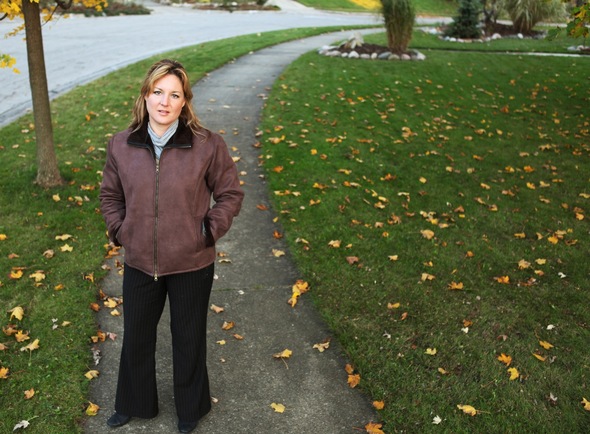
Lisa Vance stands on the sidewalk in front of her home in Ann Arbor's Dicken Woods neighborhood, where she paid to replace 11 sidewalk slabs. She's now against the city's proposed sidewalk millage on the Nov. 8 ballot because she sees it as a double tax to residents like her.
Jeff Sainlar | AnnArbor.com
Shortly after Lisa Vance and her husband moved into a house in Ann Arbor's Dicken Woods neighborhood in late 2003, the underground sewer tile on their property collapsed.
The repair bill: $16,000.
A couple of years later, Vance said, the city came knocking and issued an order requiring them to fix the crumbling sidewalks adjacent to their property. After begrudgingly replacing 11 slabs, they were on the hook for another $1,400-plus in unexpected costs.
"If it wasn't for a contractor taking a shine to us, trusting us, and putting us on a payment plan, we wouldn't have been able to do it," said Vance, who still regrets she wasn't able to put that money into renovations to her 1956-era kitchen and bathroom.
As the city of Ann Arbor asks voters on Tuesday to approve a tax increase to pay for future sidewalk repairs, residents like Vance stand opposed.
According to city officials, the 0.125-mill proposal on the ballot translates to $13.37 a year in new taxes for the average homeowner.
Ann Arbor's city code currently requires property owners to maintain the sidewalks adjacent to their properties. With the $560,000-plus a year the sidewalk millage could raise, city officials propose shifting that responsibility away from individual property owners to the city.
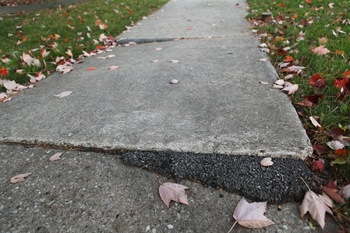
A temporary fix to a heaving sidewalk in Ann Arbor. The city code currently requires property owners to maintain the sidewalks adjacent to their properties. The proposed millage would shift responsibility to the city.
Jeff Sainlar | AnnArbor.com
Vance sees it as a double tax.
"It's not the $13. It's the principle of the matter," she said, noting many of her neighbors had to pay to replace sidewalk slabs. "We are not happy in our neighborhood about this."
But city officials argue now is the perfect time to put the question before voters, following completion of a five-year sidewalk inspection program.
In 2005, the city began an aggressive program of inspection and enforcement in order to bring all sidewalks up to a uniform level of quality and safety.
Over the course of five years, one-fifth of the city's sidewalks were inspected each year, and homeowners with faulty sidewalks were ordered to pay to fix them.
That program is now complete and the city's inspectors have combed through every neighborhood in the city. City officials stress that all faulty sidewalks either have been repaired or — in the case of those that aren't yet fixed — the city will complete the needed repairs by the end of 2011 and assess the costs to the property owners who failed to comply.
City officials point out the sidewalk millage offers residents a chance to finally shift away from an admittedly unpopular program that's placed a heavy burden on individuals. City officials contend sidewalks are a public good used by all, and so spreading out the maintenance costs across all property owners is a more fair and reasonable approach.
"Going forward, we will continue having bad sidewalks throughout the city, and if the city assumes the responsibility and pays for the replacement, there will be future savings for homeowners," said Homayoon Pirooz, head of the city's project management unit.
Pirooz believes the $13 a year the average resident would pay — about one-tenth the cost of a single slab — is a good insurance policy against the potentially larger costs. He said that's a good deal for all residents, whether they've already paid for repairs or not.
"If the sidewalk millage is not approved, then it will be the status quo," he said. "The property owners will continue being responsible for the sidewalks and we will continue working with the homeowners, asking them to replace their sidewalks when they go bad."
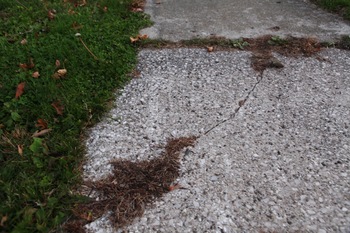
A crackling sidewalk in an Ann Arbor neighborhood. In the case of any faulty sidewalks that aren't yet fixed, the city will complete the needed repairs by the end of 2011 and assess the costs to the property owners.
Jeff Sainlar | AnnArbor.com
Voters are being asked on Tuesday to renew the 2-mill street millage for another five years and layer on an additional 0.125 mills for sidewalk repairs. The existing street millage amounts to about $214 a year in taxes for the average homeowner.
Most city officials seem confident the 2-mill tax, which brings in about $9.1 million a year and is essential to paying for streets and bridges in Ann Arbor, will be renewed.
But there's less certainty surrounding the sidewalk millage, and even Pirooz is hesitant to offer a prediction as to how the vote might go.
"It seems like almost everyone is behind the street millage," he said. "For the sidewalk millage, it's hard to tell because it's a new program, and people have questions."
In a recent online survey conducted by the city, 61.7 percent of respondents said they had to repair or replace sidewalks adjacent to their property sometime in the last six years. More than 600 people took the survey, only 38 of whom indicated they weren't city residents.
When asked if they would prefer if the city were responsible for repairing sidewalks instead of property owners, 32.9 percent agreed and another 37.8 percent strongly agreed, while only 7.8 percent disagreed and 13.3 percent strongly disagreed; 8.2 percent were neutral.
Asked more specifically whether they'd agree to pay an additional 0.125-mill tax to fund a city sidewalk repair program, 30.2 percent agreed and 29.5 percent strongly agreed, while 10 percent disagreed and 23.3 percent strongly disagreed; 6.9 percent were neutral.
Sharon Burzan, who lives near Vance on Palomar Drive, said the sidewalk millage has been a hot topic of discussion in her neighborhood.
"This is really sort of a salt-in-the-wound thing, because most of us have already had to put out to fix our sidewalks," she said. "That caused a lot of hardship for a lot of people."
Burzan said many of her neighbors have been double-hit like Vance, having the same sewer tile problem before getting an order from the city to pay for sidewalk repairs. She said she and her husband had to pay close to $500 to repair four or five slabs.
"It's like shutting the door after the horse goes out," she said of the sidewalk millage. "I think most people are greatly alarmed and extremely dissatisfied with even thinking about a tax increase when the city should have been picking up the bill for those sidewalks to begin with."
Vance agreed and said she would have supported a sidewalk millage before, but not now. She said she lobbied for a sidewalk millage about five years ago.
"We sent letters to the city that went unanswered then," she said. "I think the city has made an egregious error here, and now they're trying to backtrack and fix it."
Ryan J. Stanton covers government and politics for AnnArbor.com. Reach him at ryanstanton@annarbor.com or 734-623-2529. You also can follow him on Twitter or subscribe to AnnArbor.com's e-mail newsletters.
Comments
SurlyCommenter
Tue, Nov 8, 2011 : 6:54 p.m.
Sour grapes! Honey, we ALL paid out of our own pockets to pay for sidewalk slab replacement. You're not special, this isn't unfair. This millage makes it so we won't need to pay out of our own pockets again. Makes perfect sense to me.
Mark Salke
Fri, Nov 4, 2011 : 12:30 p.m.
Go Lisa! We're behind you!
Carole
Fri, Nov 4, 2011 : 10:43 a.m.
Vote No to any increases in mileages for the city until we have fiscally responsible individuals running the city.
walker101
Fri, Nov 4, 2011 : 4:52 a.m.
One of the reasons I would never live in Ann Arbor.
Tru2Blu76
Fri, Nov 4, 2011 : 3:29 a.m.
Well - no one can blame the homeowners who now feel they've been had (and mistreated in some cases) for not wanting this millage. The puzzling thing is: WHY wasn't this tiny millage proposed YEARS AGO? I would like to see the aggregated cost to those home owners who did pay the full cost on those 45,000 slabs in the period mentioned. I'd say: it's fair to institute the millage IF the ENTIRE cost to those home owners was refunded out of this revenue BEFORE proceeding with new sidewalk reconstruction. I see slabs dated back to 1939 (still in good condition) around town: further reconstruction can wait until the unjustly imposed costs are refunded to Ann Arbor home owners.
A2Woman
Fri, Nov 4, 2011 : 1:40 p.m.
Thanks, Tru2Blu76. Yes, that millage should have been proposed years ago, I agree. We'll never see a refund. I had two homes at the time (one for sale), and there were a lot of slabs that were replaced. The ash trees which caused the slab damage are now gone, and the sidewalks are good-to-go for many years. (I also paid to have those ash stumps ground out and removed, and planted new easement trees...all on my dime...city easement.) NO on sidewalk millage + NO on street millage = NO confidence in City Council
EyeHeartA2
Fri, Nov 4, 2011 : 3:07 a.m.
I get it. They pay union wages, squander the money and toss 1% away on overpriced starving artist junk. That said.....I think I will vote yes for this. I feel that the person paying the bill should be one making the call on the slab. Also, it is the CITY trees tearing up the sidewalk, no my tree. So now all this stuff goes down the same tube.
Stuart Brown
Fri, Nov 4, 2011 : 3:01 a.m.
AnnArbor.com is a consummate shill for the Hieftje party as proven by this article; no mention of the over $28 million in the Street's fund. Don't believe the talk about voters approving the renewal of the Street's millage; once people find out the city has refused to use street's money for street repair, they are no longer for the Street's millage renewal. Also, when people find out the Street's fund has provided over $500,000.00 for the 1% For Art program, they are even more against the Street's millage renewal. The city let its roads crater while accumulating over $28 million in the Street's fund.
Stuart Brown
Fri, Nov 4, 2011 : 4:26 a.m.
Ryan, The over $28 million in the Street's Fund is relevant because, 1) the Sidewalk proposal can only pass if the Street's millage is renewed--the Sidewalk plan is a cynical attempt to get voters to approve the Street's Fund millage renewal, 2) with $28 million in the same fund why can't Ann Arbor residents get sidewalk repair without a tax increase? BTW, you neglected to mention that it was Karen Sidney and a2politico.com who first broke the knowledge that the Street's fund had a balance of over $20 million in it. Nor have you bothered to offer any coherent explanation to why the city would build up over $28 million in the Street's fund when Ann Arbor streets are cratering. Steve Ranzini offered the best explanation, the city was using the multi-million dollar fund balance in the Street's fund to gamble in the bond market.
Ryan J. Stanton
Fri, Nov 4, 2011 : 3:24 a.m.
For the record, we've reported on the streets fund balance and the allocations to public art numerous times before. This story was intended to focus on the sidewalk proposal.
Mark Wilson
Fri, Nov 4, 2011 : 1:18 a.m.
Two NO votes at our house. I do not believe that the city can repair the sidewalks for less than the property owners. I do not believe that the cost will be only $13/year. This is a confidence game and taxpayers will be fleeced if this millage passes. Do the math. One slab = $100. How long will it last? 20 years? That's $5/year. How many slabs do you have? If your answer is more than 3, then it has to cost more than $13/year. Seriously, the City can't do this for less than we can, especially with 25% overhead. It isn't going to happen. What *is* going to happen is either 1) the cost is going to be higher, much higher, or 2) the sidewalks won't be repaired. Probably a combination of the two. This is a perfect case for insurance, but not if the City is the insurer. Ask a real insurance company what it will cost. Better yet, convince an insurance company to offer sidewalk replacement coverage. I guarantee the premium will be more than $13/year, but I might buy that policy. Two No votes.
snapshot
Sat, Nov 5, 2011 : 2:52 a.m.
My point is that your analysis makes serious assumptions and you know what they say about making assumptions. Sour Grapes as I am using it, actually refers to "animosity of feeling "slighted". Which I believe is the case here.
Mark Wilson
Fri, Nov 4, 2011 : 7:52 a.m.
snapshot, I used a 20 year lifespan in my example, not 5 years, and I used a very conservative $100/slab. We actually paid $130 to a private contractor. If I assume a realistic $130/slab + 25% overhead ($162.50) and extend the life to 50 years, the average cost per slab per year is $3.25. With those assumptions, that $13/year would cover replacing only 4 slabs per home over 50 years. The city coerced me into replacing three times that many slabs. Check my math. "Sour Grapes" refers to when you pretend not to care for something you don't have or can't have. How does that apply here?
snapshot
Fri, Nov 4, 2011 : 2:04 a.m.
sour grapes....you don't take into consideration how long the sidewalks had been in disrepair before they were repaired. 30 years of disrepair compared to 5 years is not a good comparison. Again, sour grapes rule.
Go Blue
Fri, Nov 4, 2011 : 1:09 a.m.
Another brilliant idea brought to you by non other than the City of Ann Arbor. So what about all those homeowners that do NOT have a sidewalk???? Are they to kick in to a fund for something they don't have? Same idiocy as having the homeowners pay when they've already replaced all their sidewalk slabs. Has anyone seen ANYTHING come out of city council and the powers that be in Ann Arbor, that is relevant and important and worth bringing to the people of our fair city? Thought not.
snapshot
Fri, Nov 4, 2011 : 12:25 a.m.
Congratulations City Council, you've given the residents of Ann Arbor a chance to show their true character which is "if it doesn't benefit me, I'm opposed". And they wonder why folks want their pensions taxed, their health care benefits cut, school budgets cut, and all the other "take aways" folks are demanding.......it's for the same reasons "they" don't want this sidewalk proposal passed. It's the "If I had to suffer and incur the expense, everybody else should too" syndrome. Maybe now they'll understand the "economics" of reality.
larry kramer
Fri, Nov 4, 2011 : 12:08 a.m.
I just paid $1200 to get my sidewalks fixed--If the city will give me a tax credit for $1200, I'll support a sidewalk millage, as long as it wont be used for art or anything else!
silverwings
Thu, Nov 3, 2011 : 11:44 p.m.
Just to make clear: money from the new millage will indeed go to the Percent for Art program if it's passed. Source: article on the millage in the November Observer. Whatever your leanings on the millages, this should be made clear, and the city is being far from forthcoming about it.
Dog Guy
Thu, Nov 3, 2011 : 9:57 p.m.
Before deciding on how to vote on the millages, compare the water bill you received today with that for last quarter. Eight lines of charges show you eight rate increases. Ann Arbor's kleptocracy treats water utilities income as a slush fund for whatever they like, regardless of its intended purpose. Their shadow government, the DDA, spends parking revenues on whatever, whomever, or even just a hole in the ground. The city hall gang spends any millage on whatever they like and whomever they like, regardless of the headline on the ballot. And if you are (as I am) a tax parasite, you will appreciate these millages as part of a wonderful system.
Elaine F. Owsley
Thu, Nov 3, 2011 : 8:40 p.m.
I'm surprised there hasn't been some kind of tax for this purpose right along. How do people think the sidewalks get fixed? Where else would the money come from? In most cities, it's one of the obligations of property ownership.
MyOpinion
Thu, Nov 3, 2011 : 9:26 p.m.
In most cities, this would be part of property taxes. Not, in addition to property taxes. How about separate millages for garbage collection, street lights, snow plowing?
KJMClark
Thu, Nov 3, 2011 : 8:37 p.m.
I paid a bit over $2000 to have all of our sidewalk slabs replaced. The city could have done it for about 90% less. It's ***much*** cheaper to have the city doing this kind of work. This millage change will cost peanuts, and save a small fortune the next time I need sidewalk work.
Ashok Gopalakrishnan
Thu, Nov 3, 2011 : 11:19 p.m.
Sorry to put you on the spot KJM. But you claim that the "city could have done it for about 90% less." Do you really think the city could have replaced all your slabs for 90% less than what you paid? Or did you mean it would have cost the city 90% of what you paid?
alterego
Thu, Nov 3, 2011 : 8:34 p.m.
Five years to late or two years too early for this proposal.
John Spelling
Thu, Nov 3, 2011 : 8:09 p.m.
If all sidewalks have been repaired and are now in decent condition, what's the point of the millage so soon? It couldn't possibly be so that 25% of the money can to city hall administration and the rest to street and bridge repair, traffic calming, and anything else remotely related to roads? The proposal guarantees nothing for sidewalks. Over 5 years about $2.5million will go into the fund with very little actually being spent on the intended use. This is a scam and I'm voting no.
jackson72
Thu, Nov 3, 2011 : 8:01 p.m.
This is just another scam from our city "government" to get us to pay more taxes plain and simple. The truth of the matter is taht this is one more tax on Ann Arbor homeowners for services that should be provided. Our city services have become a la cart these days. They keep separating them out and eliminating them then and then billing us additional to restore them. I just had to replace a number of slabs in front of my house to the tune of $1,200. A few of the slabs that were replaced were stamped with the date "1938", so they lasted almost 75 years. If you keep in mind that your sidewalk should last 60-75 years, the city's extra tax math just doesn't add up. You can also bet that the city will be a lot more lenient on themselves if they end up footing the bill. The City of Ann Arbor cannot do anything efficiently and I'm not going to trust them with more of my money if I can help it. VOTE NO!
Jon Saalberg
Thu, Nov 3, 2011 : 7:55 p.m.
It's all well and good for those who have not already paid to say "well, we should all pay to ensure others are not not in the same position later", since they will not have paid twice for their repairs. I have paid. I will vote NO.
Seasoned Cit
Thu, Nov 3, 2011 : 7:39 p.m.
We live in a condo.. City considers our streets private hence we are responsible for maintaining our own streets. If we end up paying the milage for sidewalk repair, will the City also cover our sidewalks ?
B. Jean
Thu, Nov 3, 2011 : 7:38 p.m.
I've got the solution and you wont need a new tax! Paint the word ART in a large circle on each slab of sidewalk when the city fixes it. Then it can be paid for out of the 1% for Art fund. Obviously there is plenty of money in that fund if they can buy $750,000 dollar sculpture. The best news. The fund renews itself perpetually and the side walks will match the bike racks no one uses.
rosewater
Thu, Nov 3, 2011 : 7:34 p.m.
A2 officials are always trolling for dollars!
Ashok Gopalakrishnan
Thu, Nov 3, 2011 : 7:33 p.m.
The article did not point it out, but it is important to note that the sidewalk millage is NOT a stand-alone millage proposal. If the streets millage proposal is defeated, it does not matter which way the vote goes on the sidewalk millage - it is considered defeated. So in my mind, the real question is this - Are you satisfied with the way the city has managed the present street millage, and the projects associated with it? Would you vote to approve the streets millage? Consider the following: - The present streets fund has a balance of $29 million in it (according to an expense spreadsheet from CM Briere) - The city will take in an additional $9 million during FY 2012 - The city is planning to spend $27 million during FY 2012, even though over 2008-2011, the city has spent only between $8.3 million and $10.6 million per year. So, seeing $27 million planned for expenditure during FY 2012 is interesting, to say the least. - The existing fund will not run out of money until 2013, and that assumes $27 million will be spent as planned in FY 2012. I would vote against the street millage until I see some serious spending of existing funds by the city. The sidewalk millage has its own issues, but the street millage is the proverbial 800lb gorilla.
leaguebus
Thu, Nov 3, 2011 : 7:24 p.m.
The only way I will vote for it is if the city rebates me the $700 for my sidewalks. By the way at $150 per slab, 47000 slabs is just over $7M. Thats about 15 years to build the fund up to where the city could do all the sidewalks. My sidewalks were 60 years old when I did them. Sounds like we are building another slush fund to "borrow" upon.
capersdaddy
Thu, Nov 3, 2011 : 6:47 p.m.
i'm voting no on sidewalk, yes on street renewal. i thought it was very manipulative that the wording in the proposal for the sidewalk millage almost "packages" itself with the street renewal. also - the city lies. i ignored them, ignored them, ignored them. they finally replaced my one slab - i didn't have to lift a finger or make a single call...and they billed me $118. yup, one slab for $118, which was less than what the contractor quoted me a few years ago (i eventually fired the contractor because she was disaster on wheels). please vote no on sidewalk!
MyOpinion
Thu, Nov 3, 2011 : 7:16 p.m.
Didn't you get hit with an administrative fee? I too let the city do my work; I got 8 slabs replaced for $500 and had a $225 administrative fee. And, typical of the city, it took 3 months for me to get my bill. Frankly, I expected it to get lost, but it does give one pause.
Townie Kid
Thu, Nov 3, 2011 : 6:26 p.m.
I bought a home in Ann Arbor in 2010-- about six months later, we received a letter informing us that the deadline for sidewalk repairs was approaching. The original markings on the sidewalk had long since washed off, and I had to call the city to have them come back out to re-mark. It turned out that most of our slabs just needed to be "lifted", and only one needed to be replaced. I then went through a really frustrating process of finding a contractor- it turns out that there are places that do lifting, and other places that pour new slabs, but no one who does BOTH. Even though I used a contractor from the city recommended list, it was my responsibility to ensure that they pulled the necessary permit in a timely fashion-- they originally tried to come do it without one, and I had to INSIST that they push the repair work back and get the permit. After the repairs were made, I waited for the city to re-inspect (which I was told they would do automatically, since we pulled the permit), but still had to call the sidewalk office when no one came out after a few weeks. I also called a few other contractors about the slab that needed to be replaced, and was informed that there was a minimum sq. footage that was required, and so it would cost $500 to repair just one slab-- I had two separate contractors inform me that I should just let the city do it, because my bill would be about 1/3 the cost of having the a contractor come do the work. Ultimately, the frustration and inconvenience of the whole debacle makes me feel HAPPY to pass the responsibility off to the city. The city hires outside contractors and gets a better deal because of the volume of work, as opposed to an individual homeowner who needs to have one or two slabs replaced. And honestly, I can't imagine the administrative fees will be any more than they are now, chasing down individual homeowners to get repairs done, sending inspectors out to individual properties...I'm voting YES.
AlwaysLate
Thu, Nov 3, 2011 : 6:22 p.m.
Why not exempt any homeowner who has replaced their sidewalks within the last seven years (2005-2011)? So, for example, Mr. & Ms. Vance would be exempt from the tax for the next 119.7 years ($1,600.00/13.37). Seems fair...don't you think?
Beth Wallace
Thu, Nov 3, 2011 : 6:21 p.m.
They should add back the street leaf pick up, then I think this millage would hold come clout with folks. Personally, I support the small cost upfront over having the city come back, year after year, and say that I have more to replace or that I didn't do it correctly the first time around. Not to mention the release of liability!
David Cahill
Thu, Nov 3, 2011 : 6:02 p.m.
I'm voting for the sidewalk millage. If it passes, citizens would no longer be subject to the arbitrary and crazy present policy.
Snarf Oscar Boondoggle
Sun, Nov 6, 2011 : 2:53 a.m.
would the citizenaz be subject to the arbirtary andcrazy insurnace claimes? if the city wants the oblli9tion they can take teh legal hit as well . eh?
5c0++ H4d13y
Thu, Nov 3, 2011 : 6:24 p.m.
Really? I'm sure nothing would change on my walk on Miller.
Roaring_Chicken
Thu, Nov 3, 2011 : 6:01 p.m.
From the FQA .pdf on the City site: "The sidewalk repair millage would not be used to install new sidewalks. The proposed millage would fund repairs only to existing sidewalks.... Installing a new sidewalk for the first time would be considered an initial improvement, which would mean that the adjacent property owners would be charged for the work." So, No, YOU still have to pay for new sidewalks. And I like this, too: "Although the street and bridge resurfacing and reconstruction should be accomplished using the 2.0 mills, as adjusted, and the sidewalk repairs should be accomplished using the 0.125 mills, as adjusted, the combination of the funds will allow some flexibility in the event that sidewalk repairs might not use all of the 0.125 mills in one year or might require more than 0.125 mills in one year." So at the end of the program, the City is hedging its bets that maybe it won't NEED all that millage money after all. Bet we don't get it back.
Are you serious?
Thu, Nov 3, 2011 : 5:56 p.m.
I have not read all of the comments so forgive me if I am repeating anything already noted. When I became aware of the ballot proposal I wrote the mayor and every member of the City Council. Guess how many wrote back? The question was why not reimburse those of us who spent several hundred dollars already? The few answers I received were lame to say the least: "It would cost too much." I asked in the email how much it would cost - nobody knew and nobody tried to find out. "It would be unfair to reimburse some people and not others." So I guess it's best to be unfair to everybody?? "What if someone moved? How would we reimburse them?" Well, one way would be to put a credit on the tax bill." The City does not know who has done the required work and who hasn't?" I don't even know where to begin with a question like than. If you have read this far then you know I'm voting NO and encouraging anyone I know to do likewise.
aes
Thu, Nov 3, 2011 : 5:30 p.m.
I have already voted (by absentee ballot) my NO CONFIDENCE in city operations. I am sending the proverbial message.
Brad
Thu, Nov 3, 2011 : 5:19 p.m.
Let's take the 1% of the street millage that gets skimmed for the art and reassign that to a bucket to fix sidewalks. It's more than enough. It doesn't ahve to be the either/or that being presented to us.
63Townie
Thu, Nov 3, 2011 : 5:16 p.m.
Nope, nuh-uh, fuhgeddaboutit. I hope silly legislation like this, and other well-publicized goofs by city government has awakened a sleeping giant, the voters. Time to wake up and vote for change.
Stephen Landes
Thu, Nov 3, 2011 : 4:50 p.m.
I am not only voting no on the sidewalk proposal I am voting no on the street millage. I do not believe the city is using the money it has for streets properly. The millage is to raise funds while we have more than $20 million in an account that hasn't been spent. What are we saving it for? I will vote for a street millage when existing funds have been spent, there is need for more, AND the city demonstrates it has proper construction procedures and practices in place to assure that streets are built properly. Consider my "no" vote a vote of "no confidence".
MRunner
Thu, Nov 3, 2011 : 4:43 p.m.
I am, in general, supportive of the idea of an additional millage to pay for residential sidewalk repairs, despite having spent of $1,000 on repair of my own sidewalks. However, reading the actual millage proposal and the explanation on the city web page is very unclear to me. <a href="http://www.a2gov.org/government/publicservices/project_management/Pages/SidewalkMillage.aspx" rel='nofollow'>http://www.a2gov.org/government/publicservices/project_management/Pages/SidewalkMillage.aspx</a> On this link, it never says that the homeowner will no longer be responsible for the costs of their own sidewalk replacement. Rather, it simply says that money will be raised to replace sidewalks. How, by voting for this millage, will the current city code be repealed? Furthermore, is there an implementation plan in place? Nowhere are the voters told how this will change the overall replacement of homeowners' sidewalks. Furthermore, nowhere is it guaranteed that the funds will be used for residential sidewalk replacement, rather than for sidewalk replacement associated with general road repair (e.g. the Stadium Bridge, Packard underpass, etc). I would be more at ease if, along with this millage, there was a guideline for how the resident would petition for money for sidewalk repair, and how this would release the homeowner from responsibility for their sidewalk repair. Without the guarantee that these funds are dedicated for residential, and not city owned (or DDA managed, etc) sidewalks, I don't think I can vote for it. Either way, I believe this millage (along with the road millage) will be a referendum on the 1% for Art program rather than on the substantive issue at hand of replacing city infrastructure.
Peter Baker
Thu, Nov 3, 2011 : 4:39 p.m.
What about those of us who live in Ann Arbor proper that don't even have sidewalks in front of our houses? I'm all for having the city maintain our sidewalks, and am willing to pay, but only if it means we will GET a sidewalk in the first place. Large swathes of the Water Hill neighborhood have no sidewalks, so unless the city's putting one in, I don't see how we can possibly be expected to pay.
Peter Baker
Thu, Nov 3, 2011 : 7:47 p.m.
I'm absolutely for making Ann Arbor more walkable, which is why I would hope that now that the city would be handling sidewalk responsibilities, all the areas without sidewalks will start to receive them.
Vivienne Armentrout
Thu, Nov 3, 2011 : 7:39 p.m.
I was supporting the millage until I learned of certain details even though my property also has no sidewalks. Why? Because the point is to make Ann Arbor more walkable. It's too bad that they did not propose a standalone sidewalk millage rather than as an add-on to the streets millage. It's also too bad that CM Briere's attempt to have this not subject to the 1% for Art failed.
A2K
Thu, Nov 3, 2011 : 4:35 p.m.
We also live in Dicken woods neighborhood and had to replace 4 slabs a few years ago. I think $13/year is a pittance compared to hundreds in costs every 5-10 years. Sometimes life sucks/isn't fair...I'd certainly like to not pay 5500/year in property taxes and instead put the money towards a new bathroom instead of our crappy 1950s ones, but that is the price to live of living in Ann Arbor. *Shrugs* We could sell and move to a township, but then - we'd miss being 3 minutes from everything.
grye
Thu, Nov 3, 2011 : 4:17 p.m.
The city recently completed a border to border review of the sidewalks. Now that it is time to start the process all over again, the city council has decided to request a millage to cover the costs as a whole instead of each homeowner repairing the sidewalk adjacent to their property (mind you that the city sometimes owns the property adjacent to the sidewalk). The current ordinance is inequitable. Corner lots must maintain 2 set of sidewalks. This minimal millage should be a shared sacrafice since sidewalks are city owned and are available for all citizens to use. I would rather pay $13 per year instead of $300 per replacement slab. If citizens are concerned about the city's ability to properly manage the funds (the funds should be for slab replacement or repair, not for program management, art, or any other thing), then escrow the money, have the homeowner replace the slabs, then request reimbursement for the expense. Permits and inspections will verify necessary work and job completion.
Scylding
Thu, Nov 3, 2011 : 4:14 p.m.
I've got it...I've goooooot it! I think I have a way to make everyone happy. Why don't y'all pool the art funds with the sidewalk funds and have whoever installs the concrete use cement pigments to make Jackson Pollacks of all the sidewalks in Ann Arbor. Art lovers would be happy, sidewalks in good repair, funding controversy averted!
Scylding
Thu, Nov 3, 2011 : 4:41 p.m.
Fine, I know where I'm not appreciated. (I assume that means you won't be voting up my post?)
dotdash
Thu, Nov 3, 2011 : 4:28 p.m.
Maybe it's time you apply the sharp edge of your wit to the problems of your own community?
dk
Thu, Nov 3, 2011 : 4:11 p.m.
Given the bang up job the City of Ann Arbor has done in NOT balancing a budget, how is it possible that ANYONE could think it's a good idea to give them this responsibility?
a2propertyowner
Thu, Nov 3, 2011 : 4:04 p.m.
I will be voting against this double tax. The city should maintain sidewalks, using existing tax revenue. Maybe a portion of the funds earmarked for "art" should go to sidewalk maintenence. Worst case scenario, the money collected for "art" would accumulate more slowly. Non-essential "art" projects are not as critical as basic maintenence, such as sidewalk repair.
Carolyn
Thu, Nov 3, 2011 : 3:50 p.m.
My experiences with home ownership closely mimic those of Lisa Vance. We too purchased a home (on the Northeast side of Ann Arbor) that had the same kind of sewer pipe. It was expained to me at the time of repair that it is basically a pipe that was made out of CARDBOARD type of material and then, once in place, was SUPPOSED to have had concrete poured around it. Why city inspection failed to discover that this was never done is up to speculation. In addition to this, we also were required to replace a huge portion of our sidewalk. It comes down to a matter of public trust on the proposed sidewalk milleage and my mistrust of the process lately leads me to wonder if this money will somehow become diverted away from the intended purpose of repairing residential sidewalks and instead be used for some other purpose. In addition, I would be curious to know what the process will be if the millage passes - highest need or squeeky wheel?
dotdash
Thu, Nov 3, 2011 : 3:45 p.m.
The city can fix these things more efficiently than a bunch of individual property owners contracting with a bunch of different individual companies. Where we used to live, property owners tried to get the "city rate" when it came to sidewalk repairs because it was always lower. So I'm pretty sure that it will be cheaper under city management, not less. Personally, I don't have a sidewalk, but I use other people's sidewalks, so I appreciate those who have kept up their sidewalks themselves all these years. I also think it's entirely reasonable for me to help pay for their upkeep, so I plan to for vote this millage.
dotdash
Thu, Nov 3, 2011 : 4:28 p.m.
I'm happy to have the city enforce that contractors pay a living wage. I'd hate to have the sidewalks fixed by people who then have to go stand in line at a soup kitchen or sign up for Medicaid in order to get healthcare.
SonnyDog09
Thu, Nov 3, 2011 : 4:19 p.m.
It won't be cheaper for the city to do it if they skim money off the top for their pet projects, add city overhead to the project, and require the contractor to pay "prevailing wage" rates.
thecompound
Thu, Nov 3, 2011 : 4:02 p.m.
can "city" and "efficient" be used in the same sentence, lol?
bunnyabbot
Thu, Nov 3, 2011 : 3:44 p.m.
If it is true that there is a 1% part for art built into this millage then no way would vote for it if I hadn't just paid for sidewalk repairs. As long as millages have (nearly) hidden pet projects attached to them forget them. Especially the stupid art fund. the city needs to fix the infrastructure, mainly problems with water, so streets will stop flooding (with raw sewage in some cases, that means exactly what you think!) , yes it would be nice to have smooth sidewalks, but you know most of us tripped and scraped our knees growing up and turned out fine, poop floating down the street or backing up into peoples basement seems more hazardous to people health.
dayo13
Thu, Nov 3, 2011 : 3:36 p.m.
Currently, if someone falls on my cracked sidewalk and gets hurt, they can sue my homeowners policy for damages. If the city takes over the maintenance on the sidewalk, and if someone trips over a crack and gets hurt, who is liable for the injuries? Since they were supposed to fix it, wouldnt they have the liability? Just curious.
grye
Thu, Nov 3, 2011 : 4:24 p.m.
Interesting that you can be sued for failure to maintain something that you do not own.
Scylding
Thu, Nov 3, 2011 : 3:53 p.m.
Used to be an insurance guy, dayo13, but not for municipalities, so I couldn't say for sure. I would think, however, that if the city takes over responsibility for maintenance, and you can demonstrate that you alerted them to any unsafe portions of your sidewalk, your insurance company could possibly subrogate against the city's liability policy. It only makes sense. This won't lower your premiums a whit, though, so don't vote for the measure to try to escape inusurance costs. Won't work.
xmo
Thu, Nov 3, 2011 : 3:28 p.m.
If you can afford to own a house in Ann Arbor than you should be proud to pay to fix the side walk slabs. Just think of it as "ART" now, don't you feel better! :)
AA
Thu, Nov 3, 2011 : 3:27 p.m.
Welcome to Ann Arbor politics 101. You are being hosed. Have you looked at the $750.000 "art' yet? Think how many sidewalks that could have fixed. How much do we pay for these politicians to harass us. I think it is time to streamline A2 government or to ousource it to a private company or perhaps a 'Watson' style computer program to make inpartial decisions.
grye
Thu, Nov 3, 2011 : 4:26 p.m.
That piece of art is a crock. Been better of putting a large message board on the front of the building. "700 sidewalk slabs replaced this month". At least I'd be informed since I am not overwhelmed by the "art".
LetThePoisonOut
Thu, Nov 3, 2011 : 3:25 p.m.
Many of you voting on 'principal' and the fact you just had slabs fixed....do you feel like those slabs or older slabs are indestructible? Please do not have voters remorse when four years from now you have to replace more slabs for 10x the cost of the millage. I'll be voting yes.
bunnyabbot
Thu, Nov 3, 2011 : 3:23 p.m.
This whole thing sucks. We were one of the homeowners whose basements kept flooding everytime it rained, the city paid to install a subpump in our basement. (the city's infrastructure lacks the ability to handle storm water properly) In order to install it though they had to cut into our driveway in order to connect it to the main line, we had to pay to have our driveway redone, the whole thing. Then we were told by the city to replace multiple squares of sidewalk. When the city came out they had sprayed 12 squares, we called them to come out and respray the ones that really needed it because they had chosen ones that were not next to eachother or made since to do, the second guy, who was a supervisor kept shaking his head saying how stupid the whole project was, he ended up remarking our whole side of the street, both sides. All of the squares that needed to be replaced were due to tree roots from city trees pushing upwards. This meant a back breaking task of cutting roots, many of which were over 8 inches in diameter. We banded together with our neighbors to get a discounted price per square, although it was still expensive. Within two months of the job being completed the four households on the corner had the city come out and regrade the curb crosswalks, replacing all the corners they had just paid for. The whole project pissed everyone off. We will be voting NO out of spite. Unless the new millage is written to reimburse homeowners who were gone after aggressively for the sidewalks the city can bite me.
bunnyabbot
Thu, Nov 3, 2011 : 9:15 p.m.
I should have mentioned that the city engineers (yes two of them at the same time) who came in to talk us through the sump pump process didn't know what they were talking about, a relative of mine, a retired engineer happened to be over visiting. He had to explain to the city guys the best way, less intrusive ways of the project. He then went with them over to the neighbors to explain it to them over thier. They seemed to be mistified by the daunting task. add'ly the supervisor who resprayed the squares that needed to be done mentioned he'd been wasting time redoing someone elses work and that he was completely frustrated by the whole thing. My relative, the retired engineer walked around with him telling him which ones didn't need to be done and which did. this guy also told us that if we chopped out the roots on a weekend no one would be the wiser, to him it was obvious the tree would be fine and it would be a waste of time and money to have someone "profession" come out. country boy good
Scylding
Thu, Nov 3, 2011 : 4:40 p.m.
There you go...they get you comin' and goin'. And if they spot some soft soil next to the sidewalk, you'll probably have to put in a culvert, too. That is unless they determine it's a wetland, and then your really hosed.
grye
Thu, Nov 3, 2011 : 4:30 p.m.
One of our neighbors had tree root issues too. They were required to have a tree expert assess cutting the roots before the sidewalk slabs could be replaced.
Scylding
Thu, Nov 3, 2011 : 3:36 p.m.
I'm surprised the city didn't fine you for damaging their trees' roots, you tree hater! (Sarc.) No offense, Bunnyabbot, but like I said in another post, you couldn't pay me to live in Ann Arbor. I used to live in downtown Saline. That was bad enough. Country boy now... I voted your post up, as I have before. Keep up the good work! I especially liked "the city can bite me."
5c0++ H4d13y
Thu, Nov 3, 2011 : 3:02 p.m.
I'll post it again. Someone from the city needs to walk both sides of Miller from Maple to downtown. Many slabs are not in compliance. I suspect the owners know someone and got a pass. The city hasn't done it's job and the sidewalks are not all repaired now. Now they want a bailout. VOTE NO!
deb
Thu, Nov 3, 2011 : 3:23 p.m.
I agree, the sidewalks are bad there, i run in the area
deb
Thu, Nov 3, 2011 : 3:23 p.m.
You can't walk both sides the whole way, because there isn't a sidewalk on one side for a part of miller by the church.
Tom Whitaker
Thu, Nov 3, 2011 : 2:57 p.m.
I'll be voting against both the street millage AND the sidewalk millage because I'm tired of my tax dollars being redirected from their specified purposes and used instead for pet projects like Percent for Art or the Fuller Road Parking Structure, which the voters have had no say in. There is plenty of money in the fund balance of the streets millage to keep the City going on road repairs for at least another year--especially if the millions earmarked for the Fuller Road project are reassigned to repair our deteriorating roads. After this Mayor and Council demonstrate for a year that they can wisely and efficiently spend our millage dollars on the purposes for which they are intended, then I may be willing to entertain a streets millage renewal.
Mike58
Thu, Nov 3, 2011 : 2:52 p.m.
I know the city will NOT be able to manage this project effectively. I had several blocks replaced by a city recommended contractor two years ago. He did a great job. The inspector came out looked at it afterward and declared it fine. I was there when he came. A year later I get a letter from the city saying I needed to repair the same section of side walk. Apparently the inspector failed to close out the permit. After multiple calls to the city the building permit remains open. Ten years ago the city tore out a portion of my sidewalk they had agreed to give me more time to repair as I had just purchased the property. They were very apologetic about it and repaired it for free. Free to me anyway, the tax payers footed the bill. Let's not forget the summer students who were randomly marking slabs for repair while messing around. The city had to suspend the work orders as some citizen was clever enough to catch the kids on camera. On top of that, the council wants to siphon off money for their art programs! If they want a millage for art then put it on the ballot! Don't take money the voters have designated for certain projects and spend it on pet projects. And those that think this is insurance for the cost of future repairs need to do a reality check. What is going to keep the city from calling the program a bust in three to five years and dump the cost back onto the property owners? Vote NO!
aataxpayer
Thu, Nov 3, 2011 : 2:50 p.m.
The City punishes people if they want to do repairs. The city requires permits, inspections, markers, hassles and paperwork that drive up the costs needlessly. It's just concrete! Let people do it themselves without the hassles and it wouldn't cost much to fix the damage caused by trees the city forces people to plant next to the sidewalk!
Roaring_Chicken
Thu, Nov 3, 2011 : 2:28 p.m.
It's all about Accountability. When you, the private homeowner, contract with a business to have work done, they are accountable to YOU. When you give your tax $$ to the City, you 1) give the City YOUR money up-front, without any work yet scheduled, immediately "re-purposeable"; and 2) you LOSE the ability to "fire" your contractor or sue them for breach of contract. Many here are saying that this is an insurance policy. Maybe so ... but by what mechanism will you make the City spend YOUR money on what you want done, once you give it away? Don't be fooled -- look at past actions on the part of this government. If you can be sure of anything, there's architecture in the Proposal to divert/repurpose/withold these funds.
Scylding
Thu, Nov 3, 2011 : 2:38 p.m.
You're absolutely right, RC! Plus, look at that overhead, 25%, which you know is an underestimate! Net and overall, the city saves big money if individuals pay to fix the sidewalks themselves, and it gets done sooner. Collectively, it saves over 25%. Of course, this, again, involves the R word, and in Ann Arbor, that's an obscenity: responsibility.
barefootdave
Thu, Nov 3, 2011 : 2:27 p.m.
If this millage were to pass, would the city put in sidewalks on "grandfathered" properties so that neighborhoods with patchy sidewalks would have continuous flow? If yes then I would consider voting yes, otherwise absolutely not based on principal. Especially since I doubt they would hold themselves accountable to the same standards they held me.
mentalNomad
Thu, Nov 3, 2011 : 2:20 p.m.
To those commenters whining about A2's horrible city council, manager, % for art, and inefficient staff: When was the last time you went to a city council meeting to have your voice heard? During the last mayoral election, did you work for his opponent's campaign? Have you contacted your city council rep about why you hate the city government so much?
KJMClark
Thu, Nov 3, 2011 : 8:46 p.m.
Well, you know, most of them don't live here, they just like to gripe about Ann Arbor. It's what they do for fun.
Huron74
Thu, Nov 3, 2011 : 4:10 p.m.
Oh please. Once the Dem primary is had the "election" is over. Our Lord Mayor's opponent was a kook. Don't look for things to get any better as long as we keep this utterly dysfunctional one-party system we've have.
John Eitel
Thu, Nov 3, 2011 : 2:20 p.m.
I just bought a house in Ann Arbor but haven't changed my voter registration card yet so maybe I cannot vote on this. That said, this is a permanent solution to a high-variance problem and I don't believe 500K/yr, with 25% going to overhead, will be enough to get the job done. The cost of replacing sidewalk slabs is kinda high, but government is not the answer to all problems. Once a new tax is approved, they will inevitably ask to increase it, if only to protect the workers involved. In the end, a new tax is the wrong solution to the issue.
buildergirl
Thu, Nov 3, 2011 : 2:18 p.m.
I would much rather pay $13 a year than replace the sidewalk slabs at full cost. Most people only repaired one or two slabs, if at all. There will be many more that need to be changed.
Craig Lounsbury
Thu, Nov 3, 2011 : 4:34 p.m.
I won't care if they fix them or not, as long as its not on me anymore. The 3 slabs I replaced were just fine in my looser opinion. They just had a 3/4 inch lift between slabs . I still have 5 slabs that are older. I'd rather they were the cities responsibility at 13 bucks a year.
Basic Bob
Thu, Nov 3, 2011 : 3:06 p.m.
My guess is that the "need" will go down once the aggressive enforcement stops. Then it is up to homeowners and residents to convince the city to do something about the broken slabs. Good luck with that. City inspectors will not suddenly become sidewalk repair crews. They will find other code enforcement opportunities.
mentalNomad
Thu, Nov 3, 2011 : 2:14 p.m.
Imagine this: you are a responsible homeowner who paid big bucks to have your sidewalk replaced last year when the city asked you to. This year, you vote against the millage because it is a double tax. The millage fails. Meanwhile the homeowner down the street has not repaired their own crumbling sidewalk. It's not your problem until a snowy day when you trip on a slab, break some bones, pay a lot of medical bills, miss a lot of work, and endure a lot of pain and suffering. Sidewalks are for everyone. I also paid for my own sidewalk repairs but will be voting for the millage.
Marjorie
Thu, Nov 3, 2011 : 1:44 p.m.
Stranger and Stranger. In the letter I got "they" said it was cheaper for home owners to get the services than it would be for the city to do the work? I believe it was in terms of cost per slab. Has that changed? Even so, I will probably vote for it. For better or worse, I do not have a sidewalk adjacent to my property. I use them a lot when I am traveling on foot, my family used them for going to school. I do not like having to worry about pedestrians in the road when driving. So as citizen I am willing to pitch in for the common good. I think my father used to call that "enlightened self-interest".
Richard
Thu, Nov 3, 2011 : 1:42 p.m.
I have yet to understand why homeowners are responsible for CITY OWNED SIDEWALKS.
snapshot
Fri, Nov 4, 2011 : 2:09 a.m.
Residents were alseep at the wheel. When this program was implemented they should have been protesting, but they didn't so now they have this "I paid so others must pay" attitude. It's the "special interest" syndrome that is making it impossible to get anything done in this country.
Basic Bob
Thu, Nov 3, 2011 : 1:55 p.m.
You have to shovel them too, mow the tree lawn, and maintain the street trees. Or expect a fine.
golfer
Thu, Nov 3, 2011 : 1:38 p.m.
it is a double tax. i spent over $2,000 with in the last two years. so they are fixed. now you want to tax me for more sidewalks. i do not think so. very smart. make us pay then tax us. i expect nothing else from our city council. i have lost all trust in them.
MikeAA
Thu, Nov 3, 2011 : 1:34 p.m.
I paid to fix 4 slabs and Im voting for this. Its public infrastructure and should be funded from public moneys. End of story.
jcj
Thu, Nov 3, 2011 : 1:28 p.m.
If council would have used their heads ( oxymoron ) and exempted this from the art tax I could have voted for it even though I paid to have my slabs replaced.
Chase Ingersoll
Thu, Nov 3, 2011 : 1:23 p.m.
So let me see if I get this correctly: The city goes out and forces all of the property owners to fix their sidewalks, and is now coming back, knowing that most were fixed and attempts to force all of the property owners to buy their sidewalk insurance policy.
leaguebus
Thu, Nov 3, 2011 : 7:17 p.m.
I usually don't agree with Chase, but he is right on this issue. The sidewalks lasted 60 years at my house.
Basic Bob
Thu, Nov 3, 2011 : 1:52 p.m.
That's exactly how I interpreted it. Given the life of a concrete slab, they shouldn't have to do any sidewalk maintenance for the first several years of the program. They can just accumulate it with the street fund. After 20 years, they can declare the sidewalks to be in poor condition and the fund broke, and hand the responsibility back over to the homeowner.
RunsWithScissors
Thu, Nov 3, 2011 : 1:17 p.m.
I get the feeling that City Council is lurching from one idea to another with no analysis, forethought, research, etc. That's not good government and it ought to be a crime to do what they're doing. If this were a business it would have tanked long ago. Anyone else read the book "Ship Of Fools"? Are we fools for staying on while City Council navigates in circles? I wish I could abandon ship but I happen to love where I live. Perhaps it's time for a mutiny? Make 'em walk the plank. Vote 'em out. Oh, and push that sidewalk millage back at them. It's a good idea that should have been introduced 5 years ago but it's too late now.
Huron74
Thu, Nov 3, 2011 : 1:16 p.m.
The People's Republic of Ann Arbor : A polity governed by a one-party elite who's purpose is to provide employment, good pay, benefits, and retirement to their pampered civil servants and maybe also provide some services too if there's time and money left over. And if you schlubs don't like it, well then move to Ypsi! (Nah. Didn't think so.)
Bob Carlin
Thu, Nov 3, 2011 : 1:15 p.m.
Voting for the sidewalk tax and renewing the street millage is a question of trust. I'm voting no. There's plenty of money in the streets fund. If the street and sidewalk millages don't pass, we can do another one later. I don't have confidence in the current council majority and see this vote as a way to tell them that. The sidewalk millage will only collect $563,000 and 25% of that has been budgeted for administrative expenses. This is not nearly enough money to keep sidewalks in repair. Plus there is no guarantee this new tax will even be spent to repair homeowner sidewalks. Besides, who wants a to support a millage which has a 25% administrative overhead? By not supporting these taxes right now, we can tell city officials that we'd like them to focus on basic services instead of spending our money on parking garages, conference centers and taking money from our parks and using it to subsidize development.
Craig Lounsbury
Thu, Nov 3, 2011 : 1:08 p.m.
I replaced 3 slabs on my own dime in 2008. But I will be voting yes. I see it as a cheap insurance policy. On my dog walking route I see several slabs replaced in that same time frame that are on their way to replacement mode already. And they are all due to the root system of the city owned tree in the easement. I urge anyone who replaced slabs in the past to look at where they were with respect to the city owned tree on the street side of the sidewalk. In my area a huge majority of replaced slabs are in the immediate vicinity of that tree. If the tree trashed a slab once it will do it again. Those trees are sending their roots to your yard not under the street. Buy the insurance, its cheap.
a2grateful
Thu, Nov 3, 2011 : 1:07 p.m.
Just a few questions . . . What do the property owners that just paid for the Washtenaw Avenue sidewalk improvement think of the sidewalk millage? What is the guarantee that a nickel of the millage money will be spent on improving resident sidewalks? Anyone recall the great job the city did with the handicap accessible sidewalk ramps? Didn't the city also say that their costs are about four times that of private residents, due to city administration (mega bureaucracy) costs?
Scylding
Thu, Nov 3, 2011 : 1:06 p.m.
If I were an Ann Arborite (which you couldn't pay me to be), I would make sure there was language in the measure that requires that the work be done by outside contractors, not by city employees. You can easily fire a bad contractor if he does a bad job, but scaling back labor to outsource work formerly done by city workers in Ann Arbor (no matter how poorly and at what cost)? Hades would sooner freeze over. It would just become another union-labor entitlement. I am constantly amused by people, always trying to get something for nothing. When the poll asks whether residents think that the city should pay for the sidewalks, 32.9 percent agreed and another 37.8 percent strongly agreed. Together, that's over 70% in favor. But when a following question makes poll-takers aware that their taxes are going to have to go up to pay for it, only 30.2 percent agreed and only 29.5 percent strongly agreed. That's a total of under 60%. Over ten percent of the people in this poll seem to have made no connection between "the city's money" and their own wallet, as if the city itself produces money or something. That's liberal Ann Arbor, always calling for "free" benefits for everyone with little thought given to the fact that nothing is free, or with the intent that the cost falls on others' shoulders more than their own.
Peter Baker
Fri, Nov 4, 2011 : 1:19 p.m.
"Are you willing to pay for other people to have their sidewalks repaired?" Well, yes, because we all walk on those sidewalks. Should we be responsible for our own portions of the street as well?
Mark Wilson
Fri, Nov 4, 2011 : 12:56 a.m.
The question should have been "Are you willing to pay for other people to have their sidewalks repaired?"
Scylding
Thu, Nov 3, 2011 : 6:06 p.m.
Oh...okay. We are different. I think that Ann Arbor would be a better place if it were more able for me to like it. I also think that it would be a better place if the people in it were honest with themselves about the cost of what they are asking for. But, since you must be fully content with the city as it is and will brook no criticism from me, I can see how you think I am wasting my breath...
Peter Baker
Thu, Nov 3, 2011 : 5:28 p.m.
The difference is, I don't preface my comments with statements of disdain for the place we're talking about. I spend a fair amount of time in cities I don't like, but I'm not going on their paper's site and pretend my opinion should count.
Scylding
Thu, Nov 3, 2011 : 5:08 p.m.
@Peter. I see that, recently, you commented on a story about a cyclist who was struck by a car in Ypsi Township. Do you live near there? Do you know the cyclist, the driver? I regularly walk the sidewalks in Ann Arbor and I have friends who live there. They complain about the city and their taxes all the time. Relax, dude.
Peter Baker
Thu, Nov 3, 2011 : 4:35 p.m.
If you're not an Ann Arborite, and declare you never will be, why should we be listening to your opinions on our local issues?
Major
Thu, Nov 3, 2011 : 1:04 p.m.
Until the inept mayor and council members are removed, I will be voting NO on ALL proposals that increase taxes! In my opinion, that is the biggest "problem" this city faces!
northside
Thu, Nov 3, 2011 : 12:57 p.m.
I understand the frustration of property owners who have already been hit with the high bill, but support the millage because $13/year is an extremely low cost to make sure others don't end up in the same position. Or to put it into Rick Snyder terms, $13 = 3 double mocha lattes at Starbucks.
Tex Treeder
Thu, Nov 3, 2011 : 2:45 p.m.
I paid for a couple of slabs to be replaced, but I'm voting for this millage. The entire city has cycled through the "owner-pay" process and now it's time for the costs to be distributed throughout the city. As someone else here wrote, sidewalks belong to everyone. It seems fair to me that now that the owners have paid, the city (through a millage) should take on this responsibility. However, better oversight of this spending is needed. I had my sidewalk repaired for $140 per slab. Some of my neighbors spent more, some spent less. I know the city is charging a lot more than that, but in a city-wide program, they should be able to at least match the price that I paid.
Roaring_Chicken
Thu, Nov 3, 2011 : 12:53 p.m.
Actually, having complied with the repairs that were mandated at the time they were marked, my household got a follow-up letter back in the summer (two years later) THREATENING action if we didn't PROVE that we had made the repairs. We were told to dig out our receipt/permit and call the City (during business hours) and PROVE that the work had been done ... OR ELSE. That was our thank you for having been "responsible" homeowners. As for this millage ... you can BET that there's some slush $$ in it for art projects, etc. buried in the wording. That's how these crooks operate.
KeepingItReal
Thu, Nov 3, 2011 : 1:59 p.m.
This is very good information you provided Vivienne and thanks. Several years ago, the City replaced a slab of sidewalk in front of my house and within one year the slab was uneven. I've seen several walkers almost trip on this. Am I responsible if such should happen? Any rate, I'm not voting for this mileage. I'm really concerned about this current council.
Vivienne Armentrout
Thu, Nov 3, 2011 : 1:21 p.m.
In fact, the sidewalk millage and the road millage are both due to have 1% allocated to the Percent for Art program. CM Briere tried to have them exempted, but a council majority refused to pass her amendments.
Wolf's Bane
Thu, Nov 3, 2011 : 12:51 p.m.
I share Lisa Vance frustration. I really do, but the millage is an excellent idea given some recent experiences that we've had. Three years ago, we were ordered to replace 10 slaps and did so immediately. However, then, a year ago, the city did a sidewalk improvement project and ripped up 9 out of the 10 new slaps and re-did the ramp as well as the curb. So, instead of having others go through this as well, let the city handle it all and we save our money and time?
alternativeview99
Fri, Nov 4, 2011 : 1:20 a.m.
Then let the city "subsidy" apply only to those homes who have paid to have their sidewalks brought up to code in the last 5 years.....Those who have been inspected and mandated to replace slabs would be able to take advantage of this new program. Those who have not would pay to bring their sidewalks up to speed. And, while we are at it, why is a city so short of funds looking for ways to spend more?
Bcar
Thu, Nov 3, 2011 : 12:48 p.m.
Until the city and mayor can get their act together on the budget (more fire fighters less dumb art!!), I'm not giving them ANY MORE OF MY MONEY!! In fact their irresponsibility and poor fiscal management is one of the main reasons I'm appealing my property tax assessment with the state.
MyOpinion
Thu, Nov 3, 2011 : 12:42 p.m.
The city will not manage this efficiently even if they use 24% of the money for overhead and 1% for art. Interestingly, the cracked sidewalk in the last picture isn't marked for repair, so somehow that sidewalk missed the crackerjack city inspectors. There's a house in my neighborhood whose sidewalks were slated for city-run repairs this year. It hasn't happened and I'm betting it won't happen.
AstroJetson
Mon, Nov 7, 2011 : 9:10 p.m.
The "crackerjack city inspectors" who marked the sidewalks were usually summer interns who unfortunately were not too consistent in determining which sidewalks to mark. Our neighborhood was marked years ago and you can still trip over raised and unrepaired sidewalks.
Bcar
Thu, Nov 3, 2011 : 12:51 p.m.
It prob takes the city 6 months with 10 people to survey all the sidewalks in the city. where one kid on a bike could see them all in a week...