

Health warning: Study finds lead and chemicals in garden hose water
Gardeners and sprinkler-lovers beware: A new study found dangerous levels of lead and other chemicals that had leached into water that had been sitting in new garden hoses for an extended period of time.
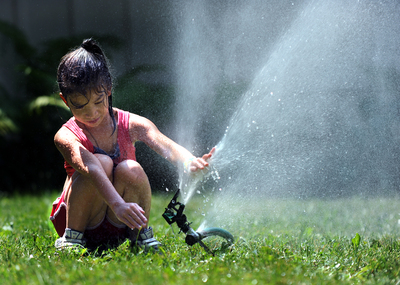
AnnArbor.com file photo
The Ecology Center, based in Ann Arbor, found levels of lead 18 times higher than the federal drinking water standard and BPA levels about 20 times higher than the standard imposed by the National Safety Foundation in water from a garden hose it tested.
“The two critical factors are time and temperature,” said Jeff Gearhart, research director for the center.
Gearhart noted that leaching can begin after water has remained stagnant in the hose for an hour.
Before watering vegetables, Gearhart recommended that people flush their garden hoses for several minutes.
Previous studies in 2003 and 2007 had shown there to be a potential for chemicals to leak into water from garden hoses. Gearhart said the intent of the study was to see if products still on the market had since improved.
“The vinyl products on the market still had a lot of chemical hazards present in the material,” he said.
Lead is a component of many garden hoses because it is used to stabilize the vinyl and prevent it from breaking down under sun exposure.
Garden hoses are not regulated by the U.S. Environmental Protection Agency’s Safe Drinking Water Act.
For the study, hoses were purchased in 2012 from Ann Arbor area retailers and were examined first for base material content.
Researchers chose a brand of hose they found to be the most representative of the majority of garden hoses and tested it by filling the hose with municipal drinking water and clamping the ends to prevent the water from contacting the brass fitting, Gearhart said.
The water-filled hose was then placed in a yard that received full sunlight for 72 hours. Samples taken from the water in the hose showed that chemicals had leached into the water.
The study tested 90 garden hoses, 53 brands of gloves, 13 kneeling pads and 23 different garden tools — and about 30 percent of the products contained levels of lead higher than levels set by the Consumer Product Safety Commission standard.
The majority — 70% — of the products tested contained enough chemicals to be considered a “high concern.”
The products that scored the worst in the study — indicating they contain high levels of hazardous chemicals — include many brands of garden hoses made by Swan, Tractor Supply Co., WaterWorks, NeverKink, Melnor, Meijer, Element, FLEXON, Craftsman, Companion, Aqua Plumb, Apex and ACE.
The Ecology Center advises consumers to seek PVC-free gardening hoses — like rubber models or those made from polyurethane — and has compiled a shopping guide.
The center also suggested people choose hoses without a California Prop 65 warning — which warns of cancer-causing chemicals and birth defects — and that have “lead-free” on the label.
Amy Biolchini covers Washtenaw County, health and environmental issues for AnnArbor.com. Reach her at (734) 623-2552, amybiolchini@annarbor.com or on Twitter.
Comments
gargl
Sat, Jun 30, 2012 : 5:43 a.m.
where does the water with lead in it go, after we flush it out of the hose? Does it go into our ground water?
Tru2Blu76
Mon, Jun 25, 2012 : 6:36 a.m.
"Garden hoses are not regulated by the U.S. Environmental Protection Agency's Safe Drinking Water Act." -- which just goes to show how much people can be trusted without the government looking over their shoulder. Here's this ONE area which isn't regulated and manufacturing chemists jumped right on it - uncaring of what lead does to kids and people. This is purely the result of the Laissez Faire mythology peddled by the right. Let's let the anti-regulation Republicans pay for fixing this latest foul up.
John
Mon, May 7, 2012 : 3:10 a.m.
What about the white water hoses that are made for drinking water in campers? Do they also have toxins? I taste the familiar "hose" taste when I drink the tap water inside.
MRunner73
Sat, May 5, 2012 : 2:03 p.m.
Some of the info is misleading from the Ecology Center. Common sense would suggest a decent hose flushing would take on the order of a minute at max spigit. The other thing would be to purchase a pure rubber hose. Spend more $$ for the quality.
Brad
Sat, May 5, 2012 : 12:45 p.m.
"Before watering vegetables, Gearhart recommended that people flush their garden hoses for several minutes. " Let's see ... a typical garden hose could be 30+ gallons per minute so a three-minute flush could hit 100 gallons of water. And this is from the Ecology Center??
scott
Sat, May 5, 2012 : 2:03 a.m.
Study finds chemicals in water.....I hope this statement was written by a journalist and not a scientist...... Hydronium, hydroxide, water (dihydrogen monoxide), hydroxyl acid....not too mention all of the salts, dissolved gases, radon.....
jns131
Fri, May 4, 2012 : 10:42 p.m.
So let me get this straight, garden hoses are bad and I need to get one from Camping World that says for drinking water and a filter? What next ? Toxic chemicals in food? O wait, there is, isn't there? O well, at least I'll be safe from radiation.
eldegee
Fri, May 4, 2012 : 10:30 p.m.
As a toddler I was taught to always run the garden hose for awhile to get it cool and wash the spiders out. Now as a 58 year old, I still drink from the garden hose on hot summer days, and always let it run for at least a couple minutes. Some of the best and refreshing water I'll ever have! Good old well water too.
Ron Granger
Fri, May 4, 2012 : 9:49 p.m.
A lot of kids have no idea they should not drink from a garden hose.
Mike
Tue, May 8, 2012 : 6:51 p.m.
A lot of kids have no idea they shouldn't eat dirt either.............
Basic Bob
Sat, May 5, 2012 : 11:36 a.m.
1. Most kids run the water first before they drink out of it - it is hot and the hose is full of air which makes it sputter. They have a better idea than you might think. 2. No research was done on the time-tested rubber garden hose. I have two at the house that have survived entire winters outside for over 20 years. PVC is brittle and cracks, and is linked to liver cancer - it is clearly the wrong material for a proper garden hose.
Boo Radley
Fri, May 4, 2012 : 9:15 p.m.
Another meaningless study and ridiculous warning ... Seriously? Water was left in a hose in full sunlight for 72 HOURS, and it picked up chemicals from the hose ... duh .. No one drinks the water that has been sitting in a hose, the water is always run until it is cold. I grew up in West Texas and probably got all of my drinking water from the hose in the yard, and I didn't need any scientists to tell me to flush the water from the hose.
Hactin
Sat, May 5, 2012 : 9:10 a.m.
West Texas? On Nugent's ranch?
jns131
Fri, May 4, 2012 : 10:43 p.m.
What if it froze during the winter? Does that still make it unsafe?
RunsWithScissors
Fri, May 4, 2012 : 8 p.m.
This is new news to me and I'm glad to have it. I'll take care to flush standing water out of the hose before watering the garden or filling the kiddie pool.
ArgoC
Fri, May 4, 2012 : 7:39 p.m.
Mr. Gearhart says to flush the hose "for several minutes." The original article says "a few seconds." Jeff Gearhart is titled "research director" and as such he should refrain from exaggerating.
Mike
Fri, May 4, 2012 : 7:37 p.m.
"Garden hoses are not regulated by the U.S. Environmental Protection Agency's Safe Drinking Water Act. " Well why not? You know most of us don't have enough intelligence to protect ourselves anymore and need some regulations. Did they study what happens to the level of lead after the hose is running for a minute? Most people won't drink scalding hot water from a hose. Maybe there should be a warning label on the hose about scalding holt water when it's hot out. Kind of like McDonalds coffee for all of us who don't know coffee is hot. We worry about the lead in a garden hose which in reality is flushed away and aren't concerned about the mercury in a compact flourescent bulb? We really do need more regulation.......................
Tru2Blu76
Mon, Jun 25, 2012 : 6:50 a.m.
" We worry about the lead in a garden hose which in reality is flushed away..." -- Flushed away TO WHERE, smart guy? Since you're so up on common sense solutions, why didn't you mention not putting lead in hoses to begin with?? No, it's not government regulated so naturally irresponsible people put lead in their products. Speaking of irresponsible, isn't it irresponsible of someone to suggest that we're all obligated to know what's in every product we use? Which is more efficient: putting the burden of Universal Knowledge on everyone or having an agency employing experts to do it for us? It's all good as far as I'm concerned: so long as those preaching irresponsibly are paying for the damage done by their ignorance. Your debt to America is already past due: so put up or shut up. Will that be cash or charge?
Mike
Tue, May 8, 2012 : 6:50 p.m.
Hey patriot, I was being fascetious
Patriot
Fri, May 4, 2012 : 9:08 p.m.
If they were - the cots of the hose would double or triple. If you don't flush out a hose (or any container) before using the water for potable purposes - then you get what you deserve. Like washing your hands before eating, a simple common sense solution to avoid any issues. Regulations????? won't help and just jacks up costs. .
ArthGuinness
Fri, May 4, 2012 : 7:27 p.m.
While I didn't think this was new information, it is good to point out to everybody that you probably shouldn't just water your vegetables and fruits until you've flushed the hose a bit. I always water trees and non-edible plants first.
bluemax79
Fri, May 4, 2012 : 7:23 p.m.
amazing that lead is still being put inthings that kids can get into. just sad manufacturers care so little for their customers.