

City records show 1 of 2 downtown Ann Arbor firetrucks out of service most days
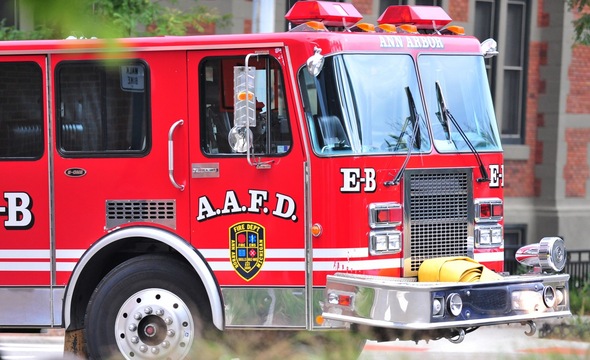
An AnnArbor.com review of records found at least one of the two active trucks at the downtown fire station was out of service at least 84 percent of the time from July 1 through Sept. 6 because of understaffing.
Ryan J. Stanton | AnnArbor.com
AnnArbor.com recently filed a Freedom of Information Act request with the city, seeking records showing the fire department's daily staffing levels, as well as records showing when trucks had to be taken out of service since a new policy took effect July 1.
The records show Tower 1 was out of service 36 out of 68 days, or 53 percent of the time, from July 1 through Sept. 6, the time period examined.
Rescue 1 was out of service 24 days, or about 35 percent of the time.
There were only 11 days when both Rescue 1 and Tower 1 were in service on the same day. That means at least 84 percent of the time, one of the two trucks was out of service.
Even counting days when Engine 1 — an old truck kept in reserve — was put into service, the downtown station still operated with only one truck at least 76 percent of the time.
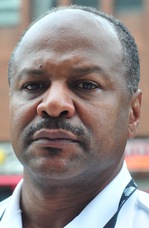
Chuck Hubbard
"We have only so much money, so we have to run with what we have," Hubbard told AnnArbor.com this past week. "We don't have a perfect system, but we have a good system."
Hubbard said each of the department's four substations has only one truck and the main downtown station has two, so it made sense to switch to taking one of the downtown trucks out of service instead of closing a station somewhere in the city.
Asked how the new policy is working out, Hubbard said it's not the best or most efficient system, but it's operationally doable.
"I wouldn't be overly concerned," he said. "I wouldn't want to create a panic over something we can handle and manage. It's not like the city's burning down. We're still responding to calls, we're still getting there in a timely fashion, we're still putting out fires."
Matt Schroeder, president of the firefighters union, wrote an open letter in August, decrying the decision to take the downtown tower truck out of service. The records obtained by AnnArbor.com now show Tower 1 was out of service all but seven days in August.
Without the tower truck in service, Schroeder said, Ann Arbor firefighters are unable to provide for citizen safety in a manner the community has come to expect. He noted that while normal ladder trucks can only reach six stories or fewer, the tower can reach nearly 10 stories in height, allowing for safer rescue of residents who live in taller structures.
Records show Tower 1 was out of service in late August when a fire broke out at Sheesh Mediterranean Cuisine restaurant on Main Street in downtown Ann Arbor and spread to neighboring businesses. The blaze caused hundreds of thousands of dollars in damage.
Schroeder couldn't say whether it would have made a difference to have the extra truck in service that day, but he maintains city officials are gambling with life and property and have knowingly chosen to compromise the fire department's ability to provide service.

Matt Schroeder
Staffing levels in the Ann Arbor Fire Department are about to become a hot topic of discussion as the city gets back a report from a consultant hired earlier this year for $54,000.
The Ann Arbor City Council agreed in February to hire the International City/County Management Association to conduct a study of the fire department. ICMA's report is expected to include a thorough analysis of staffing levels, whether the department is meeting national standards and ways it can improve operationally with existing resources.
City officials originally said the report was expected by July, and now that it still hasn't arrived, they're getting anxious.
"It's been in the mail longer than we can remember," said Council Member Stephen Rapundalo, D-2nd Ward and chairman of the council's labor committee.
Mayor John Hieftje said the same.
"It was in the mail, last I heard, about six weeks ago, and then it was in the mail four weeks ago, and two weeks ago, so your guess is as good as mine," Hieftje said. "We've been expecting it for a long time and it isn't here, so I'll believe it when I see it."
Donald James, senior manager of ICMA's Center for Public Safety Management, estimated it'll be two more weeks before ICMA releases a draft report to the city, but he's not at liberty to disclose any of its findings yet. Asked why the delay, James said all he can say is it was a personal matter of which the city has been made aware.
City officials are hoping to have the report in hand as they begin the budget planning process for the upcoming fiscal year. That usually kicks off with a council retreat in early December.
"It would be good to sit down as a council at the retreat and have that be part of the context of our discussions," Rapundalo said. "I mean, yes, we're still in arbitration with the firefighters, but let's talk about different operational models and what that would or would not gain us."
Dominic Lanza, who resigned as Ann Arbor's fire chief in March, said he left frustrated that he wasn't allowed by the city to make fact-based decisions on staffing or budgeting.
"When I left in March, the ICMA study was about to begin and was to have been completed by June or July," he wrote in a recent e-mail to AnnArbor.com. "ICMA has a record of on-time delivery. Why is the report not yet delivered or, if delivered, been released?"

John Hieftje
"I believe truthful evaluation would show the city is lacking in fire service," Lanza said, adding he resigned as fire chief partly because he was asked to blindly institute staffing changes.
As of July 1, the department saw its ranks decrease from 89 to 82 full-time employees, leaving the city with 0.72 firefighters per 1,000 residents. Nationally, the average full-time career fire department in the U.S. has about 1.72 firefighters per 1,000 residents.
The fire department had 131 full-time employees at its peak back in 2001. Some believe the reductions have been too severe.
Hubbard said it would shock him if the ICMA study recommended increasing staffing levels in the fire department. From what he can tell from other studies done in other communities, he said, ICMA usually provides recommendations for how to restructure fire departments and provide the best services based on existing staffing and financial resources.
Hubbard stressed low staffing is the reason Ann Arbor is operating without its downtown tower truck in service many times. He said the department needs to have a minimum of 19 firefighters on duty throughout the city to keep all trucks operational.
The department starts with 24 firefighters on per shift, Hubbard said. But union contracts allow seven to eight firefighters — depending on the month — to be off at any given time.
With that many people allowed to be off, Hubbard said, it's not uncommon for the department to find itself with only 16 firefighters on hand many days. He said it's also contractual that the department needs to have three people on a truck.
If only five firefighters were allowed to be off at a time, Hubbard said, there wouldn't be much problem with keeping the tower truck in service.
Asked whether the union would agree to contract changes so only five firefighters could be off at a time, Schroeder said he won't talk about negotiations publicly.
The fire department has an annual budget of about $14 million. The 82 firefighters listed on its roster include the fire chief and his administrative assistant, an assistant chief, the fire marshal, two fire inspectors, a mechanic, a training chief and the assistant to the training chief, leaving a little more than 70 other positions concentrated in fire suppression.
AnnArbor.com recently FOIA'd all communications between ICMA and top city officials since Jan. 1. That produced 15 pages of records, mostly routine e-mails.
An e-mail from James to Police Chief Barnett Jones on March 23 indicated James and Dan Kleman, one of his colleagues from ICMA, would be conducting the analysis. The e-mails show Jones made arrangements to have ICMA visit on April 18-19, but there were no written communications between city officials and ICMA after that point.
James worked for the Miami Dade Fire Rescue Department in Florida from 1986 to 2005, including as battalion chief, bureau chief, division chief and assistant fire chief. He holds a master's degree in public administration from Florida International University.

Barnett Jones
ICMA was hired after submitting a 32-page proposal on Jan. 5 to then-City Administrator Roger Fraser, outlining the scope of services the group intended to provide.
"Because this issue will have a dramatic impact on the community and because the city must have complete confidence in the outcome of our report, we have assembled what must be considered a premier team of subject matter experts with nationally recognized expertise in a wide range of public safety services," the introduction letter reads.
"Under the direction of Donald James, the project team will look at the deployment of the fire department to determine the appropriateness of current staffing levels in context to calls for service, response times and employee safety standards," the proposal states. "We will provide an objective analysis of the call center data and overall operation assessment."
The proposal references Ann Arbor's "severe financial challenges" and states upfront the city's existing methods of handling emergency responses is already proving to be unsustainable.
A month before the ICMA proposal, Hieftje and Fraser both publicly expressed interest in looking at a paid on-call approach to staffing the fire department. Jones said at December 2010 city budget retreat that many cities are moving in the direction of a hybrid solution of blending career departments with on-call firefighters to reduce costs.
Ryan J. Stanton covers government and politics for AnnArbor.com. Reach him at ryanstanton@annarbor.com or 734-623-2529. You also can follow him on Twitter or subscribe to AnnArbor.com's e-mail newsletters.
Comments
Alan Goldsmith
Tue, Nov 1, 2011 : 10:30 a.m.
BINGO! "If the city has been made aware, why are Rapundalo and Hieftje saying its in the mail? Why not be honest and say it has been delayed due to a personal matter with ICMA? Not trusting them, I suspect the report is being amended to suit these less than honest politicians or being delayed until after the election so Rapundalo does not have to comment on it."
Alan Goldsmith
Tue, Nov 1, 2011 : 10:27 a.m.
The Mayor and his twin are doing what shady politicians have done since day one-delayed damaging studies and reports until after an election. It's in the mail indeed...
Stuart Brown
Tue, Nov 1, 2011 : 2:48 a.m.
It's clear the city needs to double the number of firefighters to even match the national average for on-call firefighters per 1000 residents. The report is clearly being delayed to prevent citizens from using the information to base a vote on in either the August Primary or the November General Election. Par for the course in Hieftje's Ann Arbor! Hieftje's "comfortable" with letting people die due to reduced response times to life-threatening emergencies. Reduced response times also increase the cost of property damage increasing the cost of providing insurance (my fire insurance has increased significantly in the last year.) Send this Mayor and Council an unambiguous message, vote No on the Street's Millage Renewal and vote No on the Sidewalk tax. If you live in the Second Ward, vote FOR Jane Lumm for council. Kill Spark, Kill the DDA and last but not least, Kill the Buckets!
Jon
Tue, Nov 1, 2011 : 1:47 a.m.
I believe that AAFD is understaffed. It is apparent by this article. The leaders of the city need to wake up and realize that the department is understaffed and has been for a few years and this limits the amount of services the department can provide. In theory the department can handle only one working fire in the city. Fountains are all good and grand but all that money could have been used to by another track and get more equipment of help fund overtime for Tower 1. People also have to remember that the FD responds to all priority 1 EMS Rescues in the city and if all companies are at a fire it puts other lives at risk because the city wont staff more companies. And as far as making Ann Arbor a Public Safety the long term cost savings are gret but the start up cost of cross training police/fire is enormous and normally takes at least a couple years. Not to mention not everyone would want to do police fire and ems.
Joe Kidd
Tue, Nov 1, 2011 : 1:11 a.m.
"Schroeder couldn't say whether it would have made a difference to have the extra truck in service that day" Why not? I would think it would be obvious that another truck at the scene would help or be excess. "Asked whether the union would agree to contract changes so only five firefighters could be off at a time, Schroeder said he won't talk about negotiations publicly." To not be able to report on these two issues makes me question the credibility of any statements made by Mr. Schroeder. In particular I see no reason to keep negotiations secret. In this age of "transparency" it seems that there is a lot of picking and choosing information sharing. I do not want to hear any complaints from a union official who is not willing to give information when asked or to exhibit some effort to help solve the issue. That makes it appear the union is part of the problem. The other thing that bugs me here is the waste of money paid to a supposed international firm to report on fire safety in the city. I would prefer having people on the job who know this. The city tried this with the police department with CALEA, another organization that promotes itself as the great evaluator of police departments. Fortunately the city dropped that. And if Chief Hubbard is correct, all the city will get out of this company is a re-organizational plan. A new schedule for the fire fighters may be what the city will get for $54k which they probably won't be able to implement because of the contract. I would also like to know how many fires AAFD responded to from July 1 through Sept. 6, the dates of the FOIA request. In addition to an on call system, which sounds very risky, was any thought given to cross training police officers? Many cities have departments with cross trained officers.
Ricebrnr
Tue, Nov 1, 2011 : 1:39 a.m.
Hah! What officers? Which ones are we sparing for firefighting
BornNRaised
Mon, Oct 31, 2011 : 11:19 p.m.
To those of you that all know how to 'clearly fix the problem' without ever having talked with a firefighter, walked into a fire station, or been anywhere near a fire scene in your life... I just want to say thank you for all of your entertaining comments. Used to get mad, but now it's just funny. I think tomorrow I'm going to the University and telling surgeons how to better do their jobs. I mean I'm an expert on the subject because I have a computer and can blog about it. Clearly... LOL! Thanks again!
huh7891
Mon, Oct 31, 2011 : 11:58 p.m.
BornNRaised..you should know better by now...with Ann Arbors claim to the brightest and the best people and high amount of citizens that have college degrees they certainly do not seem to think logically. It isn't funny..it's pathetic ...people so eager to chime in about something they know nothing about.
MRunner73
Mon, Oct 31, 2011 : 9:34 p.m.
Kudos to AA.com for exposing this. Most of comments regarding the what money is spent for some of much less important and vital projects are well taken. Every dollar counts so it would make sense to get the priorities straight: Police and Fire Departments are able to service the city effectively. Hopefully, we'll see even more posts on the article.
gofigure
Mon, Oct 31, 2011 : 7:44 p.m.
re: @ Goober"........I do understand solidarity, but many volunteer fire departments function quite well pulling talent when necessary, no matter where they are located. I believe one person can shop and be prepared to join the rest of the group when needed." Um, yea, I can see it now........Firefighter out shopping in his personal vehicle. Alarm comes in, he jumps in his vehicle and proceeds to the fire, obeying traffic lights/laws because he IS in HIS personal vehicle, goes to the fire truck, suits up and THEN begins to fight the fire. That is assuming the road isn't blocked off and he can get to the fire. V.S. - Alarm comes in, jumps in Fire truck (where fire suit is located) and proceeds to the fire in the fire truck. If it was me, I wouldn't want to wait on traffic for a fire fighter to get to my house.
SW40
Mon, Oct 31, 2011 : 7:18 p.m.
With one less truck on the road who is going to save a kitten if it gets stuck in a tree.
gofigure
Mon, Oct 31, 2011 : 6:23 p.m.
re@Goober It would be interesting to see the data on this issue. How many calls come in when one person is missing? Can't 2 take the truck and meet the 'shopping firemen' at the scene? There are many more cost effective options then 3 firemen and a truck shopping. Perhaps you can come up with a better more cost-effective solution and bring it before city council.
Goober
Mon, Oct 31, 2011 : 7:09 p.m.
The best ideas are almost always the ones that the team generates on their own and implements accordingly. I do not see any team work on the part of any Ann Arbor section. If the fire chief led this type of process, he might be surprised with the good ideas that would come from the rest of the department. No consultant is needed.
Goober
Mon, Oct 31, 2011 : 6:57 p.m.
They would not listen. Remember, they do not listen to tax payers. They only march to their own drummer.
Steve Singer
Mon, Oct 31, 2011 : 6:04 p.m.
Chief Hubbard, Its unfortunate that you have had to resort to misleading and half thruths already in your tenure as fire chief. There are only 4-5 people allowed off on vacation per day. There are 3 other people that are scheduled off-duty per day on a required leave day. This is an unpaid leave day that is similiar to a furlough day that the FD calls a code day. So if you want to eliminate Code days and pay firefighters to work those day I am sure that could be arranged. If you want to take the firefighters to just one or two off on vacation per day, would this have been something you would have supported as a dues paying member?
gofigure
Mon, Oct 31, 2011 : 6:20 p.m.
I could be mistaken but aren't days off and vacations already factored into the schedule? I believe the problem is when unscheduled time off is taken.
gofigure
Mon, Oct 31, 2011 : 5:48 p.m.
re@Goober: Are they eating at Kroger's. How many firemen does it take to grocery shop? Here, I've copied Ricebrnr's response in case you missed it. There are 3 firefighters per truck. If 2 or three are allowed to make that run in between calls, what is supposed to happen when a call comes in? A) go back to the station and get the truck or.... B) get in the truck, NOW and roll to the scene Which is the better idea, I wonder? re: rs weird, I work 13 hour shifts I don't need to borrow my employer's $400k vehicle to go grocery shopping during my shift. I do what most others do, I bring my meals with me to work. And with the exception of breaks and lunch, you are at your desk, work station, cubby or wherever you work. My perception is you're all jealous of the firefighters which is why you're always hating on 'em.
Ricebrnr
Mon, Oct 31, 2011 : 8:37 p.m.
OK let's run with that. First does the AAFD have pickups and what not as you propose at their disposal for such runs? Trucks cannot have lights and sirens unless they are on a legitimate run so going to the grocery they have to obey all the same laws as you or I. Contrasting the risks of a fender bender on a food run and one that might come of a personal vehicle on an emergency call is apples and oranges to say the least. Finally, no I doubt you do know how other departments do it. Growing up in New York City, I saw the same as here. Only in NYC the trucks run with a FULL complement of personnel, 5-6 per truck. Same reasons as here. People need to eat. They don't have cushy desk jobs like most. When a call comes, they stop their shopping/eating/sleeping/studying etc etc and GO to the emergency. Why don't you find out and let us know exactly how other fire departments do it? Per your own words you are speculating, without any background, whether or not what they do is the most efficient way of doing things?
rs
Mon, Oct 31, 2011 : 7:59 p.m.
Most fire departments have passenger cars and/or pickups in their fleet. Speaking of risk, what if the engine gets in a fender bender while they're out shopping and a call comes in? I don't know how other fire departments do it, but they are able to get supplies into the station with having to use a fire engine and 3 firemen. Maybe they are just more efficient than the AAFD.
Ricebrnr
Mon, Oct 31, 2011 : 7:32 p.m.
So a firefighter should go to the scene in his private vehicle? Should he have a portable light and siren too? Will people move out of his way? What if he gets hurt or hurts someone else rushing to the scene? Who pays the firefighter or the city? Will they bring his gear for him or should he load all of that into his car before the food run...
rs
Mon, Oct 31, 2011 : 6:52 p.m.
I'm not hating on firefighters, I just don't agree with them using the tax payer's $400,000+ piece of firefighting equipment to go grocery shopping all the time. Can't just one firefighter take a passenger car shopping and meet the engine at the scene if a call comes in? Forgive me if I find this practice odd, I used to live in New York and I never saw fire engines parked at grocery stores with 3 firemen pushing a cart up and down the aisles. I think this is just a Michigan thing and I'm not used to it.
Goober
Mon, Oct 31, 2011 : 6:05 p.m.
It would be interesting to see the data on this issue. How many calls come in when one person is missing? Can't 2 take the truck and meet the 'shopping firemen' at the scene? There are many more cost effective options then 3 firemen and a truck shopping.
AACity12
Mon, Oct 31, 2011 : 5:45 p.m.
If the Mayor was made aware of the delay and the reason for the delay wouldnt that open it up to a FOIA? The citizens paid $54,000 for this study and they should be told why its delayed.
Kai Petainen
Mon, Oct 31, 2011 : 4:54 p.m.
i started paying attention to public safety a while back. all it took was one incident for me to wake up and realize that all was not well in ann arbor. it took one oil spill into the river... the mayor told me that he was told it was a 'midnight dumper'.... but that one spill happened in broad daylight, on a sunny day, it covered the river from the hospital area to gallup, and it ran for hours. although public safety officials would work on it for hours, and they would watch it flow down the river for hours... no one was able to solve it. the truth is, that 'midnight dumper' wasn't solved, and as i spoke with officials who worked on it, it was officially declared a spill of unknown cause and unknown source. emergency management decided that they would not spend another resource on it. so here, ann arbor just had a public safety issue, the river had been polluted, and it was unsolved. the AAFD worked hard on it, but for some reason or another -- the case was closed. a public safety issue was unsolved. at that point i started paying attention to public safety. then came AAFD layoffs, police layoffs, water fountains, etc... with regard to the AAFD, that spill used 8 trucks and 17 people. it had: 1 rescue unit, 2 trucks, 2 engines, 1 chief officer car and 2 hazmat units source: <a href="http://a2docs.org/assets/files/2011/04/05/AAFD_incident_report_on_spill.pdf" rel='nofollow'>http://a2docs.org/assets/files/2011/04/05/AAFD_incident_report_on_spill.pdf</a> ann arbor has a documented case of a large-scale AAFD emergency situation -- the problem is, is that few people witnessed it, knew of it, or cared about it. the photo i use for my name, is of the spill running down the river -- that photo will stay there until it is solved. to be a bit fair -- positive changes have occurred with public safety. we have new officials (at the AAFD and DPS), there is better communication with the public, and it appears that collaboration has improved as well.
Kai Petainen
Tue, Nov 1, 2011 : 4:09 p.m.
I have updated my photo to reflect the spill. It's a photo taken by UofM of the substance that was collected in the river. When I filed the FOIA, they did not provide this photo to me. One year later I got this photo from a different source. the photo listed in my original avatar photo is here: <a href="http://www.flickr.com/photos/ahknaten/sets/72157626447605812/" rel='nofollow'>http://www.flickr.com/photos/ahknaten/sets/72157626447605812/</a> video here: <a href="http://www.flickr.com/photos/ahknaten/5602296824/in/set-72157626447605812/" rel='nofollow'>http://www.flickr.com/photos/ahknaten/5602296824/in/set-72157626447605812/</a> I have a regret from the spill -- i should have taken better photos and video. I should have taped the emergency personnel and I should have bought a camcorder and taped it for the full 2+ hours. Also, i should have looked for and photographed the outfall on my own, as i had to file FOIA requests before anyone would tell me where it entered the river. Before this incident, DPS was not listing spills in its daily report, as the coding wasn't in place to list it. After this spill, they fixed that coding as per my request -- now, DPS lists spills that they work on. For their improvement in communication, DPS should be thanked.
deb
Mon, Oct 31, 2011 : 11:56 p.m.
just because I did not say it in the first post, its cool with me also
Kai Petainen
Mon, Oct 31, 2011 : 5:08 p.m.
sometimes we agree and sometimes we don't -- that's totally cool with me. one of the great things about ann arbor -- is the diversity of those who live/work and go to school here. from that, we have a difference of opinions, and i admire the difference in opinion. when folks disagree with me, i try to learn their perspective, and appreciate it a bit more. i look at stocks, and when i love a stock, i want to know 'why should i hate it'. when i hate a stock, i want to know... 'why should i love it'. the freedom to have civil discussions/debate and share ideas in a diverse city, is absolutely wonderful.
deb
Mon, Oct 31, 2011 : 4:59 p.m.
Kai- I like your posts, sometimes we agree sometimes we do not. I just wanted to let you this is the first time I realized your avatar is a picture of the oil spill. To me it always just looked like a nice shot of the river. I do not know if there is a way to change it or you have a better photo, it is just hard to see.
15crown00
Mon, Oct 31, 2011 : 4:33 p.m.
a great big old thank you to City Council.
gladtolivenorth
Mon, Oct 31, 2011 : 4:29 p.m.
So, the union won't discussion negotiations publicly, but they don't hesitate to try to scare citizens at every opportunity. Why doesn't A2.com run a story on how many of these concerned Fire professionals actually live in Ann Arbor? I understand from a friend at city hall that most of them live in areas where paid on-call people are used to protect their homes and families.
BornNRaised
Mon, Oct 31, 2011 : 11:15 p.m.
This type of position is so ignorant. I don't live in this city. I hired in 5 years ago (already owning a home). Of those 5 years, I've been told I'm getting laid off 4 of them. And was. So you want me to sell my home in the worst economy of all times and move to a city that tells me every year that they're going to take away my livelihood? Brilliant... Every time anyone ever interviews for a job, maybe they should buy a house in that city... just in case.
deb
Mon, Oct 31, 2011 : 4:25 p.m.
Is it a real personal matter or dose a person have disagreements with the report and that is what they mean by a personal matter? They personally disagree with it.' As for Rapundalo, does he know it is in the mail, or did someone just email him that answer so he could appear to be informed?
deb
Mon, Oct 31, 2011 : 4:23 p.m.
Why is the public not informed of the personal matter that is cause in delay for the report?
lester88
Mon, Oct 31, 2011 : 4:14 p.m.
"It's been in the mail longer than we can remember," said Council Member Stephen Rapundalo, D-2nd Ward and chairman of the council's labor committee. Mayor John Hieftje said the same. Asked why the delay, Donald James of ICMA said all he can say is it was a personal matter of which the city has been made aware. If the city has been made aware, why are Rapundalo and Hieftje saying its in the mail? Why not be honest and say it has been delayed due to a personal matter with ICMA? Not trusting them, I suspect the report is being amended to suit these less than honest politicians or being delayed until after the election so Rapundalo does not have to comment on it.
LBH
Mon, Oct 31, 2011 : 3:51 p.m.
Y'all love to bash public art, the "big dig", and the city hall expansion but guess what, killing those *one time* costs would **NOT** help. The current budget for the fire department is $14,000,000 **per year**, that is each and every year, with costs undoubtedly going up to pay for people (salary/benefits/training), equipment (purchase/maintenance of *EXPENSIVE* trucks), dispatching. If you are going to make knee jerk, poorly thought out suggestions, just get together in a bash blog somewhere and have at it. Wishing there was a filter on A2.Com Comment section.
LBH
Tue, Nov 1, 2011 : 2:43 p.m.
Many of the projects that are funded as one-offs are in the budget as one-offs. The much derided addition to City Hall means that the services which had been moved into rental space (which we paid for) can come back into city space which we will pay less for than we paid in rent. How about this, how about if we sell off Forest Hills golf course to someone who will pay taxes on it, even if it does mean that people in million dollar homes will lose their view? And while we're at it let's throw in a few more of the "parks" which are nothing more than lots that people convinced the city to convert into "parks" so that something they didn't want wouldn't be built there. Those cost money *every* year and they do it twice, no revenue and we pay again for maintenance. We have a lot of beautiful parks which many people use, but we have many more that could just as easily be converted back into tax generating land. Also, let's move the Community High School program into Skyline and sell that property too? Problem is, those are jealously guarded by people of means so it won't happen.
jcj
Mon, Oct 31, 2011 : 8:32 p.m.
Your kind of budgeting is what causes most people and cities to go bankrupt! " those *one time* costs would **NOT** help" Its always the same old excuse. This million dollars won't make a difference!
Ricebrnr
Mon, Oct 31, 2011 : 8:28 p.m.
LBH, there is a filter here. There's an ignore function that will hide any users that you don't want to read.
LBH
Mon, Oct 31, 2011 : 6:08 p.m.
Actually, that is pretty much the definition of a knee-jerk reaction. "I hate all these people so I'll vote for anybody with a pulse. Don't care if they have a clue, don't care if they are even running on a platform I don't support, I just hate the incumbents." I hope the majority of voters put quite a bit more thought into it than that.
Goober
Mon, Oct 31, 2011 : 5:49 p.m.
Oh?! Not a knee jerk reaction at all. I will vote in all new faces as a result of the years of a lack of true visionary leadership, wasteful spending, approval of projects not in the best interest of the citizens of Ann Arbor and poor labor relations. Their track record speaks for itself and replacement is a long time coming. I truly hope the majority of Ann Arbor citizens see it the same way and they do not vote for any incumbent.
LBH
Mon, Oct 31, 2011 : 4:08 p.m.
Change can be good, but generally isn't when it is a knee jerk reaction with the 'throw the bums out' mentality. Show me a *good* choice from a thinking, well informed candidate and I'll make it.
Goober
Mon, Oct 31, 2011 : 4 p.m.
Keep voting for the same crowd and see where this takes us over the coming years.
jcj
Mon, Oct 31, 2011 : 3:44 p.m.
Maybe we can pump water out of the fountain for downtown fires!
jeff4179
Mon, Oct 31, 2011 : 3:09 p.m.
I am very angry about this. The only thing that will calm my nerves and make me appreciate that life isn't too depressing is public art. I'm gonna go look at the $750,000 metal waterfall to make myself feel better.
rs
Mon, Oct 31, 2011 : 3:02 p.m.
...and on days its in service, its parked at Meijer or Kroger being used as the departments grocery-getter.
Ricebrnr
Mon, Oct 31, 2011 : 7:35 p.m.
No one questioned your right to do so. I only pointed out why don't you ask the people most likely to answer truthfully if at all. The firefighters. Why don't you discuss volunteer firefighters while you're at it and the size of the municipalities that field them? Compare and contrast that with AA's requirements and then report back to us?
Goober
Mon, Oct 31, 2011 : 6:52 p.m.
I do understand solidarity, but many volunteer fire departments function quite well pulling talent when necessary, no matter where they are located. I believe one person can shop and be prepared to join the rest of the group when needed. All I read here is a defense for the waste in city hall, in all departments and by all areas - management, the mayor, city administration, city council and other employees. The best way to avoid public scrutiny is to be as close to squeaky clean as possible. I know of no public sector that is squeaky clean in Ann Arbor government. As long as I am a tax paying citizen of Ann Arbor, I have a right to question something that does not seem right.
Ricebrnr
Mon, Oct 31, 2011 : 6:39 p.m.
RS, in your 13 hour day you are allowed how many food breaks? I'd wager 1. In a 24 hour shift, the firefighters get how many? At least 3, right? Let's see how you keep 3 meals in your cooler at work over 24 hours. Goober, really? READ the answer I already gave. It doesn't matter if it is 1, 2 and/or 3. The men stay with the truck, the truck stays with the men (and ladies). They all go to a call TOGETHER. ASK THE FIREMEN if you have questions, rather than typing really ignorant comments. (AA.com, this is not an attack or pejorative. This is an accurate adjective describing the statements made)
horse
Mon, Oct 31, 2011 : 6:13 p.m.
@ RS and Goober - This is amusing to say the least. Generally I ignore the ignorance in these blogs, but... Goodness gracious do you have nothing better do with your time than to complain about how fire fighters go to the grocery store to get food for the day, seems very petty. I assume that every shift at each station makes their own meals. Seeing how they are there for a 24 hour period I don't find it odd that they go to the store and prepare meals at work. Good grief!!
Goober
Mon, Oct 31, 2011 : 5:33 p.m.
Are they eating at Kroger's. How many firemen does it take to grocery shop?
rs
Mon, Oct 31, 2011 : 5:07 p.m.
weird, I work 13 hour shifts I don't need to borrow my employer's $400k vehicle to go grocery shopping during my shift. I do what most others do, I bring my meals with me to work.
gofigure
Mon, Oct 31, 2011 : 4:27 p.m.
You're right. They actually GET TO EAT during their 24 HOUR shift. Would you rather they not eat? Why don't you shop for them? At least when you sit down to eat your dinner, you get to eat it. Let's ask a firefighter how many times they've not been able to eat their dinner? Maybe next time, they'll tell dispatch "fire's gonna have to wait, I haven't finished eating". As far as the tower truck in use or not in use on certain days. Use some common sense people. Don't you think the Department is smart enough to have personnel at the downtown station who are able to drive any and all trucks?
Ricebrnr
Mon, Oct 31, 2011 : 4:25 p.m.
There are 3 firefighters per truck. If 2 or three are allowed to make that run in between calls, what is supposed to happen when a call comes in? A) go back to the station and get the truck or.... B) get in the truck, NOW and roll to the scene Which is the better idea, I wonder?
Goober
Mon, Oct 31, 2011 : 3:59 p.m.
Yes, this is true. In fact, I have seen more than one piece of fire quuipment at Kroger's. No emergency - just grocery shopping. Numerous observations of using Kroger's as a parking lot.
aes
Mon, Oct 31, 2011 : 2:58 p.m.
This situation is absolutely scary! Thank you, Ryan, for revealing these facts. I think that most Ann Arbor inhabitants will agree that PUBLIC SAFETY is the top priority for all of us, and that's exactly what a government is supposed to do, first and foremost, keep us safe.
Ryan J. Stanton
Mon, Oct 31, 2011 : 11:50 p.m.
You're welcome. Thanks for reading.
Stephen Landes
Mon, Oct 31, 2011 : 2:37 p.m.
According to the article: "It's been in the mail longer than we can remember," said Council Member Stephen Rapundalo, D-2nd Ward and chairman of the council's labor committee. Mayor John Hieftje said the same. "It was in the mail, last I heard, about six weeks ago, and then it was in the mail four weeks ago, and two weeks ago, so your guess is as good as mine," Hieftje said. "We've been expecting it for a long time and it isn't here, so I'll believe it when I see it." Donald James, senior manager of ICMA's Center for Public Safety Management, estimated it'll be two more weeks before ICMA releases a draft report to the city, but he's not at liberty to disclose any of its findings yet. Asked why the delay, James said all he can say is it was a personal matter of which the city has been made aware." "Your guess is as good as mine" when spoken by the mayor really means "I know the answer because ICMA told me, but since you don't know that answer you have to guess". What do we have to do to get honesty out of our city council and mayor? I know -- THROW THEM OUT OF OFFICE AND REPLACE THE WHOLE LOT.
hut hut
Mon, Oct 31, 2011 : 1:24 p.m.
Roger Fraser's corporatist administration ran the city like a business. The hired consultants and id loads of studies. But just like a corporate business, when the reports on air quality in city hall, the Denison study on employee morale, and now the ICMA report had results the Fraser and his managers didn't like, those studies and reports were IGNORED and BURIED!
PLGreen
Mon, Oct 31, 2011 : 1:20 p.m.
Let's see what happens on election day...
PLGreen
Mon, Oct 31, 2011 : 1:16 p.m.
Sounds like ICMA is short staffed just like the Fire & Police Depts. Has the City pre-paid for the Study?
John of Saline
Mon, Oct 31, 2011 : 12:39 p.m.
Maybe it's time to buy more art.
Goober
Mon, Oct 31, 2011 : 3:57 p.m.
I agree, John. The city can trade in the excess fire equipment for new art. Hopefully many of these readers get so fed up with the art comments that they do the right thing and vote out all incumbents - the mayor, city administrators and city council. We need new faces helping lead our city instead of wasting our hard earned money on art, the wrong projects, etc.
John of Saline
Mon, Oct 31, 2011 : 2:32 p.m.
You sound irritable. Maybe you need to go look at some art.
craigjjs
Mon, Oct 31, 2011 : 1:21 p.m.
Maybe it's time to stop trotting out the "art" nonsense for every article. It's is not clever, humorous or convincing. Just boring and silly.
63Townie
Mon, Oct 31, 2011 : 12:26 p.m.
City officials are whistling past the graveyard in regard to this. Mr. Ranzini has it right, our elected officials have their priorities in the wrong place. The first priority of government SHOULD be to provide basic services, THEN worry about convention centers and public art if there's money left over. Paid on-call is a recipe for disaster. If Ann Arbor is going to be a first-class city, then we deserve first-class leadership. Demand to be heard. Vote for change.
Silly Sally
Mon, Oct 31, 2011 : 12:22 p.m.
The solution seems so simple: Everyone who works in the downtown station should be trained to drive the BIG ladder truck. Then, whenever that station gets a call, they can decide, "Take the econlmy truck or the BIG ladder truck". If more people are needed to "man" it, then other firemen from other stations can meet them at the fire location. With this method, there is no reason that this ladder truck will ever not be used when needed, and firemen are still spread out to quickly respond to smaller fires. Anything else seems like a union fight. That said, this mayor has gutted public safety for pet projects. Mr. Ranzini is correct.
jcj
Mon, Oct 31, 2011 : 12:04 p.m.
There is not a single person on city council that deserves to stay there! And the mayor should have been out on his ear long ago!
golfer
Mon, Oct 31, 2011 : 11:39 a.m.
what did you expect. less people less equiptment. do not worry we are safe. we have more money coming in. we have the crosswalk law, we will have idle law, we will not spend $750,000 again this year on art. what we need is more police to give out tickets so we can add more services. welcome to the city of the trees oops sorry signs.
Goober
Mon, Oct 31, 2011 : 11:38 a.m.
Based on everything that has been written about the fire department, the amount of equipment recently at the employee fall incident at the 'big dig', etc., it seems to me that the city and the fire department leadership (which includes the union) needs to take control of this department and identify the most efficient way to run the department with available skills and manpower. Then this proposed plan can be compared to how it operates today. A plan and bridge can then be built to get us from current to the proposed plan inclusive of any contract changes. This seemlingly haphazard way of operating with the amount of recent changes does not seem to be in the best interest of the Ann Arbor citizens. I also find it interesting that the city hires 'fire response professionals' to run the department, but all lack the ability to run an efficient operation. Thus, the city jumps to hire a consultant to tell the trained professionals how to run their department. This is another lack of true leadership in our city - either from the mayor, city administration or from city council.
Goober
Mon, Oct 31, 2011 : 5:54 p.m.
Is there an attendance issue? I can count on one hand the times I called in ill in over 30 years of employment. What is the real issue - vacations, planned leaves, random callins, etc.?
gofigure
Mon, Oct 31, 2011 : 12:57 p.m.
re: @ goober "it seems to me that the city and the fire department leadership (which includes the union) needs to take control of this department and identify the most efficient way to run the department with available skills and manpower." IMO Union President would love to have double the amount of FF's. The problem appears to be the unscheduled time off the fire fighters are taking. Vacation time and personal time off is factored in when scheduling staff (FF's). Instances when FF's call off at the last minute is why they run "short".
63Townie
Mon, Oct 31, 2011 : 12:12 p.m.
Goober, the same day AnnArbor.com wrote about the rescue at "the big dig", there was also a story about a shooting where Washtenaw County deputies responded. There was no mention in the article about how many squad cars or deputies showed up. However, they reported to the nth degree exactly how many AAFD personnel responded to the "big dig" without providing any reason; it was all left to speculation by unqualified bloggers which (to be blunt) I find journalistically lazy. AnnArbor.com threw a big red herring out and everybody latched on. Also, ICMA is not "running" AAFD as you claim.
a2grateful
Mon, Oct 31, 2011 : 11:27 a.m.
Hieftje has two solutions for staffing firehouses beyond his fire-the-firefighters policy: 1) Cross train others to firefight 2) Use volunteers Response to Hieftje solution: Hieftje should be the first to cross train. Once cross trained, he volunteers his time to firefight and rescue. Next, setting an example for other city hall employees, top salaried administrators and department heads follow the Hieftje-cross-train-and-volunteer example. Imagine the photo and award opportunity: Hieftje at the top of a ladder outside an a2 midrise, saving lives and fighting fires!
Jamie Riddle
Mon, Oct 31, 2011 : 6:28 p.m.
It would never happen!!!!!! I will keep my reasoning to myself, so a2.com doesn't delete my post.
Craig Lounsbury
Mon, Oct 31, 2011 : 11:24 a.m.
"The 82 firefighters listed on its roster include the fire chief and his administrative assistant, an assistant chief, the fire marshal, two fire inspectors, a mechanic, a training chief and the assistant to the training chief, leaving a little more than 70 other positions concentrated in fire suppression." It seems like that list above adds up to 9. If i subtract 9 from 82 I get 73 on my calculator. Why Mr. Stanton, do you use the wording "leaving a little more than 70 other positions" ? Is the list of "non fire suppression positions" larger than 9?
Craig Lounsbury
Mon, Oct 31, 2011 : 11:25 p.m.
Its not nitpicking to expect a precis number if one is easily available. If a precis number is easily available and reporter opts to be vague instead then I begin to question whether the reporter has an agenda. A reporter with an agenda is a bit alarming to me. If a reporter opts to be intentionally evasive about simple facts then what else is he evasive or deceptive about? So you say Dave, accuracy might be a waste of time to you but it isn't a waste of time to me.
Dave
Mon, Oct 31, 2011 : 3:06 p.m.
Now, correct me if I'm wrong here... Doesn't "leaving a little more than 70 other positions" mean "a number slightly greater than 70"? Then, wouldn't 73 be slightly greater than 70? Nitpicking on these details in an article is such a waste of time.
walker101
Mon, Oct 31, 2011 : 11:02 a.m.
What do you expect from one of the Best small towns in the US?
horse
Mon, Oct 31, 2011 : 11:01 a.m.
Sounds to me like the chief is taking an unfair hit for closing a fire truck when the firefighters don't come to work. Id' much rather have all of the stations open with 1 working truck in them, than rotating station closure. The firefighters don't want to come to work, but want all the trucks in service. How is it that they only work 9 days a month and since July 1st, 53% of the time, they've had to shut down a truck??? That means 53% of the time 5 or more firefighters didn't come to work!? Are they all sick, working another job, hoping that if enough of them don't show up they will get called in for overtime?? Come on now!! They make how much a year, $ 70,000 ??, and they can't show up 9 days a month.
brokendei
Tue, Nov 1, 2011 : 10:54 a.m.
@horse, your right, it is there chosen profession, just like whatever profession you chose. There are benifits and consequenses in every line or work. The thing I dont understand is that why would you complain about what someone else is doing for a living? If the job is so great, why dont you apply for it? Instead of "beating down" someones way of life, why dont you try it for a day, month or for a career? I guess its just easier to sit back and complain then to go out and do something about it.
horse
Mon, Oct 31, 2011 : 6:37 p.m.
@ Logic - This is their chosen profession. They knew ahead of time that they would be working more than a normal 40 hour work week. They get paid well for that 50.4 hour work week. Their code day gives them 5 days off in a row - plenty of time to spend with family, catch up on sleep etc. I know plenty of salaried people who work upwards of 60 hours a week - they have abnormal sleep habits, see less of their family, work hard and on top of that don't make overtime. I also know plenty of unemployed people who would be happy to have a fire fighters job and salary. People who wouldn't call in sick or complain about the work hours. Give me a break!!
LogicIsTheAnswer
Mon, Oct 31, 2011 : 5:49 p.m.
Three firefighters are on code (or their scheduled day off) each work day , so you would be referring to two firefighters calling in sick or taking comp or vacation time most likely to spend time with family members. Also, firefighters work 50.4 hours a week not like the norm of 40 hours a week. Give them a break!! They work hard, are away from their family, have abnormal sleep habits and get sick more often than the normal person from running on sick citizens all the time!!!
gofigure
Mon, Oct 31, 2011 : 1 p.m.
Well said!
Stephen Lange Ranzini
Mon, Oct 31, 2011 : 10:58 a.m.
If the city hadn't wasted $100 million on the "Big Dig" (downtown underground parking lot) or the "Rog Mahal" (the city courts building) and things like the $750,000 water sculpture in front of city hall the citizens wouldn't be put in danger by having inadequate fire protection. As AnnArbor.com has shown in earlier articles, an increasing number of people are dying in fires and that's "OK"? When the ISO does it's next rating of Ann Arbor's fire safety, we'll lose a few notches on the rating system and our property insurance rates will soar. Meanwhile the city authorizes the construction of more tall buildings downtown that the residents of cannot be protected in on a *timely* basis to do anything other than "surround and drown". (My wife, two pre-school children and I live in one of those tall buildings downtown.) For the good of all it's citizens and property owners, Ann Arbor needs excellent fire protection, not to continue further down the path of the "experiment" that the fire professionals are warning us against. Remember next year's budget calls for more cuts in police and fire safety employees! Speaking of the water sculpture, "It" doesn't have a name, so University Bank has created a naming contest for the citizens who paid for it, to name it. We've collected 14 different suggestions so far from all the names proposed on annarbor.com and elsewhere. To vote, go to <a href="https://www.surveymonkey.com/s/W333K58" rel='nofollow'>https://www.surveymonkey.com/s/W333K58</a>.
Stephen Lange Ranzini
Tue, Nov 1, 2011 : 2:46 a.m.
@Jack: The building cost $400 per square foot, a luxury price tag. Maybe we didn't get what we paid for in quality since the building is ugly? At any rate losing the city's rent at the county courthouse ripped a giant hole in the county's finances that they are now trying to fix through a series of major cost cuts. @Joe Kidd: The City of Ann Arbor actually has about $250 million in cash spread across 58 separate dedicated fund accounts ("buckets") by my count. About $100 million of this money *could* be available for other uses according to the footnotes in the city's annual audit (CAFR) but all but a small amount of that is restricted by a vote of city council. Of course city council could vote to free up the money if they wished. What is needed is a strategy to "Drain The Buckets" and move the money around to where it needs to be to meet urgent needs when circumstances change. So, let's drain the buckets! P.S. @Joe Kidd: yes the Big Dig for example was funded from DDA funds and DDA debt. In the past millions of dollars of DDA funds have been transferred to the city's general fund as noted in AnnArbor.com. If the debt of the Big Dig hadn't been incurred, more could have been moved. I could give you other examples. P.P.S. The survey to name "IT" is very popular and we have been adding more names to vote on from your many excellent suggestions as they come in!
Stuart Brown
Tue, Nov 1, 2011 : 2:17 a.m.
Jack, The city could have and should have found new facilities for the police or actually rehabbed the existing facility. This would have been much less costly than building Rog Mahal which will cost around $50-60 Million when all is said and done.
Joe Kidd
Tue, Nov 1, 2011 : 1:21 a.m.
My understanding of the water fountain funding is that those funds cannot be used for any other project than art. I do not like this project but that money is not available for staffing fire/police. I do not know about the funding for the other projects but since I know about the fountain funding so that makes me wonder about the other projects you mention. If those funds were raised for those projects they would not be available for police/fire. I also recall the city hall addition was planned long before the fiscal problems hit the city. I don't like that either. I prefer more function than esthetics when it comes to public facilities, but I am not sure it is appropriate to suggest those funds could have been diverted to funding the FD either since the commitment was made long ago. My ire over city hall is that the police sorely needed a new facility and the court and city admin piggy backed on that for this huge building. Take the police out of city hall and put up a new function based building for AAPD and the court and there may have been enough space left over for office space. If they were available to fund public safety you should include that.
Jack
Mon, Oct 31, 2011 : 11:56 p.m.
"Rog Mahal" Mr. Ranzini? It's plain and butt ugly. There is absolutely nothing glamorous about it. Bare bones utilitarian. Would rather see your beloved fire and police officers in the leaky, asbestos laden old City Hall, as you see no reason for a new building? And therefore, seeing no reason for a new building, I assume you feel it's quite all right that non-police and fire personnel still work there every day. I have yet to hear one single word of concern about them.
jondhall
Mon, Oct 31, 2011 : 10:50 a.m.
After paying for the new City Hall, I'm surprise they have money left to pay utilities. The logical thing to do is to sell the extra truck and then lay off some more personnel. How is that Union thing working out for everyone? Maybe they should join SEER, I hear they do a wonderful job of messing up America. One does not always get more when they pay more, of course if you dislike Walmart then you can pay more, but every citizen get to make their own decision about that. I guess the City can't pay for all the liberal wishes what a shame, lets tax the ones that made this country great some more!
Basic Bob
Mon, Oct 31, 2011 : 10:37 a.m.
The union should do its best to make sure there are enough firefighters available for work. Then it is up to the fire department to schedule them properly. It shouldn't be that difficult.
gofigure
Mon, Oct 31, 2011 : 1:10 p.m.
"The union should do its best to make sure there are enough firefighters available for work." So, instead of "bashing" city hall, maybe letters should be directed to Matt Schroder, the Union President????
Alan Goldsmith
Mon, Oct 31, 2011 : 10:17 a.m.
It's not like the city is burning down. Yet.