

AATA releases 5-year plan for expanded transit services in Washtenaw County
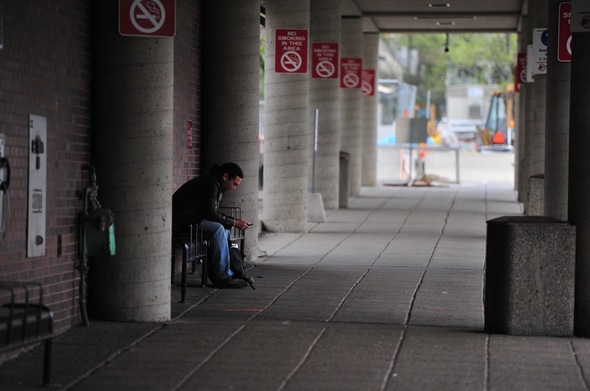
A rider waits to catch a bus at the Blake Transit Center in downtown Ann Arbor. The AATA is planning to demolish and rebuild the facility later this year as it looks toward a future of expanded transit services.
Ryan J. Stanton | AnnArbor.com
The new plan would require $38.3 million in extra capital investments over five years and add $13.3 million to yearly operating costs when all elements are implemented.
Overall, operating and capital expenses of the five-year program total $217.8 million. That's offset by $185.9 million in estimated revenue, resulting in a $31.9 million gap.
The plan contemplates closing that gap with a combination of fare increases and new funding equivalent to a 0.5-mill countywide transit tax, though that's only one option.
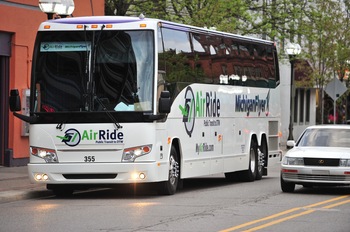
The new AirRide shuttle service between Ann Arbor and Detroit Metro Airport is only the start of expanded services the AATA wants to bring to Washtenaw County,
Ryan J. Stanton | AnnArbor.com
It now goes out for a 30-day review period, and AATA officials have a series of meetings planned to discuss the five-year program with the public throughout May.
CEO Michael Ford said the five-year program takes all of the research and feedback the AATA received over the last two years while creating a 30-year transit master plan and identifies the tangible services that can be implemented in the next five years.
The program paints a much clearer picture of what services might be provided if a new countywide transit authority is created to replace the AATA, an initiative local officials have been working on.
The five-year program would enhance existing Ann Arbor and Ypsilanti services and increase access to public transit in underserved areas of the county.
Throughout Washtenaw County, the plan calls for increased door-to-door service for seniors and people with disabilities, several express routes to help commuters reach their jobs in urban centers, new park-and-ride lots, and local routes in Chelsea, Saline and Dexter.
Ann Arbor residents could expect extended operating hours, increased service frequency and more weekend routes. Ypsilanti would have double the routes for quicker and more direct service, with peak-hour buses coming every 30 minutes — down from one hour.
Weekend service also would be improved in the Ypsilanti area.
Overall in the urban area, the plan calls for a 25 percent increase in service on weekdays and a 120-130 percent service increase on weekends.
If all proposed services in the five-year plan are implemented, AATA officials estimate 2.8 million additional trips would be added to the county's public transportation network.
"Whether you are a public transit user or not, the services proposed for Washtenaw County over the next five years will benefit the entire community," Ford said, citing the ability of public transit to get people to jobs, grocery stores, doctors offices and other vital destinations.
"Businesses will benefit because more employees and customers will have easy access to their doorsteps, and we'll all have better commutes because there will be fewer cars on our roads and more open parking spaces," Ford said.
A combination of federal and state grants, passenger fares and local funding — including the existing transit millages in Ann Arbor and Ypsilanti — would be used to fund the five-year program. If voters approved a new 0.5-mill countywide transit tax to fill the funding gap, AATA officials estimate the average homeowner would pay an extra $50 a year.
That's based on a home value of $200,000.
AATA officials say that's only one possible solution they're considering. The state Legislature also is working on several transportation-related bills that could make other funding sources possible, including new motor vehicle-based taxes and fees.
Any new local funding that would come to the transit authority would need to be approved by a majority of voters who reside in the transit authority area.
Feedback on the countywide service improvements is being gathered at a series of public meetings being held starting Tuesday night at the Saline Senior Center.
A presentation on services specifically in the Ann Arbor area will be held at 7 p.m. May 14 at the Malletts Creek Branch Library, 3090 E. Eisenhower Parkway.
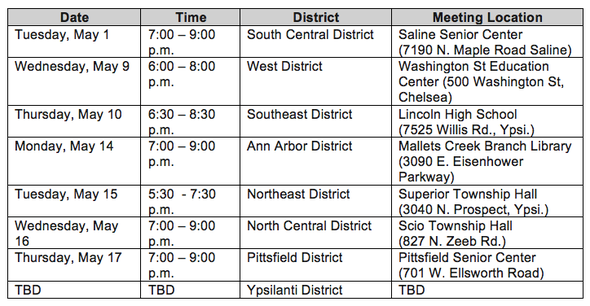
The AATA's governing board and representatives from the unincorporated countywide transit authority board — often called the u196 board — will use recommendations from the upcoming meetings to develop a final five-year implementation program.
A detailed summary of the five-year program with cost breakdowns can be found starting on page 79 of the draft report.
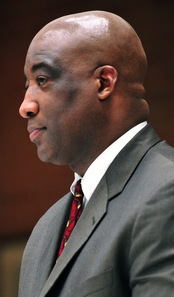
Michael Ford
The enhanced express bus services would add $1.96 million in annual operating costs and $4.8 million in total capital costs, according to the plan.
The five-year plan would increase the capacity of park-and-ride lots by 800 spaces, adding to the 1,200 spaces that exist now. That includes upgrades to existing parking sites and five new sites for a total capital investment of $5.53 million.
The plan outlines a jump in regular fare prices from $1.50 to $2, and then $3 for new evening tickets.
Weekly tickets would sell for $18.
For families, there would be an option to take up to two adults and four children for twice the adult cash fare on weekends.
The plan shows $12 million in added capital costs and $6.57 million in added annual operating costs directly associated with enhanced urban bus service across Ann Arbor and Ypsilanti, with longer operating hours, more Sunday services and higher frequencies.
Another $2 million in capital costs would pay for a series of 16 "super-stops" or bus rapid transit style stops for Route 4 on Washtenaw Avenue.
Another $2.5 million in capital costs would support a countywide vanpool program that would add $87,115 in annual operating costs.
New shelters, bus pads and facilities, including enhancements at the transit centers in Ann Arbor and Ypsilanti, would cost another $4.5 million.
The plan also shows $1.2 million in capital costs paying for creation of local transit hubs with modern facilities in Chelsea, Saline, Dexter and Whitmore Lake.
Michael Benham, AATA's special assistant for strategic planning, said while the current focus is on the first five years, there are additional projects that merit attention in future years.
He gave an overview of the five-year program at Thursday's meeting of the AATA board, pointing out more specific information on services can be found in the appendices.
"That's where there are a ton of details — schedules for the various services that we're talking about, actual routes in a lot of cases, and then a very detailed district-by-district description of the program," Benham said.
Board member David Nacht said he was "blown away" by the level of detail included in the five-year plan and he encourages everyone to give the schedules for their area a look.
"If I were a member of the public or a local township official someplace, what I would do is I'd pull out the schedules, I'd pull out the map of the service that's proposed for my area, and I'd say, 'Hey, does this make sense?' and I'd talk to people in my community," Nacht said.
Benham said policy discussions still need to be had about the level of fares and the desirability of increasing them.
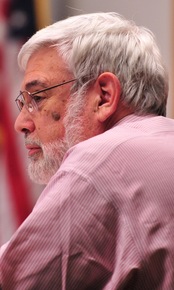
Jesse Bernstein
"All of the successful transit programs around the country took decades to put in place, so a 30-year plan I think is reasonable for our community," he said. "And if funding becomes available, we can do more things more quickly. If not, we're not going to spend money we don't have."
Bernstein said other projects outside of the five-year plan could be funded if additional state and federal funding comes through.
"We separated out those projects that would require state and federal money that we have no idea if we're going to get," he said. "So what we're saying to the public is, 'This is what we can assure you we can do when we get this amount of money.' "
The AATA's plans estimate there are 11,857 households with no car in Washtenaw County, 72,061 people age 18 and under, 34,824 people 65 and older and 29,097 people with a disability.
The 2010 Census showed 344,791 people living in Washtenaw County. The AATA's plans assume the population will grow to 380,000 by 2035 and employment will rise 25 percent.
Ryan J. Stanton covers government and politics for AnnArbor.com. Reach him at ryanstanton@annarbor.com or 734-623-2529. You also can follow him on Twitter or subscribe to AnnArbor.com's email newsletters.
Comments
Roger Kuhlman
Mon, Apr 30, 2012 : 7:53 p.m.
Property taxes are already too D*mn High! Instead of increasing the tax burden from bus services on property owners, AATA should be cutting the existing 3.0 millage being levied. Why are bus riders receiving large direct subsidies for their transportation choices? It is not fair that a small minority are receiving these subsidies. Why don't bus riders pay the full cost of their rides? Someone in government doesn't help me with paying for my purchase and use of an auto! Do you love various local government agencies always raising your property taxes. The Ann Arbor Public School System is seeking to raise property taxes. AATA is seeking to raise your property taxes. Washtenaw County Road Commission is seeking to raise property taxes. Ann Arbor Public Library is seeking to raise your taxes. As a long-time citizen of Ann Arbor I can not afford all these rises in taxation and I do not see any of these proposals as having true public merit.
Tanzor
Mon, Apr 30, 2012 : 3:25 p.m.
The picture included in the article is all telling, there is one person waiting at the Blake Transit Center. AATA's irrational quest to radically expand the scope of its services is both irresponsible and decadent. AATA's operation is over 80% subsided and extremely inefficient; I see buses running EMPTY every day. Fiscal responsible is something AATA completely disregards, of course when you're spending other people's money that's not a problem. I acknowledge the need for public transportation, however there must be an effort to act responsibly and efficiently. AATA's plan is too expensive – way too expensive
aataxpayer
Sat, Apr 28, 2012 : 1:58 p.m.
From the movingforward website "Multimodal transportation plan (car, bus and rail transit, bicycling and walking)". What about cabs! We could subsidize door to door cab service for much less expense and not eliminate private sector jobs! Let's add a smaller AATA to the list of options being considered!
A2M3
Sat, Apr 28, 2012 : 12:29 p.m.
This proposal dovetails perfectly with the plans of Ann Arbor's brain trust to ban auto traffic entirely. The dream of a smug, green, hydrocarbon-free Mecca where all the healthy citizens walk and ride bikes every day! Should I lose my ability to drive, I'll be confident in my ability to walk a quarter mile through the woods to the nearest bus stop or maybe I'll ride my Eco-friendly bike to the gerontologist...decisions, decisions???
acme
Sat, Apr 28, 2012 : 3:08 a.m.
The "Countywide transit plan" is a bad idea. Buses are economically feasible only in high density urban environments. The cities of Ann Arbor and Ypsilanti should share the bus system and the costs. Leave the rest of the county out of your plans for increased taxation. We shouldn't be asked to pay for your buses. I love my car and the freedom it provides. The priority for AATA should be to reduce their costs to the level that is affordable for the city residents it serves.
GB
Fri, Apr 27, 2012 : 8:15 p.m.
I would vote "no" for any increase in my taxes to support an expanded bus service. I have never seen a bus in Ann Arbor that appeared to have more than 2 or 3 riders... What data is generating the need ? Raise the price to ride the bus... let the users support the need.... Enough said!!!! I am finished with every government employee reaching for my wallet to increase their domain!!!
Robert Hughes
Sat, Apr 28, 2012 : 12:46 a.m.
GB, you ought to go down the the AATA bus stop downtown about 8 AM and stand there for an hour. You'll see that many of the buses pulling in there are standing room only. Really, go take a look!!
Karen
Fri, Apr 27, 2012 : 4:44 p.m.
With the AAPS looking at cutting busing, this expansion is the only guarantee to keep our roads from being over congested. This money would stay in the county and not go to the state to run away with as the school dollars do.
DonBee
Sat, Apr 28, 2012 : 12:46 p.m.
Karen - In reading (yes I did) the 124 page plan, I see nothing that is going to help with the AAPS transportation reduction. The demand service is $5 a trip each way for the townships - so $10 a day to send a child to school that way (and it only covers 10% of the operating cost). Capacity is too small with 10 vehicles to cover the township issues. The you look at frequency and bus to bus time in the city and the bus route design and few if any are setup to support students getting to schools without having to go downtown and change buses. In short, this is not the way to get children efficiently or safely to school.
blahblahblah
Fri, Apr 27, 2012 : 4:17 p.m.
I still do not understand why I am paying for buses to Wayne County (Canton and Detroit Metro airport)? Is Canton and Wayne County paying into the current or future county wide plan??
annarboral
Fri, Apr 27, 2012 : 4:13 p.m.
No way, absolutely none. If buses are such a good idea then their riders should be delighted to pay the actual cost of bus transportation. Besides why would anyone give the liberal extremists at AATA any more money?
Robert Hughes
Sat, Apr 28, 2012 : 12:43 a.m.
"If buses are such a good idea then their riders should be delighted to pay the actual cost of bus transportation." The same could be said of cars.
CynicA2
Fri, Apr 27, 2012 : 3:46 p.m.
I have been riding AATA regularly since some moronic distracted driver caused a collision which totaled my car last fall, and it is a viable alternative to driving, at least if you live and work near one of their major routes. It is, however, much more time consuming than driving, and much less convenient, as you are tied to their routes and schedules. Shopping is also much more of a pain, as you really can't buy any more than you can carry. Also, the buses I ride are rarely have more than a dozen people on them, and regularly have 5 or less passengers for much of the route, and I ride during rush hours, and occasionally on weekends. The extra convenience of a car is well worth the cost, in my estimation, and it's hard to buy AATAs growth projections for an area that has been slowly depopulating for decades, that being Washtenaw County.
jns131
Fri, Apr 27, 2012 : 3:14 p.m.
As for that TBD in Ypsilanti? How about the Michigan Library on Michigan Ave? Good grief, some of us can't get to one of these meetings due to distance. If they had Ypsilanti's input you might get our side. We would love a transit that looks like Ann Arbors. Instead of sitting out in the rain.
Razor
Fri, Apr 27, 2012 : 2:56 p.m.
While Mr.s Fords intentions are good.....I will vote this down. I made the choice to move out of Ann Arbor to enjoy the country and the less traffic and no buses. I made the decision knowing I would have to deal with the higher expenses (gas) should they come my way. I for one do not know why I should pay more taxes for the benefit of the residents or Ann Arbor or Ypsilanti or for those who chose not to own a vehicle. Again this is a "NO" vote for me! no offense
Ricardo Queso
Fri, Apr 27, 2012 : 2:36 p.m.
Here's a novel idea. Limit those voting to the actual property owners who will end up paying the the tax.
rusty shackelford
Fri, Apr 27, 2012 : 6:36 p.m.
That's not a novel idea. My only question is which other parts of pre-1820s America are you a fan of?
Ron Granger
Fri, Apr 27, 2012 : 2:17 p.m.
So they want to EXPAND the system by spending $217.8 million, with a $32 million gap, in the worst economy since the great depression. What if the economy continues to get worse - for years? What is your contingency plan? A lot of large bus systems across the nation are significantly cutting back services because they are terribly short of cash. And yet, AATA wants to *expand* service on the backs of taxpayers.
Ron Granger
Fri, Apr 27, 2012 : 2:13 p.m.
Why do they need a new downtown transit center, for millions of dollars?
JSA
Fri, Apr 27, 2012 : 12:43 p.m.
I give AATA high marks for their persistence and that is where it ends. This is a joke an it's an old one. Ann Arbor bureaucrats trying to rip off the rest of the county with the exception of Ypsi to solve Ann Arbor's problem.
Brad
Fri, Apr 27, 2012 : 12:42 p.m.
An average homeowner would pay an extra $50 per year on top of the $206 they are spending today. No thanks.
Robert Hughes
Sat, Apr 28, 2012 : 12:41 a.m.
Well worth it!
uabchris
Fri, Apr 27, 2012 : 12:34 p.m.
@ HappySenior - yes I agree there have been too many $50 millages added (sidewalks,etc), but this is worth the investment. What happens when HappySenior cannot drive anymore? Should we build more roads? We cannot sustain the infrastructure that we currently have...look at our roads and bridges. Transportation management 101: User fuel taxes fund the National Highway Trust Fund...which is rapidly SHRINKING due to reduced fuel consumption du to 1) rising fuel prices 2) people driving less 3) improved fuel mileage standards = less consumption = shrinking tax base...look it up....
motorcycleminer
Fri, Apr 27, 2012 : 12:16 p.m.
Cold day in hell ( not mi. ) just a pack of tax vampires ..once they taste the blood of your $$$$$ they can't get enough...listening to state rep kolb ( who came from OZ ) talking about raising transportation tax's on npr this am ...for roads ? maybe, but bulk of the $$$ for sidewalks , bike paths and zebra crossing's....linatics are truely running the aslym
Brad
Fri, Apr 27, 2012 : 12:09 p.m.
Anything that requires taxpayers to subsidize it to the 80% level hardly qualifies as a "plan". More of a "theft".
Robert Hughes
Sat, Apr 28, 2012 : 12:40 a.m.
Seems like our roads are paid with taxes? No? and our schools? Anyway, it seems to me that transportation is a right (at least in our society) and not, or shouldn't be, a privilege.
SonnyDog09
Fri, Apr 27, 2012 : 11:50 a.m.
Very few things in life reek of failure like a central committee with a five year plan. And, a central committee with a thirty year plan has an especially pungent aroma to it.
rusty shackelford
Fri, Apr 27, 2012 : 11:38 a.m.
Any new routes within or connecting Dexter, Saline, Chelsea, Manchester, your grandma's house, etc, need to be self-funded. By which I mean funded in some way by the residents of those towns rather than Ann Arbor. Most of the rest of the plan, including increased links to Ypsi, looks good to me. Routes between Ann Arbor and Ypsi are denser by far than new routes to the rural towns in question. Additionally, much of Ann Arbor's economy depends on working class people who move to Ypsi because they can't afford A2. As such it is in Ann Arbor's interests to maintain and increase those links.
Robert Hughes
Sat, Apr 28, 2012 : 12:37 a.m.
Yeah! Poor people should never go to Dexter, let alone Manchester!! Nobody who depends on the bus should go to these places!! For any reason! Ever! Ann Arbor just doesn't have enough to share! We're the poorest city in the state! We shouldn't have to pitch in so that our neighbors can come and visit, shop or work here! Let them walk if they want to get here so bad!
Karen Hart
Fri, Apr 27, 2012 : 11:31 a.m.
Increased mobility (especially as our population ages significantly), less land devoted to parking and fossil fuel stations, slightly reduced sprawl, connectivity to the surrounding region -- it's the only way our county will be able to compete in the coming decades. I've been out of work for quite some time, but this is a millage I'd vote for.
HappySenior
Fri, Apr 27, 2012 : 11:30 a.m.
When was the last time you saw or rode on a bus that was overly full? Other than the morning ride to work and the afternoon ride home, how many buses ride empty or with <5 riders? If you save financial records, take out your tax bill from 10 years ago and compare it to a current tax bill. How many of these "it's only $50" millages have been passed? Too many? I don't care how many consultants make projections and estimates and calculations about revenue and use, the only number that is certain is the tax you will pay. The rest is someone's dream, and the dreamers have jobs that are financed by taxpayers.
Robert Hughes
Sat, Apr 28, 2012 : 12:34 a.m.
Foobar, yes, you are right about something!! It's your sense of humor!
foobar417
Fri, Apr 27, 2012 : 6:22 p.m.
The other night I drove down a road and didn't see another car. Clearly my anecdote is conclusive proof that I am correct about something.
Useless
Fri, Apr 27, 2012 : 2:22 p.m.
Last August there were two days in a row that I was the only person bus for a good portion of the trip
TheGerman
Fri, Apr 27, 2012 : 1:04 p.m.
There was a recent story on AA.com that had ridership stats that clearly showed that no bus ever only has 5 people or less on it at any time (on average).
uabchris
Fri, Apr 27, 2012 : 11:23 a.m.
Yes it is expensive, but they are trying to be proactive. You can't build infrastructure overnight. What happens when we wake up one day to - $7 gal gas, old age, can't drive anymore, get sick, or have a disability? You will want mass transit then...its for the betterment of the community as a whole.
Barzoom
Fri, Apr 27, 2012 : 11:05 a.m.
A waste of taxpayer dollars. Expand the service and increase the revenue shortfall. Make up the difference by increasing the burden on the tax payers. Tear down the existing transit center that provides adequate services to the bus riders and spend more money on an unnecessary new building. If a new transit center is built it will keep traffic in that area a mess for at least segeral more years to come. Maybe that's part of the plan.....Increase ridership by making it impossible to drive in downtown Ann Arbor.
Vivienne Armentrout
Fri, Apr 27, 2012 : 10:50 a.m.
"That's based on a home value of $200,000." What is apparently meant here is that the house has a market value of $200,000, which would mean a taxable value (TV) of $100,000, and thus the homeowner would pay $50 more a year (0.5 x 100,000). If a home has been occupied for some years, the "market value" that is estimated by the state equalized value (SEV) is often more than twice as much as the TV. At purchase, the TV is one-half the SEV but it is limited in its rate of increase, so over time the TV is less than half (unless the market value of the house has actually dropped). I wonder whether AATA is using actual data to estimate that houses in Washtenaw County are all "on average" $200,000 market value. I would guess that the assessed value of residential property varies widely across the county, and even within the city of Ann Arbor. Of course, if the "average homeowner" lives in Ann Arbor, he/she is already paying $200 a year. (The current 2 mill tax.)
RUKiddingMe
Fri, Apr 27, 2012 : 10:48 a.m.
It's significant that the picture shows one guy in that entire expanse, right? Has anyone ever seen this existing station packed to the gills? I go by here about 9 times a week, and have never seen anything that would indicate a need for more space for people. Far from it, in fact. Someone's getting padded pockets from this.
Robert Hughes
Sat, Apr 28, 2012 : 12:31 a.m.
The area is often empty, because buses come every 15 minutes, and people time their arrival at the bus station to line up with the bus. Don't believe me? Just go down there about 8 AM and stand about for an hour. You'll see a lot of people using the buses.
TheGerman
Fri, Apr 27, 2012 : 1:03 p.m.
Definitely have seen it completely packed. Especially during morning and evening rush hour. I have also yet to see an empty bus that all the anti-public transit people keep talking about. Most of the time I have to stand on my route because the buses are so crowded.