

Pay it Forward: Can this young man make a difference?
Editor's note: This post is part of a series by Dr. Baker on Our Values about core American values. This week Dr. Baker is discussing the idea of paying it forward.
The 2000 film Pay It Forward (based on Catherine Ryan Hyde’s bestselling book) inspired legions of schoolchildren around the country to create their own pay-it-forward programs. The idea seems to tap into the universal human propensity to help others — because we have been helped. On Monday, I recounted my own personal example of this phenomenon, when we were rescued in Canada’s North Channel and then were able to pay it forward and help someone else.
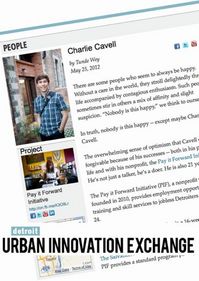
Once you tune in to the phenomena, you see if everywhere. Have you heard about Detroit’s Pay it Forward Initiative? This was founded in 2010 by Charlie Cavell, one of the many young adults who are working to turn around the Motor City. Charlie and his initiative were highlighted earlier this summer in a piece by the Detroit Urban Innovation Exchange (click here to read the whole story). The purpose of the Exchange is “to showcase and advance Detroit’s growing social innovation movement.”
Charlie’s Initiative focuses on the problem of joblessness among Detroit’s young adults, ages 18 to 25. According to the Exchange, “Pay it Forward’s primary offering is a 16-week internship program. The program places interns in jobs with local partner organizations, such as Quicken Loans and The Salvation Army. During the course of the internship, PIF provides a standard program package of weekly counseling sessions, a transportation stipend, financial management and entrepreneurial classes, as well as wages totaling $2,400. The partner organizations where the interns are placed do not incur any costs.”
In a nutshell, the Initiative’s mission is to “Employ, Educate, and Empower,” as Charlie says in a video interview.
“You have to care about your neighbor,” he says, which is the real meaning behind the Parable of the Good Samaritan. It wasn’t just that a stranger aided someone in need, but that it was a Samaritan who aided a Jew — members of two groups expected to hate each another. Jesus told this parable in response to a question asking him to define “who is my neighbor”? The answer is, everyone.
Can small initiatives like Charlie’s Pay It Forward really make a difference?
Do you know of similar initiatives in you part of the world?
How do we help people to rethink their assumptions about “neighbors”?
Please, take a moment to leave a Comment below.
Dr. Wayne E. Baker is a sociologist on the faculty of the University of Michigan Ross School of Business. Baker blogs daily at Our Values and can be reached at ourvaluesproject@gmail.com or on Facebook.