

U-M researchers uncover likely cause of Mary Ingalls' 'Little House' blindness
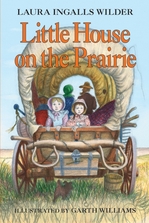
But in a new study published today in the journal Pediatrics, University of Michigan researchers found that it is likely scarlet fever had nothing to do with Mary’s blindness.
Senior author Beth A. Tarini, M.D., and her co-authors used evidence from newspaper reports, Laura Ingalls’ memories and school registries to conclude Mary’s blindness was probably caused by viral meningoencephalitis.
“Since I was in medical school, I had wondered about whether scarlet fever could cause blindness, because I always remembered Mary’s blindness from reading the 'Little House' stories and knew that scarlet fever was once a deadly disease,” said Tarini - an assistant professor of pediatrics in the Child Health Evaluation and Research Unit at C.S. Mott Children’s Hospital - in a press release.
“I would ask other doctors, but no one could give me a definitive answer, so I started researching it.”
Mary Ingalls went blind in 1879 at age 14. Tarini and her co-authors found evidence in Laura Ingalls Wilder’s memoirs and letters that described Mary’s illness as “spinal sickness” with symptoms suggestive of a stroke.
The study quotes a local newspaper item that reports that Miss Mary Ingalls was confined to her bed and “it was feared that hemorrhage of the brain had set in (sic) one side of her face became partially paralyzed.”
“Meningoencephalitis could explain Mary’s symptoms, including the inflammation of the facial nerve that left the side of her face temporarily paralyzed,” Tarini said in the press release, “and it could also lead to inflammation of the optic nerve that would result in a slow and progressive loss of sight.”
It’s not surprising that scarlet fever was labeled the culprit in the books instead, Tarini noted. Between 1840 and 1883, scarlet fever was one of the most common infectious causes of death among children in the United States.
“Laura’s memoirs were transformed into the 'Little House' novels. Perhaps to make the story more understandable to children, the editors may have revised her writings to identify scarlet fever as Mary’s illness because it was so familiar to people and so many knew how frightening a scarlet fever diagnosis was,” said Sarah S. Allexan, B.A. - lead author of the paper and a medical student at the University of Colorado - said via press release.
For reasons that remain unclear, scarlet fever case fatality rates fell dramatically in the early 20th century, well before antibiotic treatment.
But even now, a scarlet fever diagnosis can strike fear into the heart of parents Tarini sees in her pediatric practice.
“Familiar literary references like these are powerful - especially when there is some historical truth to them.” Tarini said via press release. “This research reminds us that our patients may harbor misconceptions about a diagnosis and that we, as physicians, need to be aware of the power of the words we use - because in the end, illness is seen through the eyes of the patient.”
Additional authors on this paper include Carrie L. Byington, M.D of the University of Utah.; Jerome I. Finkelstein, M.D., F.A.C.S., assistant professor of Opthalmology and Visual Sciences at the University of Michigan.
Comments
jns131
Tue, Feb 5, 2013 : 2:36 a.m.
For all intense purposes I did visit De Smet which is where the entire family except for Laura and her husband, infant son and Rose are buried. Rocky Ridge is where they are buried. Now to the bottom line of this insane story. If you want to know if and how Mary became blind then you need to dig up her body and do a DNA analysis which I highly doubt the family will let you do. If Mary did go blind not from Scarlett Fever but was something else, then explain Helen Keller and how she went blind and deaf from Scarlett Fever. Was it something else? We now need to look at other famous people who contracted this disease which is considered from what I was told untreated pneumonia. Possible mono to boot. This is one insane story and I would love to hear the historians who actually live and breath in De Smet. The final resting place of this incredible family. Also, Read I believe it is called Ghost In The Attic. it was Rose who wrote the books, not Laura. Laura told the stories, it was Rose who enhanced them. Read Little House on Rocky Ridge and this goes into Rose's story as well. Now, back to my historical reading.
mady
Tue, Feb 5, 2013 : 3:53 p.m.
this "insane story" is a much-loved classic, and yes, I voted you down!!!
xmo
Tue, Feb 5, 2013 : 12:02 a.m.
Nothing like a little bit of history to keep life interesting!
KateT
Mon, Feb 4, 2013 : 11:29 p.m.
I read those books over and over when I was young. Laura was my hero, and I even took her name when I made my Confirmation. When my son got scarlet fever, I thought of Mary. Thank you for this reporting.
jns131
Tue, Feb 5, 2013 : 2:37 a.m.
Should read even further the story of Rose and her life. Totally fascinating. Then read the published works of Laura. I need to look it up but I believe the book is called Ghost in the Attic. Who wrote the Little House books? Laura and Rose. Now go read Rocky Ridge.
Wolf's Bane
Mon, Feb 4, 2013 : 10:06 p.m.
Thank for this. Always wondered about this as well. Now, can someone shed some light on way Nellie was so disagreeable?
mady
Tue, Feb 5, 2013 : 3:52 p.m.
"Nellie's" parents spoiled her ROTTEN.
jns131
Tue, Feb 5, 2013 : 2:40 a.m.
Nellie was a made up name of someone Laura could not stand. This was told in her autobiography. If she did not like you? She made up the name. The television series is nice fantasy. Which is why I can't watch anymore. Otherwise, the books are real. O by the way, the book? On The Banks of Plum Creek is Walnut Grove and that mud house they lived in exists no more.
Ann English
Mon, Feb 4, 2013 : 10:06 p.m.
Someone born 36 years before Mary Ingalls, Laura Bridgman, is said to have lost all of her senses except touch to scarlet fever. The year was 1831. But she isn't a subject in children's books, like Mary Ingalls was.
Book Lover
Mon, Feb 4, 2013 : 9:17 p.m.
Both Laura and Almanzo had diphtheria very early in their marriage and Almanzo also suffered a stroke which hindered his walking for the rest of his life. He was able to do farm work but slowly; according to Donald Zochert's biography of LIW, one of their reasons for moving to Missouri was the more temperate climate which made it easier for Almanzo to move around.
KateT
Wed, Feb 6, 2013 : 5:35 p.m.
I remember getting that biography for Christmas! I went to Rocky Ridge Farm. You can see Laura's beautiful birthday cards still set up from when she died. Her birthday is Feb. 7, BTW. She did beautiful needlework, which is on display, and some of those name cards from the stories. You can also see her favorite Bible passages, Pa's fiddle, her little music corner...all so wonderful. The kitchen is built for her petite size, as she was Scottish- American. I also went to her grave and did a tracing.
jns131
Tue, Feb 5, 2013 : 2:42 a.m.
I don't remember that being the case. I remember he had some lung condition that forced them to a more temperate climate. They did live in Florida for a while but Laura hated Florida which is why the moved to Rocky Ridge MO. Still need to visit that place. One of the last places I have not yet visited.
dotdash
Mon, Feb 4, 2013 : 8:48 p.m.
Here's an idea for Beth Tarini: What disease did Almanzo get that made him unable to do farmwork? That always seemed rather mysterious to me...
Basic Bob
Tue, Feb 5, 2013 : 11:03 a.m.
How to successfully use Wikipedia - use the reference links at the bottom of the page and cite the source work directly.
ArthGuinness
Tue, Feb 5, 2013 : 4:02 a.m.
Oh, geez, not this crap about Wikipedia being inaccurate again. Yes, maybe there's some BS added to various political topics, but it's quite useful and accurate for most mathematical and scientific information. If you knew how *actual* encyclopedias were made, you would have a lot more faith in Wikipedia which at least has some peer review and references.
jns131
Tue, Feb 5, 2013 : 2:44 a.m.
You really trust Wikpedia? Even our daughters teacher will flunk you if you use that website. I have to reread the books to remember this. Did you know they died within five years of each other and Rose ten?
spm
Mon, Feb 4, 2013 : 9:01 p.m.
I re-read the books a few years ago and I recall that they both had diphtheria, but he had more lasting effects from it. Per Wikipedia severe diphtheria can cause partial paralysis and heart muscle problems. Both of which would be a hardship for someone doing farming.
Jenn McKee
Mon, Feb 4, 2013 : 5:14 p.m.
A friend who's done a good deal of research on Ingalls tells me that Laura reportedly changed the cause of Mary's blindness in the books on purpose, because the book was for children, and she didn't want to scare them - and that, in fact, Ingalls didn't plan to include Mary's blindness in the story at all for the same reason, but Ingalls' daughter convinced her to leave it in. I think the daughter was absolutely right in her advice, since it's one of the most memorable elements of the series. (Also, the same friend noted that Ingalls' not-for-children autobiography, "Pioneer Girl," is set for release later this spring. That should be enlightening as well!)
mady
Tue, Feb 5, 2013 : 3:49 p.m.
@dotdash: not to discount what you're saying--a lot of credit should rightfully go to Rose Wilder Lane, but please don't forget that if not for those badly-written(?) memoirs of Laura Ingalls Wilder, Rose might not have had much to go on. Sometimes we have to stand on the shoulders of giants, even if those giants are less-than-literate. Just sayin'.
jns131
Tue, Feb 5, 2013 : 2:45 a.m.
Ghost In The Attic is the book that explains the books. I believe that is the title. Have to find a copy of that book.
Julayne Hughes
Mon, Feb 4, 2013 : 9:59 p.m.
The "Pioneer Girl" you see on Amazon is a picture book for children written by William Anderson. The "Pioneer Girl" Jenn is talking about is Laura's original autobiographical manuscript that she was unable to sell before she and her daughter Rose transformed it into the Little House books we know today. This one is indeed for adults and is set for release this spring.
Jenn McKee
Mon, Feb 4, 2013 : 9:58 p.m.
What's about to be published is an unedited draft of "Pioneer Girl." Check out some more info on the project here: http://rapidcityjournal.com/lifestyles/laura-ingalls-wilder-autobiography-finally-to-see-publication/article_1e3b9354-b73d-515a-bb2e-510c18b76ffe.html
oblivia
Mon, Feb 4, 2013 : 7:36 p.m.
According to Amazon, "Pioneer Girl" is already out in paperback, and is suitable for ages 6 and up.
dotdash
Mon, Feb 4, 2013 : 5:31 p.m.
I agree with you. In fact, "the daughter" was the genius behind the books. She was a very famous and talented novelist in her her own right and rewrote all the books heavily, which is why they are so good. It was Rose Wilder Lane's idea to make them for children. She deserves a LOT more credit than she ever gets.
Thinking over here
Mon, Feb 4, 2013 : 4:45 p.m.
I suggest the headline be changed to add "likely cause" since the article does not state they definitively proved it.
Jenn McKee
Mon, Feb 4, 2013 : 4:50 p.m.
Agreed. Just made the change. Thanks for pointing this out!