

Eating pasta on the 4th night of Chanukkah
Mary Bilyeu, Contributor
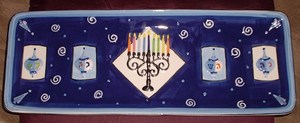
Oh, but there is so much more to it than that! There are tremendous levels of flavor in this dish, though it is prepared very quickly and without days of preparation or hours of stirring. One stockpot to boil water and cook the pasta, one skillet to prepare the sauce, and a few plates and forks are all the dishes you need to worry about washing. Truly, this is a miraculous dinner -- perfect for a holiday that celebrates a miraculous event!
When Jeremy caught sight of me making this the first time, he was horrified to see me adding anchovies to the skillet -- he walked into the kitchen just at that precise moment! I assured him that the anchovies would essentially melt, leaving a rich taste but without the fishiness that most people find so offensive. Needless to say, given the power of anchovies, he doubted me.
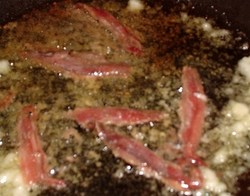
Anchovies when they're first added to the oil.
Mary Bilyeu, Contributor
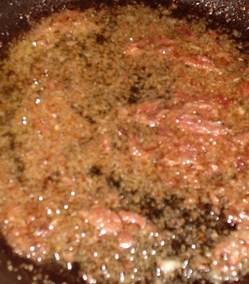
Halfway through the cooking process ....
Mary Bilyeu, Contributor
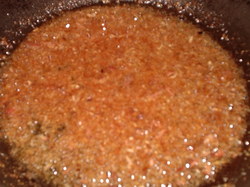
The anchovies have melted!
Mary Bilyeu, Contributor
But, brave soul that Jeremy is as my primary cooking contest guinea pig, he took a taste of the pasta … and he realized that this recipe is a thing of beauty. So when I told him we'd be eating it for Chanukkah this year, since it's a celebratory dinner that can still easily be made on a work/school day, he was happy to hear it. Because "Pasta with Oil" is so sublime that it reminds me of a lovely phrase I once heard and have remembered for years since: Chi mangia bene sta molto vicino a Dio … "He who eats well is closest to God."
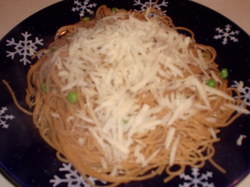
Mary Bilyeu, Contributor
Pasta con Olio (Pasta with Oil)
1 12-ounce box whole wheat spaghetti 1 cup peas 1/4 cup extra-virgin olive oil 3 tablespoons garlic paste pinch of red pepper flakes 1/4 teaspoon kosher salt 1 2-ounce can flat anchovy filets in oil, drained 2/3 cup chicken or vegetable broth 1 tablespoon minced oregano pinch of saffron, optional 1 tablespoon butter Parmigiano, to taste
Bring a stockpot of salted water to a boil. Cook pasta according to package directions, adding the peas when there are 2 minutes of cooking time left; drain.
Meanwhile, in a large skillet heat the oil, garlic paste and red pepper flakes over medium heat; stir to break up the garlic paste. Add the salt and the anchovies and cook, breaking up the filets, until they have melted into the oil. Add the broth and bring to a boil, stirring frequently, until sauce becomes a rich brown color and is reduced by about half. Stir in the oregano, saffron and butter; pour sauce over the drained pasta and peas, and serve with Parmigiano cheese.
Mary Bilyeu has won or placed in more than 60 cooking contests and writes about her adventures as she tries to win prizes, feeds hungry teenagers and other loved ones, and generally just has fun in the kitchen. The phrase "You Should Only Be Happy" (written in Hebrew on the stone pictured next to the blog's title) comes from Deuteronomy 16:15, and is a wish for all her readers as they cook along with her ... may you always be happy here!
You can contact Mary at yentamary@gmail.com.