

10 reasons to write 100 blog posts on wildcrafting and foraging
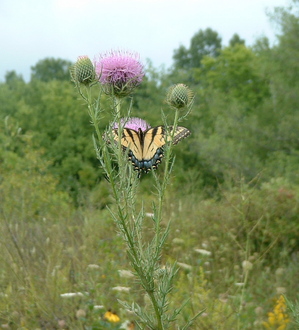
So many things to find while out foraging.
Linda Diane Feldt | Contributor
This is my 100th blog — reason enough to take a moment to ask, "Why am I doing this, and is it worth the time and effort?"
The answer to the second question is yes, so far. To answer the question of why, here are 10 answers that matter to me. In David Letterman style, I will count down to the most important reason, although they all matter.
I have departed from the brevity Letterman uses. These are core concepts important to me, and can take some explanation.
10. To support AnnArbor.com. I certainly hear a lot of complaints and criticisms of this news organization. And people should be critical. But is it functioning as a community place to go, a way to know what is happening locally, and a forum for a lot of ideas and information? Yes.
It has been an experiment, and I support the basic concepts of what they are trying to do. Supporting the idea of community contributors who are writing on a variety of interesting and hopefully innovative subjects seems very worthwhile. My writing supports those ideals.
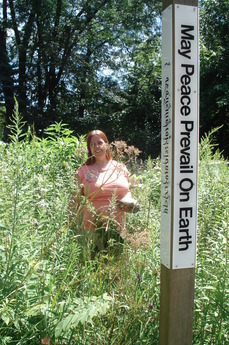
The author in her garden.
Photo: Laura Ghiron
9. Teaching basic skills. At heart, I’m a teacher. I'm the daughter of a University of Michigan professor emeritus, and teaching was the model I grew up with.
It’s exciting to teach people very basic how-to skills that were once commonplace. Finding wild plants for food and medicine is a skill I believe everyone should have.
8. Self-empowerment. I’ve watched people get really excited when they learn a plant and then find it on their own. Being able to feed yourself is a pretty basic skill, and when you begin to learn how to do it, there is a feeling of mastery, control and empowerment. I like helping people become powerful and more self-sufficient.
7. Letting people know how to find food that has no GMOs, is healthy, natural and organic. I recently wrote about the environmental impact of wild foods, and part of that is not using chemicals and toxic products.
Weeds and wild foods aren’t genetically modified (yet). They are mostly what people have been eating for thousands of years. That is until recently. We need access to real food. Wild plants are a great alternative.
6. The campaign to eliminate conventional lawns. Many of these weeds thrive right in front of us, in our lawns and gardens. Conventional weed-free lawns are a bizarre artifact that would be best done away with. The resources needed to have that pristine green lawn with no natural dandelions, plantain, chickweed and more is too high a price to pay in the negative environmental impact with no return in value.
If people realize the benefits of those weeds, more people will give up the idea that somehow you should be embarrassed or ashamed of a natural lawn. And better yet, more people will add native grasses and plants to create a low-maintenance area that is of value with food for us, for the pollinators, and that uses minimal resources. Eliminating more and more lawns is part of my agenda.
5. Fun. That’s an important motivator, and also important to not take ourselves too seriously. Being outdoors with other people, building community, enjoying weather and wilder areas, it should be fun. It should be a great thing to do as a family or with friends.
Finding food to eat as you play outdoors is fun. Showing other people what they can harvest and watching them get excited about learning is even more fun. I have fun doing this, and it is fun to write about. It’s fun to hear people’s positive experiences, and it’s fun to learn more. There are lots of fun things about wildcrafting!
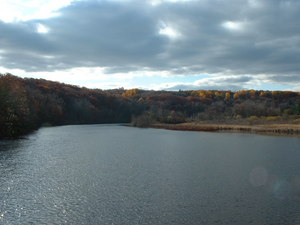
Enjoying the Huron River while foraging.
Linda Diane Feldt | Contributor
4. Nutrition, health and cost. As a health practitioner, nutrition and food are central to my work. Here is a way people can obtain good, free nutritious food while also being outdoors walking or biking. You can’t forage from your car. Most of the weeds we find are essentially dark green leafy vegetables, which we know are critical for heart health and the prevention of cancer. These beneficial plants are abundant, and free for the picking.
Wild fruits comprise another huge section of the foraging opportunities. Fruits are also essential in a healthy diet. Here is a path (literally) to greater health and well being with little or no actual cost. That’s worth telling people about!
3. It is basic human nature. We’ve been wildcrafters and foragers longer than we’ve been farmers, and certainly far longer than we’ve had a city life. It feels right, it feels as though we are honoring our DNA. Looking for food, as well as medicine, is something we evolved to do. Returning to that basic quest and task is a return to a natural way of being that feels nurturing, and deeply human.
I’d like to help more people have that experience. We’re growing fruit trees and letting the fruit rot, chopping down or removing perfectly good food and never eating it. That’s not normal. Gleaning and harvesting is basic human nature. We need to act on it and go ahead and eat what is around us. Anything else is a disconnect from nature — our human nature, as well as the abundance nature provides.
2. No Child Left Inside. My experience is that the best way to get kids to eat vegetables and fruits is to involve them in the process. The more involved the better. If they can start with growing or finding the food, then participate in the preparation and sharing of it, chances are they will enjoy it as well.
We need kids to be foragers and participants for them to appreciate the natural word and to learn to nourish themselves. I want kids to help remind their parents that eating wild food should be part of every childhood.
1. I’d like to change your perception of the world. The greatest compliment I’ve received on my blogging is that “the world looks different now.” Being outdoors and having a relationship with nature is what we all need. When people learn to love the natural world, they also begin to care for it. We need more caretakers. We need more people to pay attention. We need to become advocates, and even evangelists for a healthy planet.
I’m hoping that with my writing, you will have a closer relationship with nature and the awe that nature inspires. Every day. Because that experience changes everything.
I'm ready for the next 100 blogs.
Linda Diane Feldt is a local Holistic Health Practitioner, teacher and writer. You can follow her on twitter, visit her website, or contact her directly ldfeldt(at)holisticwisdom.org. Her next free class sponsored by the People’s Food Co-op is on introducing kids to wild foods. 7-8:30 Thursday June 23 at Crazy Wisdom Bookstore. Register at 734-994-4589.
Comments
Linda Diane Feldt
Fri, Jun 17, 2011 : 4:41 a.m.
In retrospect I would add one more reason. Promoting ethical harvesting.
Rork Kuick
Thu, Jun 16, 2011 : 8:44 p.m.
Though I will continue to complain at any bits of woo I think I detect, thanks for all that work on the first 100 posts. I appreciate it. Human nature: Get out and eat some berries straight from the plant, and feel the ancient feelings. It's as if the ancestors were right at your shoulder. Your eyes may grow to be incredibly sensitive to beauty in the natural world.
Laura Ghiron
Thu, Jun 16, 2011 : 5 p.m.
What an inspiring article! Thank you, Linda Diane! Now, where is my photo credit!?!