

Paul Theroux overflows with Peace Corps memories
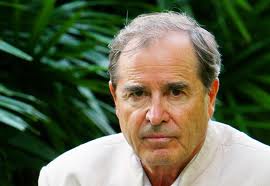
Author Paul Theroux
Photo courtesy of National Geographic Traveler
Several members of the audience had participated in the Peace Corps in its first years, including one member who went to East Pakistan (now Bangladesh) in 1961. Theroux's discussion oscillated between getting fit during the outward bound training, learning languages he still uses today, the initial anti-communist overtones of the organization, and literature. Throughout much of this discussion, heads in the audience would nod in agreement as his words resonated with them.
He was stationed in Malawi between 1963 and 1965, as a teacher in a small school in the bush. Theroux mentioned that while the Peace Corps was a coded anti-communist movement, he never saw himself in the role of fighting communism.Â
As he explained, once meeting people who need food and shelter one-on-one, their needs are what mattered and not their ideology. This was a theme that was to circle his discussion repeatedly - the idea that to truly understand another person and to discover the world around us - we must get out and meet people as individuals.
Theroux's love of literature infused the discussion as well. At times he referenced or quoted from works by James Joyce, Henry D. Thoreau, Charles Dickens, and J.D. Salinger. From "Ulysses" he quoted, "[T]he movements which work revolutions in the world are born out of the dreams and visions in a peasant's heart on the hillside."Â
He explained that he finally understood this while in the Peace Corps. Before this, the word "peasant" was just a word, but now that he was in a completely different environment, the word had a real meaning for him and the statement became clear. As he put it, "... when you travel, you find out the truth of literature."
I have to say this, among other components of his lecture, resonated with me. I am not a former Peace Corps volunteer, but IÂ spent five years in a similar organization, also a paid volunteer earning a small stipend doing grassroots work and also working abroad. At some point in my college days I read Isak Denisen's short story, "The Ring." In it, a young newlywed in the mid-19th century encounters a thief in the countryside. In their taut exchange, she gives him her wedding ring.
The narrator explains, "[W]ith this lost ring she had wedded herself to something. To what? To poverty, persecution, total loneliness. To the sorrows and the sinfulness of this earth." During the time I was a volunteer, I read the story again and understood it so much more. We all have visions of what would make the world better; what is weighing it down -- and we all marry ourselves to causes and ideals, and the misfortunes that create the need for them.
Theroux still visits the region of Malawi where he worked nearly 50 years ago. He wrote about the experience in his book "Dark Star Safari: Overland from Cairo to Capetown."
An exhibit commemorating the 50th anniversary continues in Room 100 of at the Harlan Hatcher Graduate Library.