

What Rick Snyder's college research project reveals about Michigan's governor today

Rick Snyder is seen here in a picture taken around 1982, a year after the research paper he co-authored with University of Michigan professor Herbert Hildebrandt was published in "The Journal of Business Communication." "It got a lot of publicity,” Hildebrandt told AnnArbor.com this week.
Photo courtesy of Rick Snyder's 2010 gubernatorial campaign
A research paper co-authored by Snyder in 1979 while he was finishing his MBA from the University of Michigan’s Graduate School of Business Administration illustrates his understanding of the role of positive words in influencing the public.
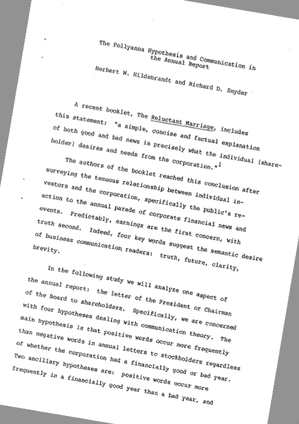
The paper co-authored by Snyder and U-M business professor Herbert Hildebrandt in 1979 is the only professional manuscript Snyder has published.
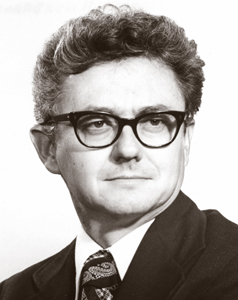
U-M business professor Herbert Hildebrandt said the study he conducted with Snyder in 1979 marked the only time in his 40-year career that he co-authored a paper with an undergraduate student.
Photo courtesy of the University of Michigan
A revised, 15-page, peer-reviewed version of the study was published two years later in the January 1981 edition of “The Journal of Business Communication.” (Download the working paper here and the published journal version here. Both are PDFs.)
The paper, which analyzes business executives’ use of positive words in their annual letters to stockholders, casts new light on the mindset of Snyder, who rarely criticizes others or displays pessimism.
Snyder’s self-proclaimed focus on “relentless positive action” — a mantra he repeats in most of his public appearances and interviews — stands in stark contrast to many other politicians who rarely miss a chance to slam opponents or mock competing proposals.
Snyder’s grasp of the role of positive communication is on full display in the study he co-authored with U-M business professor and former university secretary Herbert Hildebrandt, who retired in 1998 after a 40-year career at the university.
In an interview Thursday, Snyder — who earned bachelor’s, master’s and law degrees from U-M by age 23 — told Ann Arbor.com that getting the paper published “was a very proud moment for me.”
“I still have one,” he said. “I was just excited because you’ve got one of the world’s experts in the field and having a chance to do the research project … was a great opportunity to work together. And I thought it was just super.”
The study — the only professional manuscript Snyder has ever published — examines the role of positive and negative words that appear in the annual letters written by CEOs of major public companies.
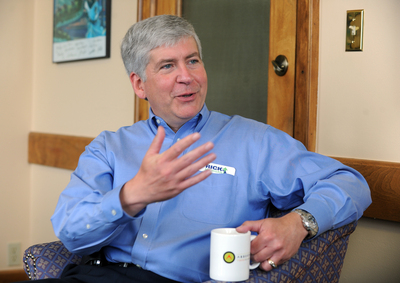
Gov. Rick Snyder conducts an interview in his former venture capital office in Ann Arbor during his gubernatorial campaign in 2010.
File photo | AnnArbor.com
By analyzing word usage, the researchers validated their main hypothesis — that “positive words occur more frequently than negative words in annual letters to stockholders regardless of whether the corporation had a financially good or bad year.”
The authors wrote that the trend is partially attributable to the “Pollyanna Hypothesis” — that is, certain executives’ “apparent tendency to communicate about life -- positively, no matter what.”
The paper asserts that business executives, like the broader public, are naturally inclined to use more positive words to describe their activities.
But it concludes with a series of suggestions, saying that business executives should refrain from being unrealistically positive.
“In a financially bad year, a direct statement of that fact, devoid of puffery, would meet reader desire for clarity and truthfulness,” Snyder and Hildebrandt wrote. They add: “While recognizing the Pollyanna attitude in most of us, more negative words would suggest a conscious attempt at objectivity, again meeting reader desire for truthfulness and brevity.”
By the time the paper was published in July 1979, Snyder, now 52, was a month short of his 21st birthday — and had just earned his MBA about a month earlier.
Hildebrandt, 80, who still lives in Ann Arbor and conducts grant-funded research through his university connections, said he asked Snyder to co-author the report while Snyder was still an undergraduate student taking his “Parliamentary Law” class. After the paper made its way through the university’s review process, it was published in July 1979 as Snyder was earning his MBA.
“He was the first undergraduate and the only undergraduate with whom I wrote a scholarly article,” Hildebrandt told AnnArbor.com. “The only person ever. Usually my writing was with PhDs and people of that sort. But in my class, there was no doubt he was an exemplary leader.”
He added: “There was no doubt that of the classes that I had over my 40 years, he’s among the top 1 or 2 students that I have ever worked with, and that’s why I asked him if he’d be willing to join me in writing” the report.
That a peer-reviewed version of the paper was published in “The Journal of Business Communication” was particularly notable.
“That is to say, it got a lot of publicity,” Hildebrandt said.
Hildebrandt said he distinctly recalled that Snyder was “one of the most organized individuals I ever worked with” — and enthusiastically positive.
“Optimism is certainly part of his outstanding qualities,” Hildebrandt said. “In a sense he is Pollyannaish, but does it after analysis of the issues — strong and statistical analysis — and listening to opinions.”
Snyder told AnnArbor.com that he chooses not to criticize because “it never solves a problem.”
As a business executive, Snyder, who resigned as president of computer-maker Gateway Inc. in 1997 to start a venture capital firm in Ann Arbor, would occasionally give talks about the importance of staying positive.
As a politician, he often reverts to a version of that speech, exhorting business people, politicians and citizens to stop arguing and start working together.
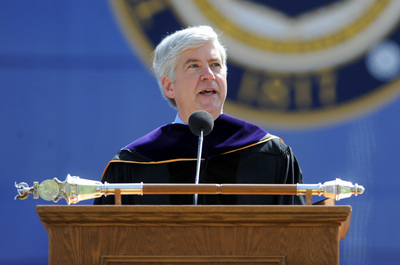
Snyder returned to the University of Michigan in April to deliver the spring commencement address at Michigan Stadium, where he received an honorary doctorate — his fourth U-M degree.
Melanie Maxwell | AnnArbor.com
“You solve a problem by staying focused on what the problem is and what the solution is,” Snyder said. “To be really successful, if you want to be an entrepreneur or go off and be innovative, you need to be a half-full kind of person.”
Politically, it might be a smart move to stay positive in the midst of a sea of negativity, said Craig Ruff, an analyst with Lansing-based Public Sector Consultants.
“The citizenry really craves leaders who are truthfully optimistic,” Ruff said.
But the focus on positivity bears risks, too. Snyder’s “relentless positive action” could backfire if voters believe he’s out of touch and doesn’t understand their problems.
Ruff said politicians have to strike a delicate balance between “buoyant optimism” and “catharsis.”
“It’s awfully difficult to be a Pollyanna and say to those people who are really suffering that all you have to do is pursue relentlessly positively thoughts and everything will work out,” he said.
The Michigan Democratic Party, which has issued a stream of press releases criticizing Snyder for his approach to job creation, did not respond to a request seeking comment for this story.
Mary Campbell, an Ann Arbor venture capitalist who earned her MBA from U-M at the same time as Snyder, said he’s always emphasized positivity.
“He is one of the most consistently positive and therefore, I presume, optimistic people I’ve ever known,” Campbell said. “His glass, as he sees it, is always half full, never half empty. He is a strong believer in his own capabilities and the capabilities of others and certainly uses very positive approaches to motivate people.”
The 52-year-old Snyder is not much different than the 20-year-old who co-authored the study on business communications, Hildebrandt said.
“I sense a continuation of what I saw earlier, carrying over into his later years — a consistent optimist regardless of the negativism that any governor or any individual would face,” Hildebrandt said.
Despite a relentless focus on positivity, Snyder is not altogether averse to using negative words from time to time.
During his gubernatorial campaign, he repeatedly described the controversial Michigan Business Tax as the “dumbest tax” in the U.S. He called his Republican opponents “career politicians” during the primary. And, after being criticized during a debate for his role as a member of Gateway’s board of directors when the computer company started shedding jobs in the early 2000s, he questioned Mike Cox’s character in a reference to the former attorney general’s acknowledged adultery.
But Snyder was generally credited with running an exceedingly positive campaign.
Snyder told AnnArbor.com on Thursday that he’s not trying to avoid a discussion about negative issues.
“But I won’t do it in the context of blaming someone for it,” he said.
Earlier this year he ordered the state to post “dashboards” on its website providing information about the progress of the state’s economic recovery and other activities.
Since taking office Jan. 1 in his first political job, Snyder has maintained an emphasis on positivity in interviews, public appearances and political communications.
When asked about the recall effort against him, the thousands of protesters who have rallied against his policies or the steep decline in his approval ratings, Snyder still stays positive. He often describes it all as part of the “Democratic process” while maintaining that he believes the public still supports his efforts.
“He doesn’t lash out at Democrats or their interest groups like the MEA,” Ruff said in a reference to the Michigan Education Association, the state teachers union. “He’s really careful about toeing a public policy line and defending his position on the policy initiatives rather than attacking either current or potential foes. He lives his motto.”
Snyder said he doesn’t mind being called a Pollyanna.
“We’re showing results,” he said. “They can be saying I’m a Pollyanna for doing those things, but we’re doing things.”
Hildebrandt suggested that consistent optimism is a natural side effect of being a political figure.
“Politicians by nature have to use positive words,” he said. “I think there is a deep danger in wallowing in negative words.”
Contact AnnArbor.com's Nathan Bomey at (734) 623-2587 or nathanbomey@annarbor.com. You can also follow him on Twitter or subscribe to AnnArbor.com's newsletters.
Comments
sig.melvin
Sun, Sep 25, 2011 : 5:52 p.m.
YES NOW you Have to pay less TAXES on your INCOME... see saving next April 2012.. When you have your taxes deducted from your income you can see how much you have left for yourself.So by working Overtime you are paying more Taxes ..so be smart enjion your life(free time and your familie and save on healthcost also ...less stress. clean air and gasoline for your car. That the good News the Bad ..Snyder and congress will raise your taxes .......Enjoi til tehn
Megan Greene
Sat, Sep 24, 2011 : 3:42 p.m.
Words are meaningless unless they are backed up by positive policies. His policies couldn't be more negative. George Bush had an engaging way but his policies left us in economic ruin. Snider will not get Michigan back on track but he'll be smiling and saying positive things while he leads the state to further ruin.
aareader
Sat, Sep 24, 2011 : 1:29 a.m.
I interpret "RELENTLESS POSITIVE ACTION AND WORDS" as the old Republican trick of emptying low and middle class wallets. I am positive this is how it works.
godsbreath64
Sat, Sep 24, 2011 : 1:39 a.m.
You noticed, too!
asymptote
Fri, Sep 23, 2011 : 10:17 p.m.
Who cares what he did in 1982? he is a TERRIBLE governor and needs to be recalled immediately.
godsbreath64
Sat, Sep 24, 2011 : 3:30 a.m.
That would be Nathan!!!
sbbuilder
Fri, Sep 23, 2011 : 10:03 p.m.
It seems there are a lot of people on this board with perennially half-empty glasses. For crying out loud, what's the complaining about? Sure, you can't stand the guy, but always having a positive outlook is grounds for vitriol?
godsbreath64
Sat, Sep 24, 2011 : 3:03 a.m.
How 'bout a little tonic to go along with that Gin?
microtini
Fri, Sep 23, 2011 : 9:15 p.m.
I'm a Michigan teacher and I just took home a paycheck with $170.00 missing. Any positive words for me, Rick?
godsbreath64
Sat, Sep 24, 2011 : 1:31 a.m.
Hey, I just wanted to take an opportunity to tell you thank you for what you do. Believe me when I say that the law abiding citizens of Michigan view you and your field as heros/heroine. Thanks again for all you do. g
julieswhimsies
Fri, Sep 23, 2011 : 8:02 p.m.
First. What does a paper one wrote in Business School have to do with His Lordship, the Governor of Michigan's actions today. I know his millionaire buddies are optimistic about the big tax breaks they're getting with good old Rick. The unemployed, the poor, the elderly, students (especially those who have amassed a mountain of debt) are not so optimistic. We, in Michigan, want to see jobs, and relief for the poor, the elderly and the middle class.
BhavanaJagat
Fri, Sep 23, 2011 : 6:53 p.m.
The Moral of the Story: When you tell a lie, use positive words, and involve a few partners who would repeat the same lie and reinforce it. This is a practical way to transform a lie into truth and change the course of action of a gullible person who buys the lie because of persistent positive action. I want to hear about honesty and integrity and its rewards.
timjbd
Fri, Sep 23, 2011 : 7:35 p.m.
Annarbor.com seems to be that partner. Particularly this "reporter."
Michigwen
Fri, Sep 23, 2011 : 4:47 p.m.
Sadly, the University of Michigan Business and Law Schools train graduates to serve corporate interests, and Rick Snyder learned well. I'm all in favor of postitive action to solve the problems of joblessness, poverty, and recession in our state. Instead, workers and consumers have been the targets of unrelenting negative action. Positive words will not change the realities of the lives of Michgan residents.
Monica R-W
Sat, Sep 24, 2011 : 12:01 a.m.
Wonder what the power of positive thinking is going to do with the 12K+ women and children that will be removed from state assistance programs in a week, on October 1st. Or for our Seniors that will be paying higher state income tax on their fixed income come January 2012? Or the homeowners who will see a good size chunk of their Homestead Property Tax Credit gone in January also. I wonder....
Stephen Landes
Fri, Sep 23, 2011 : 4:14 p.m.
Nathan, Thank you for this article. It is about time that we had something concrete written about a politician -- too bad that most of our pols don't have a paper trail that includes peer reviewed academic published papers. Whether one supports GOV Snyder or not it is important to understand why he thinks as he does. The US electorate would have been better served if such an analysis had been done before the 2008 presidential election.
Tru2Blu76
Fri, Sep 23, 2011 : 4:13 p.m.
Just watch the documentary: Inside Job. That film tells what happens when "all the leaders are making optimistic statements" - - the case in point was the financial derivatives market which collapsed the world economy. Even college professors (including the Dean of Harvard's businesses school) wrote positive reports, white papers and "studies" showing that (known to be toxic) derivates (sold to investors at AAA ratings) were great for the economy! Worse: when asked directly why they didn't state in their presentations that they were paid by the financial industry: all of these "scholars" claimed ignorance or just blew the question off. Notice in particular: the lack of emphasis on personal and professional accountability. Just making positive statements can actually become a vehicle for fraud (as in the above major instance). The truth is: Gov. Snyder can as easily steer Michigan into a disaster and still be "positive" because his greatest "risk" is in being recalled or not winning a second election to governor. He's already started a fund to compensate himself for "costs associated with being governor." Entrepreneur: someone who takes risks with other people's money. So far: that's exactly what $nyder has been doing: with our money and our economy. Being a fanboy for a sports team is one thing, being a fanboy for economic "gurus" like Snyder is an exercise for fools and for disaster.
Monica R-W
Fri, Sep 23, 2011 : 11:56 p.m.
"He's already started a fund to compensate himself for "costs associated with being governor." Entrepreneur: someone who takes risks with other people's money. So far: that's exactly what $nyder has been doing: with our money and our economy. " Speak the truth, Tru2Blu76! Speak on~
leaguebus
Fri, Sep 23, 2011 : 6:20 p.m.
Very true. The thing that bothers me about the president is that he hired all the optimistic foxes, (as in fox in the hen house), to run/fix our economy.
Kai Petainen
Fri, Sep 23, 2011 : 4:30 p.m.
"Inside Job" should be mandatory viewing.
B2Pilot
Fri, Sep 23, 2011 : 3:36 p.m.
He has done more in 9 months than Granholm did in her 8 years of mis managment. She was terrible as Attorney General, Terrible as a Wayne county prosecutor (except to the Kilpatricks and MacNamar's) and she was just as bad as Governor and people kept electing her just like Kwayme. I applaud Governor Snyder, he is a breath of fresh air compared to every other political figure that comes to mind. No political favors, no special agendas, just doing what we elected him to do. Like it or not he is treating people equally, and spending our money wiser than the previous administration or Washington is/has done.
Monica R-W
Fri, Sep 23, 2011 : 11:54 p.m.
No political favors? What is the NERD fund and the Governor's fund. Look them up and then reply back on the "political favors" comment. Also, taking a $1.00 from tax payers for doing the job of Governor of Michigan, then receiving kickbacks from untraceable donors, reeks of unethical behavior patterns.
grye
Fri, Sep 23, 2011 : 6:31 p.m.
Too bad business climate didn't equate to a good economy. If you don't like how things are running, vote him out in a few years, and vote in another tax hiking, govt growing Democrat. That will really bring in the jobs.
leaguebus
Fri, Sep 23, 2011 : 6:15 p.m.
By the way, old bad Granholm left Michigan with the 17th best business climate in the country. Higher than all the surrounding states but Indiana.
godsbreath64
Fri, Sep 23, 2011 : 3:49 p.m.
For out of state billionares and The Party of High Crimes, War Crimes and Gauleiters, maybe. Perhaps his own chagrin. What a nine months, indeed.
grye
Fri, Sep 23, 2011 : 3:36 p.m.
I find it interesting that the negative comments regarding this article and how the governor is attempting to rectify the economic problems seem to have no options to resolve that overarching issues in this State. A common negative attitude exists complaining that businesses pay less and the public pays more. Albeit this is not a long term solution I would chose to have, there exists a need to increase the number of jobs in Michigan so that the tax base can be spread across more people. To create jobs, businesses need money. Taxing businesses more will not improve the opportunity for job expansion. Of course if all you Moriarity's with the negative waves could come up some realistic solutions other than pay a lot more in taxes to help stimulate the economy, I'd like to hear them.
johnnya2
Sat, Sep 24, 2011 : 6:58 a.m.
George W Bush lowered taxes in 2003 and had the worst job creation performance in the modern era. LOWER TAXES DO NOT CREATE JOBS. Bill Clinton raised taxes (most jobs ccreated in the 20th century). Even Ronald Reagan raised taxes. The ONLY thing that creates jobs is more demand (which creates a need for more employees). As the state takes money from the buying class through things like higher taxes on seniors and laying off government workers, it actually REDUCES demand. Why can;t the right wingers understand this? By the way, Obama has lowered taxes TWICE. It disgusts me that he is buying into the lie that lower taxes creates jobs.
Dave
Fri, Sep 23, 2011 : 9:51 p.m.
leaguebus: Ok, please explain the brilliant economic theory in play here. Let's suppose tax breaks (to improve spending power) of businesses doesn't help the employment rate, or economy. ...what does?
leaguebus
Fri, Sep 23, 2011 : 9:15 p.m.
Grye, if doing something meant dropping a bomb, would you? I know that doing something should not entail raising taxes on the people that can least afford it. What I would do is raise the taxes on business and the people that can afford it. Then I would use that money for education. Next I would raise the gas tax and start working on the roads and bridges. We all know that continuing to cut taxes and expenditures will finish us off at some point. I just watched an interview with Jeffry Immelt the GE CEO. He said they look at the pool of educated workers in a state before deciding to expand into that state and business taxes were not a deal breaker. Why, because the taxes get passed on in the price of their products.
grye
Fri, Sep 23, 2011 : 6:26 p.m.
I can see you both dislike the governor and how he is going about trying to turn the economy around. Yet you still haven't provided any substantive solutions of your own. Just continual complaining. You may not like what he is doing, but he is at least doing something. Doing nothing will not solve the problem either.
leaguebus
Fri, Sep 23, 2011 : 6:12 p.m.
This is what people do not see, a tax on business adds a little more cost to lots of people, but raising my taxes directly, stops me from spending those dollars, period. This is what the Slickster did this year. Besides indirectly laying off thousands of teachers and public safety people. Giving business more money is not the answer to more jobs.
godsbreath64
Fri, Sep 23, 2011 : 3:46 p.m.
Solution #1 The prosecution of Richard Dale Snyder for fraudulent return of the state and federal constitutions. Solution #2 Returning the law abiding to Michigan's executive branch. There are many more. But the point is market confidence won't return until the constitutional state and nation is prioritized, if not insisted, once again. We have seen this from both our bond rating and as well those who wish to harm us. Solve our credibility crisis that as long as a guv embroiders spin over verity and the markets will respond. I don't believe you realize just how long people have been out of work.
godsbreath64
Fri, Sep 23, 2011 : 3 p.m.
Now Monica. You just don't understand. Little Nathen is pioneering the role of a "journalist" originally only confined to/with the gushing groupies of rock and roll superstars. He has been able to figure out that objectivity and investigative lessons taught in every academic institutions are merely just a front and otherwise a bother. That the public wants to hear the undying affections necessary to realize his giddy ambitions. If it appears Nathen couldn't research even himself, you are wrong. He wasn't handed this zenith of western academia at The Honorable Rick Snyder's in-house interview at A2.com uploaded earlier this week. Nathen is real good, Joe. See now, Monica?
godsbreath64
Sat, Sep 24, 2011 : 12:54 a.m.
Of course you get it, Monica. I was writing about a prophylactic, positively. Journalistic mockery was little Nathen's catechism, at least apparently. I know for a fact how ashamed they are of him over at his alma matter, Eastern Michigan University's Journalism Department. Can you blame them? Now his former boss at the Washington Times, Rupert Murdoch with all of his own scandals cascading down on he and his family, can't get enough of Nathan's production; but that cannot be all that much of a surprise. He learned from the best how to forego even axiomatic integrity in order to blur the line at every turn between editorializing in naked pursuit of his ambitions and professional free world journalism. Until Snyd' takes the hint and lets Michigan have back a law abiding executive branch, Nathan's efforts will unfortunately be in premium demand. Good luck to you getting through it all.
Monica R-W
Fri, Sep 23, 2011 : 11:47 p.m.
@Godbreath64....now I "Get It". But, does A2.com have a Editorial Department? If so, how did fluff piece make the primarily internet based news resource without a contrast and compare paragraph(s)...if more than one was needed. For instance, contrasting Snyder's college paper to one of Jennifer Granholm's written research projects at University of California Berkeley or Harvard Law School. Or if a Democratic/Republican college paper review didn't work for the writers' taste, then overview one of John Engler's term papers at Michigan State University or Cooley Law School. Heck, the writer wouldn't have needed to pull resources from out-of-state to pen a piece on Engler's written academia. But, heck no! We are subject to a one-sided straight up "Rick's a great guy that wrote a excellent paper at UofM in the 1980's news" piece instead. Seems like this should be labeled as a Op/Ed, at best. Just saying.
Monica R-W
Fri, Sep 23, 2011 : 2:29 p.m.
Is this a serious report? About Rick Snyder's college paper. Been in Michigan for a lifetime and never did I read a dictation (similar to this one) on Jennifer Granholm or for that case John Engler college papers. Seriously, is this news? Sounds more like a fluff piece. Editorial department, anyone?
Eric
Fri, Sep 23, 2011 : 2:19 p.m.
Winning over people by being positive is used every day to sell people stuff. That's what businesses do. Rick Snyder is good at business. Businesses are successful at making money for one or more people. So great Rick Snyder is good at making money. Not sure how this ensures that he will help raise or even stabilize the quality of life for people in Michigan communties. His only significant actions so far were to shift wealth from seniors, lower income people, non-profits, people kids under 18, and school families and staff and give it over to small business owners. This is a move with no proven success from past history. Positive talk works great for selling stuff but grounded honest critical thought and talk is what Michigan and Ann Arbor always needs. A little empathy and sincerity that is spoken to the people based on facts, helps a lot too.
kindred spirit
Sat, Sep 24, 2011 : 2:07 a.m.
Bravo! The self-proclaimed "nerd" only once bothered to debate his opponent so he could avoid honest and critical thought while he was running for election. He knew EXACTLY what he was going to do, but never bothered to be specific because he never would have been elected if he had.
leaguebus
Fri, Sep 23, 2011 : 2:16 p.m.
Now I know why the Slickster smiles as he signs the welfare limitation bill during the worst financial times since the Great Depression. Now I know why he smiles when he offloads taxes on those least able to afford it. Gosh, its great to be positive when you are at war with everyone but the rich.
Kai Petainen
Fri, Sep 23, 2011 : 2 p.m.
You can like him or dislike him as governor, but I think it's pretty cool that he got that paper published. What a neat paper, and what a neat story. Very cool. BTW -- in case you missed it... whether you dislike her as a governor or not -- Granholm was on the Daily Show this week.
julieswhimsies
Fri, Sep 23, 2011 : 8:13 p.m.
Yeah. Neat and cool.
tommy_t
Fri, Sep 23, 2011 : 1:22 p.m.
This is also covered under the "Blowing Smoke Up Orffices Hypothesis" well know to politicians.
godsbreath64
Fri, Sep 23, 2011 : 1:52 p.m.
Or unelected Supreme Court justices.
Basic Bob
Fri, Sep 23, 2011 : 1:47 p.m.
... and used car salesmen of all political affiliations.
luvdady
Fri, Sep 23, 2011 : 1:20 p.m.
snyder on his worst day is still better than granholm
timjbd
Fri, Sep 23, 2011 : 7:32 p.m.
If you judge on results you are as wrong as could be. Look at the unemployment rate from when Granholm took office and compare it to when she left (it'll be something like 9% to 11%). Then look at the USA employment rate of the people who worked at Gateway from when Snyder joined the company and compare it to when he left. THAT will go from 0% up to about 98%.
timjbd
Fri, Sep 23, 2011 : 1:02 p.m.
I get it! Instead of "I am replacing your elected officials because I'm only interested in doing what my big donors tell me to," it's "I'm gonna try to help you with some of the more mundane decisions that would otherwise take your mind off your kids and their football game this weekend!" What a guy!
julieswhimsies
Fri, Sep 23, 2011 : 8:12 p.m.
Hey. He promised me a rose garden.
timjbd
Fri, Sep 23, 2011 : 7:28 p.m.
Was that not positive?
Rose Garden
Fri, Sep 23, 2011 : 1:44 p.m.
You should try being positive like Snyder is.
Patty Davis
Fri, Sep 23, 2011 : 12:51 p.m.
Another article that devoted to much space to try to boost Rick Snyder's popularity in light of the fact there are petitions out to fire him, which I support.
Basic Bob
Fri, Sep 23, 2011 : 1:45 p.m.
Can I expect to see that on the February ballot?
godsbreath64
Fri, Sep 23, 2011 : 12:32 p.m.
Come on Cash. Blazingly Busy has the job of legitimizing the definitional domestic threat to the constitutional Michigan and country. No one else has the contempt for the truth and generations to come necessary to rescue this otherwise sinking ship. Have some respect for this important work, already.
godsbreath64
Fri, Sep 23, 2011 : 1:50 p.m.
I was parented to have more respect for myself, the truth and public at large. Sorry.
Rose Garden
Fri, Sep 23, 2011 : 1:43 p.m.
You should try being positive like Snyder is.
Jhonny
Fri, Sep 23, 2011 : 12:12 p.m.
That is one good looking guy.
Johnm
Fri, Sep 23, 2011 : 12:05 p.m.
Hey, at least he is open enough to release his college information
julieswhimsies
Fri, Sep 23, 2011 : 8:10 p.m.
This info is public.
johnnya2
Fri, Sep 23, 2011 : 12:37 p.m.
He didn't release anything "The original 26-page paper — discovered by AnnArbor.com in the online archives of the U-M Kresge Business Administration Library" Discovered does not equal release.
alan
Fri, Sep 23, 2011 : 12:34 p.m.
He didn't release anything. It is public domain.
4Bells
Fri, Sep 23, 2011 : 11:58 a.m.
This is a great story that provides valuable insight about our Governor's philosophical perspective on positive organizational leadership. It's interesting that he has continued to successfully live out this hypothesis, both in business & government.
Goober
Fri, Sep 23, 2011 : 11:17 a.m.
I have always believed that especially for leadership positions, a positive attitude is always needed even in the face of dispair, problems and various negative challenges. I have used this same philosophy successfully in business for more than 30 years now - again, with great success. People and team members need a voice of positive influence even when faced with doom and gloom. A positive attitude dealing in facts goes a long way to encourage a team to tackle and resolve encountered issues and challenges.
johnnya2
Fri, Sep 23, 2011 : 12:35 p.m.
I believe as an adult I want to hear the TRUTH. The Snyder mantra is to "fiddle while Rome is burning". It has led to stockholders being lied to and cheated out of billions of dollars. A CEO who says things are going swimmingly, and then weeks later is in bankruptcy has defrauded his shareholders. Ken Lay from Enron obviously bought into this garbage. George W Bush also had this mentality. People were dying in Iraq and Afghanistan and he flew onto an aircraft carrier announcing Mission Accomplished. Snyder is right on one count. It will make supporters happy and like them more, but it has ZERO basis in reality.
Goober
Fri, Sep 23, 2011 : 11:12 a.m.
To Cash: Why do you call our governor - SPARKy Snyder? Is this his real name?
Cash
Fri, Sep 23, 2011 : 11:37 a.m.
1. "Reply" button to reply to posters. 2. Because he started SPARK. I'm sure he is very proud of it and would feel complimented.
Cash
Fri, Sep 23, 2011 : 11:06 a.m.
"Politicians by nature have to use positive words," he said. "I think there is a deep danger in wallowing in negative words." Yeah, save all of your energy for negative ACTIONS.
Rose Garden
Fri, Sep 23, 2011 : 1:42 p.m.
You should try being positive like Snyder is.
mojo
Fri, Sep 23, 2011 : 10:51 a.m.
Another 'Michigan Man' doing well in a tough leadership job - Go Blue.
godsbreath64
Fri, Sep 23, 2011 : 1:34 p.m.
Yes sir. Like Gerald Ford pardoning the purest evidence of high crimes designed to thwart the People's right to representative democracy and perfect the more perfect majority(that actually is minority rule, or fiat). And then there was his hiring of the youngest ever/to date White House Chief of Staff -Richard Cheney. Or signing legislative attempts to remove constitutional rights of students if they merely walk on a college campus - just eight days after being sworn in himself. Or like "Defense" Secretary Robert McNamera's opus of optimizing carpet bombing people who live in the brush and/or huts. Go blue takes on new meaning! Oh and lets not forget Michigan's peter Hoekstra's snoring at the head of the US House Intelligence committee while our positively marketed "ally" in the War(arguendo) on terror shacked up Osama Bin Laden in the equivalent to our West Point while THOUSANDS of our sons and daughters spilled the blood forever in inordinately resentful foreign land. Hoeki' then Committed definitional felonice in releasing, ...no wait ...GRANDSTANDING otherwise classified information to the public just HOURS after the underpants bomber was put in custody AT ALL; but to solicit for his then unannounced and since lambasted gubernatorial campaign. Now this carreer lobbyest wants to use this war chest to acquire the authority of a US Senator. Yes sir. Just the leaders and best, alright. Go somethin'
Cash
Fri, Sep 23, 2011 : 11:14 a.m.
François Duvalier, (Public Health, 1944–45) repressive dictator. Another Michigan man who was in a tough leadership role.
Stephen Lange Ranzini
Fri, Sep 23, 2011 : 10:50 a.m.
Part 2 of my comment: "The basic idea behind BIA's research comes from years of analyzing CIA interviews and interrogations. When people are lying or covering something up, they generally feel uncomfortable and this shows in the way they talk and move. "Their theory is that people exhibit certain behavior, and if you understand this behavior and keep track of it all, you can tell if people are lying or not," Malloy said." "Scott of Paratus Global Partners puts it in poker terms. During the card game, players look for physical reactions, known as "tells," that may give away what cards an opponent is holding or the tactics they may be planning to use. This includes things like winces, fast or slow movements and long pauses to think." "BIA tries to spot verbal and nonverbal versions of this. One warning sign is when executives make positive statements with no facts to support what they're saying. Warning flags are also raised when management takes a long time to answer a question." "Another indicator BIA monitors is when executives avoid answering a question by talking about something else, often a subject they've been prepared to emphasize. This is known as a "detour statement," according to Scott. "BIA looks at what they're saying, how they're saying it and what they're not saying," he added." The article details how two major frauds were predicted in real time using these techniques. See <a href="http://www.marketwatch.com/story/from-cia-to-bia-spotting-execs-who-bend-the-truth-2010-08-25" rel='nofollow'>http://www.marketwatch.com/story/from-cia-to-bia-spotting-execs-who-bend-the-truth-2010-08-25</a>
Ron Granger
Fri, Sep 23, 2011 : 2:43 p.m.
They say anything about wearing ear pieces and radios to funnel talking points in, in realtime? Photos strongly suggested Bush was wearing a radio rig in the 2004 Presidential debates. We know it is a popular, if covert and not often talked about, technique.
Stephen Lange Ranzini
Fri, Sep 23, 2011 : 11:11 a.m.
Part 1 of my Comment: Speaking to the actual academic work that Governor Snyder and Professor Hildebrandt published analyzing CEO written annual report messages to shareholders, they were pioneers in a fertile vein that has since gone on to be very profitable for those who want to determine if CEOs are lying. "A Boston-based research firm called Business Intelligence Advisors Inc., founded by former CIA behavioral-science experts, is scouring thousands of conference calls and other corporate announcements for signs of potential exaggeration or dissembling by executives." "Such research has a following among hedge funds and other institutional investors looking for ways to generate higher returns or avoid big losses." "The researchers focused on companies that later had to restate financial statements in a material way. Chief executives used fewer self-references, more third-person plural and more impersonal pronouns, the researchers found. These executives also used fewer extreme negative emotion words and more extreme positive emotion words, along with more "certainty" words and fewer hesitations." "BIA says on its Web site that the firm's analysts have picked through 50,000 question and answer sessions and more than 4,000 earnings conference calls by more than 1,500 companies in 30 countries." "After BIA analysts study the conference calls, they produce a report that rates how concerned they are that executives may be lying. They also drill down into each answer in search of "dissembling behavior," [Harvard Professor] Malloy elaborated." "Stocks where BIA was the least worried about executives lying performed the best, according to Malloy. The next category of shares did a little worse, followed by the next one. The stocks where BIA was most concerned did the worst. "The pattern was exactly what you'd expect," he said."
Cash
Fri, Sep 23, 2011 : 11:11 a.m.
Ah part 1 has returned!
Cash
Fri, Sep 23, 2011 : 11:04 a.m.
I'm assuming they deleted your part 1. I'm guessing it wasn't a rave SPARKy Snyder review.
Stephen Lange Ranzini
Fri, Sep 23, 2011 : 10:48 a.m.
Speaking to the actual academic work that Governor Snyder and Professor Hildebrandt published analyzing CEO written annual report messages to shareholders, they were pioneers in a fertile vein that has since gone on to be very profitable for those who want to determine if CEOs are lying. "A Boston-based research firm called Business Intelligence Advisors Inc., founded by former CIA behavioral-science experts, is scouring thousands of conference calls and other corporate announcements for signs of potential exaggeration or dissembling by executives." "Such research has a following among hedge funds and other institutional investors looking for ways to generate higher returns or avoid big losses." "The researchers focused on companies that later had to restate financial statements in a material way. Chief executives used fewer self-references, more third-person plural and more impersonal pronouns, the researchers found. These executives also used fewer extreme negative emotion words and more extreme positive emotion words, along with more "certainty" words and fewer hesitations." "BIA says on its Web site that the firm's analysts have picked through 50,000 question and answer sessions and more than 4,000 earnings conference calls by more than 1,500 companies in 30 countries." "After BIA analysts study the conference calls, they produce a report that rates how concerned they are that executives may be lying. They also drill down into each answer in search of "dissembling behavior," [Harvard Professor] Malloy elaborated." "Stocks where BIA was the least worried about executives lying performed the best, according to Malloy. The next category of shares did a little worse, followed by the next one. The stocks where BIA was most concerned did the worst. "The pattern was exactly what you'd expect," he said." Part 1 of my comment, continued below.
Cash
Fri, Sep 23, 2011 : 10:47 a.m.
Who cares? I want to read stats about jobs in Michigan.....any change? How about the result of the tax increase on the poor when real media reported stats that poverty has increased in Michigan. What will the tax increases on the poor do to those stats? How do the cuts he has made on food programs impact nutrition of poor children that Snyder "cares" so much about? How about investigating and reporting REAL Michigan issues???
Cash
Fri, Sep 23, 2011 : 6:51 p.m.
Do some of you people really think there aren't any hungry children because YOU don't SEE them. Then are none so blind as though who will not see. Unbelievable.
FredMax
Fri, Sep 23, 2011 : 3:37 p.m.
Godsbreath64, can you be more specific? Maybe post a link?
cinnabar7071
Fri, Sep 23, 2011 : 2:17 p.m.
Cash I have yet to see a starving child, where do they live. And why arent you mad at the parents?
Rose Garden
Fri, Sep 23, 2011 : 1:40 p.m.
You should try to be positive like Snyder is.
djacks24
Fri, Sep 23, 2011 : 1:39 p.m.
"What will the tax increases on the poor do to those stats?" They will be walking around Ann Arbor more instead of driving. Someone just doesn't want to stop at crosswalks.
godsbreath64
Fri, Sep 23, 2011 : 1:39 p.m.
Just try to improve your understanding Fred. google sales tax and see how far you can get. It is all up from there.
FredMax
Fri, Sep 23, 2011 : 12:55 p.m.
Cash, Your post is a intended as parody to the article, right; "relentless negative action". BTW, I don't understand what taxes are increasing on the poor; they tend to not pay taxes?
Cash
Fri, Sep 23, 2011 : 11:59 a.m.
Apparently you do not spend much time in the produce section of the grocery store. Cheapest foods are not healthiest foods. BTW, hunger in children isn't humorous EVER.
Blazingly Busy
Fri, Sep 23, 2011 : 11:36 a.m.
Cash said "How do the cuts he has made on food programs impact nutrition of poor children that Snyder "cares" so much about?" He cares about whether or not children are fat. Cutting food programs will make children go hungry and thus they will not be fat. right?
Alan Goldsmith
Fri, Sep 23, 2011 : 10:16 a.m.
As if we needed any more evidence, yet another in a long series of love letters to AnnArbor.com's favorite politician by journalists who aren't watchdogs, but sleeping cute little kittens.
Basic Bob
Fri, Sep 23, 2011 : 1:41 p.m.
Half empty.
joe.blow
Fri, Sep 23, 2011 : 11:17 a.m.
?