

Wall Street hedge fund takes control of Ann Arbor corner: What's next?
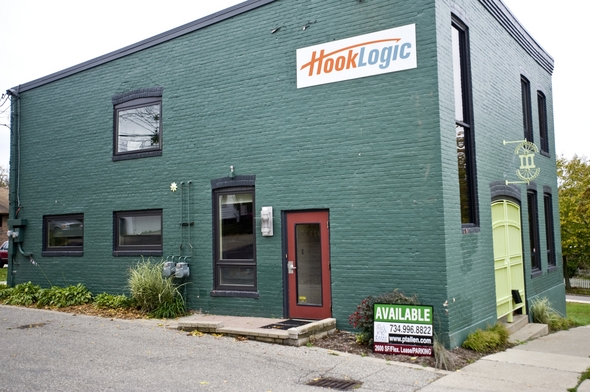
The property at 111 W. Kingsley in Ann Arbor, where the original owners - who hope to develop it into apartments - want a Wall Street hedge fund to sell it back to them.
Joseph Tobianski I AnnArbor.com
The property is called Kingsley Lane. The developers are Peter Allen and Mark Berg. The lender, as best as Allen can tell, is a Wall Street hedge fund that seems to be based on Avenue of the Americas and has an undetermined relationship with a loan servicing company that’s been added to some of the property’s documentation.
That’s imprecise, but it’s also almost all of the information Allen and Berg have been able to gather on the new holder of the $1.047 million loan representing their debt on the development at the corner of West Kingsley and North Ashley.
What that new owner does with the loan - acquired as part of an estimated $60 million hedge fund purchase of commercial loans from Flint-based Citizens Bank last spring ¬- will affect the property, its neighbors and the city’s development future in the area north of downtown.
Everyone involved assumes the buyer doesn’t want to hold the property and wants to profit from it.
But reaching a person who can confirm that - or even make it happen - has so far been impossible.
“The lender seems disinterested - completely,” said Steve Palms, an attorney with Miller Canfield who is working on Kingsley Lane’s behalf. “Which seems strange.”
Allen and Berg say they want to hold onto the property. They hope to develop it when the economy turns. And they’ve taken steps - like hiring Palms and a banking insider - to help them navigate the way. They’re also ready to pay for it and have tried to communicate offers.
But so far, all they’ve got is a public foreclosure notice for a sheriff’s sale on Nov. 3 and a series of phone messages left with the loan servicers.
That even makes it unusual, Palms said.
“My experience is on the lender side more often (than the borrower’s),” he said. “You don’t often see situations where there isn’t communication between the two.”
Allen and Berg started Kingsley Lane in 2003 when they envisioned a condominium development on the corner, where a two-story historic building - now home to HookLogic - sits at the edge of the sidewalk.
When it began, Kingsley Lane was part of a wave of downtown development concepts. It was marketed as a small-space option suitable for young professionals instead of luxury condos, and it further broke the pattern by not offering parking. Instead, buyers could get a bicycle.
The best thing he did, Allen says now, is stop construction in 2007 right after Pfizer announced it was leaving Ann Arbor. At the time, Allen said, 18 of the 46 condos were presold.
“Then Pfizer pulled out of Ann Arbor,” Allen said. “That was the beginning and end of Kingsley Lane.”
Allen and Berg held onto the property and the original mortgage written by the now-defunct Republic Bank in 2004 and amended in 2006.
While they were waiting through the housing downturn and recession, the property - sold in 2004 for $850,000 - lost value, they said. They paid on the note, even as Citizens Bank took over the loans of Republic, and they made plans to shift the development into rental apartments as the note neared the end of its term this year.
“Condos are not an asset that makes sense in the marketplace,” Allen said. “Apartments can.”
Kingsley Lane as condos “is obsolete in today’s marketplace,” Allen said.
But mid-year, as Citizens seeks to shore up its ailing balance sheet, it sold the Kingsley Lane note as part of CB Trust 2011-1, according to documents signed by Mark Hunt, a senior vice president at Citizens. The loan’s term was nearing its end, Allen said, and the bank would not refinance it.
Now, Allen said, the hedge fund is calling due to the entire amount.
Citizens would not comment for this story. And the new note-holder - which Allen said bought at least $50 million of office and medical buildings as part of that package - remains silent.
The new address of record for the note goes to Fairport, NY. Calls to a business with a phone number registered to the same address offer a menu of options for speaking to representatives of many businesses. A man who answered the phone there last week tried to direct a call on this note to someone who could answer questions, but ended up saying there was nothing he could do.
Allen and Berg said their attempts to reach someone in charge have been similar. They’ve sent formal written offers. Their banker is telling him he may have found a person who can deal with them.
In the meantime, they believe the note was sold at a wholesale price of about 30-40 percent of its value. They believe they should be able to acquire it for that plus 20 percent.
That original mortgage represents money spent by the developers on entitlements and marketing, Allen said. It doesn’t count the $500,000 spent out of pocket, he adds.
And now that a bank got the debt off of its books, he thinks he and Berg should be able to move forward by writing off the debt, too. A month after reassigning the loan to the hedge fund, Citizens reported a return to profitability - as it cut its net loss from continuing operations to $44.5 million, compared with a net loss of $120.5 million for the same period a year earlier.
“If we can get the building back for $600,000 to $700,000 and build the apartments,” Allen said, “we will be ahead by the difference of that and the mortgage.”
They’re not alone in having difficulties with re-mortgaging commercial property that’s lost value. And they’re not the first developers to learn that their lenders reassigned their debt to discount buyers.
It’s a national problem. A report from Deloitte released in late August estimates that there are $1.7 trillion in commercial loans coming due over the next four years, with many of them “under water” and not eligible for refinancing.
Allen said that’s the case with the Kingsley Lane property, which has an estimated market value of $894,400, based on city assessments. But that’s for the land and existing building - which is losing its tenant to a move, Allen said - and not the development plans.
The apartments, as they’d be proposed, are not financeable today.
But Allen and Berg said they are prepared to keep making cash offers to the hedge fund, and they’ll go to the Nov. 3 sheriff’s sale at the Washtenaw County Courthouse. The lender’s servicing agent will be the only bidder, they predicted.
The lender, Palms said, most likely wants to cash out of the investment at a profit.
“Ultimately, I don’t think that they will redevelop it themselves,” Palms said. “I also don’t think they want an asset on their books that they do nothing with. “
But until the hedge fund makes another move, no one in Ann Arbor will know for sure.
Allen and Berg still believe they are likely well-positioned to keep the property. They’re holding onto their vision for it, and say they're hoping to start true negotations if the sheriff's sale occurs and they enter a redemption period.
“We can’t build on this site today,” Allen said. “We can in a year.”
Paula Gardner is news editor of AnnArbor.com. She can be contacted by email or 734-623-2586. Follow her on Twitter.
Comments
chefbrian1
Mon, Oct 31, 2011 : 4:05 p.m.
I picture a mass Walk Away Movement where people walk away from their underwater mortgages in mass and simply rent/buy the house across the street for half the prize. Why should home owners take the fall for the mortgage gamble market?
Ron Granger
Fri, Oct 28, 2011 : 2:06 p.m.
Speculative real estate investors having trouble making big bucks on investment. They're having trouble using Other Peoples Money. Film at 11!
Gordon
Fri, Oct 28, 2011 : 1:08 p.m.
S.L.Razani is pretty much correct. Drop the comments about TARP. Congress / President passed laws with intent & did not change the loan ratio rules. That left the banks with no ability to exceed some potentially profitable loans classifications. The Fed auditors tied the banks hands and lending collapsed Nearly all commercial loans have a 'call' feature meaning the lender can call the loan at anytime in it's entirity. Nearly all the time that will force a foreclosure even if the borrower has been paying. Buying the loan at a discount is a good business practice and illustrated by the present housing market. Since time is part of the investment return mathematics forcing foreclosure at a sheriff sales does two things. Possibely improves return & determines whether there really is interest in the property. Quickly done & out of that which they had no development plans. Nice thing about government when they create rules they open new areas of return.
clownfish
Fri, Oct 28, 2011 : 12:18 p.m.
Convoluted financial schemes...what could possibly go wrong? Oh well, at least the top management will get their bonuses and that money will trickle down to everybody else, right?
Stephen Lange Ranzini
Fri, Oct 28, 2011 : 12:03 p.m.
Citizens Bank took some of the $700 billion of TARP money and instead of using that money to make new loans as we were told would happen, used that money to discount their bad loans and sell them to Wall Street Vulture Capitalists to clean up their books. This loan is just one tiny example detailing how that process occurred. Because these vulture capitalists paid so little for the loans, it makes more sense for them to foreclose and get 50 cents of the dollar making a quick 20% return, then to work with the borrowers. Repeating this process 1,000 times across Michigan with all the mega Bank's who got the TARP money and you understand now how Washington DC sold us in Michigan out so that Wall Street could steal tens of billions of dollars from Michigan alone. Some of the money that was stolen is being recylced into political contributions by Wall Street to those politicians who enabled the heist by voting for the TARP bill. Many viable businesses who never missed a single loan payment were foreclosed and the business liquidated because the Wall Street Vulture Capitalists could quickly get 50 cents on the dollar instead of patiently working with the borrower to get 100 cents of the dollar. Hundreds of thousands of jobs were lost this way. One business owner we were able to help get a new loan who applied to us to replace a loan that was called in by a mega bank hadn't missed a payment in 30 years! Now our per capita income is in the bottom 15 states nationwide. It's welcome to Michissippi for us saps! The crooks who pulled off this heist actually stole more money in this process than has ever been stolen elsewhere in the history of the world. To learn more, rent the Oscar winner for Best Documentary "Inside Job" available at Red Box in Kroger last I looked. It names the names of these crooks. Warning: you'll get mad if you watch this movie!
Hmm
Fri, Oct 28, 2011 : 1:21 p.m.
We got it the first time thanks Steve
cleanup
Fri, Oct 28, 2011 : 12:31 p.m.
For those of you too broke to rent the DVD, Inside Job, your wonderful public library has it available for you to borrow. And Stephen is right. Your head will explode.
rm
Fri, Oct 28, 2011 : 4:24 a.m.
If someone has filed a foreclosure action (or whatever gets you to "a public foreclosure notice for a sheriff's sale on Nov. 3"), don't the papers filed by that someone disclose an identity, a phone number, etc.? And if not, wouldn't that be grounds for putting off or canceling the sheriff's sale? Or is Michigan law really weird on the point? Someone can foreclose from behind the curtain?
weberg
Fri, Oct 28, 2011 : 4:17 a.m.
So, if I read the abridged version of this article correctly: These guys bought the place for $850k thinking they could make a reasonable return on an investment in another condo development --> The real estate bubble burst (in part to investments like this), the property foreclosed because the project was no longer profitable and the owners were unwilling to continue paying the mortgage --> Now they believe they should be first in line to re-buy the place for $600-700k (ie a "bailout" on the original $850k project), so that their new idea, an apartment building, could deliver a favorable return on investment. I'm not sure we should be painting the hedge fund as the faulty party here, rather the local investors who entered into some sloppy real estate prospecting and were never comfortable with the downside to the investment risk.
A2comments
Fri, Oct 28, 2011 : 3:28 p.m.
Lolly, unless I am mistaken, a sheriff's sale means that the loan is not current and the property is being seized and sold. The article says they have continued to pay on the note. It does NOT say they are 100% current. Or, the loan holder has said they have to pay the loan off when it matures, and they indicated prior to maturity that they are unable / unwilling to do so, hence the sheriff's sale. The sheriff does not sell property unless someone is in default I believe.
Lolly
Fri, Oct 28, 2011 : 11:40 a.m.
The article states clearly that the developers have continued to pay on the note. The term is near its end, though, and the lender refused to refinance. In other words, the note would be called due. The owners never refused to pay on the note. If you found yourself in this situation and couldn't get new financing, what would you do? Wouldn't you try to recoup some of your losses if you already had a business plan that you thought would work and you had invested time and energy in the project?
A2comments
Fri, Oct 28, 2011 : 10:40 a.m.
That seems to be the case. The developers were able, but unwilling, to stay current on the mortgage so if they lose the property they gambled wrong. Paula, what about the poor buyers of the condos, did they get their deposits back? If they stopped construction, what has the neighborhood been looking at all these years? I agree, the SPECULATORS here are Allen and Berg. Also, I see a dinky little building. Is there more, or did they plan on making money on just that?
OnTheRight
Fri, Oct 28, 2011 : 2:50 a.m.
"The sky is falling!! The sky is falling!!" That headline was a little over the top.... The bundling and resale of commercial and residential loans is not a new (or particularly nefarious) phenomenon. To write that the resale of this mortgage will "affect the property, its neighbors and the city's development future in the area north of downtown" perhaps overstates the importance of that single small parcel of land. If the property is scheduled to be auctioned at a Sheriff's foreclosure sale, that means that the owners have defaulted on the mortgage. Even If they aren't in default, if the loan is coming to the end of it's term the lender has every right to decide not to refinance the property. The property owners should get financing from another lender if they want to hold onto it while waiting for the condo/apartment market to bounce back. It looks like these property owners are in the same sorry situation as many homeowners....property values dropped after the purchase and now they are having trouble making the payments or refinancing (or both). The headline makes it sound as though the big, bad Wall Street financiers are using unscrupulous tactics to screw poor, hapless property owners out of their land as they take over Ann Arbor one street corner at a time.
Salinemary
Fri, Oct 28, 2011 : 1:48 a.m.
And we wonder why the mortgage and banking systems nearly collapsed. Convoluted sales, foreclosures and transfers of debt.
Kai Petainen
Fri, Oct 28, 2011 : 1:37 a.m.
what an odd story.... interesting, but odd....
Are you serious?
Thu, Oct 27, 2011 : 9:46 p.m.
Can this article be translated into something that those of us without a Wall Street background can understand? Who loses money, who makes money, etc?
Stephen Lange Ranzini
Fri, Oct 28, 2011 : 11:52 a.m.
Citizens Bank took some of the $700 billion of TARP money and instead of using that money to make new loans as we were told would happen, used that money to discount their bad loans and sell them to Wall Street Vulture Capitalists to clean up their books. Because these vulture capitalists paid so little for the loans, it makes more sense for them to foreclose and get 50 cents of the dollar making a quick 20% return, then to work with the borrowers. Repeating this process 1,000 times across Michigan with all the mega Bank's who got the TARP money and you understand now how Washington DC sold us in Michigan out. Many viable businesses who never missed a single loan payment were foreclosed and the business liquidated because the Wall Street Vulture Capitalists could quickly get 50 cents on the dollar instead of patiently working with the borrower to get 100 cents of the dollar. Hundreds of thousands of jobs were lost this way. One business owner we were able to help get a new loan who applied to us to replace a loan that was called in by a mega bank hadn't missed a payment in 30 years! Now our per capita income is in the bottom 15 states nationwide. Now it's welcome to Michissippi for us suckers! The crooks who pulled this heist off stole more money in this process than has ever been stolen. To learn more, rent the Oscar winner for Best Documentary "Inside Job" available at Red Box in Kroger last I looked. It names the names of these crooks. Warning: you get mad if you watch this movie!
timjbd
Fri, Oct 28, 2011 : 2:28 a.m.
The TARP is still funded and Citizen's of Flint has been receiving TARP money. <a href="http://banktracker.investigativereportingworkshop.org/banks/michigan/flint/citizens-bank/" rel='nofollow'>http://banktracker.investigativereportingworkshop.org/banks/michigan/flint/citizens-bank/</a> So this is probably gonna be yet another private profit / socialized loss type deal.
Paula Gardner
Thu, Oct 27, 2011 : 9:59 p.m.
The scorecard version, presuming a $400k purchase price by the hedge fund Bank - lost about $600k Developers - still on the hook for $1 million but hoping to cut it to about $600k Hedge fund - out that $400k but hoping to make at least 20 percent on it. The developers still own the property, but the foreclosure could change that ... to retain it, they'll have to either 1. pay the $1 million note in the months immediately after foreclosure (presuming it happens) or 2. successfully negotiate a lower rate.
Linda Peck
Thu, Oct 27, 2011 : 9:18 p.m.
Is this the part where we have to lend money to developers again and watch some fiasco "develop" with regard to appropriate use of land?
Borisgoodenough
Thu, Oct 27, 2011 : 9:18 p.m.
Paula, please do not use the words "historic" and "old" as synonyms. If the building currently on the property truly has historic value, then your use of the word demands an explanatory sentence or two as to its historic merit. If it's merely old, please don't confuse people -- and help to lay the groundwork for future controversy -- by laying the wrong adjective on it.
Kyle Mulka
Fri, Oct 28, 2011 : 6:06 p.m.
Yea, I'm pretty sure that building is not historic. I think this article needs to be fixed.
smokeblwr
Thu, Oct 27, 2011 : 8:50 p.m.
Occupy Ann Arbor should move from the comfy digs at Liberty Plaza to 111 W. Kingsley if they want to get their point across.
f4phantomII
Fri, Oct 28, 2011 : 8:32 p.m.
Is there WiFi?
Smart Logic
Fri, Oct 28, 2011 : 10:17 a.m.
Are there a Starbucks and organic grocery store nearby? If so then consider the protest moved!
timjbd
Fri, Oct 28, 2011 : 2:08 a.m.
That's not a bad idea.
smacks
Thu, Oct 27, 2011 : 8:34 p.m.
"The corner of West Kingsley and North Ashley." "111 W. Kingsley" Google is your friend, kef.
treetowncartel
Thu, Oct 27, 2011 : 8:29 p.m.
The reference to medical buildings is interesting, and in the flint area to. maybe they are working on bringing in some competition into the are, perhaps McClaren or Genesys is behind this, even Covenant.
treetowncartel
Thu, Oct 27, 2011 : 9:03 p.m.
Point taken, but that is assuming it is all collectible.
Chris
Thu, Oct 27, 2011 : 8:46 p.m.
The hedge fund probably doesn't know or care about the properties they purchased the mortgages to. They bought debt at a discount and now want the money owed on those loans.
kef
Thu, Oct 27, 2011 : 8:20 p.m.
this article, like all AA.com articles that refer to a place, need a map!