

Is high turnover for downtown Ann Arbor restaurants concerning?
The mix of downtown Ann Arbor restaurants is quickly changing.
In recent months, turnover has accelerated with some established restaurants exiting and newcomers faltering while others flourish.
Despite the high churn rate, commercial real estate agents said that many entrepreneurs, corporations or franchisee owners are looking to open new restaurants in the downtown area.
“Change is inevitable, and it’s not necessarily bad,” said Swisher Commercial agent Mike Giraud, a long-time Ann Arbor resident.
Recent changes to Ann Arbor’s restaurant scene include:
--Champion House, at 120 E. Liberty St., closed this month after 20 years downtown.

Champion House closed closed abruptly last week after 20 years in downtown Ann Arbor.
Lizzy Alfs | AnnArbor.com
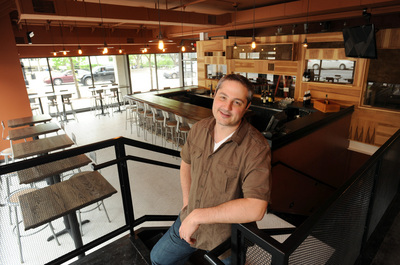
Adam Baru opened Mani Osteria on the corner of Liberty and Division streets in 2011.
Melanie Maxwell | AnnArbor.com
--The Blue Tractor brewery will expand into the adjoining space formerly occupied by Cafe Habana, which is closed until it completes its renovations at Parthenon.
--A Grand Traverse Pie Co. franchisee plans to open a restaurant within weeks in the East Liberty Street space formerly occupied by @burger, a Big Boy Restaurants chain concept that closed last summer.
--Packard Pub, a bar appealing mostly to University of Michigan students, has not reopened after closing for winter break, and a bankruptcy lawyer listed as a contact on the bar’s door has not responded to requests seeking comment.
--In 2011, Mani Osteria opened on the corner of East Liberty and Division streets; the Ravens Club took over the former Full Moon space on South Main Street; La Marsa Mediterranean Cuisine opened on South State Street; and Downtown Home & Garden owner Mark Hodesh launched his seasonal outdoor food courtyard, Mark’s Carts.
“For basically every business, whether its restaurant or retail, there’s a life cycle. Some are long, some are short,” Giraud said.
The key, he added, is a business owner’s market analysis and the ability to adapt to trends.
“People’s tastes change. It used to be all about red meat and potatoes, and now it’s about healthy food or local food,” he said. “If you don’t adapt and initially read your market correctly, your life cycle obviously shortens.”
Nick Stamadianos, owner of the Cloverleaf Restaurant, said he’s also watched the market change in his 20 years on the corner of East Liberty Street and Fourth Avenue.
Stamadianos said his business has struggled in recent years, largely due to a decline in foot traffic downtown.
“Look outside,” he said. “It’s dead.”
Stamadianos said the downtown Ann Arbor environment has changed considerably in the past decade, particularly since the economic downturn in 2008. The reason he’s been able to survive, he believes, is because Cloverleaf is a family-run business, which keeps operating costs low.
“To survive, it helps to do everything yourself, which you can’t do in a larger restaurant. We cut corners. You have to be a really hard worker. We’re always here, seven days a week, starting as early as 4 a.m.,” he said.
Stamadianos and his son, George, attribute the decline in traffic downtown and the struggling business at his restaurant to several things: parking rate increases, competition in the restaurant business, the delivery business, economic factors, construction projects and Borders’ closing.
While they envision Cloverleaf still sticking around for years, Stamadianos warned, “A lot of people are going to walk away this year.”
Other business owners have expressed concern about the same issues, particularly the parking rate increases downtown and construction projects, such as the underground parking structure that’s kept Fifth Avenue closed since September 2010.
The owners of Jerusalem Garden and Earthen Jar - which are both located on the stretch of Fifth Avenue that’s closed - have both expressed concern about the project’s effect on business. Pushpinder Sethi, the owner of Earthen Jar, told Ann Arbor City Council in July 2011 that he’s losing $6,000 a month in business.
“That is very hard for us to survive in this situation,” Sethi said at the time.
Downtown Ann Arbor has also seen a decline in the retail business in recent months, with several owners choosing to close and others reporting a decline in profits. Among the businesses that have recently closed or announced plans to close: Poshh, This & That, Organic Bliss and Sole Sisters.
Some business owners have also cited downtown Ann Arbor’s high rental rates as an issue.
But Jim Chaconas, a local commercial real estate broker with a long history in Ann Arbor, said the rental rates downtown are “minor” compared to cities on the east or west coasts, and in cities like Birmingham, Mich.
The important lessons for business owners, he said, are to be well funded, experienced and have a good business plan.
“If you’ve got the right concept, you’re well-funded and you know how to work, you’ll do well,” he said.
He also added that the turnover in Ann Arbor during the last year is fairly typical.
“It’s normal. This year we’ve had a little more change, but we’ve also had a lot of people that have aged out of their business,” he said.
Chaconas pointed to some recent restaurant startup success stories in the past year, such as Mani Osteria, Mark’s Carts and the Ravens Club.
Hodesh said his outdoor food courtyard concept worked “great” in its first year.
“People liked all the aspects of it. It got people coming to a block that didn’t have much going for it. It was activating downtown. It was also an opportunity for entrepreneurial people to give business a try for small money. People bought into it,” he said.
He added: He sees a “positive story” in the changes downtown.
The fact that one restaurant closes and another opens shows “pent up demand.”
“It’s as though people looking for opportunities are backed up, and when one piece moves, everybody jumps in on it,” he said. “People are scrambling for available space. Years ago, vacancies would last months.”
For Hodesh, that’s the unique thing about Ann Arbor. Sure, businesses might close, but “there is someone there to take their place.”
“This city feels strong to me,” he said.
Maura Thomson, executive director of the Main Street Area Association agrees: “I’m nothing but optimistic about downtown Ann Arbor. I look at the list of openings and see each one as yet another reason why people want to visit our downtown.”
Although the mix of downtown restaurants has been changing quickly, Giraud pointed out that downtown Ann Arbor has always had a mix of restaurants, including national or regional chains and family-owned businesses.
“There’s always national chains looking at Ann Arbor,” he said. “McDonald's was here, Burger King was here, Taco Bell was here, and they’ve come and gone. Sometimes businesses make it and sometimes they don’t.”
The key for the Cloverleaf owners, George Stamadianos said, is to remember that not everyone wants the same type of restaurant at the same price point.
“When I got frustrated recently, a friend reminded me: A lot of the little people count on us. We’re an inexpensive meal for people who can’t afford the more expensive things downtown.”
Lizzy Alfs is a business reporter for AnnArbor.com. Reach her at 734-623-2584 or email her at lizzyalfs@annarbor.com. Follow her on Twitter at http://twitter.com/lizzyalfs.
Comments
talker
Tue, Jan 31, 2012 : 12:11 a.m.
How many of the people who lament the loss of retail, including Borders, just browsed at Borders and purchased on-line. The (remainders, etc.) bookstore on Main Street, Afterwards' closed because the owners could earn more renting out the space than running the store. Retailers can only serve people if there are enough customers who actually buy things. Fantasy Attic costume shop relocated to Packard and Platt and again to Depot Town. The pharmacy under their second floor shop is long gone from Main Street. Main Street changed so long ago, it's hard to remember Goodyear's and Kline's Department Stores or that children's furniture and toy shop where Mongolian Barbecue is now. Now you can still buy athletic and regular shoes and boots downtown. Last year our daughter who lives in a large metro area bought boots at the shoe store on Main Street. The downtown area (bigger than a few blocks) has specific local destinations for us: Encore (recorded music), Conor O'Neills (second place in Boulder, Colorado), Afternoon Delight, and Middle Kingdom. There are many places to go elsewhere in Ann Arbor and the surrounding communities. By the way, Canton is more than the traffic on Ford Road. I won't even mention the name of the popular place we like in Ypsilanti to avoid disuading people from other places in that area. A ride on M-14, east to Gottfredson Road has the feel of being in the country when you walk into Karl's Cabin. Officially it's not Ann Arbor, but those who complain about parking in downtown Ann Arbor obviously are driving and can drive elsewhere. Then there's the rest of Ann Arbor and towns such as Dexter, Saline, or Plymouth. The restaurants in big cities aren't all on one block, so why expect that here. Spend money where you're happy with the products and service. If the price is too high or food not good enough, find another place. Send a message.
Dexter Bear
Mon, Jan 30, 2012 : 6:20 p.m.
I see a lot of lamenting about the lack of shops to browse or look in after dinner. Maybe that's why they are gone...a shop can't take a pile of 'browse' or a bunch of compliments to the bank! Retail is a bear! GRRRR.
Joe_Citizen
Mon, Jan 30, 2012 : 5:57 p.m.
Now that the Parthenon is gone, there is no other reason to pay the price of parking, dealing with panhandlers, and the lack of interests there. A2 down Town, is basically lost its personality. It's now a haven of high end eats and coffee, and nothing else to see, but the drunken homeless idiots that impede me, and their ability to give me the creeps, does not sound like a good time or even a bad time, actually it's a worse than a bad time, because I know what to expect when I am down town. I guess the feeling would be "FOOLISH" to go down town.
buildergirl
Mon, Jan 30, 2012 : 4:08 p.m.
I don't understand all these people complaining about parking. It isn't that bad if you don't try to park in the middle of downtown. Even then it's not the parking it's the idiot drivers that drive me bonkers. An extra block or two and you have plenty of parking and less lights. And if you are eating out couldn't you use the extra couple blocks anyway? If you go to other cities in Michigan with many good restaurants, Grand Rapids, Royal Oak, suburban Detroit the situation is the same. If you don't like the city go to Dexter or Saline. We don't want you hear complaining about everything anyway.
Ross
Mon, Jan 30, 2012 : 9:23 p.m.
THANK YOU!
Mike Martin
Mon, Jan 30, 2012 : 4:04 p.m.
Downtown Ann Arbor prices are "minor" Jim because downtown retailing opportunities are "minor". Many restaurants thrive in our downtown. Very, very few retailers thrive. Most are just barely getting by. Ask Jill from 16 Hands how she feels about the cost of Main St. retail space. She was quoted as saying that she moved to Kerrytown and downsized based on a rent squeeze and hers is an old, very established downtown business. Rents in the East or West coasts are commensurate with opportunity. I ran a retail store on Main St. for 15 years and as Nick Stamadianos noted there is just not enough traffic for these retailers. 20 years ago, as things were starting to build up downtown for a pretty bustling period in the 90's, you couldn't find a vacancy on Main St. As soon as a closing was announced the space was quickly rented out. Now, spaces sit for months. The former Sixteen Hands space is a super prime location. It's been on the market since last April.
leaguebus
Mon, Jan 30, 2012 : 4:02 p.m.
I don't believe that the business turnover in downtown is out of the ordinary. There is lots of foot traffic and competition. My favorite restaurant is Logan on Washington, their food is as good as anywhere I have eaten., including Chicago, New York, and Toronto. The Grizzly Peak is great, Blimpy's, Tios, the Red Hawk, Ashleys, and on and on. Parking on the west side of downtown is a bit challenging, but I have always found a space. I thought the Parthenon decided to close because John and Steve wanted to retire. It seems to me the profits of doom and gloom have made this blog a bit negative about downtown, but I still like it. Bring on the Rolling Sculpture Car show! Love it.
leaguebus
Mon, Jan 30, 2012 : 7:48 p.m.
Must be you have never eaten at Logan.
say it plain
Mon, Jan 30, 2012 : 5:22 p.m.
I was gonna reply that if Logan is as good as 'anywhere' you've eaten in NY, Chicago or Toronto, then you need to change where you eat in those places :-) But, then, the citing of "Tios" explains the rest! Perhaps it's John Chaconas' "profits" that make for doom and gloom downtown though...
Tru2Blu76
Mon, Jan 30, 2012 : 8:10 a.m.
Moved here in '74. Those days: Ann Arbor was a college town and that was good enough. Bimbos, Pretzel Bell, the Cracked Crab all long gone: inexpensive and wildly popular.. What's changed? If anything, I believe it's the "re-making" of Ann Arbor directed toward the "Little New York" or "Little L.A." images. And it's a mix - both images are pursued at once, regardless that the demographic of the town hasn't really changed that much. I agree: it seems that landlords downtown are bent on "big money" concepts: trendy (and ephemeral) boutiques, insane prices at restaurants. Get a clue real estate people: other than Zingerman's, this is still a college town. I remember (very fondly): two movie theaters in addition to the State and Michigan. SMALL, yet always filled and they played major films in their heyday. One on S. University (mom and pop) and another on Fifth. Patrons: college kids and young couples. See, it USED TO BE that Ann Arbor featured the "walking date" kind of experience: where couples strolled across town browsing books stores, stopping for dinner and then going to the movies. Cloverleaf and The Broken Egg: the last two really good breakfast restaurants left. Go to both: pick your favorite and then GET THERE regularly. That's all it takes to keep "a good thing going."
Brad
Mon, Jan 30, 2012 : 12:58 p.m.
I think you got the "remaking" exactly right. I call it the "Ann Arbor as a product" mentality. It's all about making Ann Arbor "appear" a certain way, primarily for the benefit of visitors and outsiders and the developers who make money from it.
treetowncartel
Mon, Jan 30, 2012 : 4:48 a.m.
A trip to a place like blimpy burgers or Mr. Spots is worth the trek into downtown Ann Arbor, plenty of fine fare to be found out side of the downtown area.
tim
Mon, Jan 30, 2012 : 1:42 a.m.
Too hard to park, but if the food is really really good it's worth the price/hassle. Too many places where the food is just ok.
Psudolus
Sun, Jan 29, 2012 : 10:16 p.m.
Hey, did the Spaghetti Machine close? I haven't been downtown in a while
jcj
Sun, Jan 29, 2012 : 7:55 p.m.
I don't know what all the fuss is about. It does not matter if you eat at the Chop House, Real Seafood Co,The Raven Club, Fleetwood or Taco Bell. Where does it all end up before the weeks out? Waste Water Treatment Plant!
Victor K
Sun, Jan 29, 2012 : 7:52 p.m.
I don't think high turnover for downtown is that concerning (unless you're an owner of a business that is turning over). As a resident and local business owner, I think what is more concerning is that all the retail spaces are becoming restaurants, because restaurants are the only businesses that are willing and able to take on the high rents. Say goodbye to your local boutiques or any small independent retailer, and say hello to a glut of restaurants. It's not the worst thing in the world, but it definitely makes the downtown less interesting and vibrant. The other big concern is the amount of national brands and chains moving in downtown as well. While I was an undergrad here, I was proud to see McDonald's, Burger King, and Taco Bell all close up shop and leave downtown altogether. However, in recent years, we are seeing a subtle yet growing number of national chains moving in. Look at the State and Liberty area, and you'll see what I mean. Bar Louie, BW3, Noodles & Co, CVS, 7-Eleven, Jimmy Johns, Panera, Five Guys, Starbucks, etc. Losing the battle of having local, independent businesses also makes Ann Arbor a lot less interesting and vibrant as well. It'll be sad to see Ann Arbor become another cookie-cutter Midwestern town with the same retailers as anywhere else in the country. Moral of the story: support your local businesses
A2newbie
Sun, Jan 29, 2012 : 7:48 p.m.
I think the parking rates are dirt cheap compared to what you pay in most cities!! I never have a problem getting a spot in a garage, even during Restaurant Week. Really, Main Street is tiny, walking two blocks won't kill you. In fact, it's probably good for you after the meal that was just consumed. :) I think what bothers me is that they charge so much per plate but the food is, eh. Especially what I know those prices could get me in a city like Chicago, San Francisco, NYC, etc. as I've had the pleasure of dining in many cities. However, I imagine the rent is unreasonably high in downtown, and the restaurants simply pass that on to the consumer. I encourage new restaurants to come in, and bring some creativity and flavor. I do like the recent additions of Mani and Mark's Carts.
63Townie
Sun, Jan 29, 2012 : 7:42 p.m.
Over-saturation of the market bears much of the blame, along with parking. Downtown has turned into a gigantic food-court with few retail offerings to lure diners who are out for a post-dinner stroll. As a townie I have no reason to venture to State Street area since Border's closed (oh, and for the occasional sporting good repair at College Shoe Repair). I don't venture to the South University area either, parking is the worst there while UM is in session. I think downtown will suffer the same fate. I try to keep the discretional spending local, but other than a meal out every now and then, there's not much reason to go downtown anymore. If the DDA was truly a visionary organization, they would attempt to balance the business mix downtown so there is more retail. Alas, it seems every time a local retailer shutters their doors, another eatery takes it's place.
johnnya2
Sun, Jan 29, 2012 : 8:45 p.m.
Really? Douglas J Salon Vox Bivouac Michigan Book and Supply American Apparel Urban Outfitters MDen Peterson Jewelers Aunt Agathas Book Common Language Books Crazy Wisdom Encore Recordings Renaissance Running Fit Tortoise and Hare Sams Whites Market Bongz and Thongz What is it you are exactly looking for downtown that is not available? There is no department store downtown, BUT name me any locally owned independent department store ANYWHERE in the city or for that matter in all of southeast Michigan. There are places to buy clothes, shoes, jewelry, books, records, spa treatments. The fact is there are plenty of other retail stores downtown. Unfortunately, people like you give others the impression there is nothing down there other than restaurants. My advice to many of these stores would be to stay open late to allow people to visit them after dinner. If a restaurant stays open until 10 pm on the weekends, why is a retail store closing at 6pm? If they need time off, closing early on a Monday would serve them better
Hemenway
Sun, Jan 29, 2012 : 7:35 p.m.
Downtown: Do the math. No parking + Aggressive Panhandlers = Not worth it
bhall
Sun, Jan 29, 2012 : 6:48 p.m.
Ah Ann Arbor Nobody goes there anymore! Why? It's too crowded!
Hemenway
Sun, Jan 29, 2012 : 7:37 p.m.
It's like DeJa Vu All Over Again - Yogi "Lawrence" Berra
Lemmy Caution
Sun, Jan 29, 2012 : 6:40 p.m.
I'd say the best reason to eat downtown is that there are restaurants there that you like--the food, the experience, the price: the whole package. I'd say the best reason to not eat downtown is that you don't like the food, the experience, the price. Ann Arbor has a lot of notoriously overpriced (considering food quality) restaurants in the downtown area, especially Main St. Ventures operations (I almost always have a bad food experience at their places). I don't know how they stay in business. I can't imagine how anyone from Canton can complain about Ann Arbor traffic (!). Canton has lots of parking, of course, because it's one big strip mall. But the food options--Ouch! And Dexter has two good choices. Same with Saline. And so forth. There are nice neighborhood hangouts in Ann Arbor with yummy food and acceptable prices and easy parking--for example, Casey's, Knight's, Aysa's, and so forth. And some downtown places are fun now and then, like Badito's, that sweet little French-Japanese joint on Liberty, and Blue Tractor (when you have a coupon, otherwise overpriced).
Sallyxyz
Sun, Jan 29, 2012 : 6:36 p.m.
Stamadianos and his son, George, attribute the decline in traffic downtown and the struggling business at his restaurant to several things: parking rate increases, competition in the restaurant business, the delivery business, economic factors, construction projects and Borders' closing. I would add high rents to that list, regardless of what Jim Chaconas says. He is a realtor. What do you expect him to say? Rents are too high? Jim Chaconas needs to get real. AA is NOT on the east or west coast, it is NOT Birmingham, MI, it is a small midwestern college town. Rents are far too high and only the very high profit bars and restaurants can stay in business. AA's landlords think they can continue to gouge small businesses and make fat profits for themselves, and there will be constant turnover as a result. High rents = businesses raising prices = people going elsewhere = businesses going out of business. Stamadianos is correct. And you cannot have constant ridiculous construction going on downtown for years on end, with the 5th ave debacle and not decrease downtown traffic. Student foot traffic only goes so far, adults who drive will avoid the insanity of the closed off streets that never end, the exorbitant parking fees, and the increasing downtown crime. I agree with Barzoom. I, too, avoid downtown due to the following reasons: lack of parking, construction, high parking fees, crime, poor choice of shops to browse, overpriced restaurants.
timjbd
Sun, Jan 29, 2012 : 5:46 p.m.
Even though it's now the cliché butt of jokes, the movement toward restaurants sourcing locally is good for everyone. For those who don't care, there will always be McDonalds, Olive Garden, Cheesecake Factory (perfect name) and the like.
Ron Granger
Sun, Jan 29, 2012 : 5:14 p.m.
So many of these places close because they are completely disconnected with the Ann Arbor market. They are focused on making a buck more than offering some thing great, or interesting. Chains? We don't need no stinkin' chains, with your corporate menu and streamlined process that is optimized to boost profits. The places that understand the mix of Ann Arbor - townies and students - thrive.
TownieR
Sun, Jan 29, 2012 : 4:38 p.m.
As a true Townie [born, bred, work in A2] even I am finding it hard to keep coming back downtown. Parking? A joke. Prices? A bigger joke. I certainly do not make an effort to come down more often than necessary. And, unless Cloverleaf does some major storefront updating and restaurant revitalizing, they will be going the way of Champion House, Parthenon, and Packard Pub. Ann Arbor as a whole is losing restaurants, not just downtown. Old Country Buffet, Flim Flam, and others are hitting the expressway and going long!
pluto77
Sun, Jan 29, 2012 : 4:31 p.m.
I haven't been downtown since they closed the Round Table. Too many Box Car Willy types staggering around for my tastes. Ypsi is the next frontier for cool new businesses. Cost of entry much lower engendering more owner operated less corporate theme park type operations. This is why Mark's Carts has been so successful, low entry cost attracting more creativity. The cabal of Ann Arbor's commercial landlords, social engineering nuts, and parking czars have suppressed a true blossoming of the City's potential.
Arboriginal
Sun, Jan 29, 2012 : 4:30 p.m.
Seems pretty vibrant to me. If everything stayed the same it would become stale. Keep changing and I'll keep coming!
ArgoC
Sun, Jan 29, 2012 : 4:12 p.m.
Jim Chaconas is part of the gang that has been buying up properties downtown and crowing about the wonderfulness of how fast rents go up in that area. Me, I'm expecting townies and students to go there less and less, instead eating at local restaurants popping up in cheaper, non-downtown areas. I hope a2.com continues to give those places as much exposure as it does the downtowns.
Diane
Sun, Jan 29, 2012 : 3:55 p.m.
Well, we are NOT the East or West coast etc. When you come to a logical solution maybe the businesses will stay.
InsideTheHall
Sun, Jan 29, 2012 : 3:31 p.m.
Downtown is reliant on University employees (Townies). When the higher education bubble pops Downtown A2 will be a ghost town.
djacks24
Sun, Jan 29, 2012 : 10:55 p.m.
Just like the overcompensated University employees, the rates the restaurants charge is ridiculous for the same or better fare plentifully available in Ypsi, Saline, Canton and in the suburbs.
getmoney
Sun, Jan 29, 2012 : 3:26 p.m.
Nick is a beauty! What a piece of work. He says as an owner you have to do everything. If everything is sitting on a stool in front if your restaurant, he does it all! Then he has the nerve to blame the downturn in business on everything and everyone but himself. Look in the mirror and try cleaning your dump. Maybe someone other than your regulars would come in.
Kevin McGuinness
Sun, Jan 29, 2012 : 3:11 p.m.
This should make the city think twice before charging for parking downtown on evenings. The turnover is healthy if it means improving the restaurant offerings. The problems created for Jerusalem Garden and Earthen Jar caused by the cities prolonged construction project should be relieved by the city through reduction of property taxes until the construction is done. These have been unique , successful, and fine restaurants for Ann Arbor.
Wolf's Bane
Sun, Jan 29, 2012 : 3:07 p.m.
Worrying about restaurant turn over in A2 is like worry about big box marts closing down en masse. I, for one, am very satisfied that higher quality restaurants like Mani Osteria, The Raven Club, and Jolly Pumpkin among others are deciding to call downtown Ann Arbor home. It was about time to raise the quality of fine dining experience in Ann Arbor and I think we're doing just fine! I don't even bother with the South University area, so downtown and Kerrytown have become more important than ever.
clownfish
Sun, Jan 29, 2012 : 3 p.m.
HEY! Let's go to Battle Creek where the evil libs don't have as much sway in the collectivist milieu of anti-business DDA. Been there recently? Lots of vacant store fronts waiting for a non-liberal restaurateur to swoop right in and make it swing! No silly govt run school to muck things up, no art students clogging up the aisles, no storm sewer art. And, the best part, cheap housing, the median home price is only around $70k, vs A2's $240k. Oh, wait, "The Market" says A2 is a preferred place to live...too bad nobody goes there anymore due to the crowded streets and restaurants!
ArborGuy
Sun, Jan 29, 2012 : 2:50 p.m.
We have lived in Ann Arbor for over 30 years but travel extensively. I welcome the turnover in restaurants in the hope that better restaurants will take root here. The people of Ann Arbor (and the surrounding communities who drive into downtown Ann Arbor as a destination) love to eat out, so there is a lot of demand at least for the mid to upper end restaurants and bars. They pay the same price (or higher) for their food that they would in places like NYC, San Francisco, and Chicago--but they mostly are served mediocre food in return. And yet, the restaurants are usually packed. After years of eating in Ann Arbor's restaurants we have found that on a good night at one of the better places we might expect to be served a pretty good meal, but nothing that we would call excellent or extraordinary. When we take friends who are visiting from other cities out to eat here they make the same comments. I attribute this situation to two factors: 1. People keep going to these restaurants even though they serve mediocre food because they want to go out and have a good time and there aren't any great alternatives; 2. I suspect it is very hard for a restaurant that does want to serve great food to attract and keep creative young chefs--they all want to play in the "big leagues" like NYC, Chicago, etc.. The new chef at Vinology is encouraging, however...
A2newbie
Sun, Jan 29, 2012 : 7:40 p.m.
I completely agree the prices are way too high for the average food they serve. I've been disappointed time and time again at the restaurants. I also think you are right, there is more for creative chefs in the bigger cities than here. I've had the pleasure of dining at great restaurants in many cities as well, it's fun to do. :)
Mike D.
Sun, Jan 29, 2012 : 2:44 p.m.
Ann Arbor is full of mediocre, overpriced restaurants. It's about time natural selection forced some of these places to shape up or ship out. The turnover isn't nearly high enough.
Krystal Marie
Mon, Jan 30, 2012 : 9:26 p.m.
Meanwhile in Ypsi: La Fiesta Mexicana, beezy's cafe, Tower Inn and a lot more, all yummy, all affordable. :)
Linda Peck
Sun, Jan 29, 2012 : 2:42 p.m.
There are plenty of restaurants that have been in business for decades in downtown Ann Arbor! Parking is always available (I have found) except during Art Fair. Ann Arbor is lovely and very accessible and totally fun. Turnover is inevitable in any town, and I see it as a sign of a healthy economy. However, from what I understand from the few retailers I have known personally, rents are sky high downtown, but then property taxes are, too.
clownfish
Sun, Jan 29, 2012 : 2:34 p.m.
Who are these greedy, anti-business DDA people that are running business out of A2? 1 seat for the Mayor or City Administrator 1 seat for a resident of the DDA District 7 seats for downtown property owners, downtown employees or individuals with an interest in downtown real estate 3 seats for citizens-at-large. Roger Hewitt – Treasurer; Bricks, Money, & Transportation Co-Chair, appointed to the Board in 2004 Roger Hewitt owns two downtown businesses, Red Hawk and Revive and Replenish Joan Lowenstein – Appointed to the Board in 2007 Joan Lowenstein is an attorney at Jaffe Raitt Heuer & Weiss, located in the First National Building in downtown Ann Arbor. John Mouat – Bricks, Money, & Transportation Co-Chair, appointed to the Board in 2007 John Mouat is a partner in the firm Mitchell and Mouat Architects, Inc., a downtown Ann Arbor firm specializing in Community Architecture Keith Orr – Secretary, appointed to the Board in 2009 Keith Orr co-owns the \aut\ BAR as well as the Common Language Bookstore in downtown Ann Arbor Sandi Smith –Partnerships Committee Co-Chair, appointed to the Board in 2004 Sandi Smith is a current City Council member and a downtown business owner. John Splitt – Bricks, Money, & Transportation Co-Chair, appointed to the Board in 2006 John Splitt owns a small downtown business, Gold Bond Cleaners Are any of the .com posters "Citizens at large"? If so, they could put their names in the hat and fix what is wrong in downtown A2!!
A2K
Sun, Jan 29, 2012 : 2:33 p.m.
"Jim Chaconas...rental rates downtown are "minor" compared to cities on the east or west coasts, and in cities like Birmingham, Mich" Except this is NOT the east/west coast and it is (thankfully) NOT Birmingham (no matter how many idiots try to spin A2 as the next rich-retiree meca, or Monied-Onlyville). Greed and overinflated rent and property values will drive a once-thriving downtown into the ground. I remember the desolate Main St. of the 1980s - No Thanks.
Bertha Venation
Mon, Jan 30, 2012 : 6:01 p.m.
You're right. And his step old man used to sell used cars.
a2citizen
Sun, Jan 29, 2012 : 4:06 p.m.
"...the desolate Main St. of the 1980s..." The only thing missing was tumbleweed blowing across the road.
zip the cat
Sun, Jan 29, 2012 : 2:31 p.m.
From being accosted by the panhandlers to the drunks staggering around to the off the charts fees for parking,on and on. I stopped going to ann arbor PERIOD, Lotsa fine eating place outside of town and you don't have to worry about getting hasseled
Goober
Sun, Jan 29, 2012 : 2:26 p.m.
If it's true that foot traffic has decreased, why is this? Too far from the college campus? Food not exciting enough for patrons to come downtown and pay a large parking fee just to dine? No business near by to entice patrons who work downtown? Maybe all of the above and more.
jns131
Sun, Jan 29, 2012 : 3:41 p.m.
I would say not to the college campus. The Michigan Union has stuff for them to do and the State and Liberty areas can keep them busy as well. Main street has a different ambiance.
Brad
Sun, Jan 29, 2012 : 2:13 p.m.
I'm rejecting the "high turnover" premise entirely. From what the realtors (who actually understand the situation) are saying, it's really just average turnover. The fact that Parthenon has been around since Zeus notwithstanding. Just another fluff piece.
pseudo
Sun, Jan 29, 2012 : 2:07 p.m.
Just went in to Ann Arbor for an evening out for the first time in 6 months. And the reason it has been 6 months? Same reason that I found thiw trip to be a PIA: parking and access to venues is terrible on Friday and Saturday evenings. I'm sorry but the attractions aren't that interesting for me to go through that hassle more often. Parking turned into a painfully long journey so we were late for the show. Its going to be another 6 months before do that again - its just not worth all that effort and expense. We have a couple restaurants that we like but again, its all measured against the pain of getting there and the expense of being there.
pseudo
Sun, Jan 29, 2012 : 11:52 p.m.
Oh Grumpy, no - I'm saying that if you are going to change our downtown to be attraction-driven (food and entertainment) then you better have something worth it. Because it is an effort - and will continue to be more and more of an effort they way A2 is going. Parking, frankly, is as much bike parking and car parking. I used to take the bus. Do you have any idea how convoluted the bus is for planning an evening in Ann Arbor coming from Ypsilanti? Say after work for a 7:00 show? Bike? Bus? Yeah - its not worth it.
Grumpy
Sun, Jan 29, 2012 : 4:38 p.m.
Lorie. Do you realize what a silly statement that is? "parking and access to venues is terrible on Friday and Saturday evenings. Parking turned into a painfully long journey so we were late for the show. Its just not worth all that effort and expense." In order to reduce you and your fellow suburbanites' problem with their terribly painful effort of long journeys to find expensive parking, new giant garages have to be built. In order to try and make Ann Arbor less ugly than it already is, those garages have to go underground. Giant underground garages to make your life easy are expensive so parking fees have to go up a couple nickels. And with any investement, there will be short term pain such as closing a main artery for two years in order to acheive long term benefits. When this new garage is done, there will be an abundance of parking at extremely inexpensive rates. See you in 6 months.
mtlaurel
Sun, Jan 29, 2012 : 2:01 p.m.
Ms. Thomson's statement tells it all: " opening(s).. as reason why people want to visit our downtown." Another purpose of a downtown can be to provide services and products for the local population. The model has obviously tilted to bringing people in-get them to pay to park and eat and drink. Thanks a lot, like we haven't noticed already?? For many, this is the problem.
Grumpy
Sun, Jan 29, 2012 : 2:01 p.m.
I'm curious what the Cloverleaf owner's theory is on why Afternoon Delight will have a line out the door about an hour from now as they typically do every Sat & Sun morning. Same market conditions just a few short steps away. If Stamadianos TRULY wants to stay in business, I suggest he stop looking out of the front door and complaining, then turn 180 degrees, then pick up a bucket of soap, a scrub brush and a can of paint. Otherwise, he will be going the way of Parthenon, Champion House, Full Moon, etc. All of those places were outdated and served mediocre food. Always easy to get a table those empty places even on Fri/Sat night when you find out there is an hour wait at your first choice. Cloverleaf doesn't have a corner on cheap food in a dingy atmosphere. Blimpy Burger and Fleetwood do it WAY better. And I they also actually seem cleaner than Cloverleaf. Open since 1992 is not nostalgic. Even after the smoking ban, I still walk by the Cloverleaf and think of it as a smoke filled room with smoke stained walls and ceiling tiles where I can order eggs and ash (from the cooks Marlboro). Out with the old, in with the new. Ann Arbor used to be filled with old dirty windowless establishments. They are finally all being replaced. The sports bars here used to be awful. Competition forced The Arena to renovate to try and extend their life. Sportsman will go out of business soon.
jcj
Tue, Jan 31, 2012 : 8:43 p.m.
Grumpy you said Cloverleaf doesn't have a corner on cheap food in a dingy atmosphere. Blimpy Burger and Fleetwood do it WAY better.And I they also actually seem cleaner than Cloverleaf." (Implying Blimpy Burger and Fleetwood serve "cheap food in a dingy atmosphere" So I say sarcastically "You must spend some time in Cloverleaf and Fleetwood or you would not be such an expert on the conditions there" Then you say "I had lunch at Fleetwood yesterday and breakfast there today. Love Blimpy Burger." I took your original comment to be degrading to those places. Apparently not!
Grumpy
Mon, Jan 30, 2012 : 7:19 a.m.
jcj. Confused by your comment. Do you have an actual point? Or is this an attempt at being clever or a "gotcha" attempt? To answer your question, I had lunch at Fleetwood yesterday and breakfast there today. Love Blimpy Burger. Been to Cloverleaf maybe three times in the last 10 years only because there was a long wait at Afternoon Delight. I walk by it many times per week and see the owner sitting around on a stool outside as someone else noted. So I ask again, your point?
jcj
Sun, Jan 29, 2012 : 7:46 p.m.
Grumpy You must spend some time in Cloverleaf and Fleetwood or you would not be such an expert on the conditions there!
jns131
Sun, Jan 29, 2012 : 3:37 p.m.
Most times you can tell when a restaurant is going to close. Take OCB for instance. They had good food. In the last few years? Down hill. The Parthenon never had bad food but yet want to retire. Who can blame them. If your food is gross? I won't eat there again and I will tell others to stay away. As for parking? Canton and other areas including Ypsilanti, have really great restaurants and decent parking.
bunnyabbot
Sun, Jan 29, 2012 : 2:33 p.m.
I agree with you on Cloverleaf. It needs to be scrubed and painted. Both of which have low cost but will require hours of work. Even the dishes our food was served on were not clean and my friend found a hair on his plate. I realize they might not be able to do a whole make over, but start with what you can do. I don't agree with you about the Parthenon, they wanted to retire, that is why the P is closing.
joe.blow
Sun, Jan 29, 2012 : 1:57 p.m.
My wife and I have given up on downtown, we have a policy for eating down there .... never again. The drive down there is through dozens (feels like dozens) of lights that aren't timed. Once downtown, finding parking is painful, eventually we settle on a ramp where our vehicle has been wacked twice in, then we have to walk some distance to a place to eat. Because we don't like to plan that far ahead of food, we usually wait to be seated for some time (which would indicate to me that these places are doing well). The food is usually good, but nothing great for the price. Service is also okay, but not great considering the price. Leaving is a traffic problem also. Now, we go to Canton, Saline, Dexter, or a non-downtown establishment, have a quicker drive, free parking, cheaper food at the same quality, better service, and we do it with less of a headache. Have fun going downtown, we won't see you there.
Ross
Mon, Jan 30, 2012 : 9:22 p.m.
Naw, the point is that grumpy, whiny people like yourselves aren't wanted sitting at the next table from the rest of us, complaining about everything while we are trying to enjoy our meal. "Waahhhh, there was traffic, AAaaahh, I couldn't find parking right away. Oh NOes! A polite man asked me for spare change! Run away to Canton and Saline!" It's pathetic.
joe.blow
Mon, Jan 30, 2012 : 7:30 p.m.
Never said I was boycotting downtown, just would rather go other places. I'll go back every so often to reevaluate, but for now I don't go near. Also, I don't think you can disagree with how my wife and I feel. Do you know us better than ourselves? I also recognize the fact that several places have wait lists on the weekends, that's why I described how we felt as a couple, noy how business is downtown.
rs
Mon, Jan 30, 2012 : 5:51 p.m.
The parking is still a mess downtown, the traffic is still crazy downtown and the restaurants still have long waits downtown. Obviously all the people that say they "stay away" from downtown because of these things hasn't hurt business at all. And when a place does close, somebody comes in right behind them to take their spot. The downtown still seams to be quite healthy despite the people that claim to avoid it now.
Grumpy
Mon, Jan 30, 2012 : 7:13 a.m.
jb. You just said yourself the places you go to are doing well. The point is dumps are closing and getting replaced. More visitors than ever came downtown last year. The parking stats don't lie. Your threats of boycotting AA are empty. You won't be missed. Enjoy Canton.
Doug
Sun, Jan 29, 2012 : 8:55 p.m.
Although I disagree with joe.blow, a new Italian restaurant in Saline, Mangiamo Italian Grill, is good and deserves a plug. Good food, prices, and service, and not wildly overrated like Gratzi and Palio.
jcj
Sun, Jan 29, 2012 : 7:42 p.m.
Frederica and dairy6 Maybe YOU won't miss them (I doubt you have anything invested)but apparently the businesses that are closing missed them!
Craig Lounsbury
Sun, Jan 29, 2012 : 6:27 p.m.
It does smell a little like angry people taking it personally.
joe.blow
Sun, Jan 29, 2012 : 6:13 p.m.
Glad to here so. Maybe you should have a campaign against people with disposable income spending it downtown. Or is this a personal attack? Not sure what you're getting at.
dairy6
Sun, Jan 29, 2012 : 5:23 p.m.
Believe us we wont miss you.
joe.blow
Sun, Jan 29, 2012 : 5:02 p.m.
I think the point of this story is that downtown AA is missing people like me. People with disposable income who won't go downtown because of the hassle. Or did I miss the point of the story?
Grumpy
Sun, Jan 29, 2012 : 4:26 p.m.
Agree with Frederica. Enjoy Canton dining at Buffalo Wild Wings in a strip mall and Carruso's or whatever that lousy chain Italian place is in the parking lot of the Lifetime Fitness. You won't have to worry about my car taking up one of your precious free spaces.
Frederica
Sun, Jan 29, 2012 : 4:17 p.m.
We will not miss you!
Craig Lounsbury
Sun, Jan 29, 2012 : 2:06 p.m.
you described me as well. I'd rather eat where its easy to park and I don't have to pay to park or worry about a ticket for an expired meter .
Usual Suspect
Sun, Jan 29, 2012 : 1:53 p.m.
I am no more worried about Ann Arbor running short on restaurants then I am about it running short of liberals. There is an overabundance of both.
mohomed
Tue, Jan 31, 2012 : 1:26 a.m.
Awesome post, LOL. There are a lot of libs in Ann Arbor. Way more in Detroit though.
Laura
Tue, Jan 31, 2012 : 1:12 a.m.
It's a free country, man. Stop whining and move. "I hate them liberals with their tree-hugging and social awareness......" There are plenty of places you can go where people would rather wash their SUVs and misquote the Bible.
Krystal Marie
Mon, Jan 30, 2012 : 9:21 p.m.
Cannot read a single a2.com article without someone bringing up THOSE DAMN LIBERALS as if the story really has anything to do with it. If you hate this town so much, leave.
Usual Suspect
Mon, Jan 30, 2012 : 3:58 a.m.
"Obama 2012!" .... which will the worst sequel since Caddyshack 2.
clownfish
Sun, Jan 29, 2012 : 2:26 p.m.
So, an overabundance of liberals = an overabundance of business?
cagazote
Sun, Jan 29, 2012 : 2:01 p.m.
I agree with half your statement. Obama 2012!
KIKIPIE
Sun, Jan 29, 2012 : 1:47 p.m.
Wake up greedy DDA. Wake up greedy landlords. Everyone needs to make a living!
cagazote
Sun, Jan 29, 2012 : 1:27 p.m.
The loss of The Parthenon coupled with its replacement by Habana furthers the "corporatization" of downtown Ann Arbor. Many of these thematic restaurants with their faux-ethnic cuisines make eating in Ann Arbor a Disneyland-ish experience. Yes, the food is good, but they are boring and predictable. The closest Cuban to Habana is probably living in Key West. There's probably an Italian graduate student waiting on tables at Palio. But I doubt the corporate chefs of either of these restaurants have vowels at the ends of their names. If the food is not ethnic it's average. The Blue Tractor, Grizzly Peak, Five Guy Burgers and Fries are just a few examples of rubber stamped, corporate establishments that have passable American food. Hopefully no one will buy Fleets and make it upscale.
Mike D.
Mon, Jan 30, 2012 : 12:56 p.m.
While there is an overwhelming propensity for national chains to be awful, it isn't always true that "local" chains are any better. Main St. Ventures and the group that runs Grizzly Peak, Blue Tractor, and Habana are good at offering milquetoast food at inflated prices in stylish-enough surroundings, but it isn't genuinely ethnic. How can Rick Bayless do it, if he isn't Mexican? First off, he doesn't claim his Mexican is "authentic," but rather fusion that is inspired by Mexican ingredients and methods. He also travels to Mexico and does extensive research there. Comparing Main St. Ventures' or Habana's predictable, mediocre, and heavy food to what Rick is doing at Topolobampo (for similar prices to Chop House) or Frontera (for Palio prices) is absurd.
cagazote
Sun, Jan 29, 2012 : 7:23 p.m.
This reply is to those that replied to my initial post. johnya2: You should use the term "racist" carefully. Look up what it means. I am not a racist. I do eat at these restaurants, as I said, the food is good. I am just stating that what passes for ethnic food in Ann Arbor leaves a lot to be desired. I dearly love the Fleetwood Diner, but it is a shell of its former self. JT Anderson and Little Old Lady: Corporations are corporations whether they are local or national. The high price of real estate in Ann Arbor is suppressing the individual/creative chef and only allows large enterprises to dominate the field. As more and more restaurants are owned by fewer and fewer corporations, dining out in an Ann Arbor will become more expensive as these companies start fixing the prices. And the downtown will continue to lose its character. For example, the Parthenon is closing down. Now THAT was an ethnic restaurant (Habana is a characterization).
Wolf's Bane
Sun, Jan 29, 2012 : 3:11 p.m.
Habana, Blue Tractor are all owned by a local partnership. So, you are wrong.
JT Anderson
Sun, Jan 29, 2012 : 2:26 p.m.
My problem with your comment is that you are painfully unaware that Cafe Habana, Blue Tractor and Grizzly Peak are local Michigan Owned businesses while 5 Guys is a National chain. When I read that @Burger (a chain) closed, and these business are thriving and expanding, it sounds like a step in the right direction. P.S - Blue Tractor, Habana and Jolly Pumpkin are some of the best food in the area. period. At the end of the day, all the other issues are beat out by quality. More good restaurants, shops and entertainment, less bad.
johnnya2
Sun, Jan 29, 2012 : 2:08 p.m.
RIDICULOUS! Basically you are saying, if a person is not a specific ethnicity there is no way they can cook it like somebody who happens to be that ethnicity. That is racist and quite frankly wrong. Some of the best Mexican food in all of the world come from a guy in Chicago names Rick Bayless. He is not Mexican by any stretch. The "corporate" chef for Palio, Real Seafood and Carson's American Grill is Yugoslavian. The Fleetwood is owned by a Greek and Albanian, yet they serve American food. How could that be? Of course if you do not like these restaurants you are free to be "pure" in your decisions and not eat at them that is your choice. Nobody will miss you.
1bit
Sun, Jan 29, 2012 : 1:47 p.m.
I've never seen, nor imagined, the words "Fleets" and "upscale" in the same sentence! Bravo! +1 to you.
MjC
Sun, Jan 29, 2012 : 1:05 p.m.
Ann Arbor needs a Cheesecake Factory (there are none in Michigan anywhere!)
wolfman jack
Sun, Jan 29, 2012 : 9:42 p.m.
Culinary barbarians.
MjC
Sun, Jan 29, 2012 : 6:51 p.m.
Sorry - I just really love that restaurant... they make great soup and salads :-(
Ron Granger
Sun, Jan 29, 2012 : 5:08 p.m.
I don't think we need another formulaic chain. Save the chains for places that embrace urban sprawl and strip malls. Troy... now there is a town that would be perfect for a cheesecake factory.
jns131
Sun, Jan 29, 2012 : 3:32 p.m.
Wasn't there one off of Huron near Main? Or that train tress? Unless they are gone, might want to check it out. Otherwise, Krogers makes a really darn good cheesecake.
Wolf's Bane
Sun, Jan 29, 2012 : 3:11 p.m.
Based on the Michigan's obesity rate of 30.5% (Ranked as the 10th most obese state) we definitely do not need a Cheese Cake Factory restaurant chain here!
cagazote
Sun, Jan 29, 2012 : 1:30 p.m.
ARRRRGGGGHHHHH!
Barzoom
Sun, Jan 29, 2012 : 1:04 p.m.
A few years ago my wife and I would go into downtown to walk around, look in the shops, and have an enjoyable time. Now, between being harassed by the panhandlers, the lack of any interesting shops and the cost of parking, we never go into town anymore. Until things change we will continue to avoid the area.
Tom Hollyer
Tue, Jan 31, 2012 : 1:05 a.m.
Did you ever buy anything at those shops?
Ross
Mon, Jan 30, 2012 : 9:17 p.m.
Well you guys are pretty pathetic then. if you can't handle someone asking for some spare change, don't find 10,000 villages, the robot store, crazy wisdom or other stores interesting, and can't afford a couple dollars for parking (WHILE YOU PAY $100 FOR DINNER) then good riddance; stay at home, shop at walmart, and be quiet.
jns131
Sun, Jan 29, 2012 : 3:33 p.m.
I remember doing that myself. Especially for the ice cream stores that made the walking worthwhile. Now? I can get ice cream at the grocery store. Nothing attracts me downtown anymore. Another reason we moved out of the area.
Steve
Sun, Jan 29, 2012 : 12:52 p.m.
Not very concerning. Ann Arbor probably has more restaurants per capital than most cities it's size. This is just the marketplace doing its thing.
clownfish
Sun, Jan 29, 2012 : 2:23 p.m.
Joe, is anybody asking Obama to do this? Did you see any comment from any of the closed businesses saying that? When the GOP passed TARP, did you post silly comments? Have you noticed that GM is doing better now, which means that SE MI is looking better than it did two years ago?
joe.blow
Sun, Jan 29, 2012 : 1:59 p.m.
You're wrong, we need an Obama bail out to save those who have been victimized by corporate greed. It's no their fault they can't turn a profit, so we should give them free money.
cagazote
Sun, Jan 29, 2012 : 1:29 p.m.
It has more restaurants per capita then New York City.
Hot Sam
Sun, Jan 29, 2012 : 12:29 p.m.
If there is a problem downtown it is a growing lack of balance between dining and retail...couple that with the parking situation and you have a recipe for long term difficulties.
Sesame45
Mon, Jan 30, 2012 : 12:54 a.m.
I can spend a few dollars to park downtown, especially since everybody validates parking. Has anybody else noticed how that t-shirt store by the Parthenon is open only like two hours a week, but it has stayed in business for years and years? AA confuses me!
Doug
Sun, Jan 29, 2012 : 8:47 p.m.
Johnny's right. Get off your fat, lazy ass and walking. You'll save money, and it's good for you. Free street parking is almost always available if you're willing to hoof it a couple of blocks. And a UM-owned lot b/t Ashley and First streets is free after 6pm and literally two blocks from Main Street. If you can't even do that, the problem lies with you, not with some imagined parking situation.
jns131
Sun, Jan 29, 2012 : 3:31 p.m.
If you can afford the parking then you can afford to eat downtown. Or visit it for that matter. Most of the rental property is based on the taxes the owners pay for the building. The higher the taxes the more they have to charge the rental space. Nothing new here. Same goes with gas stations. It was mentioned here a while back on gas prices versus what the gas stations pay to operate that space and what the owners are charging them. Hand to mouth and back again.
Hot Sam
Sun, Jan 29, 2012 : 3:18 p.m.
@johnny...I somewhat agree...I too rarely have a problem and don't mind a nice walk...the problem is really one of perception...it is bolstered by the speed and efficiency with which one gets a ticket, and the ever rising cost...
Mike D.
Sun, Jan 29, 2012 : 2:41 p.m.
I am one of those people. It's cold out, and I don't want to freeze to death. I have noticed that there's an inverse correlation between the amount of disposable income someone has and their willingness to schlep around in bitter cold to shop.
johnnya2
Sun, Jan 29, 2012 : 2:17 p.m.
There is no "parking situation". The fact is there are very few times you cannot find a parking spot in downtown. (art fair being the exception). The problem is lazy people who want to park right in front of the business they are going to, yet those same people would go to a mall and walk miles to traverse the maze of stores, but walking on the street is painful for them. Give me a break
smokeblwr
Sun, Jan 29, 2012 : 11:28 a.m.
"But Jim Chaconas, a local commercial real estate broker with a long history in Ann Arbor, said the rental rates downtown are "minor" compared to cities on the east or west coasts, and in cities like Birmingham, Mich. " Leave it to the real estate broker to make us think we're getting a deal in order to justify their industry's attempts to inflate prices. If people around here made money like they did on the east or west coast maybe we could afford to eat at fancy restaurants every night. I've seen Seinfeld, I know they never eat at home in New York!
tdw
Sun, Jan 29, 2012 : 8:51 p.m.
Johnny....The Ypsi stores are starting to fill up.Cheaper rent perhaps ?
johnnya2
Sun, Jan 29, 2012 : 8:47 p.m.
@ clownfish, No, people who patronize the business pay the "high rent" tax. If you think beyond your four walls, there are people who visit from OUTSIDE Ann Arbor. They come to town and spend money at 100's of businesses in town. Guess what that does? Helps increase revenue without charging more to residents.
johnnya2
Sun, Jan 29, 2012 : 3:51 p.m.
@ Clownfish Yes, you pay more for rent in thriving city like Ann Arbor versus what you would pay in Ypsi. THAT IS A GOOD THING. The fact is the real estate guy is pointing out that people claiming rents are too high really have no idea what they are talking about. Unless you see these properties sit vacant for long periods of time, the rents are right where they need to be. I bet any of these businesses could get a better rent in downtown Ypsi with cheaper parking. How many of the store fronts in downtown Ypsi are vacant? SO people who complain about high rents, panhandlers, parking rates, and any number of other excuses are delusional. Businesses come and go. Before Champion House there was Pretzel Bell, what was their demise? Before Scorekeepers there was Dooleys, was it too high of rent? Before Borders there was Jacobson's. Before The Ark there was Kline's. The same foolish arguments were made back then. How many businesses fail at malls, or at free standing throughout town that have ZERO to do with panhandlers, parking and high rent?
Wolf's Bane
Sun, Jan 29, 2012 : 3:08 p.m.
It's just his nature, no worries!
Buster W.
Sun, Jan 29, 2012 : 2:41 p.m.
I hear rental rates are higher in Tokyo, too!
clownfish
Sun, Jan 29, 2012 : 2:21 p.m.
Don't "people that live in the city" pay those taxes via the high rent? I agree that if rents get too high business will seek other venues, but comparing A2 to the coasts is ridiculous. NY has MILLIONS of residents and is on an island. There is no comparison.
johnnya2
Sun, Jan 29, 2012 : 2:14 p.m.
Ok, I have said this a million times and I will say it again, there is no such thing as too high of a rent if the building is rented out. If the rent were too high, people would sign leases elsewhere. I wonder if you think those real estate agents who try to get you top dollar for your home are attempting to "inflate prices". I know that whole supply and demand thing is lost on you, but in this situation it works. I have no problem with businesses charging what the market will bear. Are you in favor of rent controls for businesses? As an aside, the higher those rents, the higher the property value. The higher the property value, the higher the property tax, which means more money for the city and less burden on the people who live in the city.
joe.blow
Sun, Jan 29, 2012 : 2:02 p.m.
At 3% commission, why would they try to increase the price of a sale? And, if they represent the buyer and seller, that's 6%. 500,000 building is 30K commission VS 200,000 building with only 12K commission. Wonder what I'd do.